









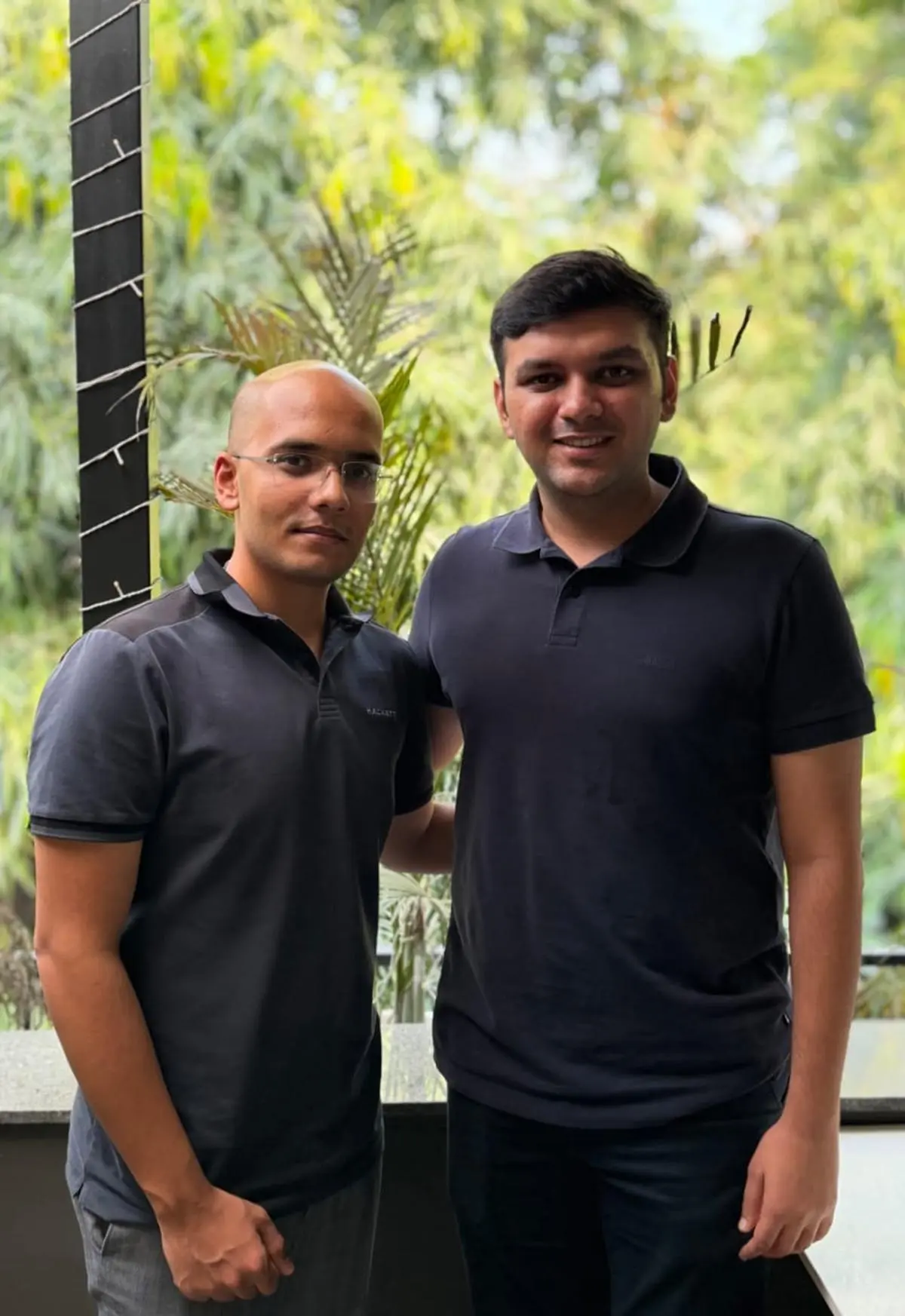
RECOVERY MODE: Manhar Dixit and (right) Vedant Taneja, Co-founders, Beyond Renewables & Recycling
With global solar energy installation continuing to move north, the number of solar panels reaching their retirement will also increase, resulting in waste. To lower the environmental burden, the concept of solar panel recycling is gaining ground.
Beyond Renewables & Recycling, a startup launched in 2024 by Manhar Dixit and Vedant Taneja, is building a large-scale solar waste recycling ecosystem in Rajasthan.
“A friend who runs a solar EPC (engineering, procurement, and construction) company was mentioning that he has around 200 solar modules that had been damaged during transportation and installation at one of his sites. That’s when we got the idea of doing something around solar waste,” Dixit says.
Diving deeper into the issue, they realised that solar recycling was already happening in developed nations like the US, Germany, Italy, China, Singapore, and Australia.
The startup has developed a proprietary process to recover over 95 per cent of materials — including silver, silicon, and glass — from end-of-life solar panels, turning hazardous waste into a high-value, circular resource.
Dixit cites data on India’s rapid solar adoption, which is expected to generate nearly 1.2 million tonnes of solar PV waste by 2040. This wastage could climb to 4.8 million tonnes in an early-loss scenario — the failure of numerous solar panels before their expected lifespan.
“Much of this e-waste is currently handled by the informal sector, which often lacks the infrastructure to safely process hazardous materials, leading to low recovery rates and environmental damage,” Taneja says.
The duo first set out to understand how the informal sector handled the recycling process.
“Once we understood what exists out there in terms of technology, we started developing our own blueprint for recycling panels to allow for not just high recovery of raw materials, but also eco-effectiveness. We wanted to ensure that the recycling process we design and follow does good for the environment,” Dixit says.
The founders say their facility will follow the norms set by the Central Pollution Control Board in the storage and handling of solar waste modules. It will be equipped to recycle 10-15 tonnes of waste modules daily.
“Transportation (of procured waste panels) needs to be arranged by us,” Taneja says, adding, “In some cases, the seller arranges transportation, but we do pay a premium on the price of the waste materials for that.”
Dixit points to the policy push on solar waste recognition. In the e-waste management rules of 2022, the government included solar waste in the e-waste category. Today, any producer of waste — whether a solar panel manufacturer, an asset developer, or an EPC company — is required by the pollution board to hand over waste solar panels only to registered recyclers, he explains.
The company targets becoming fully operational on February 1, 2026. “The materials that we extract after recycling are metals mostly. So, they’re usually sold openly in the metal scrap markets or, say, jewellers for silver,” Taneja says.
The start-up recently raised ₹5 crore in a pre-seed funding round led by Momentum Capital, with participation from Venture Catalysts, IIMA Ventures, Oorjan Cleantech, and Gautam Das. “Funding has not been an issue,” Taneja says, adding “We have been fairly blessed to have found the right set of investors for our kind of project; but it has been a long road, and we did not start looking for funds immediately.”
“We did a lot of research and developed our capabilities and understanding of this market to make sure that it is a calculated risk we are taking, and ensuring we are able to deliver the return on investment that we’re promising to our investors,” he says.
Published on November 24, 2025
此内容由惯性聚合(RSS阅读器)自动聚合整理,仅供阅读参考。 原文来自 — 版权归原作者所有。