

惯性聚合 高效追踪和阅读你感兴趣的博客、新闻、科技资讯
阅读原文 在惯性聚合中打开

推荐订阅源

V
Visual Studio Blog
Application and Cybersecurity Blog
A
Arctic Wolf
让小产品的独立变现更简单 - ezindie.com
P
Proofpoint News Feed
S
Schneier on Security
The Cloudflare Blog
Security Latest
Security Latest
S
SegmentFault 最新的问题
L
Lohrmann on Cybersecurity
T
Tailwind CSS Blog
D
Darknet – Hacking Tools, Hacker News & Cyber Security
C
Cyber Attacks, Cyber Crime and Cyber Security
K
Kaspersky official blog
Latest news
Latest news
月光博客
月光博客
aimingoo的专栏
aimingoo的专栏
P
Privacy & Cybersecurity Law Blog
F
Fortinet All Blogs
C
Cybersecurity and Infrastructure Security Agency CISA
美团技术团队
博客园 - 叶小钗
H
Help Net Security
博客园 - 【当耐特】
云风的 BLOG
云风的 BLOG
cs.CV updates on arXiv.org
A
About on SuperTechFans
WordPress大学
WordPress大学
Cloudbric
Cloudbric
IT之家
IT之家
Last Week in AI
Last Week in AI
S
Securelist
Google Online Security Blog
J
Java Code Geeks
Microsoft Azure Blog
L
LINUX DO - 最新话题
Know Your Adversary
Know Your Adversary
爱范儿
爱范儿
Threat Intelligence Blog | Flashpoint
G
Google Developers Blog
C
CERT Recently Published Vulnerability Notes
宝玉的分享
宝玉的分享
博客园 - Franky
TaoSecurity Blog
TaoSecurity Blog
P
Proofpoint News Feed
大猫的无限游戏
大猫的无限游戏
Jina AI
Jina AI
L
LINUX DO - 热门话题
N
News and Events Feed by Topic
B
Blog

Opinion, Editorial, Views, Columnists, Columns | The HinduBusinessLine

Rupee can’t be defended from just one side Railways’ performance Why not have a women-only party? Labour pangs Pak’s peculiar comeback on the global stage Letters to Editor India has jobs, but it needs better ones Cross-border insolvency laws and trade A major health challenge Editorial. Snooping around Letters to the Editor dated April 20, 2026 All you want to know about the women’s reservation and delimitation bills fiasco Editorial. Process deficit Letters to the Editor dated April 19, 2026 WPI effect on new GDP series The tragic reality of police brutality India’s AI value paradox Prepare the ground India-Korea economic ties poised to strengthen Nari Shakti Bill — a missed opportunity Natural farming should become mainstream policy Insights from new GDP data Strategies to enhance fertilizer security Pathway to maritime insurance sovereignty Why the GoP’s jittery Clear the smoke Aiding piped gas push Stocks are the least over-priced asset in India Is TCS harassment case tip of the iceberg? SIP with caution Global gold ETFs post worst-ever $12 billion monthly outflow: WGC How India is funding Silicon Valley’s rise Cyber insecurity Continuity via status quo Iran war, a boon for the BRICS Assessing the easing of provisioning norms by RBI Iran war, a test for India’s economic resilience Iran war’s impact on India’s farm output and food inflation Economic competence in judiciary Pressure point India moving up the pharma value chain NFRA’s statutory leap Finance capital in time of war How West-Asia war could reshape the AI race When signals diverge: Reading the Nifty-Gold ratio Mohali’s miracle boys Plastic concerns Nice countries come last Lawyers matter more than ever for corporates Odisha central to our aluminium ambitions Editorial. Fair deal Editorial. Wait and watch Letters to the Editor dated April 10, 2026 Unfortunate fallout of cyber crime investigations Letters to the Editor dated April 9, 2026 Will the uneasy truce hold? Charting an intellectually honest way of forecasting RBI plumps for caution amidst uncertainty Large corporates and the sustainability transition of MSMEs MPC positive, despite strong headwinds Cease and desist Together, let us empower our Nari Shakti An AI model that’s too risky NPS funds consistency check: what 10-year rolling returns reveal Editorial. Nuclear milestone Letters to the Editor dated April 7, 2026 Packaging woes China’s perennial industrial policy Sensex has fallen on account of global forces India’s strategic defiance at the WTO meet Freebies will hit Tamil Nadu’s fiscal health Close the backdoor in tobacco FDI policy Is EU’s CBAM discriminatory? Editorial. Freebies unplugged Letters to the Editor dated April 6, 2026 Projecting growth is not easy Improving safety in Indian aviation Amendments to FCRA India’s outreach to Angola will contain energy risk Oil shocks and the rupee: The tricky 100s Sensex at 40: Secrets behind long-term wealth in markets Editorial. Sweeping powers India’s next social protection is care, not cash In West Asia, it is advantage China Is awarding Trump a Nobel Prize the best bet for peace? Editorial. Knotty regulations Letters to the Editor dated April 3, 2026 Time to push for rupee internationalisation Up in the air Time for industry to lead economic resilience Allied healthcare needs attention What holds back investor participation? Still no endgame in sight Challenging year What happens when CAD rises Reorienting farm research Telecom infra must rest on strong fibre network A severe test for monetary policy India’s chance in supply chain reset Bengaluru’s housing market is growing but affordability is shrinking
The albatross around our neck: Dollar deficit
By TCA Srinivasa Raghavan · 2026-05-18 · via Opinion, Editorial, Views, Columnists, Columns | The HinduBusinessLine
High level committees have given valuable suggestions to ward off economic crises but precious little has been done on the policy front

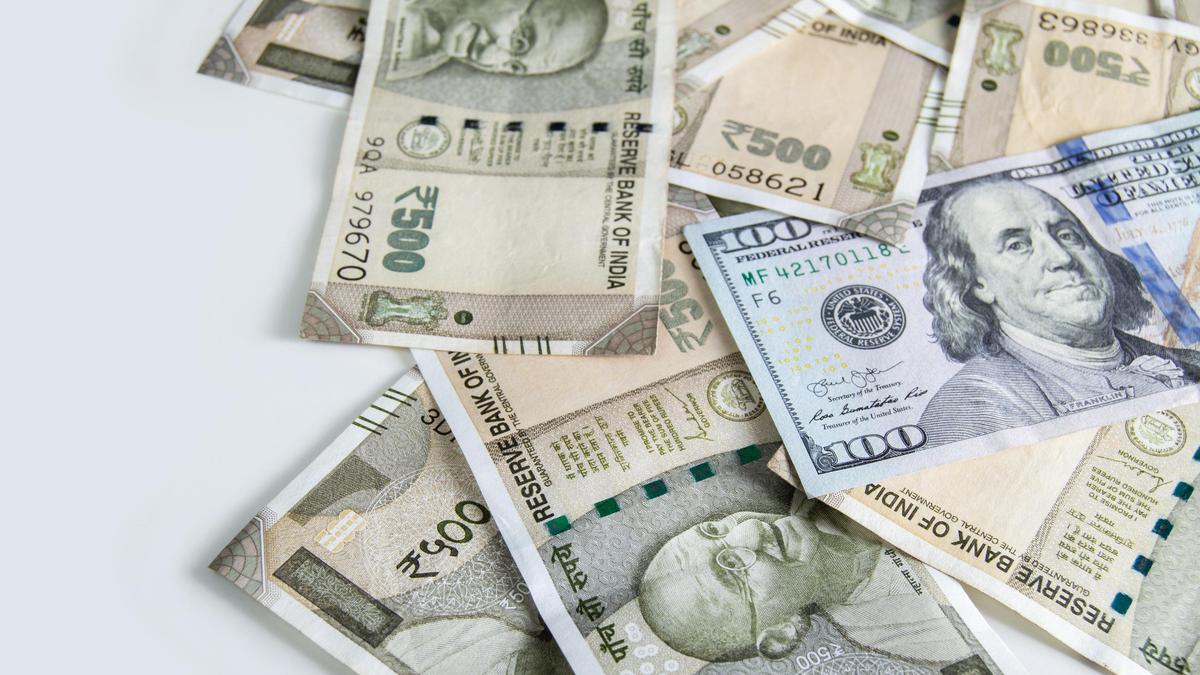
High level committees have given valuable suggestions to ward off economic crises but precious little has been done on the policy front | Photo Credit: desifoto

Prime Minister Narendra Modi has talked about the ‘return of mass poverty’ and a ‘decade of disasters’. He was talking to Indians in the Netherlands two days ago. Earlier in India he had asked Indians to spend less on imports of oil and gold.

And I thought to myself here we are again, folks, into our periodic economic rahu kalam when our prime ministers tell us to be patriotic and buy less from foreigners.

1955. 1965. 1974. 1980. 1991. 1998. 2012. 2020. And now 2026. That’s nine times in 70 years.

On each occasion it’s the shortage of the dollars which are needed to bridge the domestic supply gap. It used to be food until 1972. It’s been fuel since 1980. China is also short of both. But has managed far better than we have.

So there are two questions worth asking: why do we have this domestic supply gap and why aren’t we able to overcome the dollar deficit. Decade after decade?

Our domestic supply gap was mainly in agriculture. Then we started fixing that problem and by 1980 no one even noticed the massive drought of 1979. The food shortages were solved by the self-reliance that the green revolution initiated.

Then the fuel shortages started. And we haven’t been able to fix the problem even after 45 years. We need dollars to buy it and we don’t have enough of those. Why not? Because we don’t export enough.

One could answer by saying that our energy dependence is the problem because our energy base is all wrong in that we have been avoiding coal when we have an abundance of it. Instead we have moved towards the other hydrocarbons, oil and gas. Reason: coal is dirtier than oil and gas.

Another answer, which our governments hate to hear, is that for over 60 years they have managed to make a dog’s breakfast of industrialisation. This means we import a lot of industrial goods instead of exporting them. So we don’t earn enough dollars.

History keeps repeating

So every time we become desperate, the government tells us to spend fewer dollars. 1955. 1965. 1974. 1980. 1991. 1998. 2012. 2020. And now 2026. It’s the same absurd story.

Sensible in the current context each time and absurd in the totality. Our governments simply don’t seem to be able or willing to solve the problem. And, as soon as the crisis is over we get distracted and start thinking it will not happen again.

But it does. 1955. 1965. 1974. 1980. 1991. 1998. 2012. 2020. And now 2026. And our response after each episode is over is to dance in the streets claiming victory. I have seen several generations of economists weep in frustration.

Not that the governments haven’t tried. There have been at least a dozen high level committees to give suggestions. Absolutely nothing has come out that can be described as a success. Why?

And who should we blame, the politicians, the bureaucrats, the industrialists, Jawaharlal Nehru, PC Mahalanobis, the trade unions, the judiciary, who? All of them and none of them because when everyone is complicit, no one is complicit.

The inverse relationship

Countries that succeed in achieving high rates of economic growth over several decades fail spectacularly in having democratic practices. The moment they become democratic, their growth rate starts to falter.

When Walter Rostow wrote his famous book on the stages of economic growth in 1960 he didn’t give any weight to the political arrangements in a country. That has made people forget that politics matters in determining economic outcomes and that electoral politics matters even more.

This does not mean that all undemocratic countries achieve high rates of growth. But it does mean that the more democracy you have the more likely you are to be stuck in a low and highly variable growth boat.

There are no exceptions. You can either have a rights focused economy or a duties focused one. The former generally has lower rates of growth than the latter.

Be that as it may, we are, and will continue to be, a rights focused economy. So given this, the question is how do we avoid the mistakes of the last 70 years?

The answers have been known for at least four decades. We have paid heed to some of them but the majority have been ignored or discarded or half implemented. The result is a gigantic mess.

There is an illusion that we can sort out this mess. But as long as we simultaneously pursue dozens of objectives giving each equal weight, we will be chasing our own tails: a lot of activity and not enough to show for it.

Yes, it’s been a decade of disasters so far with perhaps more to come. But these wouldn’t have been harbingers of mass poverty had we got our mindset and policies right.

Published on May 18, 2026