

惯性聚合 高效追踪和阅读你感兴趣的博客、新闻、科技资讯
阅读原文 在惯性聚合中打开

推荐订阅源

cs.AI updates on arXiv.org
T
The Blog of Author Tim Ferriss
S
Securelist
C
CXSECURITY Database RSS Feed - CXSecurity.com
T
Tor Project blog
S
Schneier on Security
Google DeepMind News
Cyber Security Advisories - MS-ISAC
Blog — PlanetScale
Blog — PlanetScale
AWS News Blog
AWS News Blog
F
Fortinet All Blogs
C
Cisco Blogs
L
LangChain Blog
MongoDB | Blog
MongoDB | Blog
D
Docker
T
The Exploit Database - CXSecurity.com
The GitHub Blog
The GitHub Blog
月光博客
月光博客
量子位
A
Arctic Wolf
博客园 - 叶小钗
L
LINUX DO - 热门话题
J
Java Code Geeks
The Hacker News
The Hacker News
Security Latest
Security Latest
V
Vulnerabilities – Threatpost
M
MIT News - Artificial intelligence
博客园 - 【当耐特】
T
Tenable Blog
Microsoft Security Blog
Recent Announcements
Simon Willison's Weblog
B
Blog
阮一峰的网络日志
阮一峰的网络日志
A
About on SuperTechFans
博客园_首页
OSCHINA 社区最新新闻
OSCHINA 社区最新新闻
钛媒体:引领未来商业与生活新知
钛媒体:引领未来商业与生活新知
T
Threat Research - Cisco Blogs
Exploit-DB.com RSS Feed
Y
Y Combinator Blog
PCI Perspectives
PCI Perspectives
Hacker News: Ask HN
Hacker News: Ask HN
P
Palo Alto Networks Blog
小众软件
小众软件
Threat Intelligence Blog | Flashpoint
O
OpenAI News
P
Privacy International News Feed
P
Privacy & Cybersecurity Law Blog
N
Netflix TechBlog - Medium

Opinion, Editorial, Views, Columnists, Columns | The HinduBusinessLine

Rupee can’t be defended from just one side Railways’ performance Why not have a women-only party? Labour pangs Pak’s peculiar comeback on the global stage Letters to Editor India has jobs, but it needs better ones Cross-border insolvency laws and trade A major health challenge Editorial. Snooping around Letters to the Editor dated April 20, 2026 All you want to know about the women’s reservation and delimitation bills fiasco Editorial. Process deficit Letters to the Editor dated April 19, 2026 WPI effect on new GDP series The tragic reality of police brutality India’s AI value paradox Prepare the ground India-Korea economic ties poised to strengthen Nari Shakti Bill — a missed opportunity Natural farming should become mainstream policy Insights from new GDP data Strategies to enhance fertilizer security Pathway to maritime insurance sovereignty Why the GoP’s jittery Clear the smoke Aiding piped gas push Stocks are the least over-priced asset in India Is TCS harassment case tip of the iceberg? SIP with caution Global gold ETFs post worst-ever $12 billion monthly outflow: WGC How India is funding Silicon Valley’s rise Cyber insecurity Continuity via status quo Iran war, a boon for the BRICS Assessing the easing of provisioning norms by RBI Iran war, a test for India’s economic resilience Iran war’s impact on India’s farm output and food inflation Economic competence in judiciary Pressure point India moving up the pharma value chain NFRA’s statutory leap Finance capital in time of war How West-Asia war could reshape the AI race When signals diverge: Reading the Nifty-Gold ratio Mohali’s miracle boys Plastic concerns Nice countries come last Lawyers matter more than ever for corporates Odisha central to our aluminium ambitions Editorial. Fair deal Editorial. Wait and watch Letters to the Editor dated April 10, 2026 Unfortunate fallout of cyber crime investigations Letters to the Editor dated April 9, 2026 Will the uneasy truce hold? Charting an intellectually honest way of forecasting RBI plumps for caution amidst uncertainty Large corporates and the sustainability transition of MSMEs MPC positive, despite strong headwinds Cease and desist Together, let us empower our Nari Shakti An AI model that’s too risky NPS funds consistency check: what 10-year rolling returns reveal Editorial. Nuclear milestone Letters to the Editor dated April 7, 2026 Packaging woes China’s perennial industrial policy Sensex has fallen on account of global forces India’s strategic defiance at the WTO meet Freebies will hit Tamil Nadu’s fiscal health Close the backdoor in tobacco FDI policy Is EU’s CBAM discriminatory? Editorial. Freebies unplugged Letters to the Editor dated April 6, 2026 Projecting growth is not easy Improving safety in Indian aviation Amendments to FCRA India’s outreach to Angola will contain energy risk Oil shocks and the rupee: The tricky 100s Sensex at 40: Secrets behind long-term wealth in markets Editorial. Sweeping powers India’s next social protection is care, not cash In West Asia, it is advantage China Is awarding Trump a Nobel Prize the best bet for peace? Editorial. Knotty regulations Letters to the Editor dated April 3, 2026 Time to push for rupee internationalisation Up in the air Time for industry to lead economic resilience Allied healthcare needs attention What holds back investor participation? Still no endgame in sight Challenging year What happens when CAD rises Reorienting farm research Telecom infra must rest on strong fibre network A severe test for monetary policy India’s chance in supply chain reset Bengaluru’s housing market is growing but affordability is shrinking
Editorial. Reforming schools
2026-05-21 · via Opinion, Editorial, Views, Columnists, Columns | The HinduBusinessLine
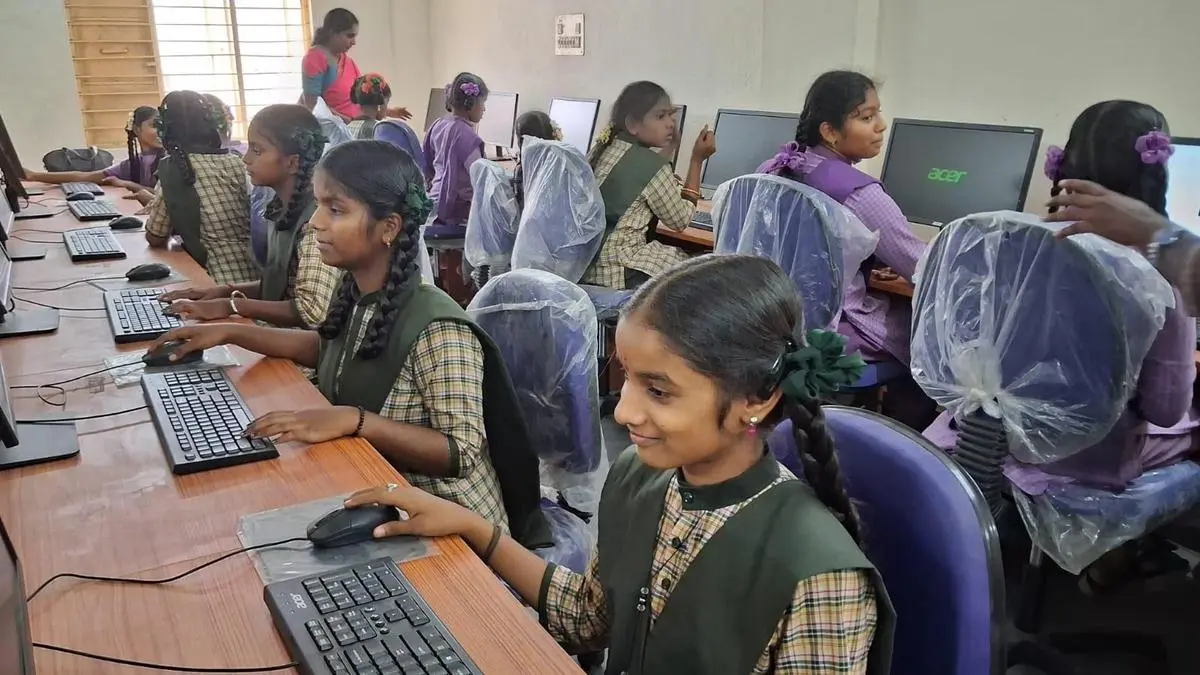
Schooling: Improving learning outcomes is still a challenge

Schooling: Improving learning outcomes is still a challenge | Photo Credit: HANDOUT

India’s school education story, as laid out in a new report by NITI Aayog, begins on an encouraging note. Over the past decade, India has achieved what once seemed elusive: near-universal access to primary schooling, better enrolment among girls and disadvantaged groups, improved basic infrastructure in schools, and signs of recovery in foundational literacy. With 14.7 lakh schools serving nearly 25 crore students, the architecture of access is now largely in place.

Yet, beneath this progress lies a deeper, more troubling truth — India may have succeeded in getting children into schools, but it is struggling to ensure that they stay, learn and emerge ready for a changing economy. While enrolment is robust at the elementary level, participation collapses as children move into secondary and higher secondary education, with gross enrolment at the higher secondary stage just 58.4 per cent. A key reason lies outside the classroom. For millions of low-income families, adolescence marks the point at which education begins to compete directly with survival. Secondary schooling brings transport costs, books, uniforms, exam fees and often private tuition. At the same time, household economic pressures intensify. Many teenagers are pulled into the labour market early.

This challenge is becoming more acute in a new economy increasingly shaped by low-barrier gig work. Delivery platforms, logistics apps and on-demand services offer quick earning opportunities that require little formal qualification. The gig economy, in fact, risks quietly normalising early exit from education for vulnerable families. The tragedy is that this happens even as learning levels remain weak. Too many children are progressing through grades without mastering the basics. The report points to a system still dominated by rote pedagogy and assessment structures that fail to measure real understanding.

India therefore faces a paradox: access has expanded, but learning quality and retention remain fragile; aspiration for private schooling has risen, but quality assurance remains uneven; policy frameworks are modern, but classroom realities lag behind. The answer cannot simply be to keep children in school longer. Schooling itself must become more relevant to the future economy. As artificial intelligence reshapes work, India must rethink education as preparation not for clerical or repetitive jobs, many of which automation will eliminate, but for higher-value roles requiring problem-solving, creativity, digital fluency, design thinking, communication and STEM skills. Secondary schooling must integrate AI literacy, critical thinking and market-linked skills without abandoning foundational learning. India must create an economy that rewards higher skills with better wages. If the future offers only low-paid gig work, families will continue to choose immediate income over long-term education. The challenge lies in building a system that makes staying in school more worthwhile than leaving it early.

Published on May 21, 2026