
惯性聚合 高效追踪和阅读你感兴趣的博客、新闻、科技资讯
阅读原文 在惯性聚合中打开

推荐订阅源

博客园 - 【当耐特】
Engineering at Meta
Engineering at Meta
Microsoft Azure Blog
The Cloudflare Blog
小众软件
小众软件
有赞技术团队
有赞技术团队
MyScale Blog
MyScale Blog
A
About on SuperTechFans
CTFtime.org: upcoming CTF events
Jina AI
Jina AI
OSCHINA 社区最新新闻
OSCHINA 社区最新新闻
云风的 BLOG
云风的 BLOG
Vercel News
Vercel News
博客园_首页
T
Troy Hunt's Blog
I
InfoQ
M
MIT News - Artificial intelligence
aimingoo的专栏
aimingoo的专栏
钛媒体:引领未来商业与生活新知
钛媒体:引领未来商业与生活新知
P
Proofpoint News Feed
博客园 - 司徒正美
Cloudbric
Cloudbric
Exploit-DB.com RSS Feed
Forbes - Security
Forbes - Security
D
Docker
Attack and Defense Labs
Google DeepMind News
N
News and Events Feed by Topic
博客园 - 聂微东
S
Security Affairs
Security Archives - TechRepublic
WordPress大学
WordPress大学
N
News and Events Feed by Topic
奇客Solidot–传递最新科技情报
奇客Solidot–传递最新科技情报
H
Heimdal Security Blog
大猫的无限游戏
大猫的无限游戏
Threat Intelligence Blog | Flashpoint
雷峰网
雷峰网
让小产品的独立变现更简单 - ezindie.com
T
Threat Research - Cisco Blogs
Blog — PlanetScale
Blog — PlanetScale
A
Arctic Wolf
J
Java Code Geeks
F
Full Disclosure
L
Lohrmann on Cybersecurity
Recent Commits to openclaw:main
Project Zero
Project Zero
GbyAI
GbyAI
B
Blog
爱范儿
爱范儿

Opinion, Editorial, Views, Columnists, Columns | The HinduBusinessLine

Rupee can’t be defended from just one side Railways’ performance Why not have a women-only party? Labour pangs Pak’s peculiar comeback on the global stage Letters to Editor India has jobs, but it needs better ones Cross-border insolvency laws and trade A major health challenge Editorial. Snooping around Letters to the Editor dated April 20, 2026 All you want to know about the women’s reservation and delimitation bills fiasco Editorial. Process deficit Letters to the Editor dated April 19, 2026 WPI effect on new GDP series The tragic reality of police brutality India’s AI value paradox Prepare the ground India-Korea economic ties poised to strengthen Nari Shakti Bill — a missed opportunity Natural farming should become mainstream policy Insights from new GDP data Strategies to enhance fertilizer security Pathway to maritime insurance sovereignty Why the GoP’s jittery Clear the smoke Aiding piped gas push Stocks are the least over-priced asset in India Is TCS harassment case tip of the iceberg? SIP with caution Global gold ETFs post worst-ever $12 billion monthly outflow: WGC How India is funding Silicon Valley’s rise Cyber insecurity Continuity via status quo Iran war, a boon for the BRICS Assessing the easing of provisioning norms by RBI Iran war, a test for India’s economic resilience Iran war’s impact on India’s farm output and food inflation Economic competence in judiciary Pressure point India moving up the pharma value chain NFRA’s statutory leap Finance capital in time of war How West-Asia war could reshape the AI race When signals diverge: Reading the Nifty-Gold ratio Mohali’s miracle boys Plastic concerns Nice countries come last Lawyers matter more than ever for corporates Odisha central to our aluminium ambitions Editorial. Fair deal Editorial. Wait and watch Letters to the Editor dated April 10, 2026 Unfortunate fallout of cyber crime investigations Letters to the Editor dated April 9, 2026 Will the uneasy truce hold? Charting an intellectually honest way of forecasting RBI plumps for caution amidst uncertainty Large corporates and the sustainability transition of MSMEs MPC positive, despite strong headwinds Cease and desist Together, let us empower our Nari Shakti An AI model that’s too risky NPS funds consistency check: what 10-year rolling returns reveal Editorial. Nuclear milestone Letters to the Editor dated April 7, 2026 Packaging woes China’s perennial industrial policy Sensex has fallen on account of global forces India’s strategic defiance at the WTO meet Freebies will hit Tamil Nadu’s fiscal health Close the backdoor in tobacco FDI policy Is EU’s CBAM discriminatory? Editorial. Freebies unplugged Letters to the Editor dated April 6, 2026 Projecting growth is not easy Improving safety in Indian aviation Amendments to FCRA India’s outreach to Angola will contain energy risk Oil shocks and the rupee: The tricky 100s Sensex at 40: Secrets behind long-term wealth in markets Editorial. Sweeping powers India’s next social protection is care, not cash In West Asia, it is advantage China Is awarding Trump a Nobel Prize the best bet for peace? Editorial. Knotty regulations Letters to the Editor dated April 3, 2026 Time to push for rupee internationalisation Up in the air Time for industry to lead economic resilience Allied healthcare needs attention What holds back investor participation? Still no endgame in sight Challenging year What happens when CAD rises Reorienting farm research Telecom infra must rest on strong fibre network A severe test for monetary policy India’s chance in supply chain reset Bengaluru’s housing market is growing but affordability is shrinking
Preventive healthcare is a national imperative
By Sangita Reddy · 2026-06-01 · via Opinion, Editorial, Views, Columnists, Columns | The HinduBusinessLine
What India needs now is a preventive healthcare mindset that moves from being advisory to becoming systemic 

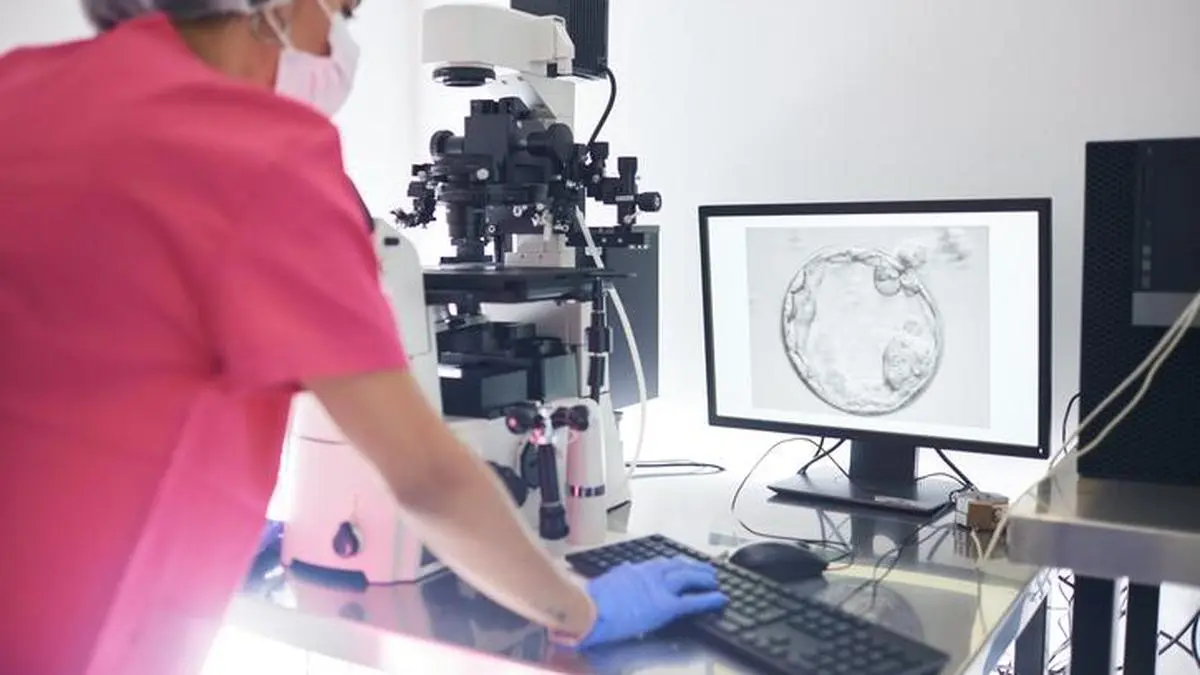
What India needs now is a preventive healthcare mindset that moves from being advisory to becoming systemic  | Photo Credit: TEMPURA

We have 101 million diabetics, 315 million with hypertension, and a healthcare system that meets most of them only after the damage is done. This is not a future crisis. It is a present emergency.

There was a time when disease defined medicine. Frailty, failing vision, and even hearing loss were accepted as inevitable companions of ageing. But as India lives longer, a more urgent question confronts us: are we adding years to life, or disease to those years?

Longevity without quality is not progress. It is a quiet compromise.

India today stands at a decisive moment in its health journey. Our clinical capabilities have advanced dramatically. We can detect risk earlier, intervene faster, and treat with precision that was unimaginable a generation ago. Yet, our collective behaviour remains largely unchanged. We continue to wait for illness to announce itself.

The finding, drawn from over 500,000 corporate health assessments in Apollo’s Health of the Nation Report 2026, says 8 in 10 corporate employees are overweight. Nearly half had pre-diabetes or diabetes. Their mean age was 38.

This is the defining feature of India’s health emergency: it is largely invisible until it is not. Non-communicable diseases accumulate in silence, across years of unexamined blood sugar, unchecked blood pressure, and unaddressed lifestyle risk. In surveyed rural populations, 99.8 per cent reported inadequate fruit and vegetable intake, 91.1 per cent were physically inactive, and roughly 83 per cent consumed excess dietary salt. These are not fixed characteristics of the Indian people

What we are witnessing is not a future crisis. It is a crisis already in motion. And yet, this is also India’s moment of greatest possibility.

But unlike previous generations, we now understand that these conditions are largely preventable, often reversible, and almost always detectable early. The challenge, therefore, is not one of knowledge, but of design and a paradigm shift.

What India needs now is a preventive healthcare mindset that moves from being advisory to becoming systemic. Screening must be continuous, not occasional. Health records must evolve into living, dynamic profiles that guide personalised interventions over time. And most importantly, individuals must be empowered to become active participants in their own health journey.

This is where integrated care models—combining clinical expertise, digital monitoring, and personalised pathways—can redefine outcomes. Platforms like ProHealth are early examples of how predictive, continuous, and personalised care can be operationalised at scale.

We now have, for the first time, the tools to change this at scale. The Ayushman Bharat Digital Mission has created 73.98 crore ABHA health IDs and linked 49.06 crore health records — the structural foundation of what could become the world’s largest longitudinal health database. Paired with AI-driven analytics, this infrastructure enables the identification of individuals at elevated risk of cardiovascular disease or specific cancers well before any symptoms appear.

Predictive genomics, wearable biomonitoring, digital therapeutics — these are no longer aspirational technologies.

The shift from episodic treatment to predictive, continuous, personalised care will not happen through a single policy announcement. It will happen through digital health records, community-level risk screening, and clinical protocols that treat prevention with the same rigour we have long reserved for cure.

It will happen when employers treat workforce health as a productivity imperative rather than a wellness perk. It will happen when individuals understand that a health check at 32 is not hypochondria — it is the single most consequential investment they can make in everything that comes after.

A nation that waits for illness has already, in a very real sense, surrendered to it. A nation that chooses prevention chooses its own future. We have spent forty years learning to fight disease. It is time we learned to protect health.

The writer is Joint Managing Director – Apollo Hospitals

Published on June 1, 2026