惯性聚合 高效追踪和阅读你感兴趣的博客、新闻、科技资讯
阅读原文 在惯性聚合中打开

推荐订阅源

S
Security Affairs
S
Secure Thoughts
P
Proofpoint News Feed
K
KPMG report finds enterprise disconnect between AI and its ROI | CIO
S
Schneier on Security
V
Vulnerabilities – Threatpost
Security Archives - TechRepublic
T
The Exploit Database - CXSecurity.com
A
Arctic Wolf
Latest news
Latest news
Hacker News - Newest:
Hacker News - Newest: "LLM"
AI
AI
T
Troy Hunt's Blog
H
Heimdal Security Blog
美团技术团队
Webroot Blog
Webroot Blog
P
Proofpoint News Feed
Hacker News: Ask HN
Hacker News: Ask HN
Google DeepMind News
P
Privacy & Cybersecurity Law Blog
U
Unit 42
Google DeepMind News
V2EX - 技术
V2EX - 技术
G
Google Developers Blog
N
News and Events Feed by Topic
Project Zero
Project Zero
The Register - Security
N
Netflix TechBlog - Medium
IT之家
IT之家
月光博客
月光博客
Cyber Security Advisories - MS-ISAC
N
News and Events Feed by Topic
Simon Willison's Weblog
L
Lohrmann on Cybersecurity
Schneier on Security
博客园_首页
Help Net Security
Help Net Security
AWS News Blog
AWS News Blog
Application and Cybersecurity Blog
S
Security @ Cisco Blogs
PCI Perspectives
PCI Perspectives
Cisco Talos Blog
Cisco Talos Blog
C
Cybersecurity and Infrastructure Security Agency CISA
H
Hackread – Cybersecurity News, Data Breaches, AI and More
D
Docker
cs.CV updates on arXiv.org
阮一峰的网络日志
阮一峰的网络日志
Spread Privacy
Spread Privacy
钛媒体:引领未来商业与生活新知
钛媒体:引领未来商业与生活新知
The Hacker News
The Hacker News

Databricks

How lakebase architecture delivers 5x faster Postgres writes Why Talent Transformation Is the Missing Focus of Enterprise AI Public Health Intelligence Shouldn't Require a Data Scientist Mean Time to Detect Is a Data Access Problem First-party audience data is the ad sales relationship now Rethinking Distributed Systems for Serverless Performance and Reliability The AI Scaling Gap Hiding in Digital Native Companies 10 trillion samples a day: Scaling beyond traditional monitoring infra at Databricks AI success starts with clean data, not just better models How nOps Rebuilt Their Cloud Optimization Platform on Databricks Lakebase, and Why Other ISVs Should Too Peril Predicts: Precision Payouts for a Volatile World The foundation of AI scalability: one team, one platform, one operating model The Federal Data Paradox: Rich in Data, Poor in Access Driving Budapest Forward: How BKK Uses Databricks to Transform City Mobility LLM Vs AI: A Practical Guide to Differences, Use Cases, and Tools Model Risk Governance Is Not the Same as Risk Intelligence Generative AI for Business: A Complete Strategy and Implementation Guide Data Science vs Data Engineering: Choosing Analysis or Infrastructure AI Applications: Tools, Use Cases, and Platforms MLOps vs DevOps: A Practical Guide for Data Scientists and IT Teams Top Data Warehouse Tools For Modern Data Analytics Unlocking SAP Business Context in Databricks with Semantic Metadata Delta Sharing The marketing activation gap has a fix: Databricks and Stitch partner to turn data infrastructure into marketing performance Alert Fatigue Is a Business Risk Backstage with Lakebase Shipping Faster isn’t Learning Faster Why Your OEE Dashboard Is Lying to You The Turbine That Tried to Tell You It Was Failing Predicting Readmissions Isn't Enough. Acting in Time Is. Clinical Trials Run Longer Than They Have To. That's a Patient Problem Network Quality Is a Revenue Problem, Not a Technical One Shelf Availability Starts with Better Demand Visibility When Predicting the Next Hit Requires More Than Intuition Approximate Answers, Exact Decisions: New Sketch Functions for Analytics Companies Winning with AI Built the Data Layer First Rethinking SQL ETL for modern data platforms Stripe data now available on Databricks via Databricks Marketplace Databricks and Stripe Projects: Infrastructure Built for Agents Agents are ready but your architecture probably isn't Interoperability Between Unity Catalog and Google BigQuery via Catalog Federation Built In, Not Bolted On: What AI-Native Actually Means in Cybersecurity From months to minutes: Building real-time clinical data pipelines with natural language Agentic Data Engineering with Genie Code and Lakeflow Securely send first-party conversion signals with Snapchat Conversions API on Databricks Marketplace How leading tech companies are killing the builder’s tax with Lakebase Inside one of the first production deployments of Lakebase: LangGuard's agentic workflow governance engine The next generation of Databricks Genie Model Risk Management in 2026: A Banker’s Guide to the Revised Interagency Guidance OpenAI GPT-5.5 now available on Databricks, fully-governed through Unity AI Gateway Operational databases: How they work and when to use them Databricks partners with OpenAI on GPT-5.5 Announcing the Public Preview of Lakeflow Designer Are LLM agents good at join order optimization? How conversational analytics removes the BI bottleneck How to transform document activation workflows with Genie and Agent Bricks Beyond the spreadsheet: how Databricks is delivering the modern CFO in Financial Services AI App Development: Guide To Building AI-Powered Apps IoT in Manufacturing: Strategy, Components, Use Cases, and Challenges Stop Hand-Coding Change Data Capture Pipelines Multimodal Data Integration: Production Architectures for Healthcare AI Personalization Strategies for Media Companies A Modern AI Risk Management Framework Introducing the Databricks Excel Add-in for Business Users Real-Time Decisioning for AI Agents: Why you Need a Customer Context Layer First A Practical Guide to LLM Fine Tuning AI Data Transformation Guide for Data Engineers and Data Scientists Concurrency Control in DBMS: How Locking, MVCC and Optimistic Strategies Keep Data Consistent Bridging data science and marketing: Databricks unveils Delta Sharing integration for Adobe Experience Platform and agentic marketing workflows Take Control: Customer-Managed Keys for Lakebase Postgres Get hands on with agents, vibe coding and more at Data+ AI Summit Mercedes-Benz Builds a Cross-Cloud Data Mesh with Delta Sharing and Intelligent Replication, Cutting Costs by 66% What Is a Transactional Database? Introducing Genie Agent Mode Governing coding agent sprawl with Unity AI Gateway Governing Coding Agent Sprawl with Unity AI Gateway What is pgvector? Banks Don’t Have an AI Problem – They Have a Data Platform Problem Open Platform, Unified Pipelines: Why dbt on Databricks is Accelerating Why Your Agents Can’t Read Enterprise Documents — and How to Fix It Building with Databricks Document Intelligence and Lakeflow Databricks on Google Cloud: Innovate Faster. Smarter. Together. Introducing the Databricks Connector for Google Sheets: Real-Time, Governed Lakehouse Data in the Sheets Users Love Unity AI Gateway: How to connect agents to external MCPs securely Expanding agent governance with Unity AI Gateway Agentic reasoning in practice: Making sense of structured and unstructured data Agent Bricks: The Governed Enterprise Agent Platform 8 AI and data trends shaping financial services in 2026 Building real-time product search on Databricks Lovable + Databricks: Build Data-Driven Apps at the Speed of Thought Memory scaling for AI agents Powering clinical research innovation: How TriNetX uses Databricks to accelerate drug development Database Branching in Postgres: Git-Style Workflows with Databricks Lakebase How Zalando built a unified data foundation for AI and analytics on Databricks The next era of the open lakehouse: Apache Iceberg™ v3 in Public Preview on Databricks How FSIs eliminate silos between clients, operations, and finance How MakeMyTrip achieved millisecond personalization at scale with Databricks A multi-agent approach to audience intelligence AiChemy: Next-generation agent with MCP, skills and custom data for drug discovery Accelerate business insights with Lakeflow Connect, now with a Free Tier Unlocking Next-Gen Customer Experiences with Data Intelligence for Marketing
Operationalizing AI for public sector fraud prevention
2026-04-29 · via Databricks

Operationalizing AI for public sector fraud prevention

Public sector agencies are at a pivotal crossroads. Governments are embracing artificial intelligence (AI) not only to modernize core operations and improve citizen services. At the same time, the rise of AI is also reshaping the threat landscape. Criminals now deploy synthetic identities, deepfake-enhanced documentation and hyper-personalized social engineering campaigns are forcing agencies to rethink legacy risk controls that were never designed for this scale or sophistication. For example:

  • Benefits: Fraud offenses have increased 242% since 2020.
  • Taxes: There was $4.5 billion in tax fraud uncovered in 2025 (up 111.8% YoY)
  • Patents: single foreign actor was tied to over 52,000 fraudulent trademark filings

AI holds enormous promise, but only when grounded in trusted data and strong governance. Modernization isn’t about a single model; it’s about building a secure, end-to-end system that connects data, intelligence and workflows. This blog illustrates how to modernize fraud prevention with Databricks through a fictional agency called the Services Bureau.

A New Operating Model for Fraud Investigation

Before exploring how this modernization works, it helps to understand how fraud investigations often happen today at the Services Bureau. Analysts must jump between multiple systems to gather the data needed for a single case. They export files from one system, download spreadsheets from another and receive additional information through email attachments or shared folders. They then combine those sources manually, running macros or rules to flag suspicious rows and performing deeper searches in other systems to validate the findings. The process is time consuming, fragmented and difficult to scale.

Now imagine a modern workflow where a single application visualizes 17 prioritized cases, each with supporting evidence and clear explanations tied to policies or fraud signals. AI surfaces the most urgent risks, while the analyst makes the final call. What once took weeks can now be done in a day, allowing them to move faster and with greater confidence.

Embedding Intelligence into Operational Workflows with Databricks Apps

Data and insights deliver the most value when embedded directly into daily workflows.

Using Databricks Apps powered by Lakebase, the Services Bureau brings governance, agents and dashboards into a single fraud operations application tailored to its mission.

A senior fraud analyst logs into the application and sees assigned cases. When opening a case, the analyst can review supporting documents stored in Unity Catalog volumes and third-party verification data.

Meanwhile, an embedded agent evaluates the case in the background and provides recommendations with supporting rationale.
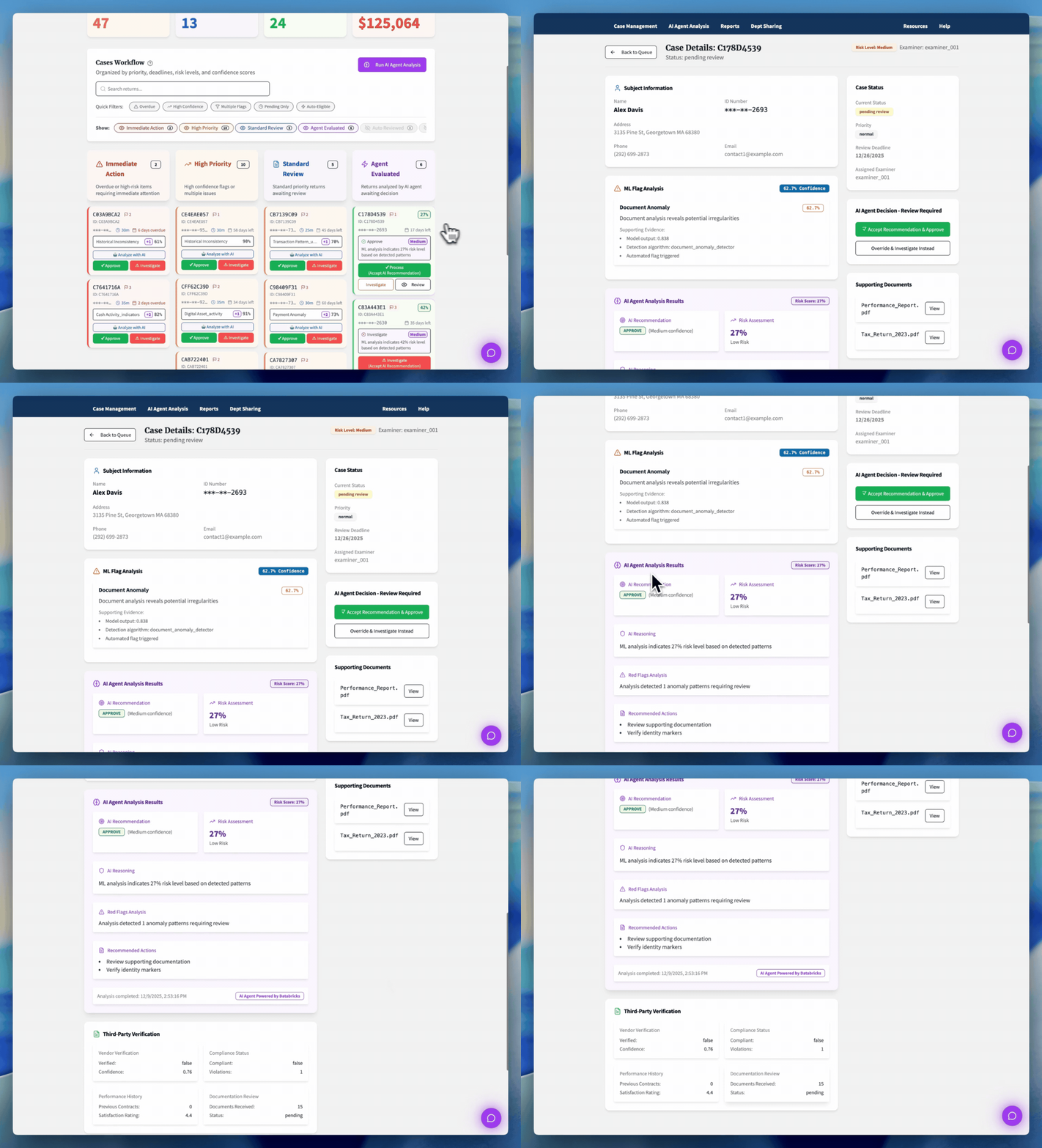
Case detail view with embedded agent recommendation panel.

If the analyst agrees, they can approve the case. If not, they can override the recommendation and escalate it for investigation. Human judgment remains central.

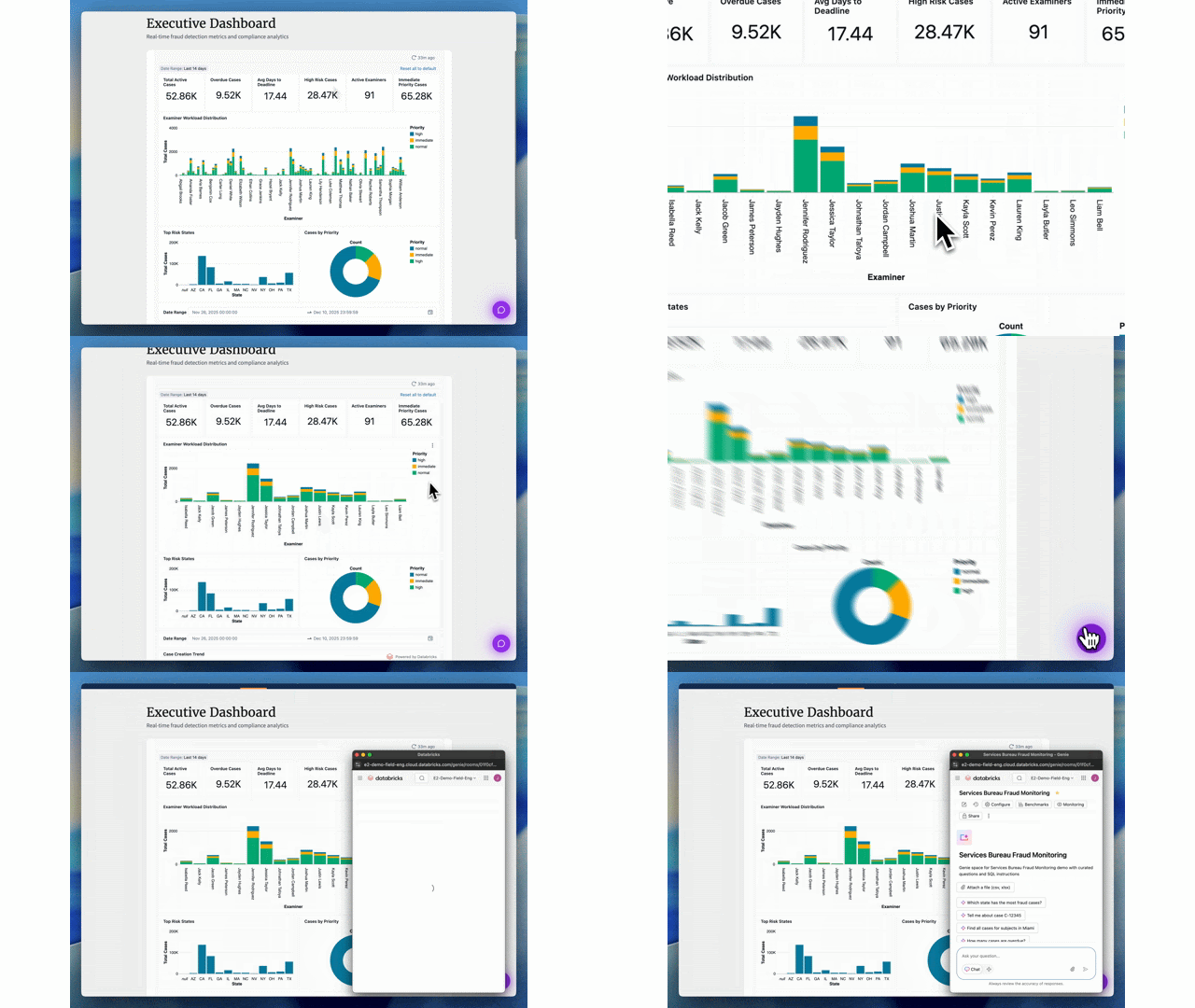
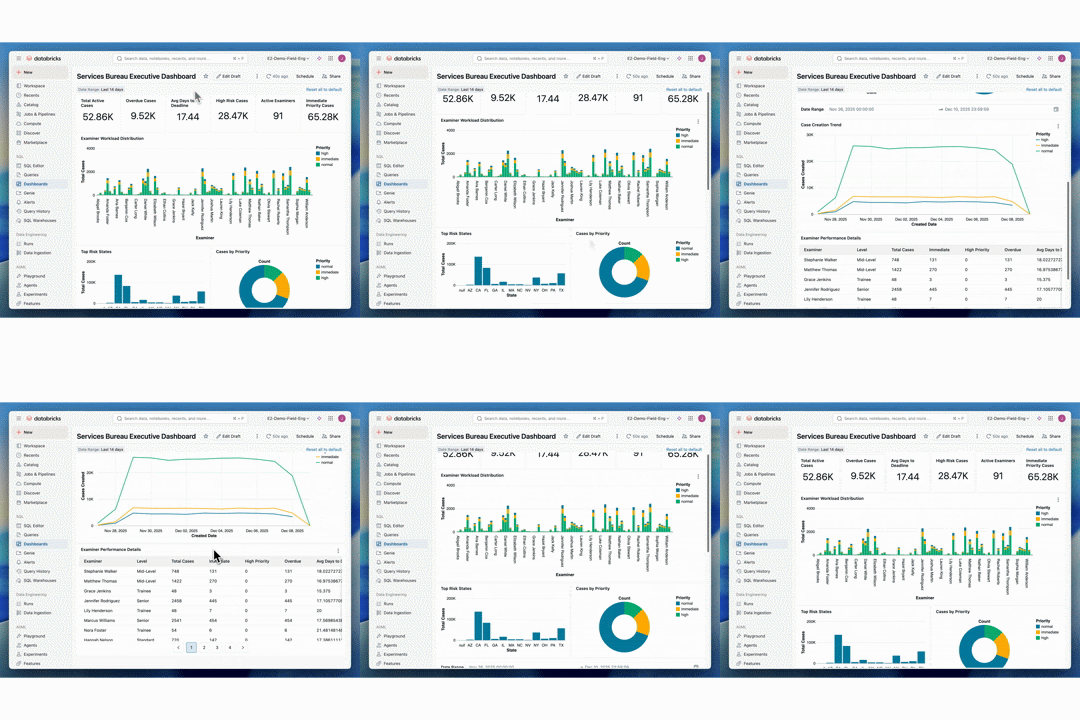
Executives use the same application to view dashboards and interact with Genie without logging into multiple tools. Leadership and analysts operate within a unified environment that connects governance, intelligence and action.
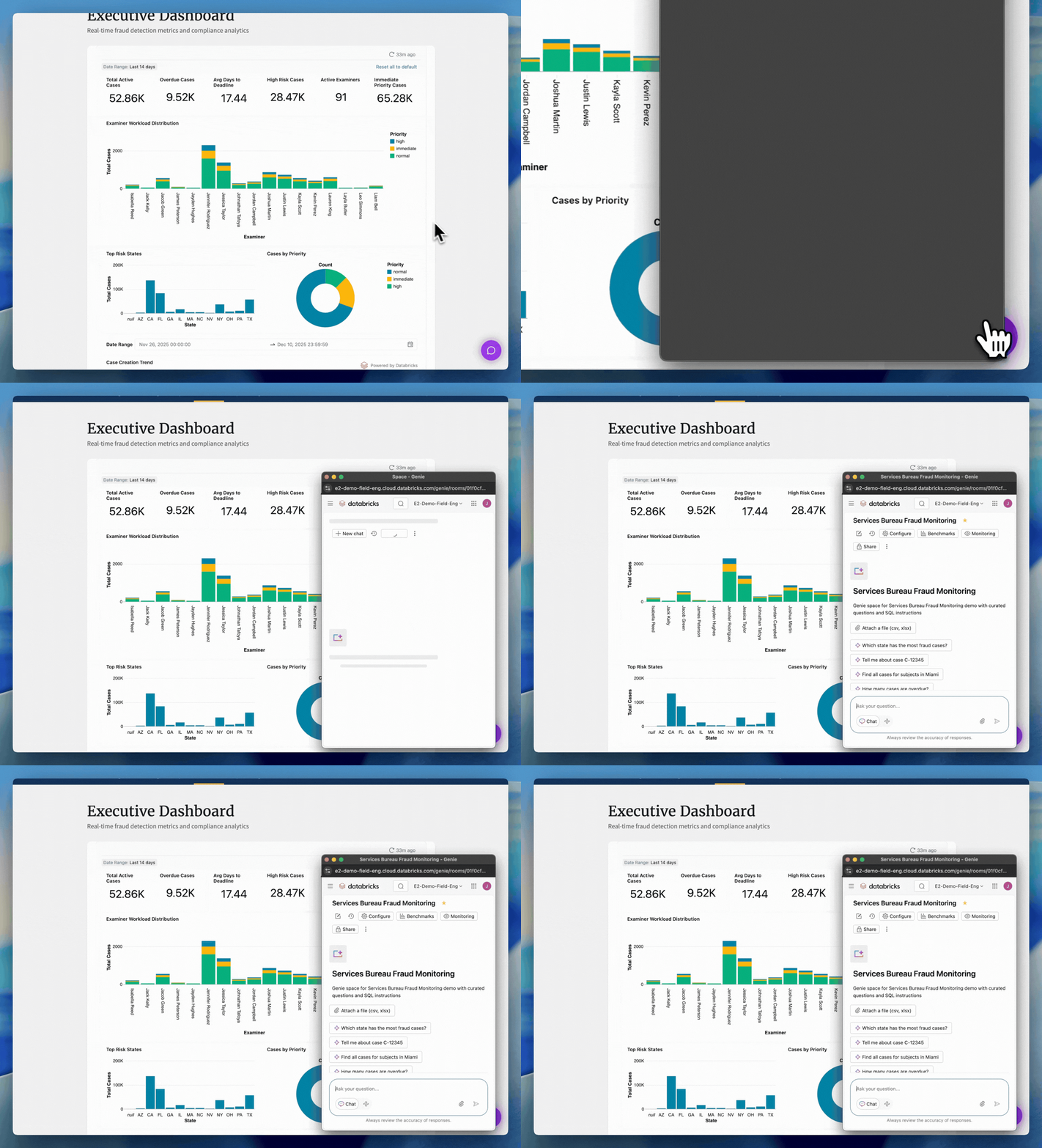
Embedded executive dashboard and Genie interface within the app.

This is what operationalized AI looks like in practice. Insights are not isolated in analytics platforms. They are embedded into mission workflows where decisions are made.

Teams can process far more cases with the same workforce, all while reducing the likelihood that suspicious activity slips through the cracks. Investigators gain visibility into patterns across programs and leadership gains confidence that every flagged activity is being evaluated systematically and consistently.

Governed Data and Secure Collaboration with Unity Catalog + Delta Sharing

The fictional Services Bureau processes grants, contracts, benefits, tax returns and patents, which requires strong governance. Thousands of applications stream in daily through external systems and land in Delta tables within the lakehouse. Machine learning models and business rules flag suspicious cases for fraud analysts across the country.

Within Unity Catalog, the agency manages its fraud investigation tables with attribute-based access control (ABAC). Sensitive columns such as Personally Identifiable Information (PII) are governed by tags that automatically enforce masking policies for specific user groups.

For example, junior fraud analysts can view case details needed for review but never see masked PII fields. Senior analysts and approved investigators can access additional context based on role and policy.
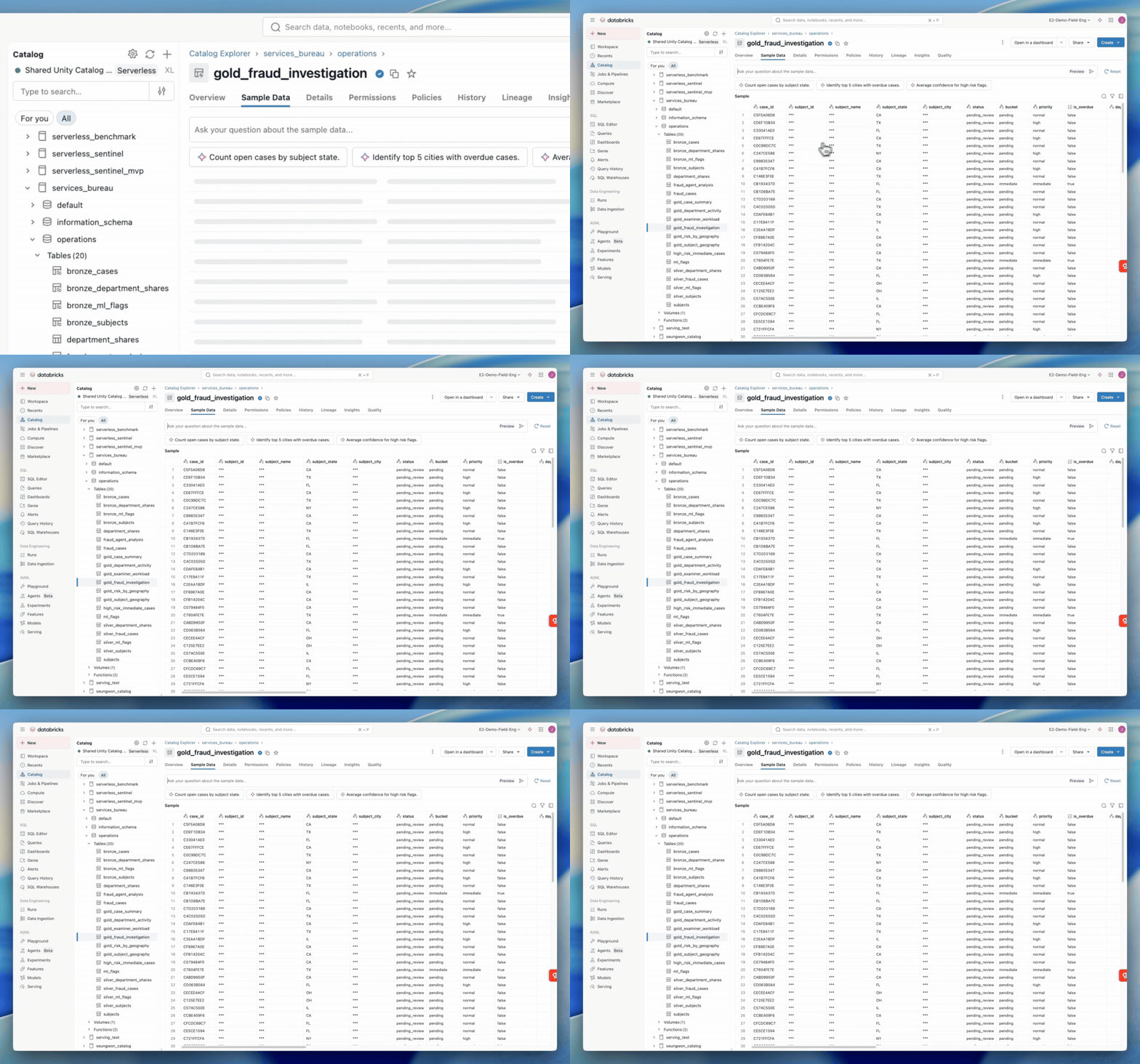
Unity Catalog table view showing governed tags and masked PII columns for a junior analyst role.

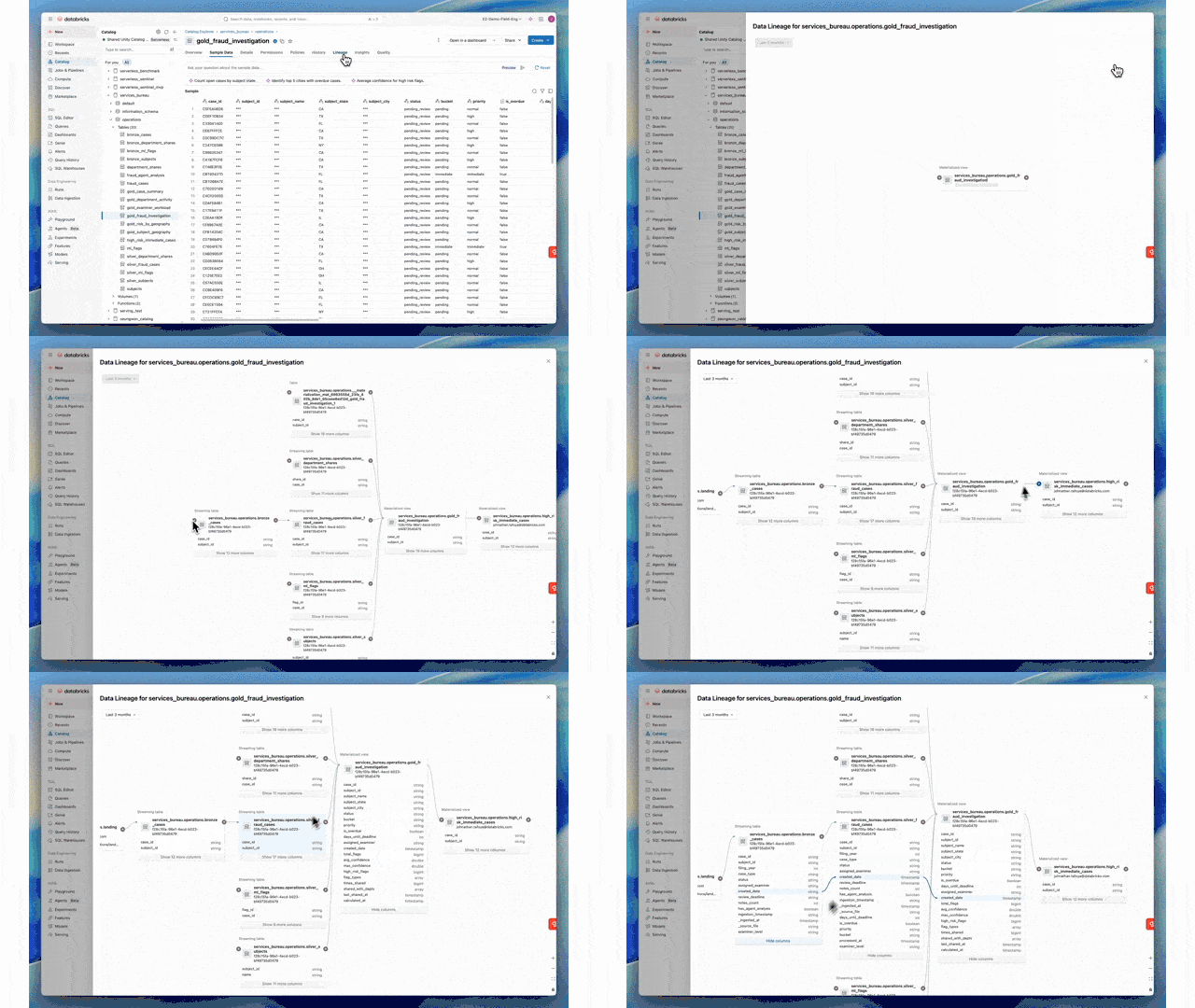
Governance extends beyond access controls. Full lineage is available at the table and column level. Analysts and compliance teams can see exactly where a data element originated and where it flows downstream. If a regulator asks where a field came from, the answer is available in seconds.
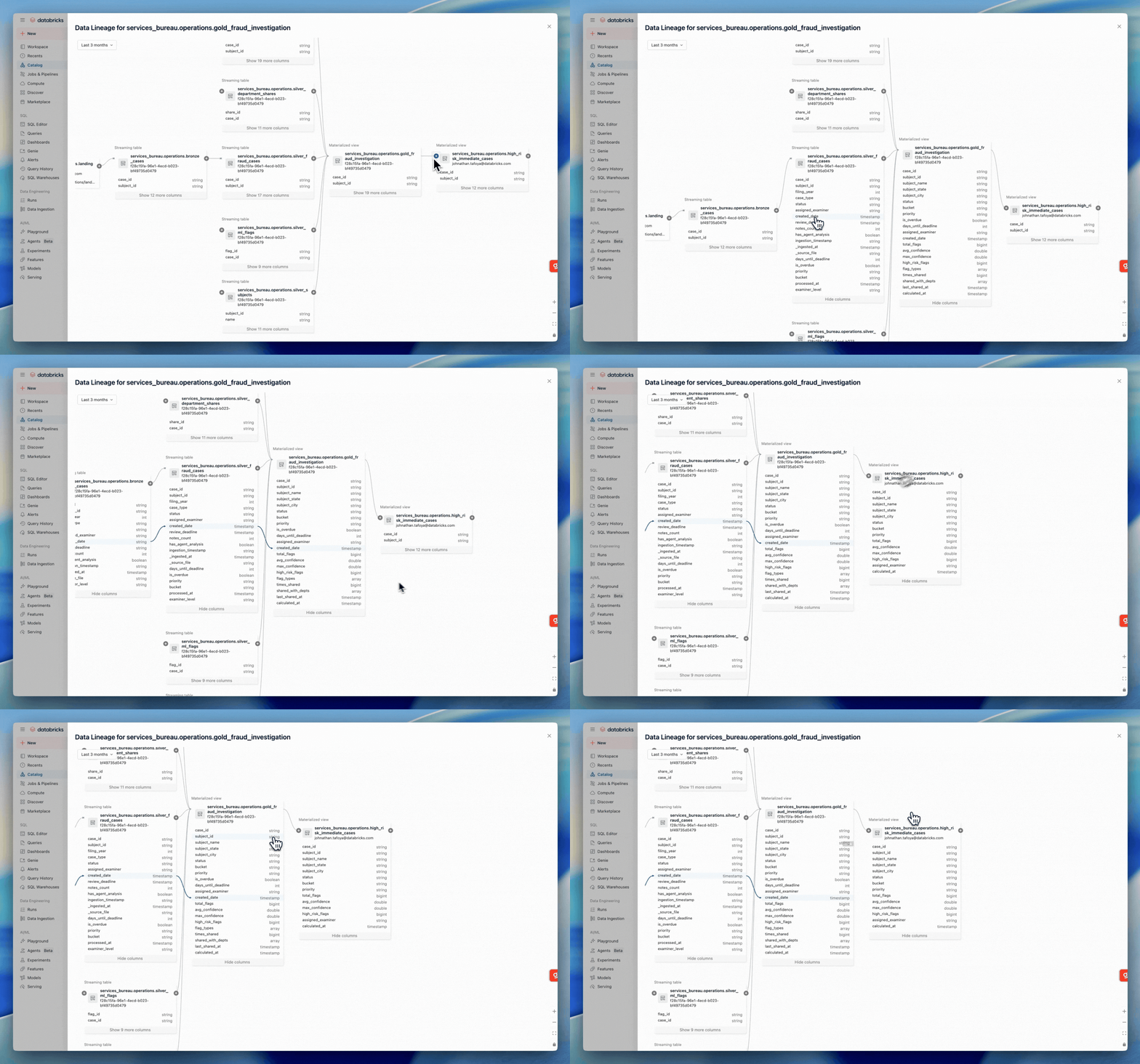
Column-level lineage graph within Unity Catalog.

Coordinating Intelligence with Agent Bricks

Once data is governed and accessible, the next challenge is prioritization. Executives need to understand risk trends. Fraud leaders must align operational decisions with policy guidance and emerging external threats.

The Services Bureau uses Agent Bricks, a multi-agent supervisor, to coordinate three capabilities:

  • Genie: Pulls live stats within a workspace that queries data in the lakehouse.
  • Knowledge Assistant: Adds procedures with an agent grounded in agency policies.
  • Web: Brings trends via an external Model Context Protocol (MCP) server that scans for emerging fraud patterns.

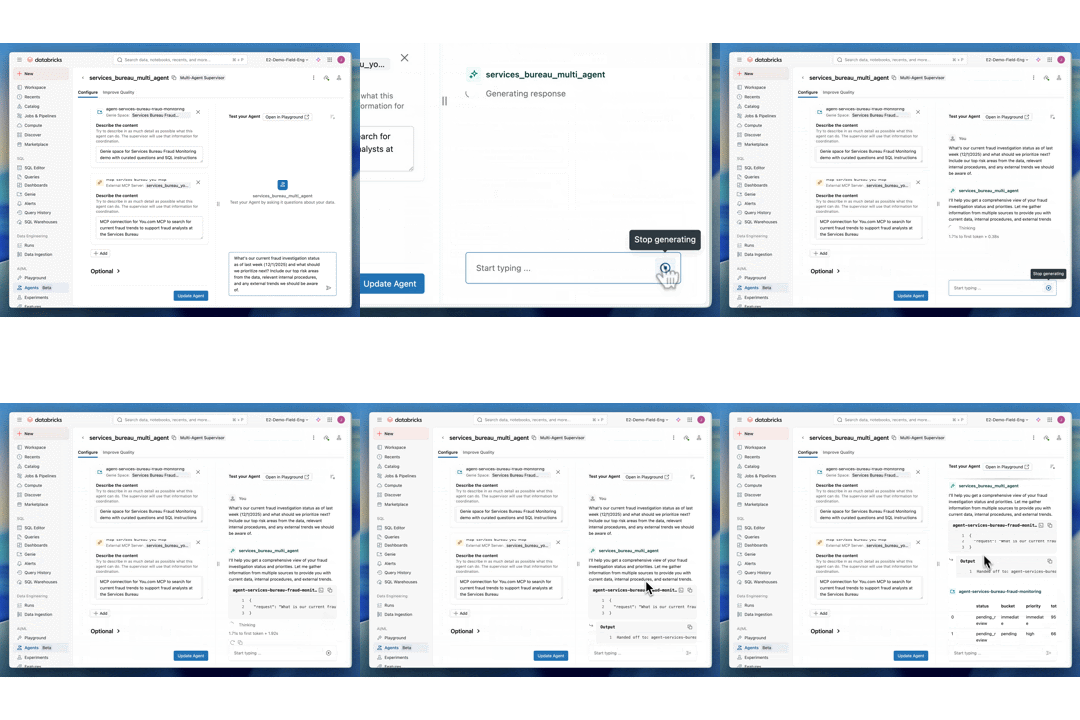
Within the Databricks Platform, Agent Bricks is configured by defining its role and specifying which agents it can orchestrate. From there, executives can ask natural language questions such as: “As of December 1st, what should we prioritize next? Where are our top risk areas and how are we performing?”
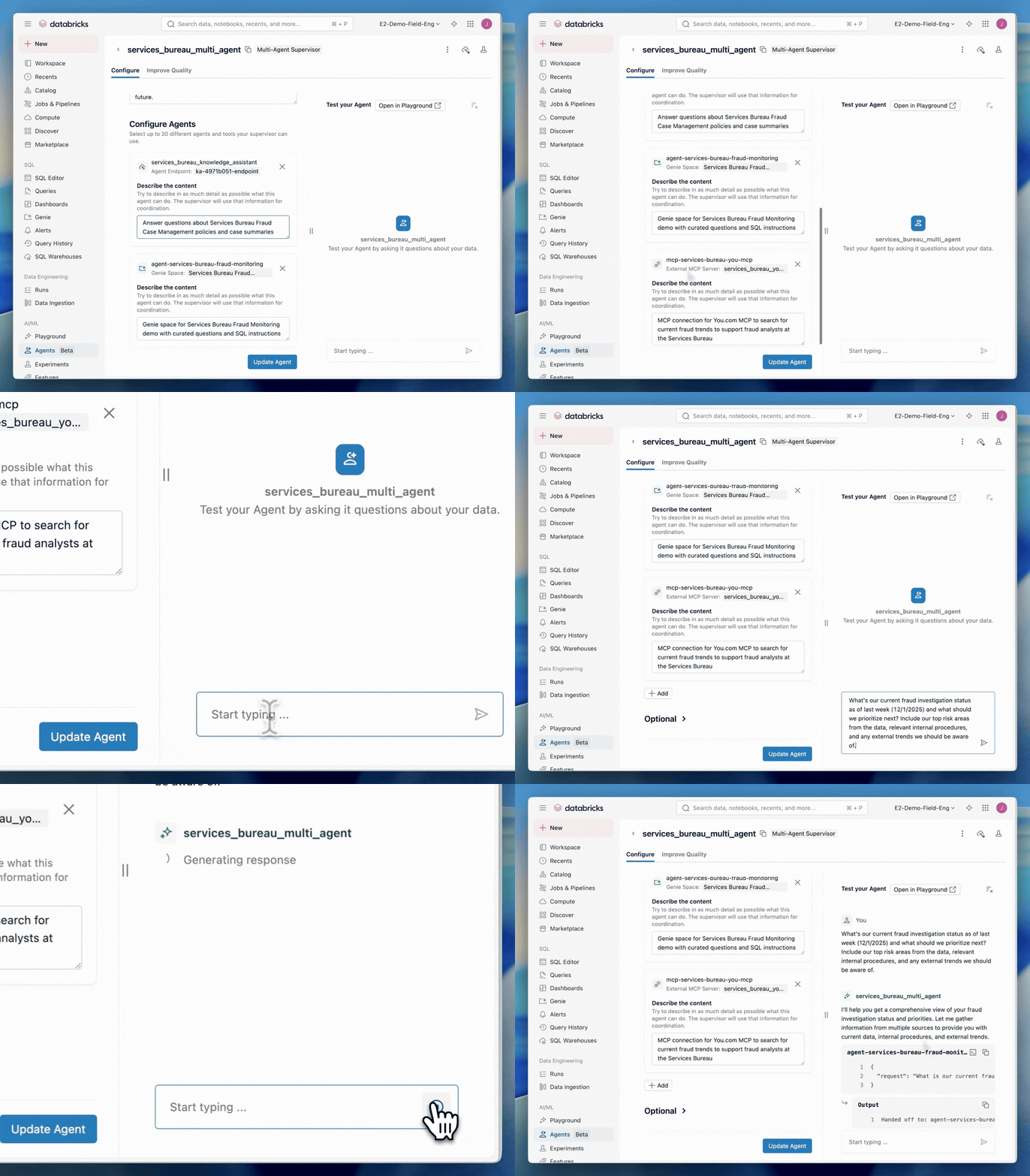
Agent Bricks configuration panel showing connected agents.

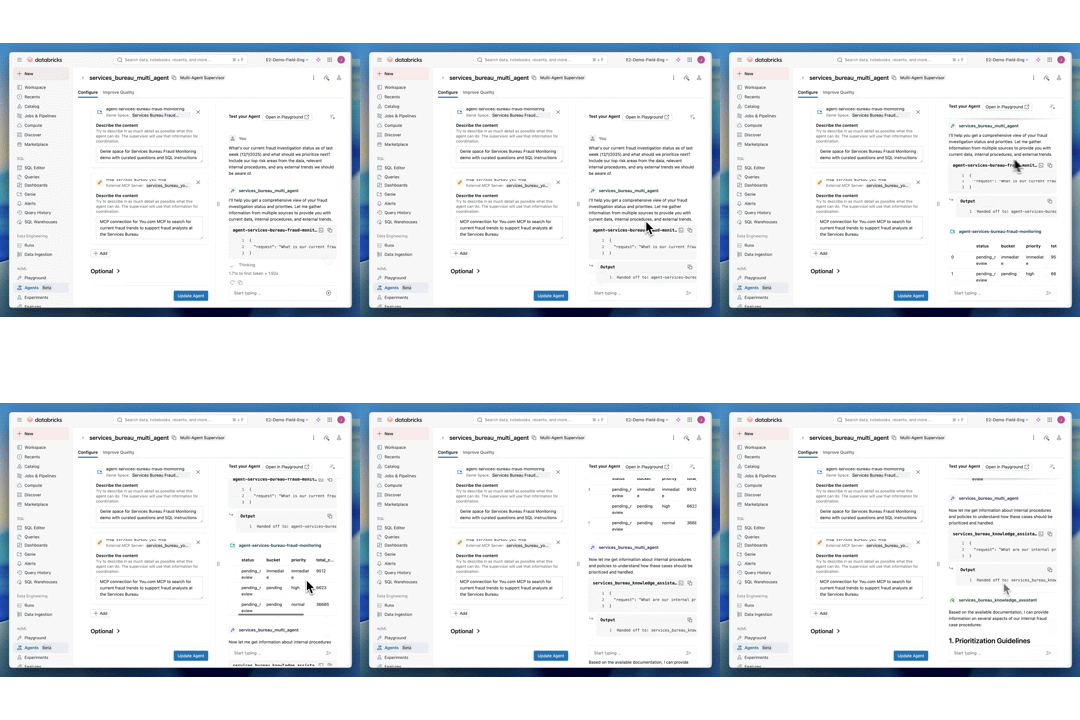
Behind the scenes, Agent Bricks calls Genie to run SQL queries against live fraud tables. It invokes the knowledge agent to surface relevant policy citations with direct references to source documents, then retrieves external signals about emerging fraud schemes.

The supervisor synthesizes these inputs into a clear response with recommended actions and supporting reasoning.
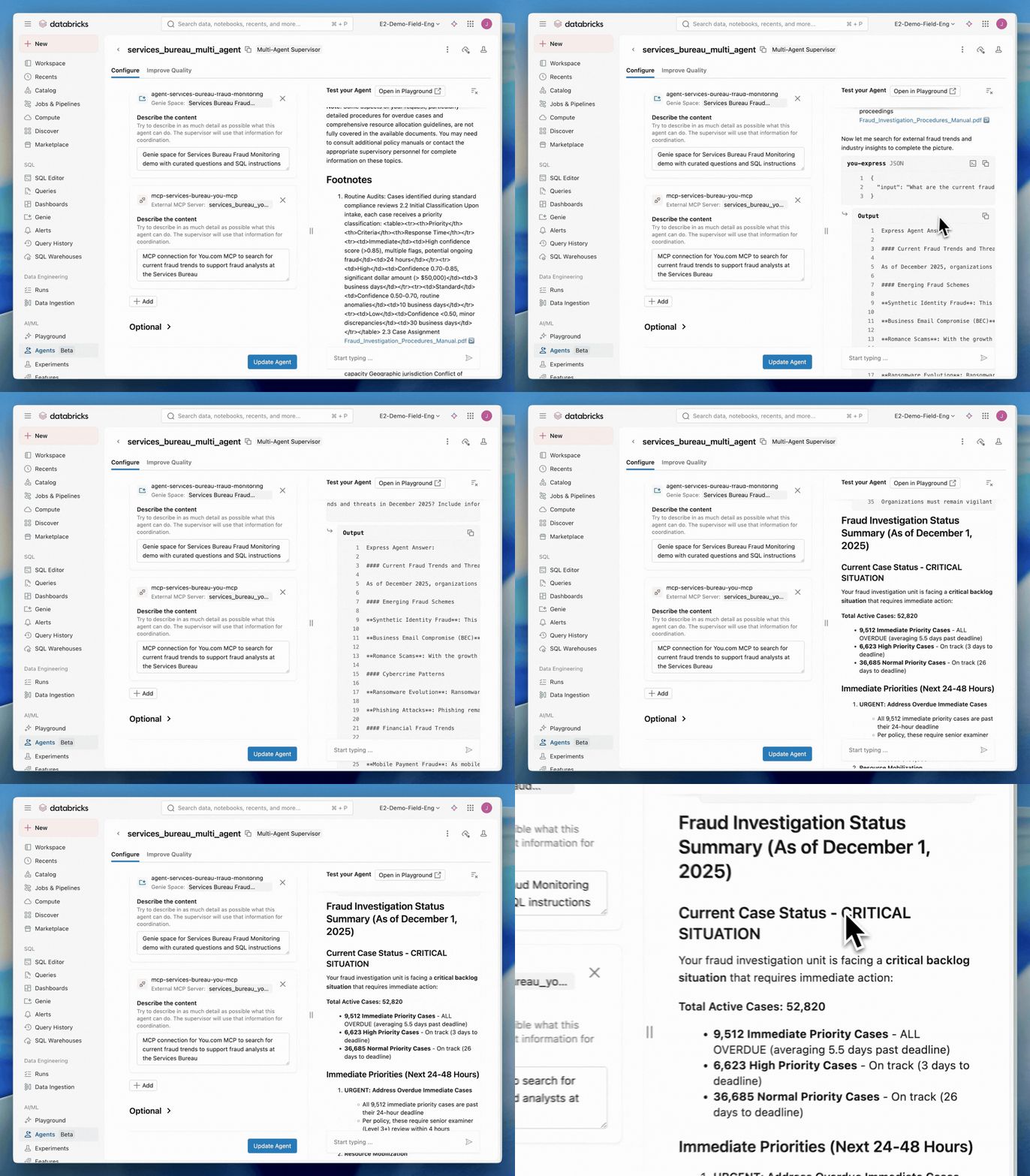
Agent response includes citations and external references.

This is not a generic LLM response. It is AI grounded in enterprise data, aligned to policy and enriched with real-time context. The agent recommends where the Fraud Investigation Unit should spend its time in the next 24–48 hours, armed with the context that they are currently in a “critical” backlog situation of nearly 53,000 cases.

For executives, this means actionable guidance delivered in plain language. And for operational teams, it means faster alignment around risk.

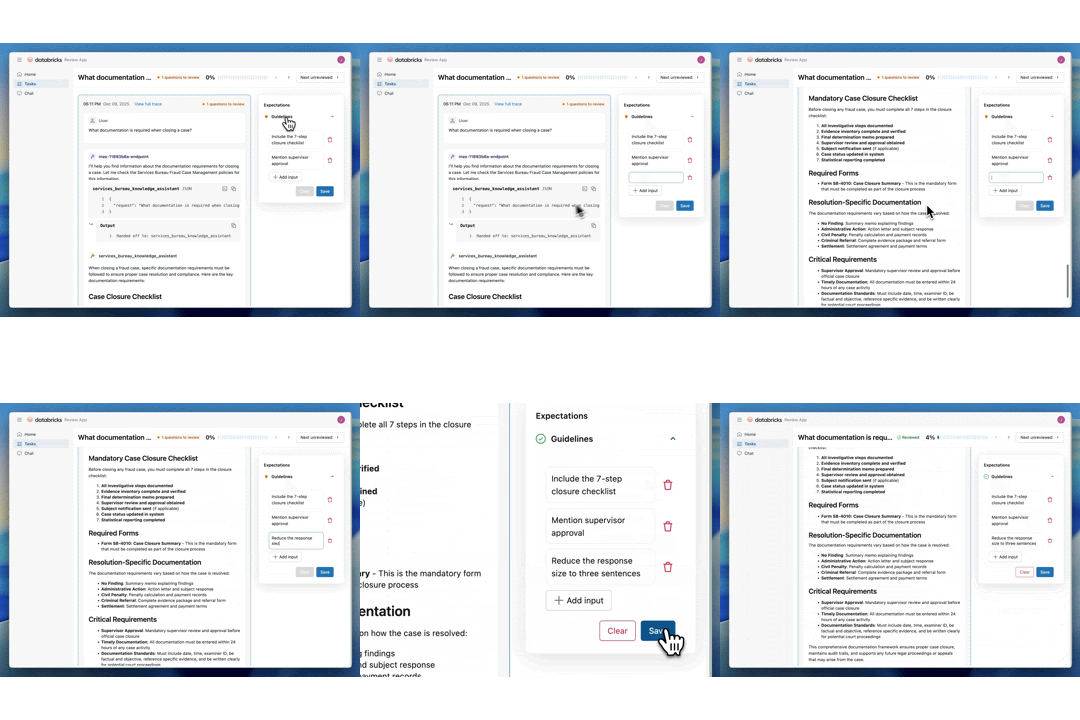
Feedback loops are built-in. Through labeling sessions, users can rate responses and provide guidance to refine outputs over time.
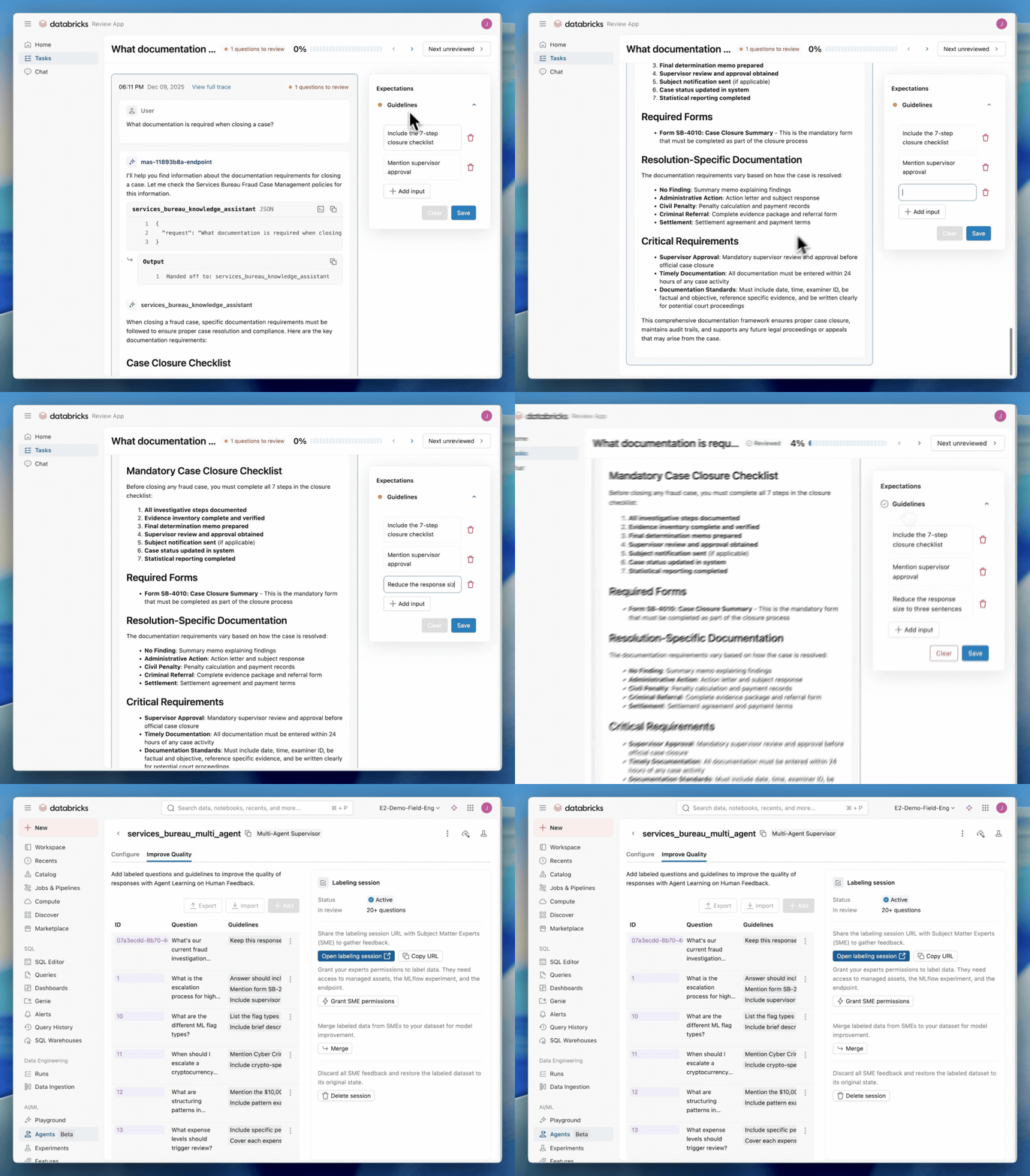
Labeling session interface for agent feedback.

This approach brings AI into production as a coordinated system rather than a standalone model.

Equally important is AI governance. Every recommendation produced by the agent is grounded in traceable data sources, policy references and documented reasoning. Analysts remain in the loop and can review the supporting evidence before accepting or overriding the recommendation. This transparency helps agencies maintain trust in AI-assisted decisions while ensuring compliance with regulatory and oversight requirements.

Turning Questions into Actionable Insight with AI/BI Genie

Operational leaders also need visibility into workload distribution and performance metrics.

Within an executive dashboard built on AI/BI Genie, the Services Bureau tracks key performance indicators across its fraud program. The interface is interactive. Selecting an individual examiner automatically updates related charts to reveal workload, overdue cases and case mix.
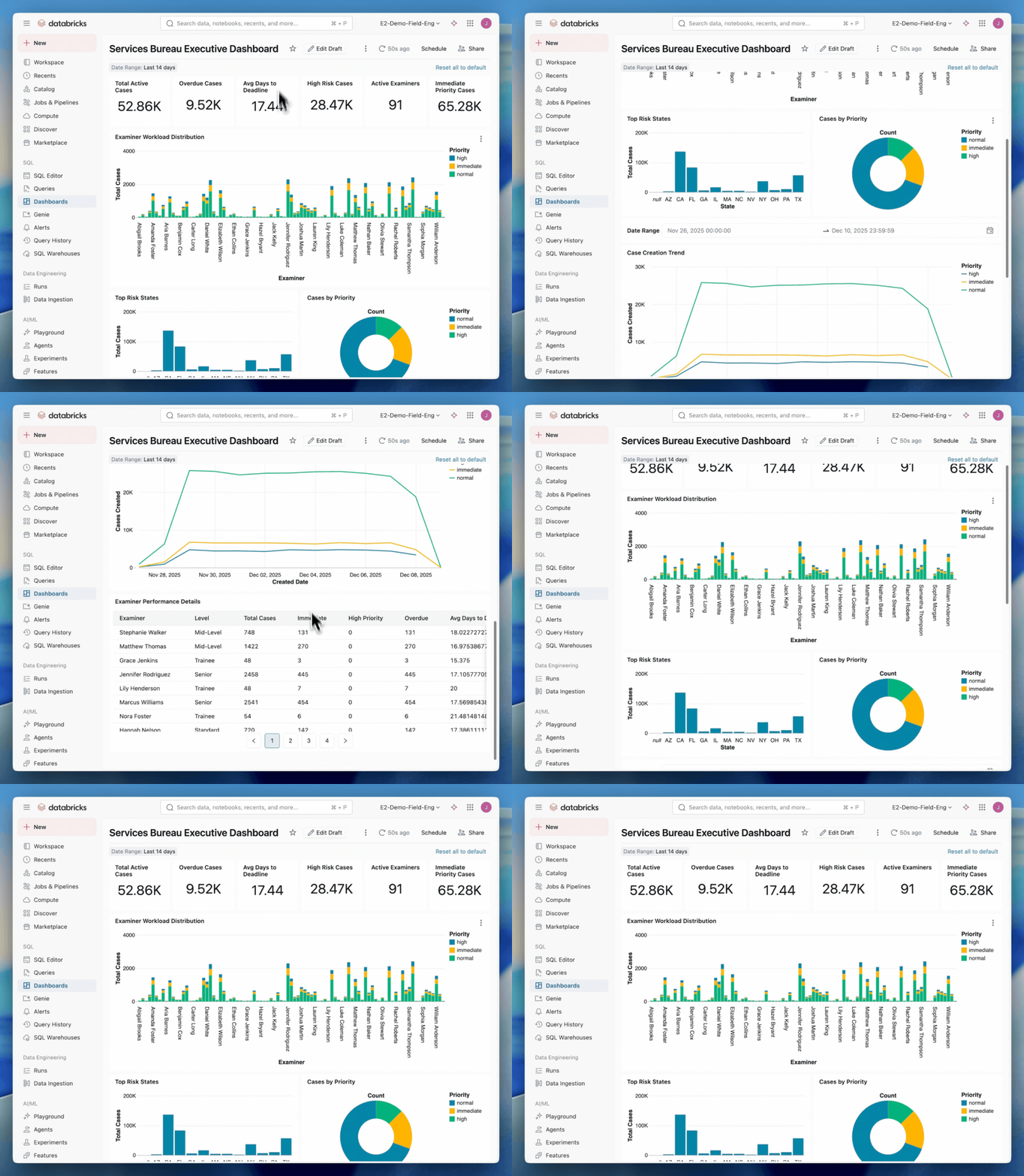
Executive dashboard with interactive filtering applied to a single examiner, Jennifer.

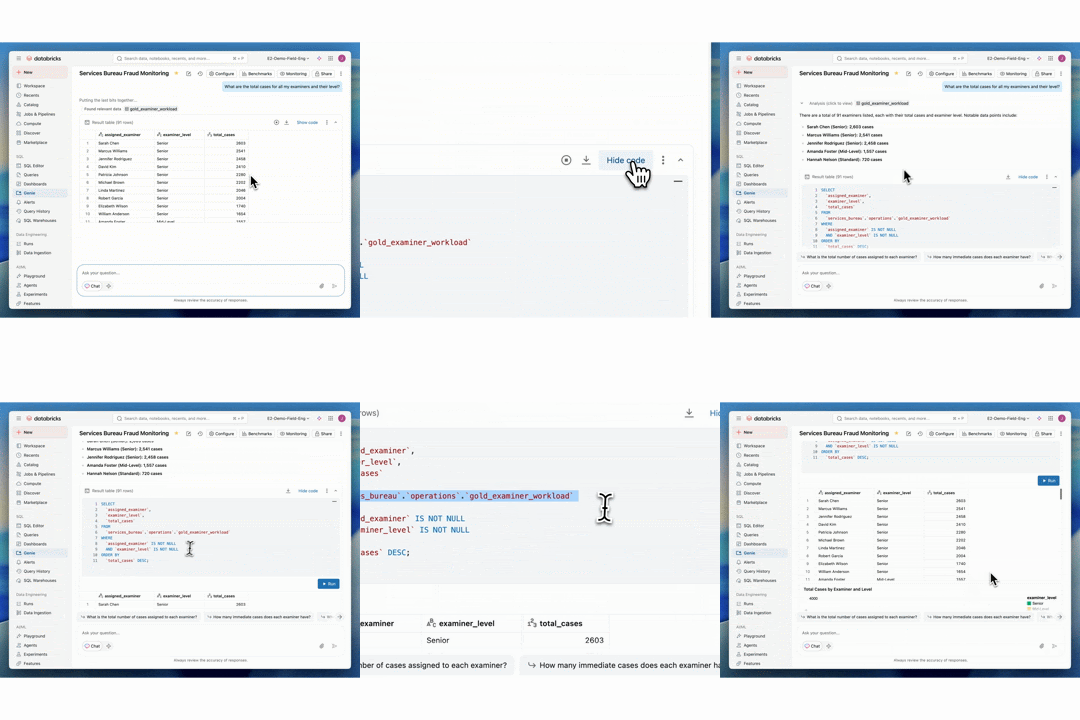
Suppose leadership notices that senior examiners are carrying a disproportionate share of overdue cases. To investigate further, they can ask Genie directly: “What is the breakdown of cases by examiner level?”

Genie generates the SQL query against the gold fraud table, returns a structured table and produces a visualization automatically. The SQL remains visible for transparency and validation.
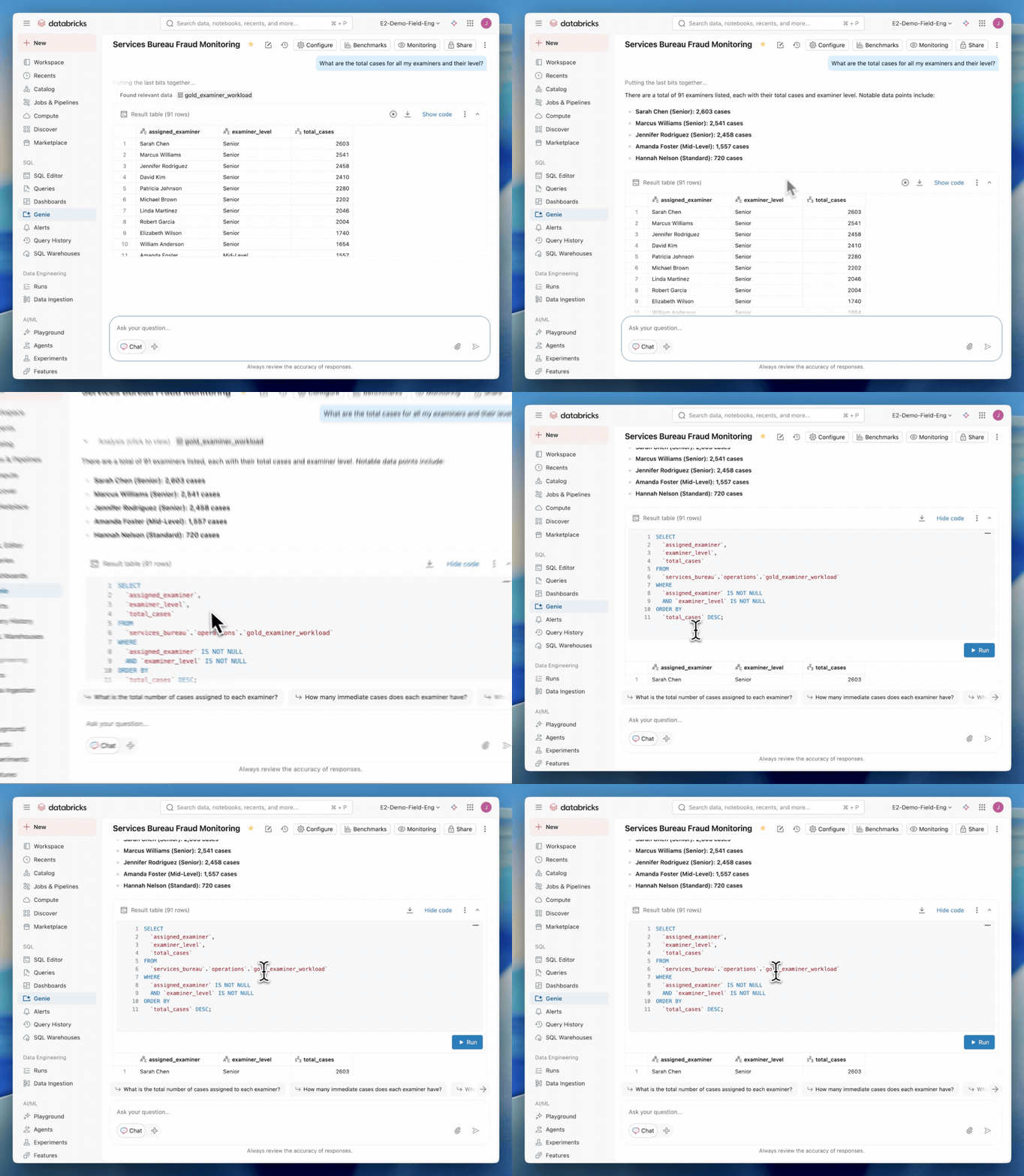
Genie response showing generated SQL and accompanying visualization.

With this insight, leadership can rebalance workloads or accelerate training for junior examiners. Analysts and executives alike can move from question to evidence without waiting on technical teams.

AI/BI Genie transforms analytics from static reporting into conversational, transparent and actionable intelligence.

Conclusion

Modern public sector agencies cannot afford fragmented systems where data governance lives in one tool, analytics in another and operational workflows somewhere else entirely.

By unifying data, AI and governance within the Databricks platform, agencies can build secure foundations, coordinate intelligent agents and embed insights directly into mission-critical applications.

With models being built on trusted, context-aware data:

  • Fraud detection becomes faster.
  • Collaboration becomes more secure.
  • Decisions become more transparent and defensible.

To learn how your agency can modernize fraud prevention and other mission critical programs, connect with our public sector team.