



惯性聚合 高效追踪和阅读你感兴趣的博客、新闻、科技资讯
阅读原文 在惯性聚合中打开

推荐订阅源

P
Proofpoint News Feed
L
LangChain Blog
U
Unit 42
Apple Machine Learning Research
The Cloudflare Blog
Martin Fowler
Martin Fowler
T
Tenable Blog
IT之家
IT之家
H
Help Net Security
阮一峰的网络日志
阮一峰的网络日志
Forbes - Security
Forbes - Security
N
Netflix TechBlog - Medium
The Hacker News
The Hacker News
J
Java Code Geeks
H
Hackread – Cybersecurity News, Data Breaches, AI and More
T
Tailwind CSS Blog
美团技术团队
NISL@THU
NISL@THU
T
Threatpost
GbyAI
GbyAI
T
Threat Research - Cisco Blogs
I
InfoQ
Jina AI
Jina AI
Microsoft Azure Blog
人人都是产品经理
人人都是产品经理
C
Check Point Blog
V
Vulnerabilities – Threatpost
cs.CL updates on arXiv.org
Spread Privacy
Spread Privacy
S
Securelist
大猫的无限游戏
大猫的无限游戏
P
Privacy & Cybersecurity Law Blog
Security Archives - TechRepublic
爱范儿
爱范儿
小众软件
小众软件
C
Cybersecurity and Infrastructure Security Agency CISA
Cisco Talos Blog
Cisco Talos Blog
Engineering at Meta
Engineering at Meta
S
Security Affairs
S
Secure Thoughts
T
Troy Hunt's Blog
Application and Cybersecurity Blog
aimingoo的专栏
aimingoo的专栏
博客园 - 司徒正美
PCI Perspectives
PCI Perspectives
C
Cisco Blogs
MongoDB | Blog
MongoDB | Blog
Vercel News
Vercel News
月光博客
月光博客
Recorded Future
Recorded Future

Databricks

Why Talent Transformation Is the Missing Focus of Enterprise AI Public Health Intelligence Shouldn't Require a Data Scientist Mean Time to Detect Is a Data Access Problem First-party audience data is the ad sales relationship now Rethinking Distributed Systems for Serverless Performance and Reliability The AI Scaling Gap Hiding in Digital Native Companies 10 trillion samples a day: Scaling beyond traditional monitoring infra at Databricks AI success starts with clean data, not just better models How nOps Rebuilt Their Cloud Optimization Platform on Databricks Lakebase, and Why Other ISVs Should Too Peril Predicts: Precision Payouts for a Volatile World The foundation of AI scalability: one team, one platform, one operating model The Federal Data Paradox: Rich in Data, Poor in Access Driving Budapest Forward: How BKK Uses Databricks to Transform City Mobility LLM Vs AI: A Practical Guide to Differences, Use Cases, and Tools Model Risk Governance Is Not the Same as Risk Intelligence Generative AI for Business: A Complete Strategy and Implementation Guide Data Science vs Data Engineering: Choosing Analysis or Infrastructure AI Applications: Tools, Use Cases, and Platforms MLOps vs DevOps: A Practical Guide for Data Scientists and IT Teams Top Data Warehouse Tools For Modern Data Analytics Unlocking SAP Business Context in Databricks with Semantic Metadata Delta Sharing The marketing activation gap has a fix: Databricks and Stitch partner to turn data infrastructure into marketing performance Alert Fatigue Is a Business Risk Backstage with Lakebase Shipping Faster isn’t Learning Faster Why Your OEE Dashboard Is Lying to You The Turbine That Tried to Tell You It Was Failing Predicting Readmissions Isn't Enough. Acting in Time Is. Clinical Trials Run Longer Than They Have To. That's a Patient Problem Network Quality Is a Revenue Problem, Not a Technical One Shelf Availability Starts with Better Demand Visibility When Predicting the Next Hit Requires More Than Intuition Approximate Answers, Exact Decisions: New Sketch Functions for Analytics Companies Winning with AI Built the Data Layer First Rethinking SQL ETL for modern data platforms Stripe data now available on Databricks via Databricks Marketplace Databricks and Stripe Projects: Infrastructure Built for Agents Agents are ready but your architecture probably isn't Interoperability Between Unity Catalog and Google BigQuery via Catalog Federation Built In, Not Bolted On: What AI-Native Actually Means in Cybersecurity Operationalizing AI for public sector fraud prevention From months to minutes: Building real-time clinical data pipelines with natural language Agentic Data Engineering with Genie Code and Lakeflow Securely send first-party conversion signals with Snapchat Conversions API on Databricks Marketplace How leading tech companies are killing the builder’s tax with Lakebase Inside one of the first production deployments of Lakebase: LangGuard's agentic workflow governance engine The next generation of Databricks Genie Model Risk Management in 2026: A Banker’s Guide to the Revised Interagency Guidance OpenAI GPT-5.5 now available on Databricks, fully-governed through Unity AI Gateway Operational databases: How they work and when to use them Databricks partners with OpenAI on GPT-5.5 Announcing the Public Preview of Lakeflow Designer Are LLM agents good at join order optimization? How conversational analytics removes the BI bottleneck How to transform document activation workflows with Genie and Agent Bricks Beyond the spreadsheet: how Databricks is delivering the modern CFO in Financial Services AI App Development: Guide To Building AI-Powered Apps IoT in Manufacturing: Strategy, Components, Use Cases, and Challenges Stop Hand-Coding Change Data Capture Pipelines Multimodal Data Integration: Production Architectures for Healthcare AI Personalization Strategies for Media Companies A Modern AI Risk Management Framework Introducing the Databricks Excel Add-in for Business Users Real-Time Decisioning for AI Agents: Why you Need a Customer Context Layer First A Practical Guide to LLM Fine Tuning AI Data Transformation Guide for Data Engineers and Data Scientists Concurrency Control in DBMS: How Locking, MVCC and Optimistic Strategies Keep Data Consistent Bridging data science and marketing: Databricks unveils Delta Sharing integration for Adobe Experience Platform and agentic marketing workflows Take Control: Customer-Managed Keys for Lakebase Postgres Get hands on with agents, vibe coding and more at Data+ AI Summit Mercedes-Benz Builds a Cross-Cloud Data Mesh with Delta Sharing and Intelligent Replication, Cutting Costs by 66% What Is a Transactional Database? Introducing Genie Agent Mode Governing coding agent sprawl with Unity AI Gateway Governing Coding Agent Sprawl with Unity AI Gateway What is pgvector? Banks Don’t Have an AI Problem – They Have a Data Platform Problem Open Platform, Unified Pipelines: Why dbt on Databricks is Accelerating Why Your Agents Can’t Read Enterprise Documents — and How to Fix It Building with Databricks Document Intelligence and Lakeflow Databricks on Google Cloud: Innovate Faster. Smarter. Together. Introducing the Databricks Connector for Google Sheets: Real-Time, Governed Lakehouse Data in the Sheets Users Love Unity AI Gateway: How to connect agents to external MCPs securely Expanding agent governance with Unity AI Gateway Agentic reasoning in practice: Making sense of structured and unstructured data Agent Bricks: The Governed Enterprise Agent Platform 8 AI and data trends shaping financial services in 2026 Building real-time product search on Databricks Lovable + Databricks: Build Data-Driven Apps at the Speed of Thought Memory scaling for AI agents Powering clinical research innovation: How TriNetX uses Databricks to accelerate drug development Database Branching in Postgres: Git-Style Workflows with Databricks Lakebase How Zalando built a unified data foundation for AI and analytics on Databricks The next era of the open lakehouse: Apache Iceberg™ v3 in Public Preview on Databricks How FSIs eliminate silos between clients, operations, and finance How MakeMyTrip achieved millisecond personalization at scale with Databricks A multi-agent approach to audience intelligence AiChemy: Next-generation agent with MCP, skills and custom data for drug discovery Accelerate business insights with Lakeflow Connect, now with a Free Tier Unlocking Next-Gen Customer Experiences with Data Intelligence for Marketing
Unifying Data and Governance in the Agentic Era: What’s New with Azure Databricks
Isaac Gritz · 2026-06-16 · via Databricks

Data + AI Summit 2026 Azure Databricks Announcements

At Data + AI Summit 2026, we're announcing a wave of new capabilities that bring the combination of context and control to the agentic era. In order to transition enterprises from narrow experimental AI pilots to production-grade automated workflows, we are expanding the Azure Databricks platform across four foundational pillars: establishing an ultra-fast, zero-copy real-time foundation with Agentic Data; embedding data-smart AI coworkers directly into daily productivity tools with Agentic Dev & Work; deploying autonomous, lakehouse-embedded personalization with Agentic Marketing; and anchoring the entire ecosystem under an intelligent, secure governance framework. Together, these advancements deliver a unified architecture designed to help your data, your teams, and your autonomous agents operate seamlessly natively on Azure.

1. Agentic Data: LTAP, Azure Databricks Lakebase, and Real-Time Lakehouse Foundations

To fuel autonomous agents with real-time data without forcing data replication into costly operational side-stacks, Azure Databricks introduces the first true LTAP (Lake Transactional/Analytical Processing) Architecture. This unified storage layer brings your analytical data, streaming pipelines, and live application transactions together into a single, shared copy of storage directly on the lakehouse.

As the transactional engine of this framework, Azure Databricks Lakebase delivers a fully-managed, serverless Postgres database purpose-built for the agent era. Featuring decoupled compute and storage, Azure Databricks Lakebase supports instant copy-on-write database branching to completely eliminate compliance risks when debugging production AI agents. Developers can spin up a full-fidelity branch of a live production database in seconds, allowing engineers to point GitHub Copilot agent mode directly at the temporary branch to safely reproduce edge cases, identify root causes, and deploy fixes through standard Git-based workflows.

For downstream analytical serving, Lakehouse//RT shatters the legacy scale-latency tradeoff. Powered by the vectorized Reyden engine, it delivers sub-second, millisecond-level response times for high-concurrency workloads directly on your data lake, creating an ultra-fast foundation that integrates seamlessly with operational dashboards and Power BI.

Lakehouse//RT ran more than a third faster on average than our prior warehouse on our healthcare dataset, with 10× faster queries. That translates directly to quicker information access and more decision time for our customers. We had considered a dedicated real-time system to augment our Lakehouse architecture, but Lakehouse//RT removed that need, giving us that speed natively with consistent governance.— Mehrshad Setayesh, SVP Engineering (Data, Platform, AI) at PointClickCare

Shared Data, Zero-Copy

Access any data stored in OneLake (Now Generally Available): Azure Databricks can query data stored in OneLake directly through Unity Catalog without copying data.

Store data in OneLake (Now in Public Beta): Azure Databricks can now store managed Delta tables natively in OneLake. Whether data is stored in OneLake or ADLS it is available zero-copy in OneLake for all Fabric engines.

2. Agentic Dev & Work: Democratizing AI with Genie Everywhere

The best AI insights are the ones that reach you without friction, which is why we’re bringing Genie natively into the collaboration tools where your teams already work and make decisions every day.

Genie for Microsoft Teams and M365 Copilot (Now in Beta)

For teams working across the Microsoft ecosystem, that same data intelligence is now available directly within your everyday collaboration tools. Picture this: your VP of Sales pings you in Teams asking "What were our top accounts this quarter and why did we miss the Southeast target?" Instead of scrambling across dashboards and reports, you simply tag @Genie in the thread and your entire team gets a context-aware answer from your Azure Databricks lakehouse in seconds. Now in Beta, the Databricks Genie integration for Microsoft Teams and M365 Copilot extends AI-native intelligence across every chat and Copilot-powered workflow. Tap in Genie to answer that.

And available today, Databricks Genie works seamlessly with M365 Copilot Cowork. This integration will allow teams to anchor Cowork’s tasks with the Genie Ontology, bringing trusted data intelligence straight into their workflows.
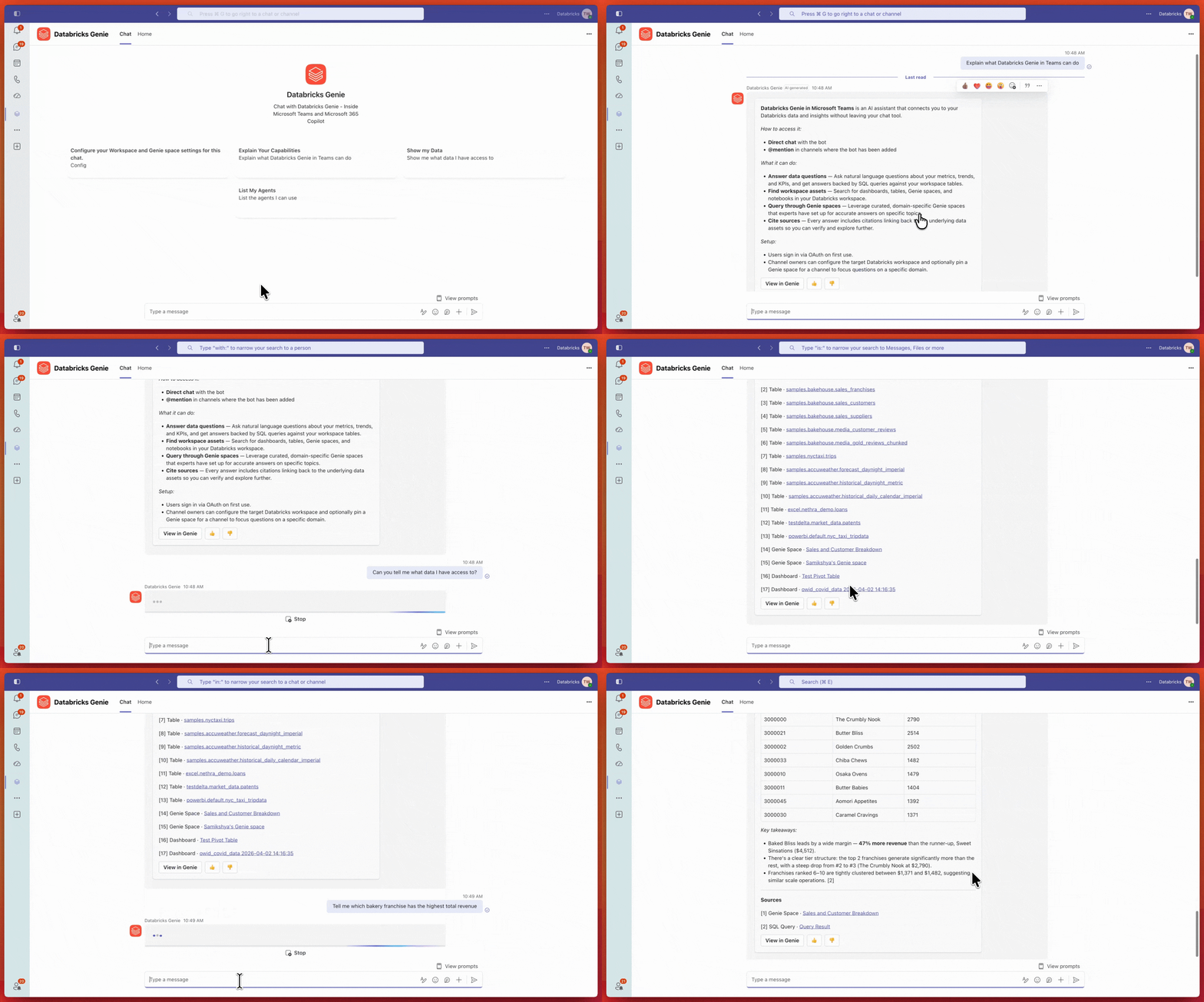
image2.gif

The Full Genie Suite

Genie shifts analytics from a passive reporting dashboard to an active, data-smart AI coworker across your entire Microsoft surface area. This integration is fully governed by Unity Catalog, ensuring every answer is trusted, secure, and scoped to exactly what each user can see. Alongside this rollout, we are highlighting the complete Genie innovation framework:

  • Genie One: AI coworker for your business teams, anywhere they work, providing insights and autonomous actions including document drafting, report generation, scheduling, and task tracking.
  • Genie Agents: Empowers non-technical users to create and share tailored, contextual conversations as reusable personal agents to scale domain knowledge with teammates.
  • Genie App Builder: A governed low-code environment allowing anyone to rapidly build and deploy custom applications powered by live company data.
  • Genie Flow Builder: Reimagines pipeline orchestration by allowing data engineers to design, edit, and automate complex data workflows (formerly Lakeflow Designer) using natural language prompts.
  • Genie ZeroOps: A fully autonomous execution layer that handles underlying infrastructure provisioning and query tuning, entirely removing traditional database administration overhead.
  • Genie Code: An autonomous AI partner that helps teams build, debug, optimize, and operate data and AI workflows inside Databricks.

Seamless M365 Office Integration:

For teams living in Excel, we’re meeting them where work already happens. The Azure Databricks Excel Add-in, now in public preview, brings your lakehouse directly into spreadsheets: no SQL, no per-user ODBC setup, and less friction.

With support for Unity Catalog metric views, data teams can define business logic once and make it instantly available in Excel and beyond, fully governed, secure, and consistent. And it’s not just read-only. The add-in also supports write-back, so users with permission can push updates from Excel straight into Databricks, closing the loop between analysis and action.

The result is faster, more reliable decisions by bringing governed lakehouse data and business logic directly to Excel users.

To further automate file processing across the entire enterprise ecosystem, the public Beta of the fully managed SharePoint Connector via Lakeflow Connect eliminates manual ingestion hurdles. This connector allows organizations to deploy automated, point-and-click ingestion pipelines for both structured sheets and unstructured files, such as PDFs, Word documents, and PowerPoints. By automatically streaming SharePoint file repositories directly into Delta tables, this integration ensures that downstream analytics pipelines, Genie One spaces, and Excel workbooks are constantly supplied with fresh, verified data without manual text extracts or risky file downloads.
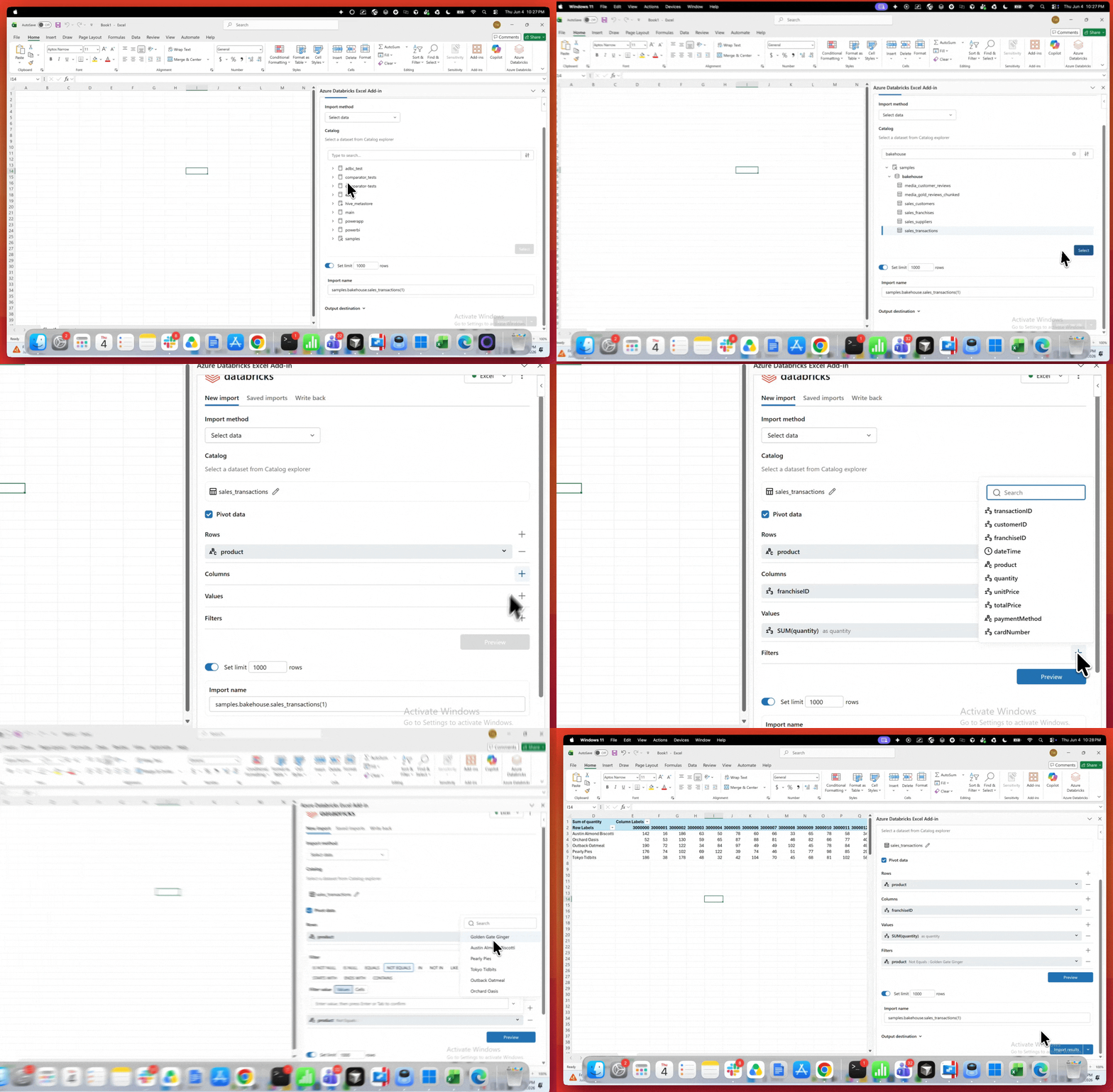
image1.gif

3. Agentic Marketing: Introducing Azure Databricks CustomerLake

To eliminate the operational complexity of siloed MarTech applications, we are introducing Azure Databricks CustomerLake: the industry's first Agentic Customer Data Platform (CDP) built natively inside the lakehouse foundation. Fully embedded within your secure storage boundary, CustomerLake equips data teams with autonomous Profile Agents to help transform raw data into business-ready Customer 360 profiles across fragmented sources. Simultaneously, a marketer-friendly workspace empowers business users with Campaign Agents to segment audiences, recommend next-best actions, activate across channels, and continuously optimize 1:1 personalized experiences.

What excites us most about CustomerLake and the new CDP capability is the ability to bring customer data together in a way that is actionable, timely, and scalable. By creating a more complete view of each customer, we can better understand behaviors, preferences, and needs across channels, which will help us deliver more personalized experiences and more relevant offers. Ultimately, we see this as a powerful step toward stronger engagement, deeper loyalty, and better outcomes for both our business and our customers.— Jay Malepati, Global Director, Customer and Marketing Data Science, Circle K

4. Context, Control, and Choice: The Governance Framework

Powering these intelligent applications requires granular administrative control and semantic precision. The foundational intelligence layer of our platform is the Genie Ontology, a self-improving semantic context engine. Rather than requiring manual curation, the Genie Ontology automatically extracts table relationships, column metrics, and query popularity signals directly from your pipelines, eliminating AI hallucinations and ensuring that models accurately understand unique enterprise jargon.

To govern these models as they scale, the Unity AI Gateway serves as a centralized runtime registry inside Unity Catalog. It establishes strict, real-time rate limits, content filtering, and hard spend caps to guarantee predictable tokenomics across all automated workflows.

By connecting real-time data foundations directly to everyday tools like Microsoft Teams and Excel, Azure Databricks makes it simpler than ever to run and govern trusted AI workflows. Explore the updated product documentation or visit Databricks Academy to start putting these new capabilities to work today.

Get started with Azure Databricks for free →