


惯性聚合 高效追踪和阅读你感兴趣的博客、新闻、科技资讯
阅读原文 在惯性聚合中打开

推荐订阅源

Cyber Security Advisories - MS-ISAC
V
Vulnerabilities – Threatpost
freeCodeCamp Programming Tutorials: Python, JavaScript, Git & More
V
Visual Studio Blog
月光博客
月光博客
IT之家
IT之家
钛媒体:引领未来商业与生活新知
钛媒体:引领未来商业与生活新知
T
Tailwind CSS Blog
罗磊的独立博客
S
SegmentFault 最新的问题
博客园 - 三生石上(FineUI控件)
让小产品的独立变现更简单 - ezindie.com
量子位
V
V2EX
Jina AI
Jina AI
The GitHub Blog
The GitHub Blog
小众软件
小众软件
CTFtime.org: upcoming CTF events
阮一峰的网络日志
阮一峰的网络日志
Recent Announcements
MongoDB | Blog
MongoDB | Blog
Y
Y Combinator Blog
H
Help Net Security
博客园_首页
Cyberwarzone
Cyberwarzone
T
Tenable Blog
A
Arctic Wolf
C
CERT Recently Published Vulnerability Notes
奇客Solidot–传递最新科技情报
奇客Solidot–传递最新科技情报
T
Threat Research - Cisco Blogs
aimingoo的专栏
aimingoo的专栏
Google DeepMind News
博客园 - 叶小钗
C
Cyber Attacks, Cyber Crime and Cyber Security
美团技术团队
Attack and Defense Labs
GbyAI
GbyAI
博客园 - 【当耐特】
Cloudbric
Cloudbric
NISL@THU
NISL@THU
B
Blog RSS Feed
K
Kaspersky official blog
Hugging Face - Blog
Hugging Face - Blog
P
Privacy International News Feed
博客园 - Franky
博客园 - 司徒正美
Microsoft Azure Blog
Apple Machine Learning Research
Webroot Blog
Webroot Blog
Microsoft Security Blog

Hackread – Cybersecurity News, Data Breaches, AI and More

Atomic Arch Campaign Hijacks 20+ Linux AUR Packages to Deliver Malware ShinyHunters Target Universities in Oracle PeopleSoft Zero-Day Attack The SpaceX Pre-IPO Market: How Crypto Rails Are Opening Synthetic Access Feds Seize AudiA6 and Dark2Web in $389M Crypto Laundering Case ShinyHunters Leak 40GB of University of Nottingham Student Data Authorities Dismantle Decade-Old SniperDZ Phishing Network Criminal IP at Infosecurity Europe 2026: Introducing AITEM, the Next Chapter of Attack Surface Management Hackers Use Fake Claude Code Guide and AI PDFs to Spread AsyncRAT Malware The Hidden Security Risks of Poor Software Testing FBI Seizes China-Linked Fake Consulting Sites Targeting US Clearance Holders How to Turn Images into Animated Videos with AI: A Wondershare Filmora Guide Scammers Use TikTok and Instagram Reels to Spread Vidar Infostealer ServiceNow Discloses Security Incident Exposing Customer Data Cloud Security Report Finds Fragmented Tools Widening the Cloud Complexity Gap Microsoft June 2026 Patch Tuesday Fixes 206 Flaws and 3 Zero-Days Network Log Analysis: Why Collecting Logs is Not Enough E-Signature Security Checklist Before Selecting an E-Signature Tool Maine Govt Portal Lists 10M Discord Data Breach Notice, But Filing Shows Red Flags Handala Claims Israeli Radar Hack, But Evidence Shows Phone Admin Panel WhatsApp Says It Blocked Pegasus Spyware Campaign Linked to NSO Operation FlutterBridge Uses Fake Google Ads to Spread macOS Backdoor Hackers Clone Ghidra, dnSpy and Other Tool Sites to Spread Malware Silent Ransom Group Uses Fast Flux Botnet to Hide Law Firm Leak Sites New Pink Extortion Group Targets Microsoft 365 Cloud Data Via Vishing Scams Miasma Malware Hits 32 Red Hat Packages via Compromised GitHub Account Atlas Menu Data Breach Exposes 64,000 GTA V and CS2 Cheat Service Users Reaper macOS Infostealer Abuses Script Editor to Steal Crypto and Passwords iFood Confirms Data Breach Affecting 1.2 Million Users in Brazil Why eSIMs Are Replacing Traditional SIM Cards Lazarus Group Uses npm Brandjacking Campaign to Target Developers Five Eyes Warns Chinese Spies Are Using Fake Job Ads to Target Military Staff How to Recover Data from iCloud Backup Without Resetting Your iPhone China-Linked TA4922 Hackers Target UK, Europe With New SilentRunLoader Malware Alcasec, "Robin Hood of Spanish Hackers," Jailed for 31 Months Over Data Theft Fake ChatGPT Desktop App Ads Used to Push Password-Stealing Malware Hackers Abused Meta’s AI Support Bot to Hijack Major Instagram Accounts New WordPress Malware Uses Steam Profile Comments to Hide C2 Instructions Halo Security Honored with 2026 MSP Today Product of the Year Award Why Encrypted File Sharing Is Essential for Modern Businesses What One Predator Case Can Reveal About an Online Platform’s Safety Gaps RaccoonLine Publishes 2026 dVPN Buyer’s Guide for Privacy-Focused Users How to Get a Reddit API Key in 2026: Step-by-Step Guide Zero-Click pretalx XSS Flaw Lets Hackers Hijack Conference Organizer Accounts How to Get the Most From Your Explainer Video Production Services Fake Purchase Order Emails Spread Fileless PureLogs Malware via RAR Archives 27,000-Download Codex UI Tool Secretly Stole OpenAI Refresh Tokens Fake Anthropic Sites Deliver Fileless Infostealer to Claude Code Users The Deliverability Problem: How New Platforms Are Solving Inbox Placement The CISO Whisperer's Watch List For The Gartner Security & Risk Management Summit 2026 Can Big Data Predict Market Movements Accurately? Iran’s Nimbus Manticore Used Trojanized Zoom Installers Against US Firms How Can MSSPs Scale Threat Detection Without Burning Out Their Analysts? Link11 is fully committed to Europe and is opening a Customer Excellence Hub in Lisbon Trojanized Gemini and Claude Installers Target Developers Via SEO Poisoning Claude Mythos AI Identified 10,000+ Software Vulnerabilities in One Month FBI Chief Kash Patel’s Clothing Store Hacked in ClickFix Infostealer Attack Netherlands Busts Bulletproof Hosting Network Linked to Disinfo and Cybercrime
Extradited Ukrainian Man Admits Role in Conti Ransomware Attacks
Waqas · 2026-06-13 · via Hackread – Cybersecurity News, Data Breaches, AI and More

A Ukrainian man extradited from Ireland has pleaded guilty in the United States for his role in the Conti ransomware operation, one of the most damaging cybercrime groups active during the pandemic years.

Oleksii Oleksiyovych Lytvynenko, 44, admitted to conspiracy to commit wire fraud after prosecutors said he worked with others involved in deploying Conti ransomware against victims in the US and overseas. His guilty plea follows his extradition from Ireland, as reported by Hackread.com in October 2025.

According to the US Department of Justice, Conti was used between 2020 and 2022 to attack more than 1,000 computers and networks. The FBI estimates that by January 2022, victims had paid at least $150 million in ransom demands linked to the malware.

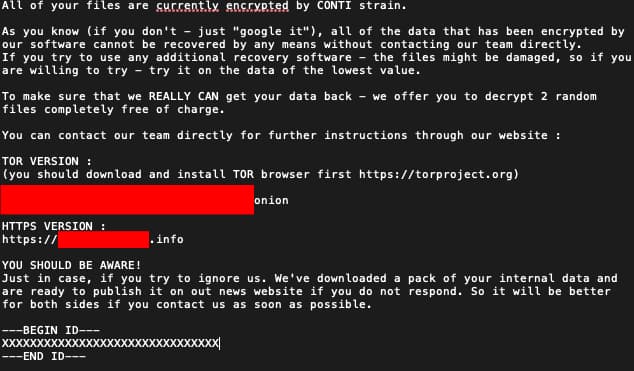
Prosecutors said the group used a familiar ransomware model, including compromising victim networks, encrypting files, stealing data, and making ransom demands. Those demands often included threats to publish stolen data if victims refused to pay.
Extradited Ukrainian Man Admits Role in Conti Ransomware Attacks
Conti ransomware gang’s ransom note

In its press release, the Justice Department said Conti ransomware attacks had targeted victims in 47 US states, the District of Columbia, Puerto Rico, and 31 foreign countries. These targets included businesses and organizations of different sizes, with prosecutors saying the group caused millions of dollars in damage.

Lytvynenko admitted that he joined the Conti conspiracy in September 2021. As part of his plea, he acknowledged having data stolen from eight US victims and four victims outside the United States.

Court filings also describe his work with a Conti member who directed him to code a “loader.” In malware operations, a loader is commonly used to install or run other malicious tools needed for further attacks.

Lytvynenko is scheduled to be sentenced on September 10, 2026. He faces a maximum penalty of 20 years in prison, although the final sentence will be decided by a federal judge after reviewing sentencing guidelines and other legal factors.

The action is part of Operation Riptide, an FBI campaign targeting cybercrime actors, infrastructure, and financial networks behind online fraud and ransomware. According to the FBI, Americans reported more than $20 billion in cybercrime losses last year, a 26 percent increase from the prior year.

The case adds another guilty plea to the US government’s effort to identify and prosecute people linked to ransomware gangs. In December 2025, two Americans, Ryan Goldberg, 40, of Georgia, and Kevin Martin, 36, of Texas, pleaded guilty in a Florida federal court to carrying out a series of extortion attacks for the ALPHV, also known as BlackCat, ransomware gang during 2023.

That same month, another Ukrainian national, Artem Aleksandrovych Stryzhak, 35, pleaded guilty to deploying Nefilim ransomware as part of a global extortion scheme that targeted companies in multiple countries. Stryzhak had been extradited from Barcelona, Spain, to the United States.