








Baidu’s autonomous mobility platform Apollo Go has secured a key regulatory approval in Switzerland, marking a significant step forward in its push into the European market.
The company said that AmiGo, an on-demand autonomous mobility service developed through a partnership between Apollo Go and Swiss Post subsidiary PostBus, received on June 12 a special operating permit from Switzerland’s Federal Roads Office (FEDRO). The permit covers Level 4 autonomous vehicle operations in eastern Switzerland, a category in which vehicles can operate without human control under defined conditions. The approval allows AmiGo to conduct autonomous driving trials under a defined regulatory framework and moves it closer to a planned commercial rollout in 2027.
The development builds on expansion plans disclosed late last year, when Apollo Go and PostBus announced preparations for autonomous vehicle trials in Switzerland as part of Baidu’s broader effort to establish a presence in Europe.
Under the permit, AmiGo vehicles have been conducting open-road testing since June 1 across an approximately 80-square-kilometer service area spanning the cantons of St Gallen, Appenzell Ausserrhoden, and Appenzell Innerrhoden. The trials are currently operating with safety operators on board while the partners gather operational data and demonstrate compliance with regulatory requirements.
According to Baidu, the next phase will involve a closed-group user trial, followed by initial rides without safety operators once the required safety evidence has been submitted and approved. Regular driverless operations are expected to begin in early 2027, subject to regulatory clearance. Baidu said the service could become Europe’s largest planned automated public transport operation of its kind.
“Receiving FEDRO’s special permit is an important milestone for AmiGo and a strong validation of our technology,” Nan Yang, vice president of Baidu and general manager of the overseas business unit within its intelligent driving group, said in a statement.
Unlike robotaxi deployments focused on urban ride-hailing, AmiGo is designed as an extension of Switzerland’s public transport network. The service combines Apollo Go’s autonomous driving technology and RT6 vehicles with PostBus’ operational experience, targeting areas where conventional transport services may be less practical. The fully electric vehicles can carry up to three passengers and are accessible through the AmiGo mobile application.
The Swiss project follows Apollo Go’s expansion in the Middle East. Earlier this year, Baidu launched a fully driverless ride-hailing service in Abu Dhabi through a partnership with local operator AutoGo, adding to its international footprint.
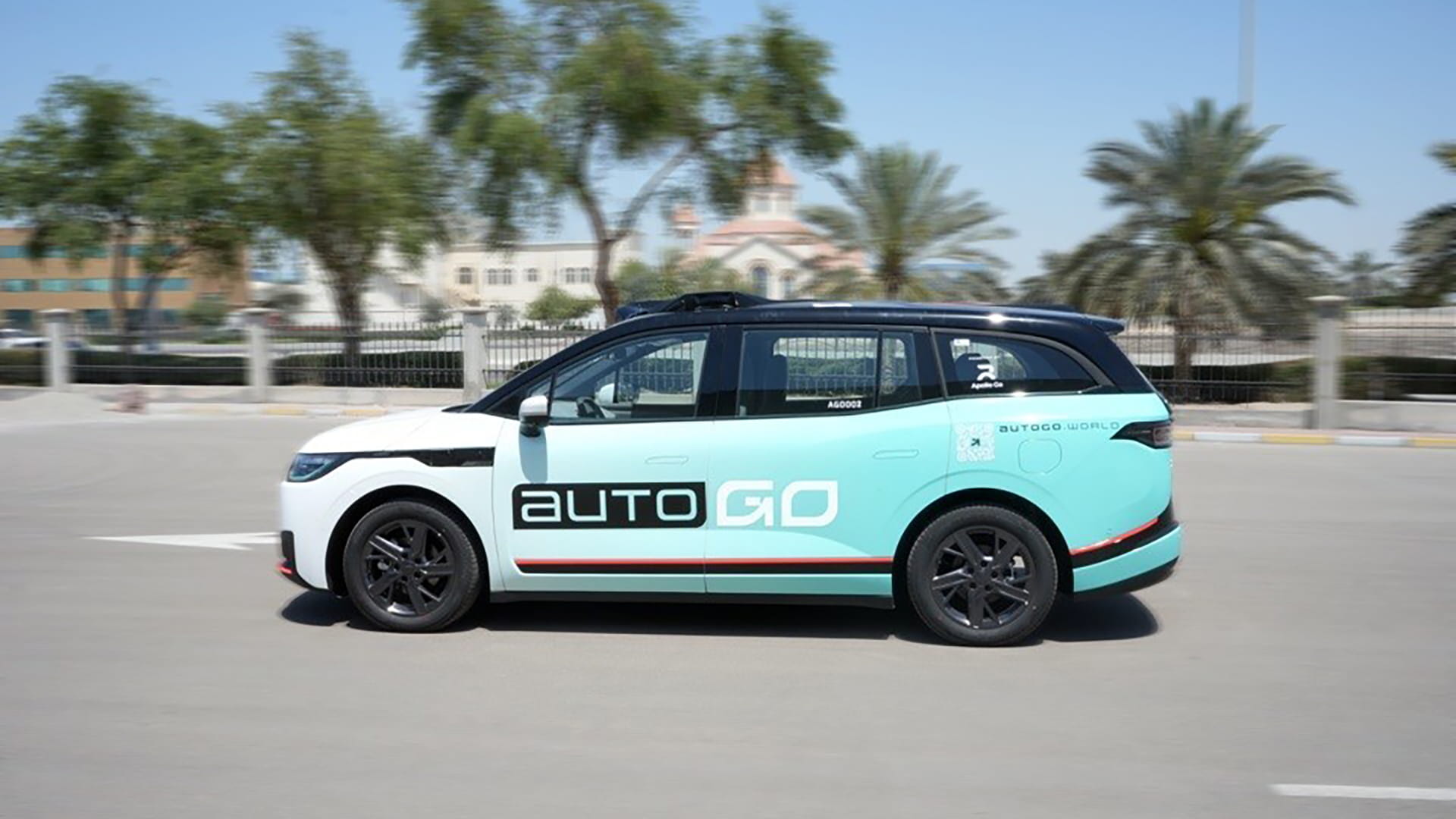
Together, the Switzerland and Abu Dhabi initiatives reflect Baidu’s overseas strategy of working with local transportation partners while navigating market-specific regulatory pathways. In Switzerland, the focus is on integrating autonomous vehicles into public transport infrastructure. In the UAE, the deployment centers on commercial ride-hailing.
The latest milestone also highlights Apollo Go’s effort to draw on operational experience from China. Baidu previously said the platform completed 3.2 million fully driverless rides in the first quarter of 2026, with weekly rides exceeding 350,000 in March. As of April, cumulative rides provided to the public had surpassed 22 million. Apollo Go’s fleets had collectively logged more than 330 million autonomous kilometers, including more than 220 million fully driverless kilometers, across 27 cities globally.
此内容由惯性聚合(RSS阅读器)自动聚合整理,仅供阅读参考。 原文来自 — 版权归原作者所有。