





North Korea has reportedly updated its constitution to clearly define its territory and, for the first time, state that leader Kim Jong Un has authority over the nation’s nuclear weapons.
The revision has also removed all references to reunification with South Korea.
Experts say the changes may be an attempt to present North Korea as a more “normal” state, according to The Chosun Daily, a South Korean paper. The new text reportedly avoids strongly hostile language towards the South and removes older ideological references from the preamble, including the phrase “Kim Il-sung–Kim Jong-il Constitution”.
The changes were apparently adopted at a March session of the Supreme People’s Assembly, Reuters reported.
According to sources cited by the news agency, the changes include a revision to Article 2, which now reads: “The territory of the Democratic People’s Republic of Korea includes land areas bordering the People’s Republic of China and the Russian Federation to the north, and the Republic of Korea to the south, as well as the territorial waters and airspace established based on this territory.”
It adds: “The Democratic People’s Republic of Korea absolutely does not permit any infringement upon its territory.”
The text does not specify the exact inter-Korean boundary and makes no mention of disputed maritime lines such as the Northern Limit Line in the Yellow Sea.
The revision eliminates longstanding language on “peaceful reunification” with the South and “national unity”. Experts say this amendment underscores Pyongyang’s shift towards treating the two Koreas as separate and opposing states rather than components of a single nation seeking reunification.
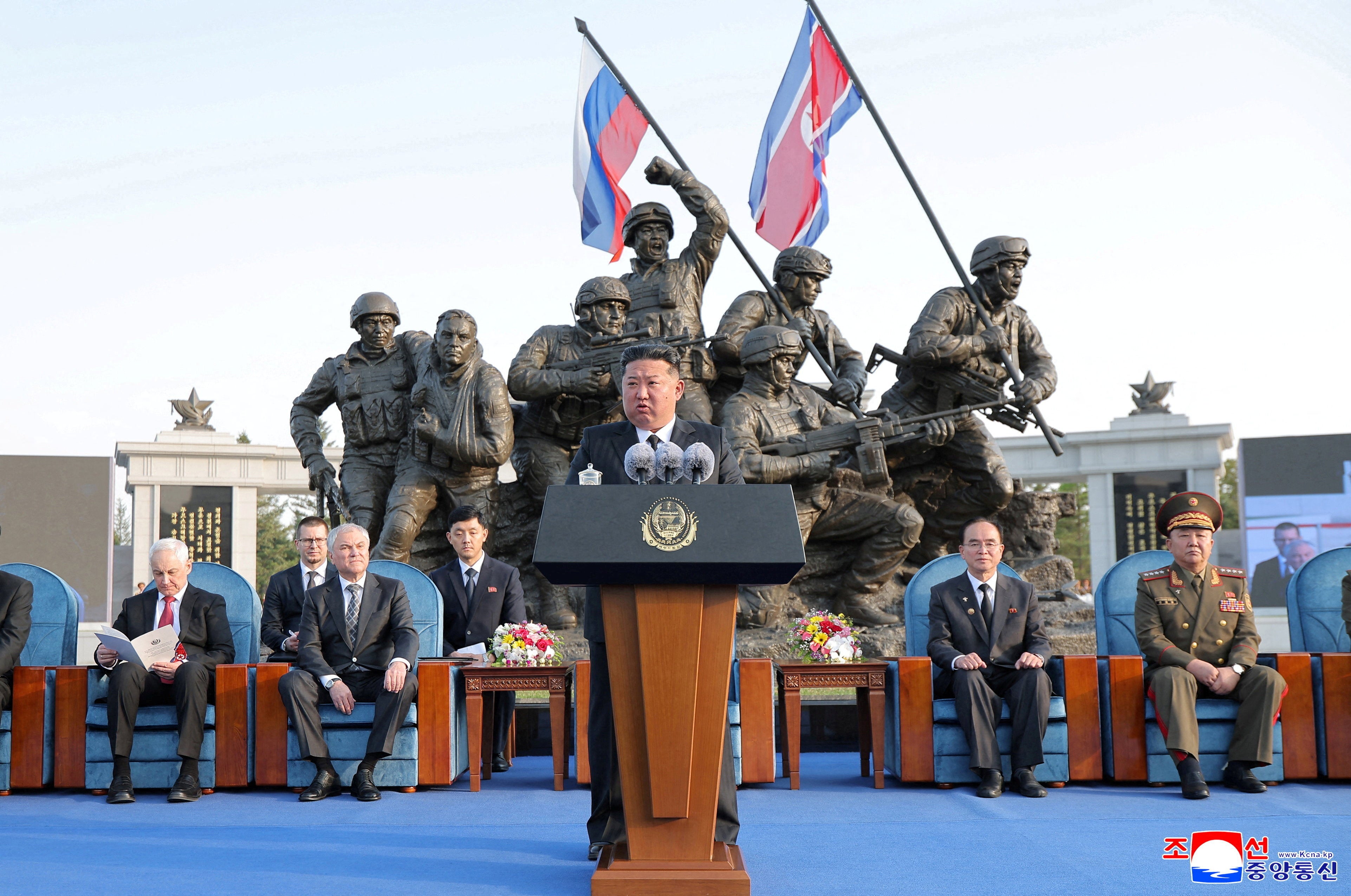
Lee Jung Chul, professor of international relations at Seoul National University, told The Korea Herald that terms associated with reunification and ethnic nationalism, including “northern half”, “reunification of the fatherland”, “peaceful reunification” and “great national unity”, had been removed from both the preamble and the main text of the constitution.
“Deleting the phrase ‘Kim Il-sung-Kim Jong-il Constitution’ and omitting hostile rhetoric toward the South suggests the constitutional revision was conducted in the direction of normalising the state. It appears to reflect a judgment on how the supreme document of a sovereign state should be structured,” he said, adding that this change “appeared to signal Pyongyang’s willingness to project an image of a normal state”.
North Korea adopted its constitution in September 1948 and revised it five times before introducing a socialist constitution in 1972. After 12 further amendments, it reportedly updated the document early this year, removing the word “socialist” from its title, The Korea Herald reported.
The constitutional changes also strengthen the authority of the State Affairs Commission chairman. The position, held by Mr Kim, is formally defined as the “head of state” and its holder is placed above other state institutions.
A new clause grants the chairman explicit command over the nation’s nuclear forces. Article 6 states that “command authority over nuclear forces belongs to the chairman of the State Affairs Commission of the Democratic People’s Republic of Korea” and that “the chairman may delegate nuclear weapons use authority to the national nuclear warfare command organisation”.
The constitution describes North Korea as a “responsible nuclear weapons state” and declares that nuclear development will continue to ensure national security and deter war.