








Sign up to see the future, today
Can’t-miss innovations from the bleeding edge of science and tech
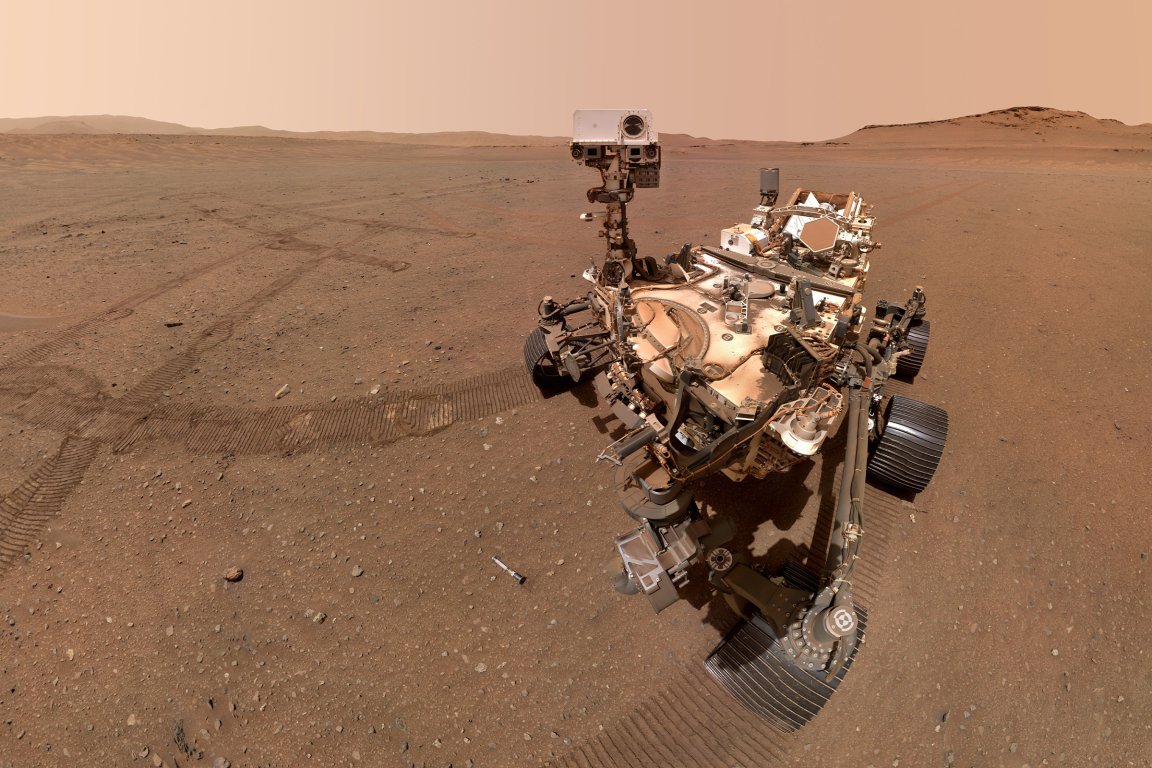
After more than five years of roaming the desolate and dusty landscapes of the Martian surface, NASA’s Perseverance rover has come across some of the most intriguing evidence yet of ancient microbial life on the Red Planet. As detailed in a new paper published in the journal Science Advances, scientists confirmed that Perseverance had discovered a rock that contained “complex organic matter” — the building blocks of life, in biological parlance — in two rocks in a formation dubbed Bright Angel.
The outcropping is located inside the Jezero crater, which scientists believe is an ancient lakebed that dried out billions of years ago. The scientists found that samples from the rocks that Perseverance originally found in 2024 contained macromolecular carbon (MMC), large networks of carbon atoms commonly found in Earth rocks containing fossilized biological carbon and meteorites.
An initial analysis of the rocks made headlines last year after NASA announced it had spotted “potential biosignatures,” pointing at compelling “leopard spots” that may have been left behind by microbial life.
The latest paper fleshes out the compelling case even further, confirming the detection of MMC in the rocks by using one of Perseverance’s scientific instruments to detect their composition by shining an ultraviolet laser at them.
“Measurements of two mudstones show hundreds of organic detections, making this the most robust organic detection in Jezero crater thus far, and, to our knowledge, the only detection of macromolecular carbon on a natural rock surface on Mars,” the paper reads.
Hold your horses on the idea that they’ve confirmed extraterrestrial life, however: MMC can form both through biotic and abiotic processes.
“While the specific formation mechanism of the MMC detected in the Bright Angel mudstones remains unknown, this is still one of the most exciting findings to date,” said co-lead and Planetary Science Institute postdoctoral researcher Ashley Murphy in a statement, calling the discovery a “resounding win for Mars science.”
The MMCs might also original off world; they could either “be from meteorites or cosmic dust; abiological processes like hydrothermal reactions; or they could be biological in nature,” as Washington University planetary scientist Paul Byrne told Science News.
The scientists suggest fine-grained sediment carried by water through an ancient river channel hardened into the rocks Perseverance analyzed using its Scanning Habitable Environments with Raman & Luminescence for Organics & Chemicals (SHERLOC) instrument.
Scientists were baffled how close to the surface — mere microns away — the MMCs were preserved, considering the extreme environment.
“The Martian surface environment includes radiation and chemical oxidants that are destructive to organics, and terrestrial laboratory simulations have shown that the survival time of organics in Martian-like conditions — especially at or near the surface — depends on factors such as the type of organic molecule and the surrounding minerals,” Murphy explained.
“The MMC detected in the Bright Angel mudstones is either resistant to degradation and/or has been sufficiently shielded by other minerals, such as clays, or iron-rich Martian soil,” she added.
It’s yet another intriguing chapter in our efforts to probe the planet’s surface for evidence of ancient microbial life. Intriguingly, more than 2,000 miles away, NASA’s Curiosity rover detected organic molecules as well, raising the possibility that life may have once spread over a vast area.
However, to confirm the presence of microbial life, samples would need to be shipped back to Earth, an extremely complicated and expensive plan that has turned into a painful political football.
“The science payload of the Perseverance rover was not designed to distinguish between organics formed via abiotic and biotic processes but was instead selected to identify compelling rocks to be collected for possible return to Earth for more rigorous testing,” coauthor and NASA Jet Propulsion Lab research scientist Kyle Uckert told Space.com.
Unfortunately, after years on life support, the Trump administration effectively killed NASA’s proposed Sample Return mission, which means it will take some time to get more answers.
More on life on Mars: Now That NASA Found Signs of Life on Mars, It’s Clear Trump Made a Massive Error