


惯性聚合 高效追踪和阅读你感兴趣的博客、新闻、科技资讯
阅读原文 在惯性聚合中打开

推荐订阅源

IT之家
IT之家
Engineering at Meta
Engineering at Meta
腾讯CDC
宝玉的分享
宝玉的分享
H
Help Net Security
I
InfoQ
博客园 - Franky
The GitHub Blog
The GitHub Blog
奇客Solidot–传递最新科技情报
奇客Solidot–传递最新科技情报
H
Hackread – Cybersecurity News, Data Breaches, AI and More
Microsoft Security Blog
M
MIT News - Artificial intelligence
博客园_首页
美团技术团队
Recent Announcements
freeCodeCamp Programming Tutorials: Python, JavaScript, Git & More
雷峰网
雷峰网
The Cloudflare Blog
博客园 - 司徒正美
Vercel News
Vercel News
MyScale Blog
MyScale Blog
人人都是产品经理
人人都是产品经理
爱范儿
爱范儿
月光博客
月光博客

Victor Tangermann Archives - Futurism

Grimly Cyberpunk Video Shows Ukrainian Soldiers Leaning Out of Propeller Plane to Obliterate Drones With Rifles AI Slop YouTube Channel Glitches Out in a Way So Bizarre That It’s Vaguely Disturbing Double Murder Suspect Asked ChatGPT How to Hide Body in Dumpster The White House Suddenly Seems Pretty Terrified of Anthropic Democrat and Republican Voters United on Key Issue: Hatred of Data Centers NASA’s Moon Landing Schedule Slipping Horrendously Under Trump NASA Fires Up Futuristic Plasma Thruster Designed to Take Us to Mars Toilet Maker Spikes in Value as It Flushes Money Into AI New England Journal of Medicine Retracts Paper Because Photo of Patient’s Insides Was Garbled by AI Eric Trump’s Crypto Company Is Falling Into Total Disaster Gen Z Is Turning Against AI in an Incredible Way If OpenAI Loses This Trial, It Could Effectively Be Eliminated in Its Current Form D4vd Bought Chainsaws and Body Bag on Amazon After Murder, Prosecutors Say, in the Most Grisly Case of Internet Brain Rot We’ve Ever Heard There’s a Hidden Shortcut to Mars, Scientific Paper Finds Reddit Intentionally Breaks Its Mobile Website, Demanding Users Download Its App Instead Uninstalls of ChatGPT Are Spiking at the Worst Time Imaginable for OpenAI Another Military UFO Guy Just Died Sam Altman Caught in What May Be His Most Spectacular Lie Yet Scientists Scan Gigantic Structure Hiding Behind Our Galaxy If You Thought Mark Zuckerberg Was a Pathetic Little Worm Before, Wait Until You Hear About His Latest Move OpenAI in Shambles as IPO Looms Scientists Experimenting With Quantum Effect That Some Fear Could Cause Chain Reaction That Ends Entire Universe Weird Things Happen When You Give AI Agents Money and Let Them Spend It Bitcoin Developers Are Debating a Move That Could Send Crypto Markets Into a Tailspin Sam Altman Issues Grim Apology Top Medical Journal Publishes Searing Article Warning Against Medical AI New Browser Plugin Adds Typos to Your AI-Generated Emails to Make Them Look Real New AI-Powered Robot Can Destroy Human Champions at Ping Pong Devious New AI Tool “Clones” Software So That the Original Creator Doesn’t Hold a Copyright Over the New Version NASA Planning to Set First-Ever Fire on the Surface of the Moon
Video Shows NASA Astronaut Struggling to Walk After Journ...
Victor Tange · 2026-04-28 · via Victor Tangermann Archives - Futurism

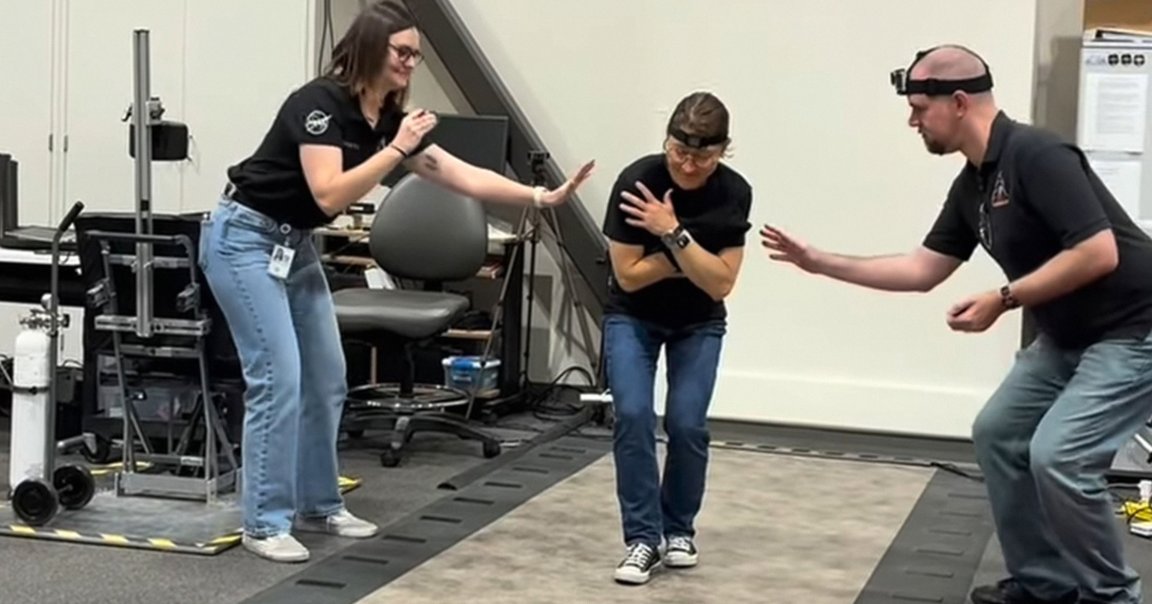
NASA astronaut Christina Koch, who traveled around the Moon and back, demonstrates that getting used to Earth's gravity isn't exactly easy.

Christina Koch via Instagram

Sign up to see the future, today

Can’t-miss innovations from the bleeding edge of science and tech

Spending prolonged periods of time in the microgravity of space can wreak havoc on our bodies. Scientists have found that astronauts can suffer from everything from accelerated bone loss and spinal health issues to swelling of the optical nerve that results in blurry vision. Some studies have even found space can alter astronauts’ DNA in ways that are still largely unknown.

At a high level, returning to our home planet can also throw space travelers’ sense of balance completely out of whack. As NASA astronaut Christina Koch — who traveled around the Moon and back alongside her fellow crew members earlier this month — demonstrated in a recent video, getting used to Earth’s gravity again isn’t exactly easy.

The clip she shared on Instagram roughly a week after splashing down in the Pacific Ocean shows her visibly struggling to put one front in front of the other while her eyes are closed.

“Guess I’ll be waiting a minute to surf again,” she wrote in the caption.

Her stumbling is the result of the brain no longer being able to rely on the vestibular system within the inner ear for knowing which way is up and which is down. In other words, Koch likely would’ve fared much better with her eyes open.

“When people live in microgravity, the systems in our body that have evolved to tell our brains how we’re moving, the vestibular organs, don’t work correctly,” Koch explained. “Our brains learn to ignore those signals and so when we first get back to gravity, we are heavily reliant on our eyes to orient ourselves visually.”

“A tandem walk with eyes closed can be quite the challenge!” she admitted. “Learning about this can help inform how we treat vertigo, concussions and other neuro-vestibular conditions on Earth.”

Koch is no stranger to spending prolonged periods of time in space. While this month’s Artemis 2 mission took place over just ten days, the NASA astronaut has previously spent almost a year on board the International Space Station.

While astronauts spend significant portions of their time in space exercising to stave off the detrimental effects microgravity has on their physical health, we have yet to find an effective way to help them restore their sense of balance once they’re Earthside — other than Father Time, that is.

“With eyes closed, it was almost impossible to walk in a straight line,” European Space Agency astronaut Andreas Mogensen told NASA after his journey to the ISS last year.

“I felt wobbly for the first two days,” added fellow crew member NASA astronaut Jasmin Moghbeli. “My neck was very tired from holding up my head.”

In short, stumbling over your own two feet with your eyes closed seems like a small price to pay considering Koch’s spectacular journey around the Moon, which provided some genuinely breathtaking views.

More on Artemis 2: Guess What This Creepy Underwater Thing Is That Was Photographed by US Navy Divers for NASA