








A 6-person startup learned their bottleneck wasn’t AI. It was infrastructure anxiety. Then they won Vercel’s AI Accelerator.
How the 6-person team at Stably ships AI testing agents faster with Vercel—moving from weeks to hours. Their shift highlights how Vercel's platform eliminates infrastructure anxiety, boosting autonomous testing and enabling quick enterprise growth.
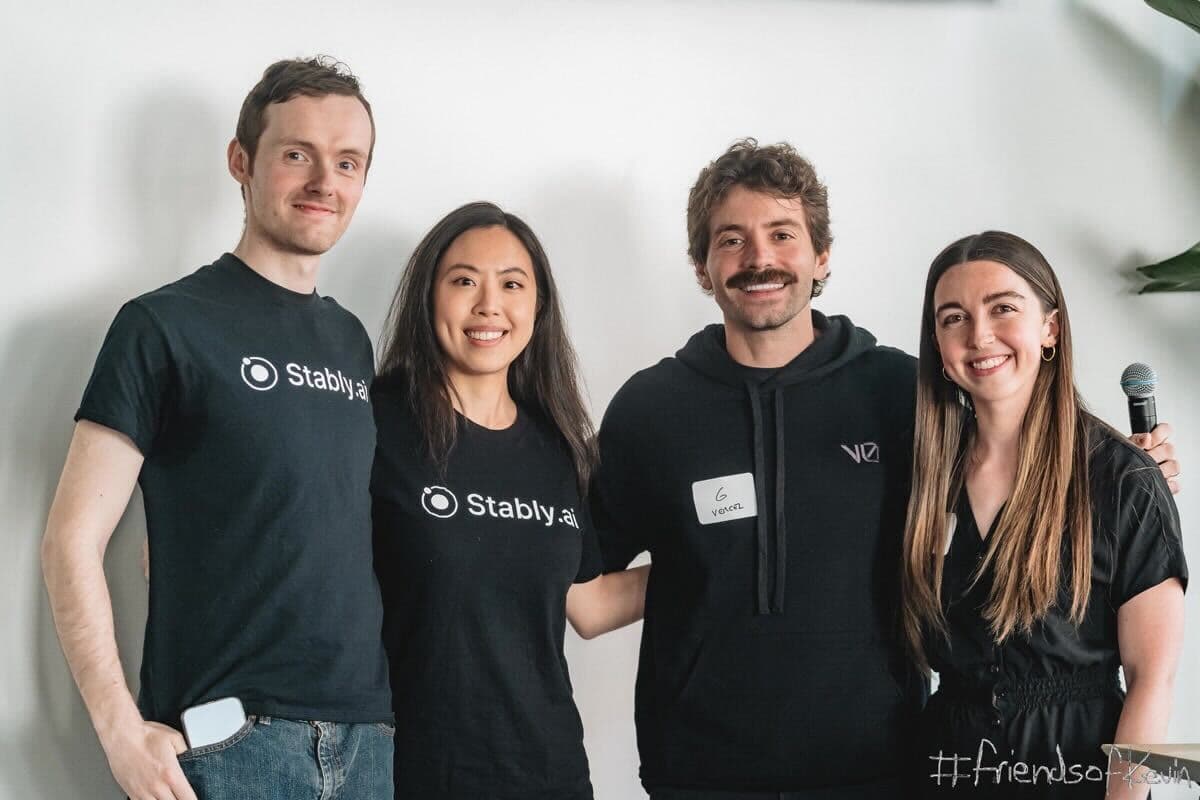
Jinjing Liang, co-founder and CEO of Stably, was building something technically ambitious: AI agents that run autonomous end-to-end tests by deploying on preview URLs, reading code diffs, and validating whether changes actually work. Testing is the bottleneck for autonomous coding: AI can write code fast, but without validation, teams get stuck checking everything manually.
But Stably had their own bottleneck. Every new feature meant infrastructure decisions. Every new agent meant deployment anxiety. For a team of six, that DevOps overhead was unsustainable.
Link to headingImpact at a glance
Launch new product lines in hours instead of weeks
Ship internal tools (Slack bots, dashboards) without worrying about deployment
Scale from early product to enterprise contracts on the same infrastructure
Entire stack run by a 6-person team, revenue-generating and lean
Link to headingThe infrastructure tax
"Stably is an AI end-to-end testing framework that integrates directly with coding agents like Claude Code," Jinjing explains. "We test the actual application, clicking through it like a real user. Your agents invoke Stably to validate their own work, so you can run them in parallel and ship high-quality features at scale."
Before Stably, Jinjing built infrastructure on the Google Chrome team and her co-founder Neil worked on Uber's safety team. Both had experience shipping systems where small failures had outsized impact. That experience influenced how they approached Stably: reliability was a baseline requirement, even with a small team. They were revenue-generating but running lean, using AI tools wherever possible. They couldn't afford to waste engineering cycles on DevOps.
Their frontend and backend runs on Vercel, leveraging AI Gateway for AI scalability and large TPM limits, and Sandbox for agentic code execution.
Jinjing's team did thorough vendor evaluations for each piece of their stack. But Vercel kept winning. Each time they evaluated alternatives, the calculus was the same: better developer experience, fewer bugs, fewer restrictions, faster feature additions.
It always happens: Vercel just has the best developer experience, less bugs, less restriction, and we can see they're adding more and more features a lot quicker.
Jinjing Liang, CEO

Her philosophy is simple. "You should just trust the community unless you have a reason not to. Your default should be: I should justify why I shouldn't build on Vercel."
Link to headingThe culture shift
Something unexpected happened once infrastructure stopped being a decision point. The team's entire operating rhythm changed.
"We used to say, if you see something, say something," Jinjing recalls. "But now we changed it to: if you see something, just do it."
Engineers stopped asking whether deployment would be a blocker, and product ideas turned into shipped features the same day. Internal tools that would have been "someday" projects got built in hours.
Stably built Slack bots that search databases and answer questions, dashboards, and new agents, all on the same Vercel stack. "We're not afraid to launch new products knowing that deployment won't be the blocker," she says.
The team even built internal AI agents that deploy entire services autonomously. "Someone could be like, 'Oh, I really want to add this new product,' and just go ahead, do it. You can do all the DevOps. It's no longer hard to do. And you can also just ask our Slack bot, which is running completely on Vercel, and that bot will go in, build everything for you, and put up a PR for you."
Link to headingAccelerating through Vercel’s Accelerator
When Stably applied to Vercel's AI Accelerator five months ago, the company was at an inflection point. They had spent years iterating. The first stretch focused on talking to users and understanding the problem, building a version of the product that treated testing as an afterthought, a separate flow tacked onto the end of the development pipeline.
But right before applying, they had a realization: the real breakthrough would come from embedding testing directly into the developer workflow. They built an initial version of that newer product, got early feedback, and applied to the accelerator on that momentum.
Once inside the program, the sessions shaped both product and business thinking. During a fireside chat alongside Vercel, MongoDB, and HubSpot, Jinjing received clarity on pricing strategy. One session delivered an insight that stuck: "pricing is product."
"It used to be I gave the pricing part to one of our interns," she admits. "But now, after that, I actually review the whole pricing part. I'm the only one on the team who knows more about the pricing code than anyone else. That was kind of eye-opening to see the amount of thought going into it."
Winning the accelerator (and the investment from Vercel Ventures that came with it) shifted Stably's trajectory in ways that went beyond funding. The brand validation opened doors in enterprise sales conversations. "There have been many times where a customer said, 'Oh, you guys were invested by Vercel, right? That's a great signal.' It reinforced what we were already building, and gave enterprise buyers extra confidence.'"
The LinkedIn announcement about winning the accelerator generated multiple inbound leads, some of which are now closing as contracts.
Since the accelerator, Stably's trajectory has shifted in two main ways. "First,” Jinjing says, “We've started to open-source more of our core product and the tools we've built for our company. We're following the Vercel playbook, Next.js, Turborepo, building a business while empowering developers with open tools. That open-source ethos is exactly what drew us to Vercel in the first place. Second, real revenue traction. Enterprise pilots from the accelerator are converting to contracts."
Link to headingWhat infrastructure should feel like
For Stably, infrastructure was never supposed to be the story. The product was the story. Vercel just made sure the infrastructure stayed out of the way.
That focus is paying off. A team of six, revenue-generating and lean, is now converting enterprise pilots to contracts, preparing to open-source their testing framework, and shipping new product lines in hours instead of weeks.
The motto that started as an internal culture shift, if you see something, just do it, has become the operating principle for the whole company.
About Stably: Stably builds AI-powered end-to-end testing that integrates directly into developer workflows, enabling coding agents to validate their own work at scale.