





Sign up to see the future, today
Can’t-miss innovations from the bleeding edge of science and tech
Covering the well over 100 million miles to Mars is no easy feat. Even in the best case scenario, the journey can take many months.
As an alternative to heavy and inefficient chemical rockets, NASA continues to investigate an intriguing alternative that instead uses electricity for propulsion. Combined with a nuclear power source, such a thruster could greatly lower our dependence on heavy propellants, bringing human explorers one small step closer to visiting Mars for the first time.
Earlier this year, the space agency fired up a “next generation” prototype thruster in a special chamber at its Jet Propulsion Lab, cranking it up to “power levels exceeding any previous test in the United States,” according to a new update.

JPL Tests Next-Generation Electric Thruster
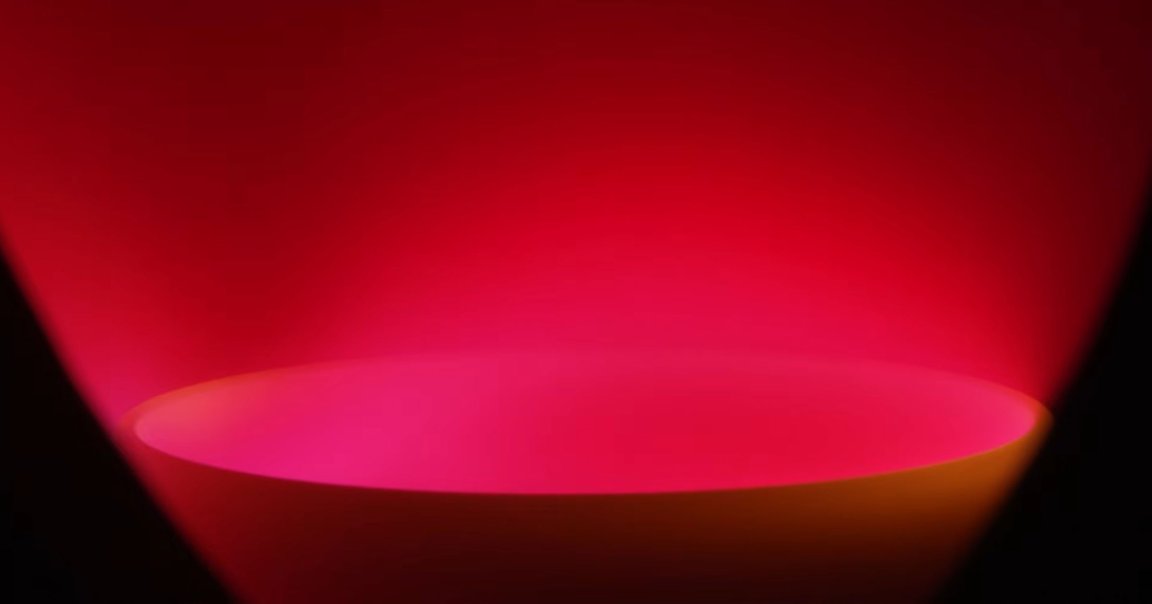
Newly-released video footage shows the thruster glowing a mesmerizing shade of red as a tungsten electrode in its center heats up to over 5,000 degrees Fahrenheit.
The prototype, a “lithium-fed magnetoplasmadynamic (MPD) thruster,” generates thrust by using high currents to electromagnetically accelerate lithium plasma, or hot, ionized particles of the alkali metal.
While other types of electric thrusters have already been used to propel spacecraft — like the one being used by NASA’s Psyche mission, which is currently headed to study a metal-rich asteroid — this particular type of propulsion has yet to be tested in space. That’s despite scientists investigating the concept since the 1960s.
NASA officials heralded the latest test as an important step in the right direction as it prepares to send the first humans to Mars within the next ten years or so.
“At NASA, we work on many things at once, and we haven’t lost sight of Mars,” said NASA administrator Jared Isaacman in a statement. “The successful performance of our thruster in this test demonstrates real progress toward sending an American astronaut to set foot on the Red Planet.”
“This marks the first time in the United States that an electric propulsion system has operated at power levels this high, reaching up to 120 kilowatts,” he added. For context, that’s roughly 25 times the output than NASA’s Psyche thruster. “We will continue to make strategic investments that will propel that next giant leap.”
It’s a promising new result that highlights the considerable advantages over traditional chemical propulsion. According to the space agency, electric propulsion uses 90 percent less propellant and can provide a slow trickle of thrust that can build up to high speeds over time instead of individual, more powerful bursts.
At the same time, it’s part of a much broader, years-long effort to turn the concept of an MPD thruster into a reality, and we still don’t know when NASA will start testing it in space.
As the agency explains, a crewed mission to Mars may require anywhere from two to four megawatts of power, which would require “multiple MPD thrusters” that “would have to operate for more than 23,000 hours.”
It’s also a dramatic departure from other transportation options to Mars. For instance, NASA contractor SpaceX’s enormous Starship two-stage launch platform — CEO Elon Musk’s preferred method to reach the Red Planet — uses several thousand tons of both liquid methane and liquid oxygen propellants, making it an entirely different proposition.
At the same time, the advantages of electric propulsion shouldn’t be overlooked. When paired with a nuclear power source, NASA claims that MPD thrusters “could reduce launch mass and support payloads required for human Mars missions.”
More on electric propulsion: NASA Announces Nuclear Mission to Mars by 2028