

惯性聚合 高效追踪和阅读你感兴趣的博客、新闻、科技资讯
阅读原文 在惯性聚合中打开

推荐订阅源

G
Google Developers Blog
Apple Machine Learning Research
小众软件
小众软件
Recent Announcements
阮一峰的网络日志
阮一峰的网络日志
IT之家
IT之家
A
About on SuperTechFans
量子位
Engineering at Meta
Engineering at Meta
B
Blog
The Cloudflare Blog
博客园 - 【当耐特】
Hugging Face - Blog
Hugging Face - Blog
Y
Y Combinator Blog
J
Java Code Geeks
D
DataBreaches.Net
aimingoo的专栏
aimingoo的专栏
T
Tailwind CSS Blog
H
Help Net Security
钛媒体:引领未来商业与生活新知
钛媒体:引领未来商业与生活新知
V
V2EX
Stack Overflow Blog
Stack Overflow Blog
C
Check Point Blog
酷 壳 – CoolShell
酷 壳 – CoolShell

Futurism

SpaceX Stock Has Officially Fallen All the Way Down to the Low $170s SpaceX Stock Had Quite a Bad Night Wall Street Terrified That SpaceX Investors Will Dump Their Stocks SpaceX Stock Now in Rapid Decline SpaceX Stock Has Now Started to Fall Scientists Propose That Entire Universes Can Form Inside Collapsing Stars NASA Loads Moon Rocket onto Giant Trump-Branded Train Eighty Residents Sue SpaceX, Saying Elon Musk’s Constant Rocket Launches Are Literally Destroying Their Homes SpaceX’s IPO Shows That We Aren’t Even Close to Peak AI Bubble The More Data We See About SpaceX’s IPO, the More We’re Wincing Scientists Discover Fearsome Wind That Destroys Entire Galaxies NASA’s Next Moon Mission Is a Rube Goldberg Machine of Corporate Failure Points Scientists Release Results After Scanning 3I/ATLAS for Alien Signals The Math on SpaceX’s IPO Is Virtually Impossible Astronomers Say Star Self-Destructed So Catastrophically That It Left Behind No Trace of Its Existence Catholic Church Boots Exorcist After He Said UFOs Are Demons NASA’s James Webb Discovers That 3I/ATLAS Let One Rip as It Passed Through Solar System Scientists Find Chunk of Lost Planet in Desert It’s Possible That SpaceX Could Collapse Spectacularly ISS Astronauts Ordered to Enter Evacuation Mode SpaceX Is Massively Overvalued Ahead of Its IPO, Analysts Find Paper Claims the “Asteroid” Japan’s Probe Is Approaching Is Actually a Derelict Spacecraft Trump Shovels $4 Billion Directly to Elon Musk, Who Spent a Fortune Getting Him Elected Scientists Say They’ve Cracked Mystery Behind a Dozen Strange Signals From Deep Space Scientists Spot What Appears to Be a Ring-Shaped “Planet Factory” Deep Out in Space Scientists Say They’ve Found Fungi That Turn Dead Martian Soil Into Fertile Cropland The Blue Moon Is Fake. You Are Being Deceived Jeff Bezos’ Rocket Explodes Into Mushroom Cloud, Dealing Massive Blow to NASA’s Moon Plans Elon Musk Furious at Starlink Being Used for American Suicide Drones NASA Releases Sweeping Plans for Moon Base
Moon Astronaut Captures Shot of Earth That Lets You See I...
2026-04-08 · via Futurism

NASA astronaut and Artemis 2 mission commander Reid Wiseman took a moment to snap a breathtaking photo of the full Earth.

NASA

Sign up to see the future, today

Can’t-miss innovations from the bleeding edge of science and tech

On December 7, 1972, NASA astronaut and Apollo 17 crew member Harrison Schmitt took a stunning photo of the entirety of the Earth, an image later dubbed “The Blue Marble.”

The iconic shot was made possible by the mission’s unusual trajectory, which brought much of our world’s south pole into view. The astonishing perspective changed the “way we look at our home planet,” as the space agency notes on its website.

And while Apollo 17 was the last time we set foot on the Moon’s surface, we finally have a non-satellite-image-based update to the photo over half a century later.

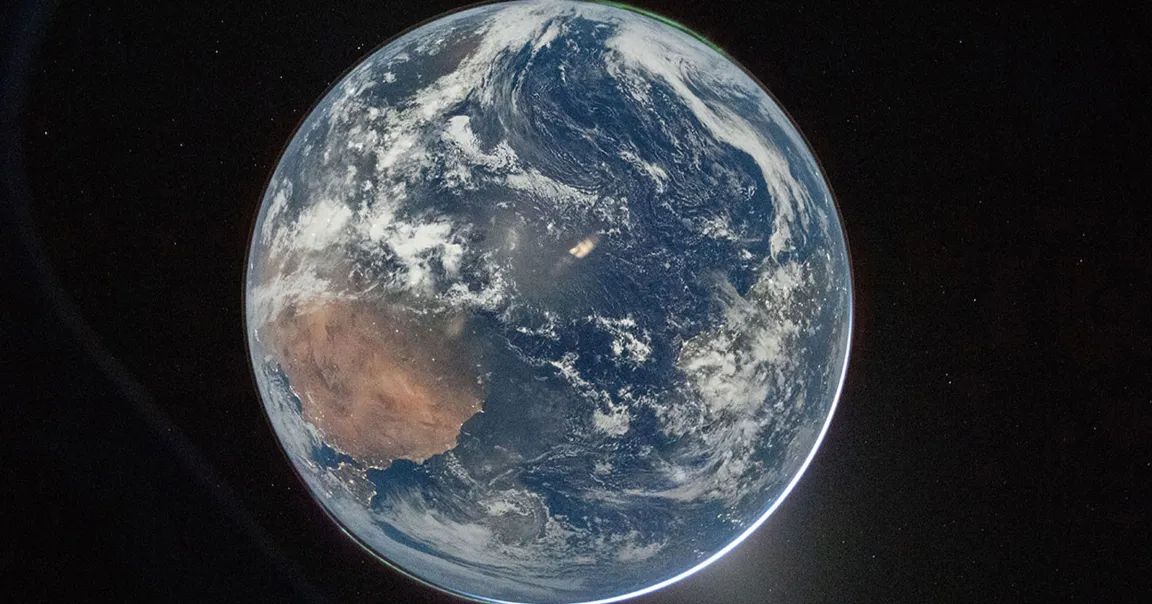
After their Orion spacecraft fired its thrusters to take the crew of NASA’s ongoing Artemis 2 mission away from Earth on April 2, NASA astronaut and commander Reid Wiseman took a moment to snap a breathtaking photo of our world .

The image, titled “Hello, World,” even shows the boundary of Earth’s atmosphere in remarkable detail — including not just one but two auroras visible in the top right and bottom left, they appear as faint green hues.

It’s a stark reminder of the frail layer of gases that allows life to exist on Earth, a feature that may — or may not — make us unique in the universe.
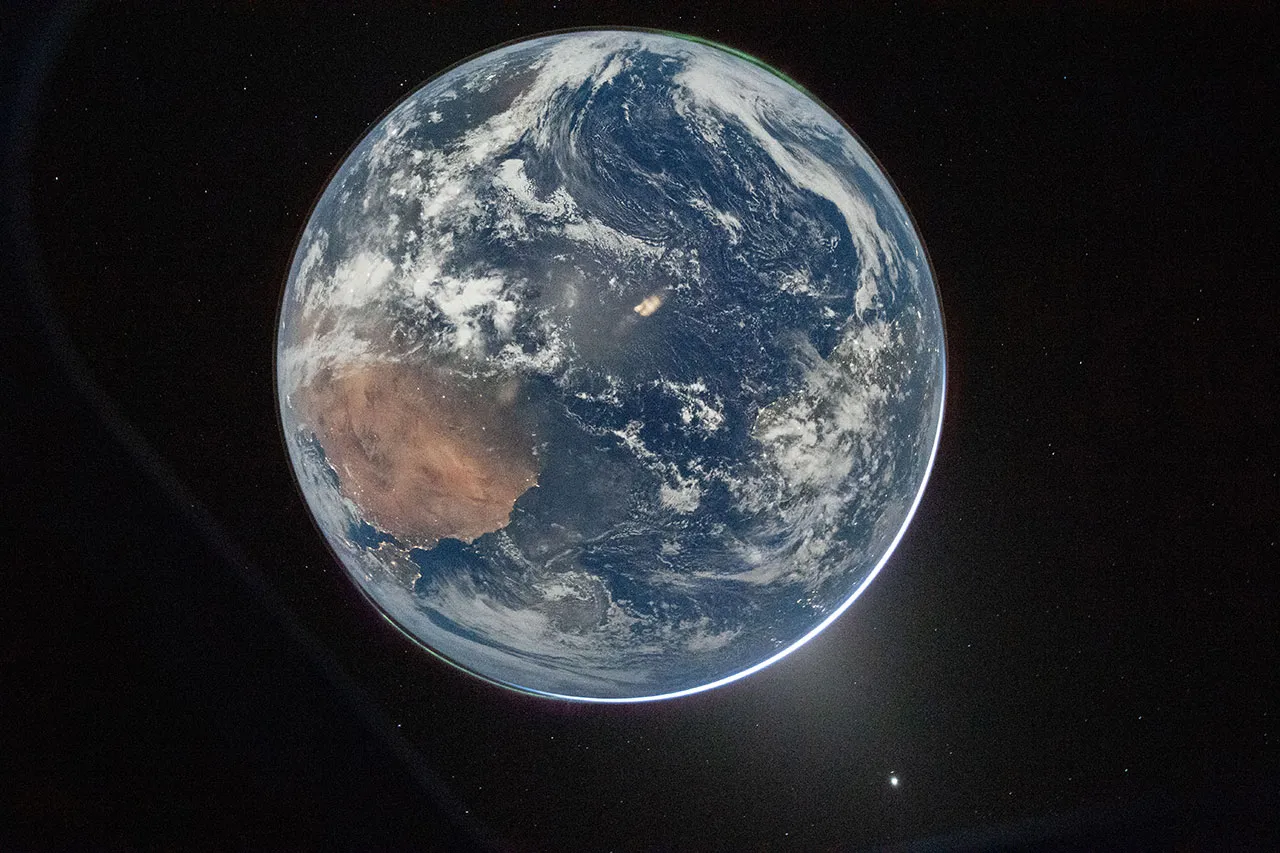
The image, titled "Hello, World," shows the Earth's atmosphere in remarkable detail, including not just one, but two auroras, visible in the top right and bottom left, appearing as faint green hues.

The glow on the bottom right of the image is “zodiacal light,” a faint glow also referred to as “false dawn,” that appears due to rays of light being scattered by interplanetary dust as the Earth eclipses the Sun.

The photo, alongside another stunning image showing the Earth peeking through one of the Orion spacecraft’s windows after completing the translunar injection burn, were the two first images the Artemis 2 astronauts sent back to Earth.

Since then, the team has sent back a treasure chest of astonishing views from their lunar flyby, including dramatic scenes of the lunar surface and the Earth setting and rising behind it.

Considering the amazing photos we’ve already seen, there’s no doubt the memory cards they’ll be bringing back to Earth on Friday evening will contain an even greater collection of out-of-this-world views.

More on Artemis photos: We’re In Utter Disbelief About the Photos the Moon Astronauts Just Sent Back