





惯性聚合 高效追踪和阅读你感兴趣的博客、新闻、科技资讯
阅读原文 在惯性聚合中打开

推荐订阅源

Martin Fowler
Martin Fowler
J
Java Code Geeks
博客园 - 【当耐特】
宝玉的分享
宝玉的分享
腾讯CDC
D
DataBreaches.Net
Microsoft Azure Blog
Engineering at Meta
Engineering at Meta
V
V2EX
F
Fortinet All Blogs
MyScale Blog
MyScale Blog
让小产品的独立变现更简单 - ezindie.com
T
Tailwind CSS Blog
Jina AI
Jina AI
GbyAI
GbyAI
大猫的无限游戏
大猫的无限游戏
A
About on SuperTechFans
酷 壳 – CoolShell
酷 壳 – CoolShell
爱范儿
爱范儿
OSCHINA 社区最新新闻
OSCHINA 社区最新新闻
U
Unit 42
B
Blog
M
MIT News - Artificial intelligence
N
Netflix TechBlog - Medium

Futurism

Bizarre New Websites Are Designed Specifically to Spark Dopamine in Your Brain FBI Now Allowing History of Bestiality Among New Recruits Doctors Just Used AI to Perform Brain Surgery Mom Who Travels For Work Builds AI Clone of Herself to Keep Her Teenage Son Company The Results of Middle and High School Students Using AI Are Extremely Ominous Wild New Paper Claims Human Brain Doesn't Produce Consciousness We Are Admittedly Creeped Out by These Chunks of Human Brain Matter That Have Lived Longer Than a Toddler Man Sues Bank for Being Stupid Enough to Give Him a Mortgage Even When Experts Were Warning Him It Was About to Fall Into the Ocean We Talked to the Guy Who Built a Chatbot That's Just Him Manually Responding to People One-by-One The AI Industry Has Acted So Badly That It's Now Dealing With a Huge Wave of Hatred Eye Implant That Restores Vision to the Blind Cleared for Sale Famous "Pick Up Artist" Reduced to Hitting on AI Girlfriend FanDuel Is Using Extremely Dirty Tricks to Keep Gambling Addicts Hooked Learning What Substance Is Suspected of Causing Alzheimer’s May Throw You Into an Existential Crisis The Hectic Modern World Is Shredding Your Little Cave Man Brain, Scientists Confirm DuckDuckGo's AI Feature Is Telling Users That Trump Died of Rabies Earlier This Month Research Suggests the Older You Get, the More Weed You Should Smoke TikTok Has Been Completely Taken Over by AI Slop We Are Admittedly a Bit Startled by This Medical Case Report About Giving an Elderly Woman With Advanced Alzheimer's a Gigantic Dose of Psychedelic Mushrooms Just to See What Would Happen Google's AI Overviews Feature Is Telling Users That SCP Horror Fiction Entities Are Real Clavicular's "Botched" Nose Job Illustrates the Dangers of Looksmaxxing Working From Home Has a Grim Effect on Your Brain, Surprise Research Finds Psychiatrists Investigating People Who Get Trapped Inside Vivid Daydreams It Turns Out Lookmaxxing Has Some Extremely Emasculating Side Effects Startup Testing Drugs on Freshly Extracted Human Brains That Are Kept On Life Support Woman Alarmed When Her Trusted Therapist Starts Recording Her With AI Kids Are Flying Into Lunatic Rages When Their iPads Are Taken Away Influential Tech Founder Says His Peers Are Suffering From Mass AI Psychosis Man Drives Cybertruck Into Lake to Test Elon Musk’s “Boat” Claims, and It Went About as Well as You’d Guess Elon Musk Compares His Work to Miracles Performed by Jesus Christ
Study Finds AI Use Eats Away at Users’ Confidence in Thei...
Joe Wilkins · 2026-04-19 · via Futurism

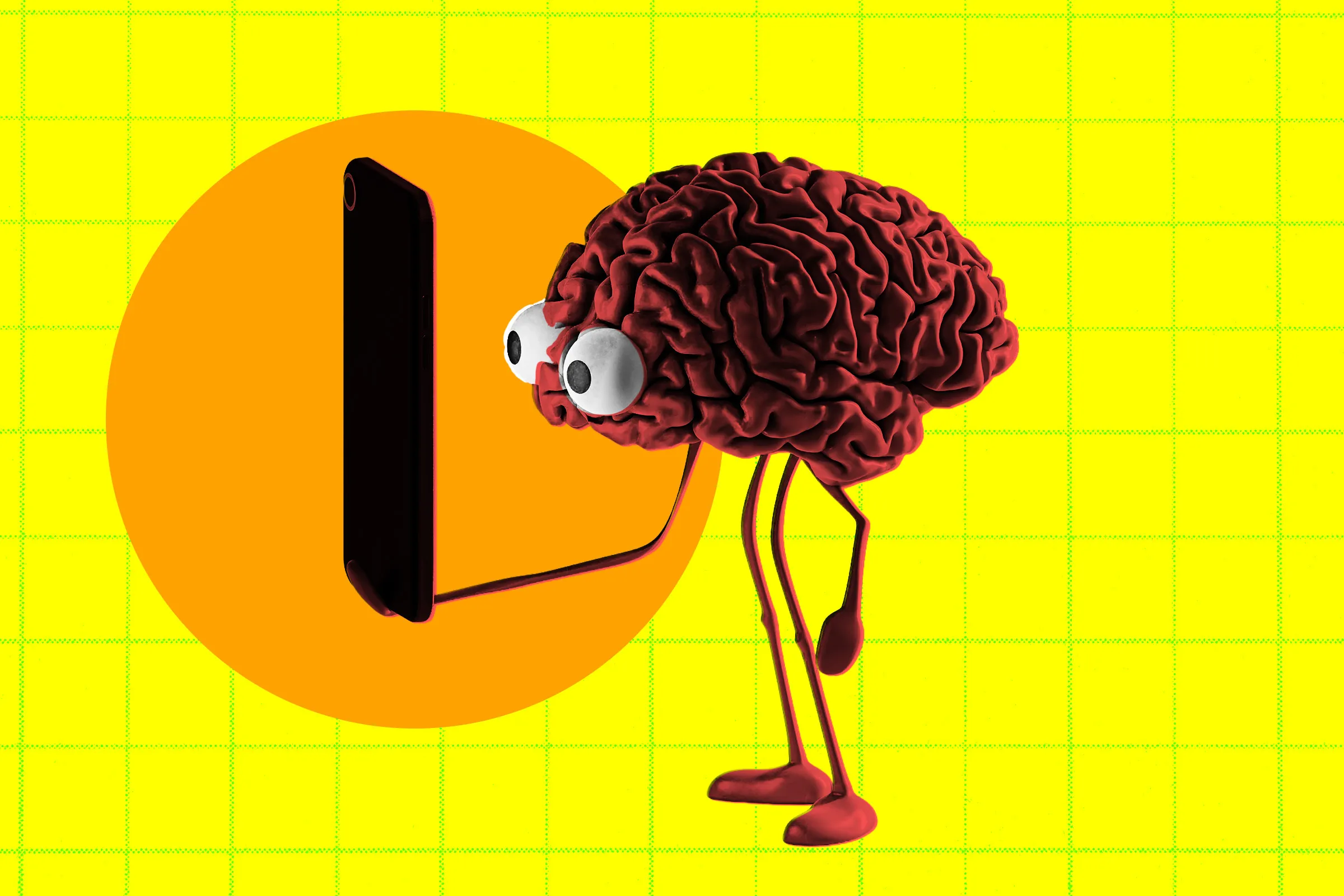
A cartoonish red brain with large, googly eyes and thin, stick-like arms and legs is looking at a smartphone held up in front of it. The background is bright yellow with a grid pattern and an orange circle behind the phone.

Illustration by Tag Hartman-Simkins / Futurism. Source: Getty Images

Sign up to see the future, today

Can’t-miss innovations from the bleeding edge of science and tech

Researchers are growing increasingly suspicious that outsourcing intellectual tasks to AI is causing a range of cognitive deficits. A new study adds a wrinkle worth paying attention to: that use of the bots can eat away at users’ faith in their own abilities, resulting in lower confidence in their own independent reasoning.

The new peer-reviewed study, published in the journal Technology, Mind and Behavior and flagged by TIME, found that those who showed a heavy reliance on AI were more likely to admit chatbots were “thinking” for them — and seem to show decreased confidence in their own ideas.

By the same token, participants who took control over their AI’s output by editing, questioning, or scrapping it showed a greater confidence and sense of ownership over the final output, even though the tools used were the same.

As the study’s author Sarah Baldeo — a PhD candidate in AI and neuroscience at Middlesex University — told TIME, the ultimate cognitive effects “depends on your interaction style.”

“When we look at brain activity contingent on how people choose to use the tool, we can see increases or decreases,” Baldeo said. “It really doesn’t have to do with the tool itself.”

That finding lines up with the “boiling frog study” we covered earlier this week. That yet-to-be-peer-reviewed paper, by researchers at MIT and Carnegie Mellon, claimed to have found the first causal evidence that AI can rapidly degrade users’ intellectual abilities, particularly when we use the tech for “reasoning-intensive” work.

During that study, participants in the experimental group were given AI access to complete a series of equations. The researchers then pulled the plug in the middle of their work, forcing them to continue without it. Those who had been abandoned by their AI chatbots saw rapid declines in reasoning ability, as well as a swift drop in willingness to follow-through and complete the math tasks.

Both studies converge on the same core mechanism: how you use AI is an important factor in determining whether it harms your cognitive ability. Basically, they argue that offloading all of your work to the machine degrades your capacity for independent reasoning, while using AI as a supplement may help to preserve it.

Whether you’re measuring confidence or raw reasoning, both pieces of research seem to pose an important question: are you using AI to help you think, or is AI doing the thinking for you?

More on AI: College Students Losing Ability to Participate in Class Discussions Due to Offloading Their Thinking to AI