





Sign up to see the future, today
Can’t-miss innovations from the bleeding edge of science and tech
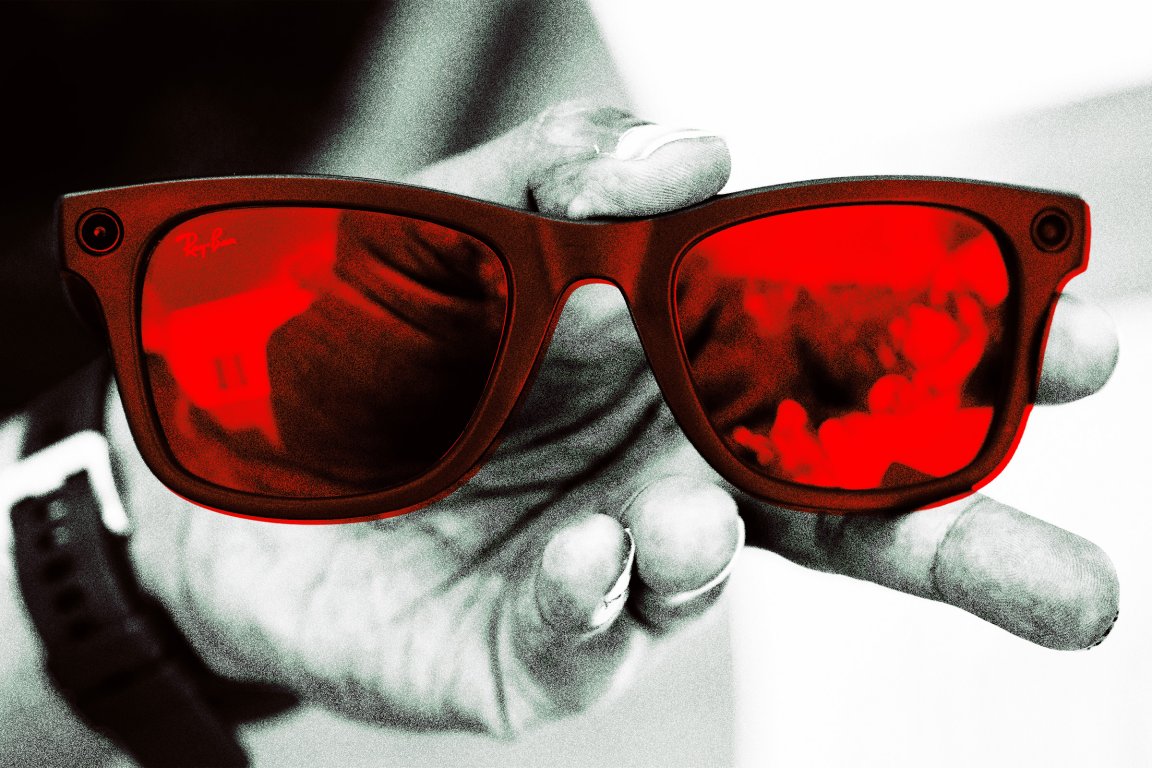
Code uncovered by journalists revealed that Meta quietly embedded facial recognition tech into its AI-enabled smart glasses — and top Meta executives are fuming.
Last week, Wired reported that Meta discreetly moved to infuse facial recognition tech into its popular smart glasses, as evidenced by a piece of code discovered in the Meta AI app by the magazine’s journalists. The unreleased feature, internally dubbed “NameTag,” would “transform faces captured by Meta’s glasses into unique biometric signatures, commonly known as faceprints, and check each one against faceprints stored on the user’s phone — a database that’s currently configured to receive updates from Meta,” as Wired put it.
The report made clear that NameTag isn’t activated yet, nor is it accessible to consumers in its current form. But the prospect of consumer-facing smart glasses equipped with facial recognition tech has long had privacy advocates on edge — and with public adoption of Meta’s smart glasses on the rise, privacy concerns have become more pertinent than ever. If a company has gone about building out the infrastructure to roll out a wildly controversial feature of this kind, consumers might want to know about that, even if the feature currently remains inaccessible.
And yet, according to the company’s executives, it’s “dishonest” to inform the public about a piece of unreleased tech that Meta has chosen to incorporate into a consumer product.
In its initial response to Wired, Meta referred to the discovery as “sensational” and characterized NameTag as exploratory. “We’ve said before we’re exploring these types of features, and what you’re seeing is just evidence of that exploration,” the company said in a statement to Wired. “Nothing has shipped to consumers and no final decision has been made on what to do here, if anything. If we do decide to roll something out, we will take a thoughtful approach and do so with full transparency. One decision we can be clear about—we are not building a central face database.”
A few well-known Meta higher-ups then weighed in on social media, doubling down on the allegation that Wired’s story was somehow “misleading.”
“It’s not until [paragraph] four that Wired says this feature is ‘not enabled,'” declared Meta spokesperson and VP of communications Andy Stone. “And then takes until [paragraph] 16 for Wired to reflect that Meta has no existing plans and this is exploratory. And not until [paragraph] ten does Wired quote its own expert saying the feature is not ‘exposed to consumers.'”
“This is more than shoddy reporting, it’s intellectually dishonest,” Stone continued. “Pure advocacy-driven click bait.”
Meta’s longtime chief technology officer, Andrew “Boz” Bosworth jumped in, adding: “Incredibly misleading from Wired, sadly we are coming to expect that from them more and more. Absolutely dishonest.”
But this isn’t the first time in recent months that NameTag has been in the news. In February, the New York Times reported on an internal Meta memo in which Meta discussed plans to install NameTag into its smart glasses. In the striking memo, the tech giant noted that the ethically-fraught feature should ideally be launched “during a dynamic political environment where many civil society groups that we would expect to attack us would have their resources focused on other concerns.”
Public pushback following the NYT’s reporting was swift, and in April, 75 organizations signed an ACLU letter addressed to Meta CEO Mark Zuckerberg that characterized NameTag as “a red line society must not cross.”
This particular feature isn’t Meta’s first brush with controversy in this area, either. In 2025, the tech giant paid $1.4 billion to settle a lawsuit with Texas over its handling of biometric data. And in 2021, after settling a different class action suit, it killed a Facebook feature that used facial recognition to automatically tag people in photos.
It’s true that NameTag remains unreleased. But if Meta were to launch it, the implications are likely to be enormous.
“The feature is not yet exposed to consumers but seems nearly ready to go,” Electronic Frontier Foundation Threat Lab technologist Cooper Quintin, who reviewed the latent NameTag code, told Wired. “Despite the billions of reasons not to, Meta seems to have created the capacity to turn their customers into a distributed surveillance machine.”
More on Meta glasses: Meta Workers Say They’re Seeing Disturbing Things Through Users’ Smart Glasses