






Retrieval-Augmented Generation (RAG) revolutionizes recommendation systems by seamlessly blending retrieval and generation techniques. In simple terms, RAG combines the strengths of both methods to offer personalized recommendations that resonate with individual preferences. By leveraging past user interactions and preferences, RAG can retrieve items tailored to each customer's unique tastes.
The significance of RAG in recommendation systems lies in its ability to enhance personalization. Traditional recommendation systems often struggle with generalization and lack the nuanced understanding of individual user preferences. Studies have shown that incorporating RAG modules can boost accuracy by an additional 5-10%, surpassing traditional global systems alone. This means RAG doesn't just follow trends—it sets them, making sure users get recommendations that really match their interests.
Related Blog: How to Build a Recommendation System (opens new window)
In the realm of recommendation systems, the essence lies in understanding user preferences at a granular level. RAG serves as a beacon in this quest, illuminating pathways to personalized recommendations that resonate deeply with individual tastes.
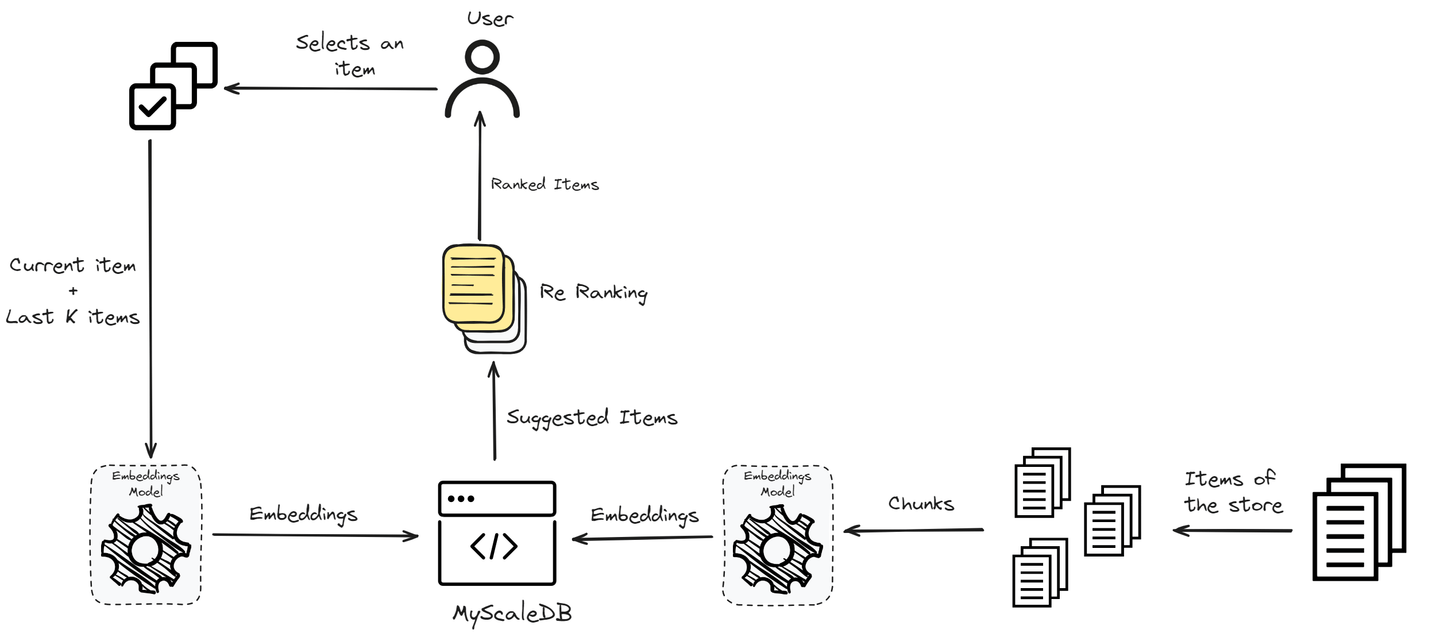
Delving into the core of RAG functionality unveils a sophisticated process where past behaviors act as guiding stars for future suggestions. By scrutinizing historical interactions and preferences, RAG deciphers intricate patterns that form the bedrock of tailored recommendations. This analytical prowess enables recommendation systems to transcend generic suggestions and delve into the realm of personalization.
The impact of RAG on personalizing product recommendations is increasingly evident across various industries. Marketing campaigns leverage RAG technology to enhance the relevance of content, making it more bespoke and directly tailored to individual customer segments. By using RAG to incorporate rich, contextual insights into messages, product recommendations, and ad copy, marketers can significantly boost engagement levels, leading to improved conversion rates and enhanced customer satisfaction.
Case Studies:
Marketing Campaigns Transformation: Through the lens of marketing strategies, companies witness a paradigm shift by leveraging RAG-generated personalized content.
Enhanced Customer Engagement: The fusion of data-driven insights from RAG results in targeted messages that resonate profoundly with diverse audiences.
Business Growth Acceleration: Businesses embracing RAG witness accelerated growth trajectories through tailored product recommendations that align with individual preferences.
By amalgamating data analytics (opens new window) with user-centric approaches, RAG propels recommendation systems into a new era of hyper-personalization (opens new window), where each suggestion is finely attuned to cater to unique user preferences.
Boost Your AI App Efficiency now
Sign up for free to benefit from 150+ QPS with 5,000,000 vectors
In the realm of recommendation systems, the essence lies not only in suggesting products but also in fostering meaningful engagements. RAG plays a pivotal role in this narrative by delving deep into user context to tailor recommendations that resonate profoundly with individual preferences.
Understanding the significance of context is paramount when it comes to recommendation systems. RAG excels in grasping user context by analyzing a myriad of factors such as past interactions, demographics, and online behavior. This contextual understanding enables RAG to craft personalized suggestions that align seamlessly with each user's unique preferences and interests.
By utilizing advanced embedding models and similarity techniques, RAG contextually understands and interprets user queries. These insights empower RAG to go beyond surface-level recommendations and delve into the intricacies of individual preferences. Through this contextual understanding, RAG ensures that every suggestion is tailored to meet the specific needs and desires of each user.
Marketing Teams Leveraging RAG for Personalized Campaigns: By harnessing RAG technology, marketing teams can analyze user preferences and behaviors to create targeted messages and product recommendations that drive enhanced engagement and conversion rates (opens new window).
E-commerce and Retail Utilizing RAG for Personalized Shopping Experiences: E-commerce platforms leverage RAG to understand customer behavior, leading to increased engagement, satisfaction, and sales (opens new window) through tailored product suggestions.
RAG Application for Personalized Customer Support: Through automated processing of inquiries and personalized responses, businesses enhance customer satisfaction levels (opens new window) while potentially increasing revenue streams.
Enhanced Customer Experience Metrics with RAG Chatbots: Chatbots powered by RAG elevate customer experience metrics (opens new window) like satisfaction levels through hyper-relevant interactions tailored to individual preferences.
Improving Financial Analysis through RAG: By incorporating recent market data and economic indicators, organizations make more informed investment decisions (opens new window) using insights derived from RAG technology.
Through these diverse applications across various industries, it becomes evident how RAG enhances user engagement by providing tailored recommendations rooted in a deep understanding of user context.
Join Our Newsletter
In the realm of recommendation systems, accuracy stands as a cornerstone for user satisfaction and trust. RAG excels in enhancing recommendation accuracy through its unique approach to in-context learning (opens new window).
The mechanism underpinning RAG's accurate suggestions revolves around its ability to fuse context-rich data points seamlessly. By integrating quality scores (opens new window) and evaluating framework abilities, RAG ensures that recommendations are not just relevant but also faithful and robust across various scenarios.
When delving into the intricacies of RAG, it becomes evident that quality scores play a pivotal role in assessing context relevance, answer faithfulness, and answer relevance (opens new window). Simultaneously, framework abilities encompass noise robustness, negative rejection capabilities, information integration prowess, and counterfactual robustness. This holistic evaluation framework empowers RAG to generate recommendations that align closely with user preferences while maintaining a high degree of accuracy.
Accurate recommendations serve as the bedrock for fostering user trust and satisfaction within recommendation systems powered by RAG.
The seamless integration of context-rich data points not only enhances recommendation accuracy but also instills confidence in users regarding the suggestions provided. When users perceive that recommendations align closely with their preferences and needs, trust in the system grows organically. This increased trust translates into higher user satisfaction levels, leading to prolonged engagement and loyalty towards the platform.
By prioritizing accuracy through in-context learning mechanisms, RAG elevates the efficacy of recommendation systems, ensuring that each suggestion resonates authentically with users' individual preferences and requirements.
Another crucial element that improves the performance of RAG systems is the vector database (opens new window). The choice of the right vector database is extremely important when designing RAG systems. A vector database determines how quickly your data can be retrieved and how swiftly users receive responses. Many databases become slower during scaling, making the choice of a vector database especially critical.
MyScaleDB (opens new window) is a vector database specifically designed for scalable AI applications. It is built on top of ClickHouse (opens new window) and it's an SQL vector database (opens new window). This means that interacting with it only requires knowledge of SQL, which is familiar to most developers. MyScaleDB seamlessly combines structured data management with vector operations, optimizing performance for complex data interactions and enhancing the efficiency of RAG systems. With filtered searches (opens new window), MyScaleDB efficiently filters data in large datasets based on specific attributes before conducting vector searches, ensuring rapid and accurate retrieval for RAG systems. Additionally, it has outperformed competitors (opens new window) in terms of speed and accuracy. It's worth noticing that MyScaleDB offers new users 5 million free vector storage.
As we gaze into the horizon of recommendation systems, a profound transformation unfolds, guided by the innovative prowess of technology. Douwe Keila (opens new window), an expert in AI applications, underscores the pivotal role of Retrieval-Augmented Generation (RAG) in shaping the future landscape of personalized recommendations. The amalgamation of retrieval and generation techniques heralds a new era where recommendations transcend mere suggestions to become tailored experiences that resonate deeply with individual preferences.
In our dialogue with Douwe Keila, insights emerged highlighting the transformative impact of RAG on recommendation systems. By harnessing the power of data and evaluation mechanisms, RAG not only enhances accuracy but also paves the way for hyper-personalization. The future holds promises of recommendation systems that anticipate user needs with unparalleled precision, fostering deeper engagement and loyalty. As RAG continues to evolve, its applications will extend beyond recommendations, influencing diverse sectors with its ability to decipher user preferences and deliver customized experiences.
The journey towards personalized recommendations propelled by RAG is not just a technological advancement but a testament to understanding users at a profound level, ensuring each interaction is meaningful and enriching.
此内容由惯性聚合(RSS阅读器)自动聚合整理,仅供阅读参考。 原文来自 — 版权归原作者所有。