



In the realm of speech recognition, a groundbreaking technology known as RAG is making waves. But what exactly is RAG? Imagine a system that combines information retrieval (opens new window) and language generation techniques, primarily to enhance the accuracy and relevance of text generation in various applications. The integration of RAG can enhance the efficiency of speech recognition systems directly by providing more contextually accurate and relevant responses according to the user query.
Why does speech recognition matter in today's tech-driven world? Well, think about everyday conveniences like virtual assistants, automated customer service, or even voice-to-text applications. These are all powered by speech recognition technology. The ability to accurately transcribe spoken words into text or commands is crucial for seamless human-computer interaction (opens new window).
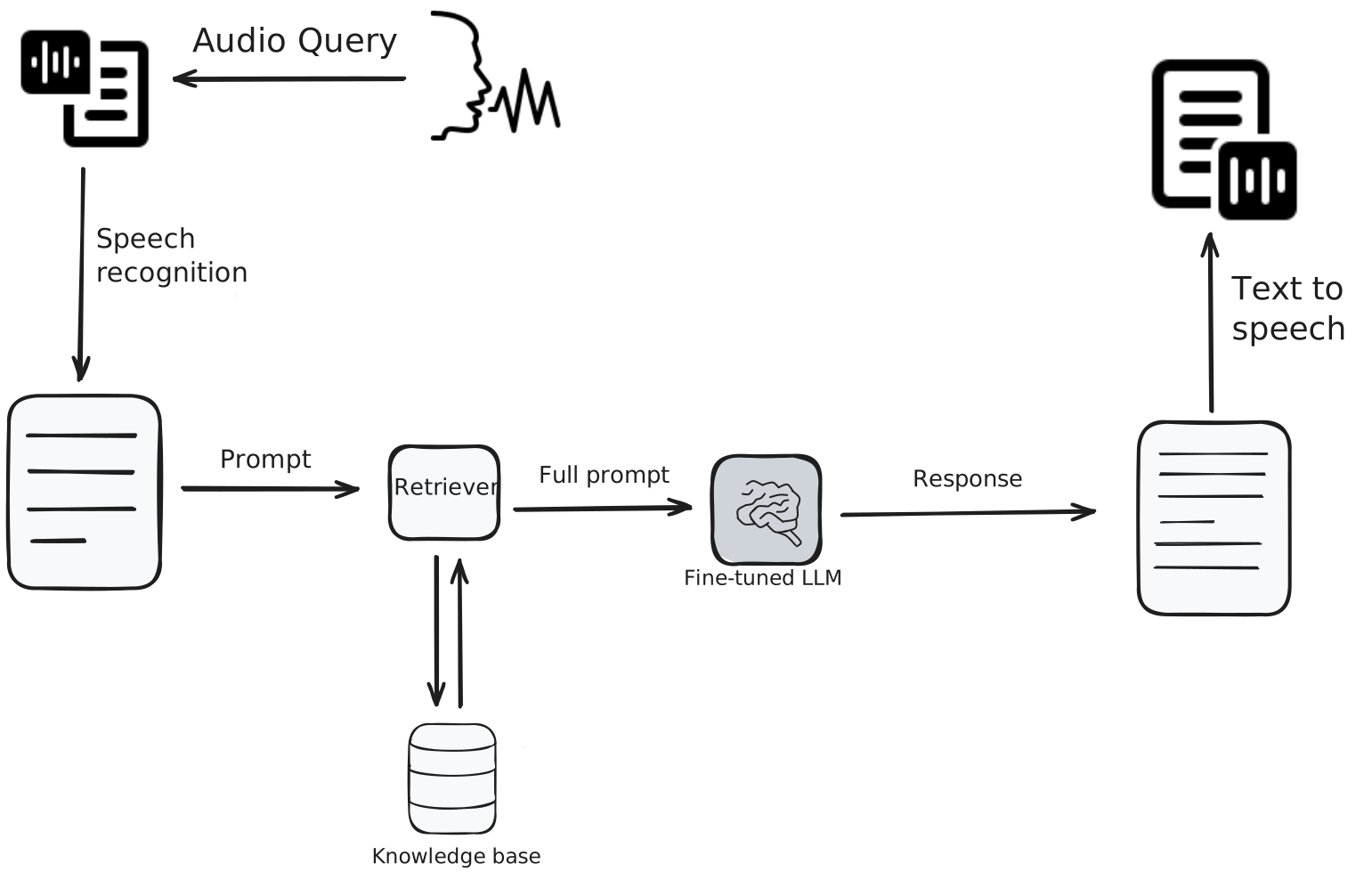
Retrieval Augmented Generation with Speech Recognition system
As the demand for more advanced speech recognition systems grows, so does the market. According to forecasts, the global Speech and Voice Recognition Technology market is set to experience significant growth in the coming years, with a projected CAGR of 25.43% (opens new window) between 2022-2028. This surge in market value underscores the importance of technologies like RAG in shaping the future of speech recognition. This surge in market value highlights the potential contributions of advanced technologies, including how techniques similar to RAG can shape the future of speech recognition by enhancing the processing of transcribed text.
In the realm of speech recognition, accuracy stands as a paramount challenge. Traditional systems often grapple with common issues that hinder their precision. These challenges include semantic disambiguation, understanding nuanced user intentions, and maintaining dialogue context are paramount. Such hurdles can lead to misinterpretations and errors in transcribing spoken words accurately.
However, the advent of RAG has brought a new dawn to this landscape. While RAG primarily enhances text generation tasks, it can indirectly benefit speech recognition systems by improving the contextual understanding in the post-processing stages of transcription. By leveraging advanced algorithms and neural networks, it is also possible to enhance the processing of the transcribed text, thereby reducing errors and enhancing overall accuracy.
Real-world examples vividly demonstrate the transformative impact of similar technologies on accuracy levels. In medical transcription services, where precision is critical for patient care, systems informed by retrieval-enhanced techniques has shown remarkable improvements in enhancing the overall transcription. Similarly, in legal settings where verbatim transcription is essential for documentation purposes, advanced language models has proven its ability to capture intricate legal jargon with unparalleled accuracy.
The fusion of information retrieval and language generation techniques within RAG addresses existing challenges. As industries across sectors increasingly rely on precise transcription services, the role of technologies like RAG becomes indispensable in ensuring seamless communication and operational efficiency.
In the realm of speech recognition, the quest for efficiency is a crucial endeavor. Older systems often grapple with inefficiencies that impact both speed and resource utilization, posing challenges in meeting the demands of modern applications. The need for swift responses and optimal resource allocation underscores the significance of enhancing efficiency within speech recognition systems.
The emergence of RAG presents a promising solution to these efficiency dilemmas.By incorporating advanced information retrieval and language generation techniques, RAG can potentially offer a pathway to streamline operations (opens new window) and optimize performance of such applications. One key advantage lies in access to real-time information, enabling Language Models (LLMs (opens new window)) to provide accurate responses promptly. This real-time integration not only enhances user interaction but also keeps the model up to date without the headache of continuous model retraining.
Case studies have showcased the tangible benefits of RAG in driving faster and leaner operations within speech recognition systems. For instance, RAG powered chatbots have shown their effectiveness by utilizing up-to-date data to provide timely and accurate responses, thereby improving the overall performance of the application. This technique not only enhances user satisfaction but also boosts productivity across various applications where quick communication is paramount.
Moreover, RAG plays a pivotal role in improving Language Model (opens new window) (LLM) accuracy and reliability by grounding responses in factual information and minimizing biases in text generation. These enhancements not only elevate the quality of generated content but also reduce maintenance costs associated with traditional models. By addressing limitations inherent in language models, such as hallucinations or inaccuracies (opens new window), RAG sets a new standard for efficiency (opens new window) and effectiveness.
In the realm of technology, personalization plays a pivotal role in enhancing user satisfaction and engagement. RAG emerges as a transformative force in tailoring user experiences to individual preferences and needs. The fusion of information retrieval and language generation techniques within RAG enables systems to provide contextually relevant responses, thereby elevating the level of personalization in technology.
Personalization stands as a cornerstone in modern technological advancements, influencing user interactions and overall satisfaction. By customizing responses and services based on user preferences, technology can create more meaningful and engaging experiences. In the context of speech recognition systems, personalized interactions foster a sense of connection between users and machines, leading to enhanced usability and efficiency.
Research indicates that personalized experiences lead to higher levels of user satisfaction and loyalty. When users feel understood and valued by technology, they are more likely to engage with it positively. RAG's ability to tailor responses according to individual preferences not only enhances user experience but also fosters long-term relationships between users and speech recognition systems.
RAG capabilities extend beyond similarity search functions, offering personalized solutions that cater to diverse user needs. For instance, in the realm of chatbots, RAG can enhance conversational AI by providing natural language answers beyond predefined (opens new window) intents. This flexibility allows chatbots to address specific queries effectively, leading to more engaging interactions with users.
Moreover, RAG, with its dual mechanism of retrieving relevant information and generating context-specific responses, has immense potential in e-learning (opens new window) platforms. By addressing specific queries with tailored responses, RAG can revolutionize online learning experiences (opens new window) by providing students with personalized support and guidance.
In essence, RAG's role in personalizing user experiences extends to applications that require post-transcription text enhancement, paving the way for more intuitive and adaptive technologies that resonate with individual preferences.
MyScaleDB (opens new window) is a SQL vector database that has been designed to enhance the functionality of AI applications through its efficient handling of vectorized data. This vector store provides the robust infrastructure necessary for swift data retrieval, which is crucial for the dynamic demands of AI applications. This efficiency not only accelerates the response time of AI systems but also improves the relevance and accuracy of the outputs by ensuring quicker access to pertinent information.
The integration of MyScaleDB with RAG applications facilitates a seamless user experience. This combination enhances RAG applications by enabling more complex data interactions, directly influencing the quality of generated content. As an open-source platform, MyScaleDB encourages community-driven enhancements, making it a versatile and evolving tool for developers aiming to push the boundaries of AI and language understanding.
As we reflect on the transformative impact of RAG in the realm of speech recognition, it becomes evident that this innovative technology is reshaping the landscape of human-computer interaction. By delving into the state of speech recognition before and after the introduction of RAG, key differences emerge (opens new window), highlighting how RAG has revolutionized the field of AI.
Throughout this exploration, we have witnessed how RAG enhances accuracy, efficiency, and personalization within speech recognition systems. From overcoming common challenges in transcription to optimizing resource utilization and fostering tailored user experiences, RAG stands as a beacon of innovation in the tech world. Its ability to combine information retrieval and language generation techniques sets a new standard for precision and user-centric design.
As we gaze into the future of speech recognition, predictions point towards an era where RAG will continue to play a pivotal role in advancing technology. Upcoming trends suggest a deeper integration of RAG across industries, leading to more intuitive interfaces, seamless interactions, and enhanced user satisfaction. The evolution of speech recognition systems with RAG at their core promises a future where human-machine communication reaches unprecedented levels of accuracy and personalization.
此内容由惯性聚合(RSS阅读器)自动聚合整理,仅供阅读参考。 原文来自 — 版权归原作者所有。