





According to the TCF v 2.2 Policies, the Initial Layer of the Framework UI (the cookie banner) MUST include the following elements:
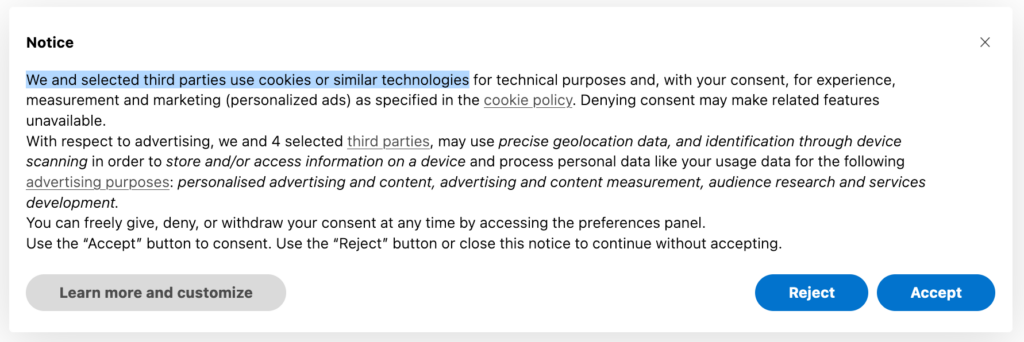
Element #1
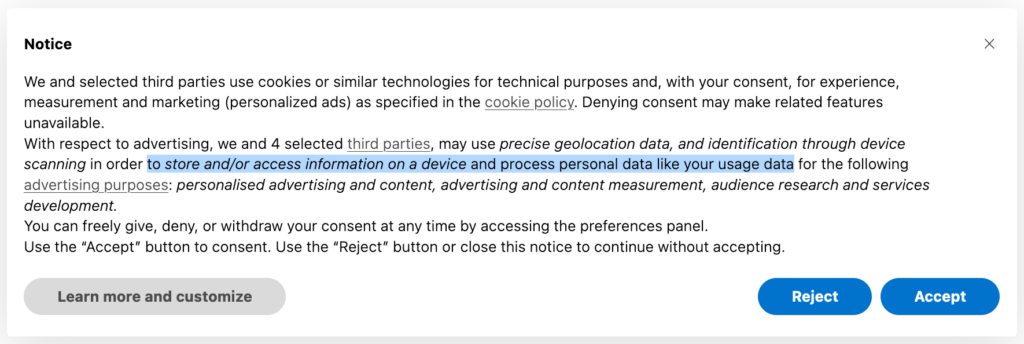
- Information about the fact that information is stored on and/or accessed from the user’s device (e.g. use of cookies, device identifiers, or other device data)
- Information about the fact that personal data is processed, and the nature of the personal data processed (e.g. unique identifiers, browsing data)
Element #2
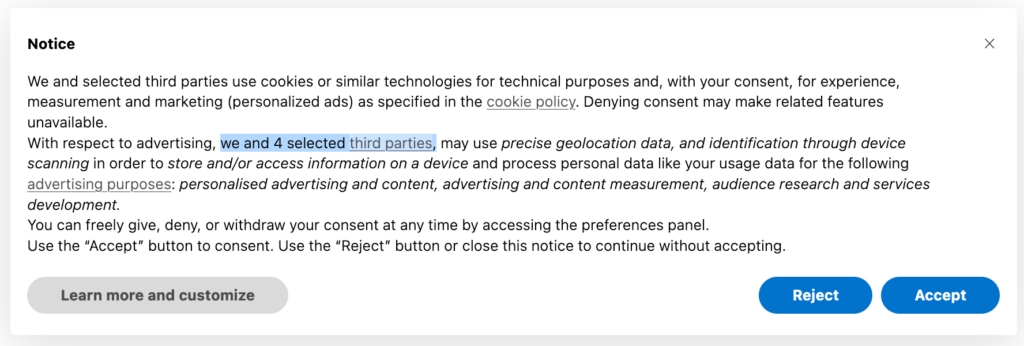
- 🆕 The total number of vendors AND a link to the complete list
Remember to restrict the number of vendors you work with, since an inappropriately large number of vendors may affect the ability of users to make informed decisions and may increase legal risks for both publishers and vendors.
To do so we strongly recommend using our Privacy and Cookie Policy Generator as the 🎖️ Preferred Method for selecting relevant vendors and in order for the Privacy and Cookie Controls Solution to automatically update accordingly.
💡 You can use the %{total_number_of_ads_vendors} shortcode in order to show the count of the vendors included in your Privacy and Cookie Policy or in the CS parameter value (if you choose to manually insert them).
🚨 Without a selection, the Privacy Controls and Cookie Solution will display all TCF vendors, potentially breaching TCF policies.
Element #3
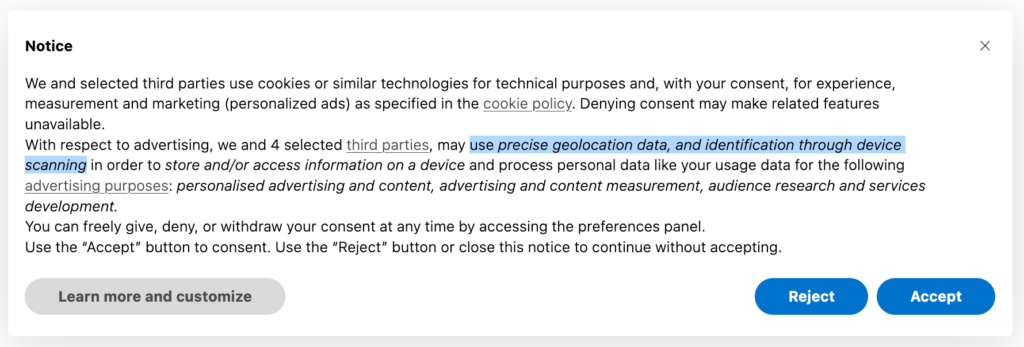
- List of Special features (using at least the standardized names and/or Stack names provided by IAB)
Element #4
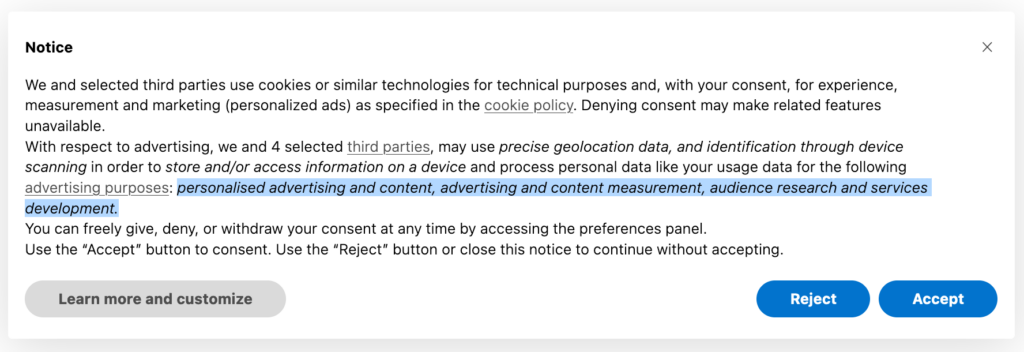
- List of Purposes (using at least the standardized names and/or stack names provided by IAB)
Publishers are free to choose which TCF purposes to prompt, therefore they will be required to list only those purposes actually pursued. By default, the standard text uses the 🆕 stack 42 (that includes all purposes from 2 to 11).
💡 Remember there is a new purpose 11 under TCF v 2.2 that was not present in TCF v 2.1.
Element #5
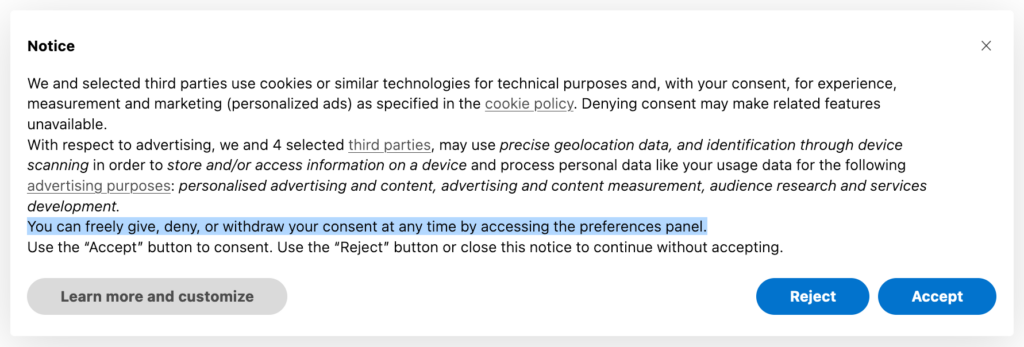
- Information about the fact that the user can withdraw their consent at any time, and how to resurface the Framework UI in order to do so
🚨 Remember to display the Privacy widget or a custom link on every page of your website to allow your users to easily access and edit their preferences.
Element #6
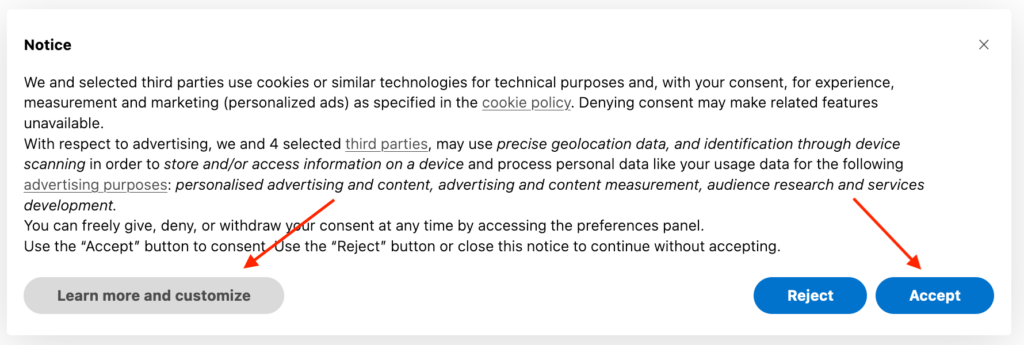
- A call to action for the user to express their consent (for example “Accept”, “Okay”, “Approve”, etc.) and one to customise their choices (for example “Advanced Settings”, “Customise Choices”, etc.)
🚨 Calls to action in a Framework UI must not be invisible, illegible, or appear disabled. While calls to action do not need to be identical, to ensure they are clearly visible, they must have matching text treatment (font, font size, font style) and, for the text of each, a minimum contrast ratio of 5 to 1.
Note
According to the TCF v 2.2 Policies, all the required elements must be made visible to the user in the UI prior to the user being able to give his or her consent. In other words, they must be immediately visible and consequently, the banner text cannot be partially hidden due to scrolling bars.