








There’s a moment every IT and security team recognises. You’ve done the hard work: rolled out SSO, tightened access policies, and moved sensitive tools behind stronger authentication. On paper, it looks like progress.
Then reality shows up in the form of a “quick login” from a personal laptop, a contractor device you don’t manage, or a machine that hasn’t been updated in months. Suddenly, your access decision is only as strong as the device behind it.
In EMEA, it’s particularly challenging to be confident in your device security policies because device posture has to meet stricter expectations. Organisations need to secure unmanaged devices and manage compliance drift while also navigating privacy reviews, procurement scrutiny, and the expectation of a localized user experience that won’t trigger a flood of support tickets. But for EMEA teams, GDPR requirements and the absence of EU data hosting has created real barriers to adopting device security tools.
EMEA-based teams deserve device security tools that are compatible with their regulatory obligations. That’s why we’re happy to announce that 1Password Device Trust is now fully available for EMEA organisations.
Starting March 3rd, 2026, we’re bringing two foundational capabilities for EMEA organizations:
1) EU data hosting
Device Trust customer data can now be hosted in the EU (in Frankfurt, Germany), which is specifically designed to support GDPR-aligned data residency compliance requirements and to meet the expectations of organisations with strict data sovereignty needs.
2) Localised end-user remediation
Device Trust works best when the end-user understands what’s happening and what to do next. With this launch, the end-user experience is now localised across key touchpoints, including the privacy centre, notifications, and step-by-step remediation guidance. Employees can now self-serve themselves into their preferred localized language, such as French, German, Italian, and more.
Secure company data by trusting the device, not just the sign-in
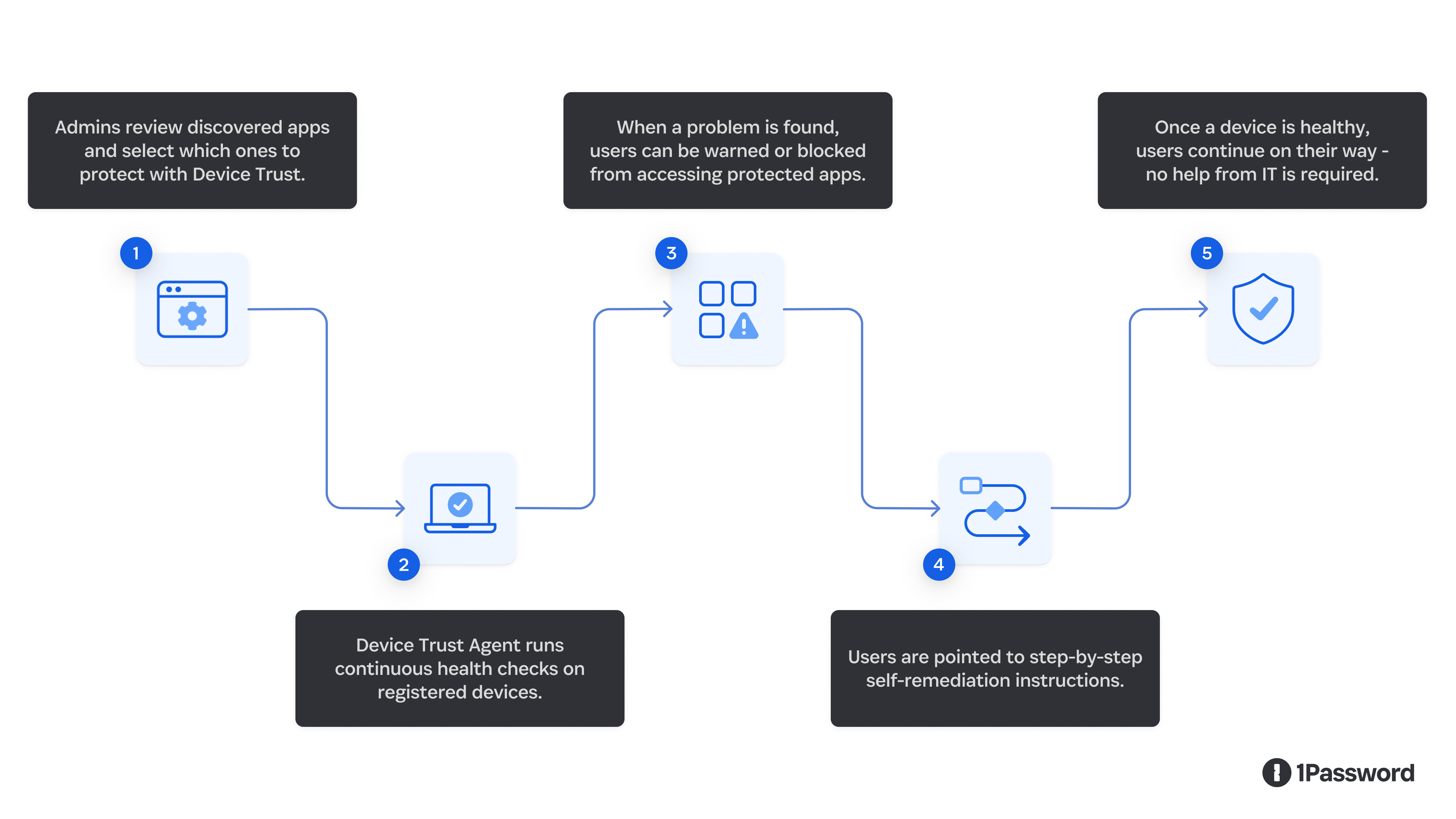
1Password Device Trust lets organisations restrict access based on the health of a user’s device. This way, compromised, unmanaged, or out-of-date endpoints don’t get a free pass to sensitive tools and data.
Now, with EU data hosting, EMEA teams can adopt that control without compromising on data residency requirements.
A smoother rollout that supports employees
When employees get blocked and don’t understand why, they do what humans do: they find a workaround, open a ticket, or both. Localised remediation guidance is a quiet upgrade that pays off quickly:
Less confusion in the moment
More successful self-remediation
Fewer escalations to IT
A clearer, more deployable path to Zero Trust
Zero Trust means never trust by default and verify explicitly using more than just identity. Device Trust adds device posture into the access decision, so you’re not treating every successful sign-in as safe. And because Zero Trust assumes breach, the goal is rooted in reducing the chances a risky device can reach company data, and limiting impact when something goes wrong.
Most organisations already have identity-based access controls via their identity providers (IdPs). The challenge is that identity alone can’t answer a basic question:
Is the device accessing your systems in a state you trust?
This risk manifests in several ways:
Personal and unmanaged endpoints accessing company tools
Contractors working on devices outside corporate control
Teams with limited or no “MDM” coverage
Devices that were once compliant but fall out of policy over time
Employees rapidly adopting new AI and SaaS tools
In other words: access sprawl continues to multiply.
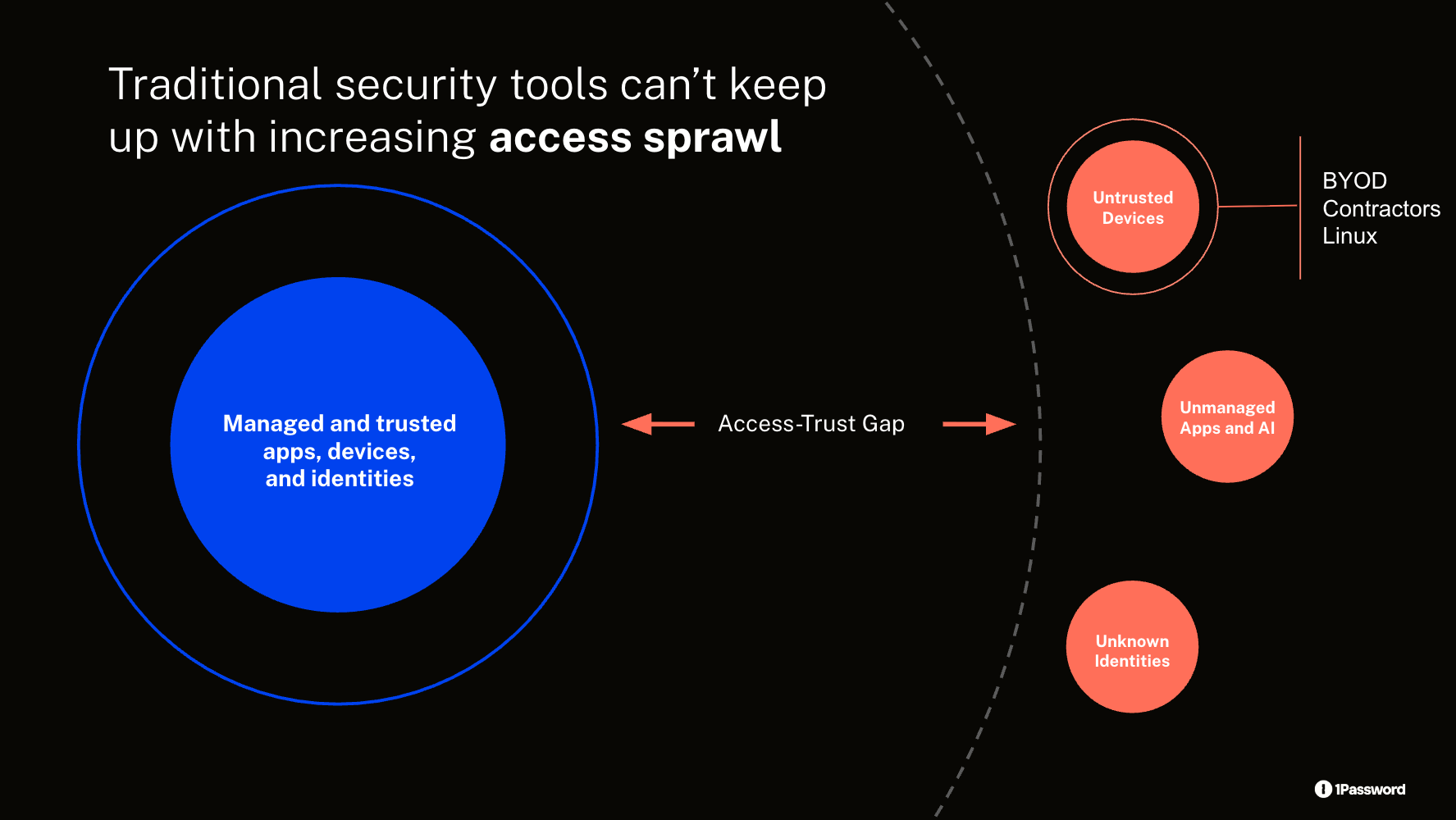
Device Trust is built to help you restore control by adding device health and security posture into access decisions, and by giving users a clear path to remediation when something isn’t right.
IT teams often ask a very practical question:
“Can we apply Device Trust signals where work actually happens, and across the web apps we rely on?”
To answer that question, we developed Extended Device Compliance (EDC), to bring device posture to both SSO and non-SSO applications.
EDC is a feature of Device Trust that broadens coverage by giving you visibility into the web apps employees are using. It evaluates device posture in the browser when a user attempts to access a web app, extending health checks beyond traditional IdP enforcement.
If you’re operating in a world of dozens (or hundreds) of SaaS web apps and AI tools, EDC makes it far easier to focus effort where risk is highest.
You’ll get the most value from this launch if you:
Need EU data residency to meet GDPR or internal sovereignty requirements
Want to reduce risk from unmanaged devices, contractors, or BYOD
Are pursuing Zero Trust and need stronger verification beyond identity alone
Want better visibility and device posture signals across the web apps employees use every day
If EU data hosting and localised remediation are what you need to move forward, then now is the time to revisit 1Password Device Trust.
此内容由惯性聚合(RSS阅读器)自动聚合整理,仅供阅读参考。 原文来自 — 版权归原作者所有。