



Armenia’s increasingly pro-Western foreign policy is causing growing irritation in Moscow. Formally, the latest source of tension is Yerevan’s unpaid membership fees to the Collective Security Treaty Organization (CSTO). In reality, however, the issue runs much deeper: Armenia is gradually withdrawing from the Russian-led security architecture and attempting to reorient its foreign policy towards the West.
At a recent meeting of the CSTO Council of Foreign Ministers, Russian Foreign Minister Sergey Lavrov said that the organisation’s member states intend to consider possible measures against Armenia over its outstanding financial obligations.
“For more than two years, Armenia’s debt to the CSTO budget has remained in a situation provided for by the Charter of the Collective Security Treaty Organization. Today we agreed to consider invoking the relevant article of the CSTO Charter,” Lavrov said.
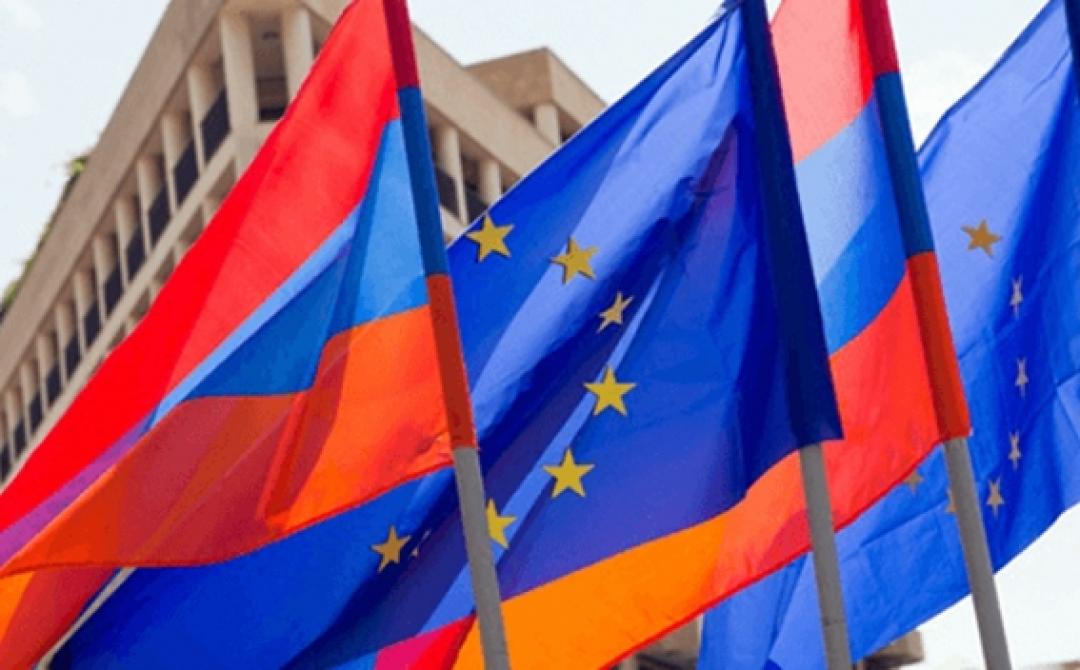
Source: caucasuswatch
He also recalled the position of Armenian Foreign Minister Ararat Mirzoyan, who said Yerevan was not paying contributions because it was no longer participating in the organisation’s activities.
“My colleague Ararat Samvelovich Mirzoyan, when asked about the CSTO, said: ‘We do not pay fees because we simply do not participate,’” Lavrov noted.
This statement merely confirmed what has long been obvious: relations between Armenia and the CSTO are effectively frozen. Since 2024, Yerevan has consistently distanced itself from the organisation, refusing to take part in its activities, withholding membership payments and increasingly discussing the possibility of a full withdrawal.
Prime Minister Nikol Pashinyan has justified this course by arguing that the CSTO failed to fulfil its security obligations towards Armenia. During recent election debates on Public Television, he again made clear that Armenia does not intend to return to full participation in the CSTO and may eventually decide to leave the bloc altogether.
Formally, CSTO membership provided Armenia with important security guarantees. Article 4 of the Collective Security Treaty provides for mutual assistance in the event of aggression against any member state — a mechanism broadly comparable to Article 5 of NATO’s founding treaty. For Armenia, this was long regarded as a key instrument for deterring Azerbaijan and Türkiye.
Membership also gave Yerevan access to Russian weapons on preferential terms. For an Armenian army built over decades around Soviet and Russian military equipment, this was of critical importance. Armenia’s participation in the CSTO also created a political and legal framework for the presence of Russia’s 102nd Military Base in Gyumri and provided Yerevan with a permanent platform for security dialogue with Russia, Belarus, Kazakhstan, Kyrgyzstan and Tajikistan.
Yet over the past few years, this entire framework has largely lost its previous meaning. Armenia remains a CSTO member in legal terms, but politically it has already moved outside this system. Moscow and the CSTO Secretariat continue to regard Armenia as a full member and emphasise that its obligations remain in force. In practice, however, Yerevan has already withdrawn from meaningful allied interaction.
Armenia’s likely withdrawal from the CSTO would deal a noticeable, though not catastrophic, blow to Russia’s image. Above all, it would represent a symbolic defeat, demonstrating the weakening of Russian influence in the post-Soviet space, particularly in the South Caucasus. The CSTO, often described as “Russia’s answer to NATO”, has long been viewed as a structure dependent on Moscow’s political will. Armenia’s departure would amount to a public admission that this format failed to keep even one of the countries most dependent on Russian security guarantees within its orbit.
At the same time, the Kremlin is clearly not interested in a sharp confrontation with Yerevan. Russian presidential spokesman Dmitry Peskov has said that Armenia’s possible withdrawal from the CSTO would be a sovereign decision, while also pointing to the advantages of membership. Russian Deputy Foreign Minister Alexander Pankin has likewise stated that if Armenia fails to pay its contribution, member states may consider various scenarios, but automatic expulsion is unlikely.
This caution is understandable. Moscow realises that Armenia has de facto already left the CSTO. However, a formal withdrawal would create a new political precedent that would be actively used against Russia. The Kremlin is therefore trying to avoid an abrupt break, hoping to keep Armenia at least within its economic orbit, primarily through the Eurasian Economic Union.
The main paradox is that Russia suffered its most painful reputational blow not now, when Armenia stopped paying its membership fees, but earlier — when the CSTO did not intervene during the events surrounding Karabakh and the Armenian-Azerbaijani confrontation of 2020–2022.
From a legal perspective, the situation was more complicated than Yerevan presents it. In 2020, Azerbaijan conducted a military operation on its internationally recognised territory. This meant that the CSTO had no direct legal grounds for intervention. Karabakh was not part of Armenia’s territory; therefore, the collective defence clause could not formally be invoked.
Later, in 2021–2022, Armenia claimed that Azerbaijani forces had entered Armenia’s sovereign territory. Yet even here the issue was not straightforward, as the border between Azerbaijan and Armenia had not been fully delimited. Nevertheless, Yerevan used these episodes as evidence that the CSTO was unwilling to defend Armenia even in a situation that the Armenian side described as aggression against a member state.
This argument became central to Pashinyan’s rhetoric. The Armenian prime minister did not merely criticise the CSTO for inaction. He effectively questioned the very nature of allied obligations within the organisation. Moreover, Pashinyan claimed that he knew of “at least two CSTO countries” that had participated in preparing a war against Armenia. This was not a routine diplomatic complaint but a direct political accusation that allies were complicit in actions against a member of the bloc.
For Russia, this narrative is extremely damaging. It creates a simple and uncomfortable question: why sign security treaties with Moscow if those treaties do not work at a critical moment? This question is now being raised not only in Armenia but also in expert circles across Central Asia, the wider post-Soviet space and among countries closely watching the real value of Russian guarantees.
That is why Armenia’s departure from the CSTO matters not so much as a technical fact but as a political symbol. Losing one member of the bloc is unpleasant, but not disastrous. Far more damaging is the public confirmation that the Russian-led collective security system failed to convince one of its own members of its effectiveness. This precedent will be cited for years in debates about Russia’s reliability as a security guarantor.
However, this does not mean that the CSTO is doomed to collapse. On the contrary, the organisation is likely to survive, albeit in a narrower and more pragmatic form. Armenia has always been something of an anomaly within this structure — a geographically detached member with a very different set of security concerns. For Yerevan, the CSTO was primarily an instrument of deterrence in the Karabakh conflict. For Central Asian states, the organisation serves a different purpose.
Russia attaches great importance to the CSTO precisely because of its role in Central Asia, a region it continues to regard as part of its strategic sphere of interest. The military-strategic importance of this direction for Moscow is considerable. Twelve constituent entities of the Russian Federation border countries of the region across roughly 7,500 kilometres. Central Asia also hosts important infrastructure and transport links that matter for Siberia and the Russian Far East.
The CSTO provides Russia with a legal framework for military deployments, exercises, consultations and rapid crisis response on allied territories. Without such a framework, any Russian military presence would appear far more politically vulnerable and controversial. It was through the CSTO that a contingent was rapidly deployed to Kazakhstan during the January 2022 unrest — one of the few examples of the organisation’s mechanisms being used quickly and effectively.
As China’s economic and diplomatic influence in Central Asia grows, the CSTO remains one of the few frameworks in which Moscow sets the rules of the security game. In the Shanghai Cooperation Organisation, China carries significant economic weight, whereas the CSTO remains a platform where Russia retains military-political leadership. For Moscow, therefore, the organisation is important not so much as a universal equivalent of NATO, but as an instrument for maintaining strategic influence in Central Asia.
Kazakhstan, Kyrgyzstan and Tajikistan retain a genuine interest in the CSTO. Their security concerns are concrete and practical: instability in Afghanistan following the Taliban’s return to power, cross-border terrorism, drug trafficking, illegal migration, border tensions and ethnic conflicts. These are precisely the areas where the CSTO can still prove useful.

Source: ecmi.de
In other words, Central Asian states are watching the crisis surrounding Armenia, but their reasons for remaining in the organisation are fundamentally different. They are not disappointed in the CSTO in the same way Armenia is, because their expectations of the bloc are not linked to support in a territorial conflict but to assistance in countering non-traditional threats. Neither the Shanghai Cooperation Organisation nor any other regional structure offers comparable military-political guarantees.
Therefore, Armenia’s withdrawal would damage Russia’s image but would not destroy the CSTO. Rather, it would accelerate the organisation’s transformation from an attempted full-scale collective defence bloc into a narrower Russian-Central Asian security mechanism. In this configuration, the CSTO would focus less on traditional collective defence against external aggression and more on counterterrorism, drug trafficking, instability emanating from Afghanistan and internal regional crises.
The main risk for Moscow is not the loss of Armenia itself. Far more dangerous is the normalisation of distancing: if Yerevan can spend years refusing to participate in the organisation’s work, avoiding membership payments and still retaining formal membership, other participants may conclude that obligations within the CSTO are flexible and optional. That would undermine discipline within the bloc more seriously than Armenia’s demarche itself.
Nevertheless, the CSTO is likely to survive in the coming years. However, it will no longer be the organisation Moscow once tried to present as a full-fledged collective defence system for the post-Soviet space. Instead, it is more likely to become a pragmatic instrument of Russian influence in Central Asia — a region where Russia is not prepared to cede ground either to China or to the West.
Armenia, in this new configuration, increasingly appears to be an outlier. Its departure would be a symbolic defeat for Moscow, but it may also allow the CSTO to reorient itself towards the tasks it can realistically perform. For Russia, this would be a painful but manageable loss. For Armenia, it would represent a demonstration of its new foreign policy course. And for the wider post-Soviet space, it would be another sign that the old system of alliances has entered a period of profound transformation.
(If you possess specialized knowledge and wish to contribute, please reach out to us at opinions@news.az).
此内容由惯性聚合(RSS阅读器)自动聚合整理,仅供阅读参考。 原文来自 — 版权归原作者所有。