

惯性聚合 高效追踪和阅读你感兴趣的博客、新闻、科技资讯
阅读原文 在惯性聚合中打开

推荐订阅源

Y
Y Combinator Blog
MyScale Blog
MyScale Blog
Recent Announcements
酷 壳 – CoolShell
酷 壳 – CoolShell
GbyAI
GbyAI
freeCodeCamp Programming Tutorials: Python, JavaScript, Git & More
Cyber Security Advisories - MS-ISAC
N
Netflix TechBlog - Medium
V
V2EX
MongoDB | Blog
MongoDB | Blog
Microsoft Security Blog
博客园 - 三生石上(FineUI控件)
Stack Overflow Blog
Stack Overflow Blog
U
Unit 42
B
Blog
Microsoft Azure Blog
博客园_首页
H
Help Net Security
D
DataBreaches.Net
OSCHINA 社区最新新闻
OSCHINA 社区最新新闻
阮一峰的网络日志
阮一峰的网络日志
T
The Blog of Author Tim Ferriss
C
Check Point Blog
奇客Solidot–传递最新科技情报
奇客Solidot–传递最新科技情报

Futurism

Meta Installing Software on Employee Computers to Track Everything They Do, Feed the Data to AI Concern Grows That AI Is Damaging Users’ Cognitive Abilities JPMorganChase Data Center Gets $77 Million Handout to Create Grand Total of One Job Nvidia CEO Loses His Cool at Tough Question CEO of $1.5 Billion AI Startup Accused of Massive Fraud by Justice Department Palantir Issues Ominous Corporate Manifesto Madison Square Garden Reportedly Used Facial Recognition to Stalk Trans Woman For Two Years The Florida Mass Shooter’s Conversations With ChatGPT Are Worse Than You Could Possibly Imagine China Is Starting to Pull Ahead of US in AI Race AI Company Known for Teen Suicides Launches New Feature to Turn Books Into Roleplaying Experiences Study Finds AI Use Eats Away at Users’ Confidence in Their Own Brains Democrats Warned Not to Upset Multi-Million Dollar AI Lobbyists, Even Though It’d Be a Slam Dunk With Voters City Council Wrecked in Voter Bloodbath After Allowing New Data Center Mother Reportedly Doesn’t Know Her Son Died Because She’s Been Talking to an AI Version of Him Things You Told ChatGPT or Claude My Have Already Doomed You in Court Millions of Americans Are Talking to AI Instead of Going to the Doctor, and It’s Giving Them Horrendously Flawed Medical Advice There Are Signs of a Massive AI Backlash A Prominent PR Firm Is Running a Fake News Site That’s Plagiarizing Original Journalism at Incredible Scale Fury Erupts as Val Kilmer’s Estate Announces Starring Role in AI Film Made From Beyond the Grave Allbirds Stock Now Crashing as Reality Sets in About Its Delusional AI Pivot NAACP Sues Elon Over His Noxious AI Data Center Top Security Experts Alarmed by Power of Anthropic’s New Hacker AI Teens Alarmed at What AI Is Doing to Their Minds What It Really Means That a Failing Shoe Brand “Pivoted to AI” and Its Stock Soared 700 Percent Starbucks’ Baffling ChatGPT Collab Treats Customers Like Empty, Soulless Venti Cups ChatGPT’s “Honest Reaction” to a “Song” Composed Entirely of Gas-Passing Noises Will Make You Question Whether It’s Honestly Evaluating Your Other Brilliant Ideas AI Is Turning Workplaces Into Hopeless Gridlock Companies Just Learned a Brutal Lesson About Training AI to Do Human Jobs Berklee College of Music Students Furious That It’s Offering an AI “Songwriting” Class Usually, Young People Embrace New Technology. Gen Z’s Attitude Toward AI Should Worry the Entire Tech Industry
AI Will Consume as Much Water as a Billion People By 2030...
Frank Landymore · 2026-06-06 · via Futurism

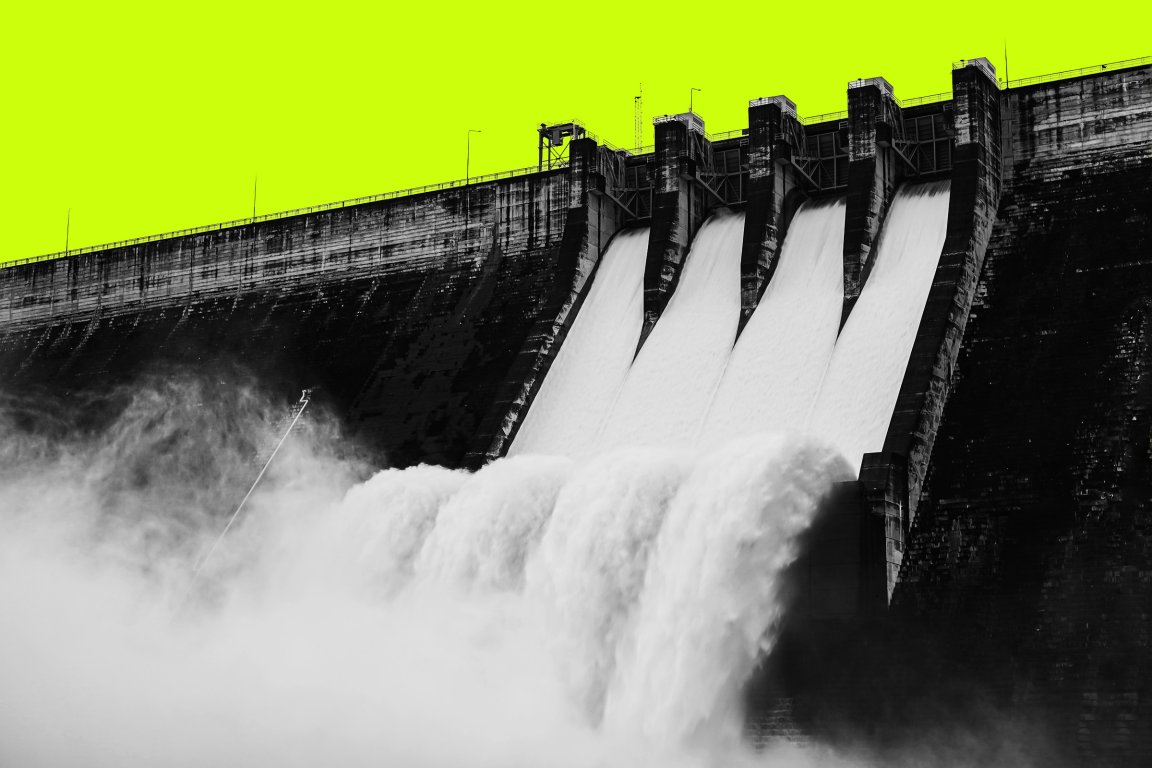
Photo illustration featuring massive dam releasing a deluge of water.

Illustration by Tag Hartman-Simkins / Futurism. Source: Shutterstock

Sign up to see the future, today

Can’t-miss innovations from the bleeding edge of science and tech

AI data centers will consume as much water as the water needs of 1.3 billion people by 2030, according to a new report from the United Nations University Institute for Water, Environment and Health.

The report, released this week, found that the environmental cost of AI is being “systematically mismeasured” because current assessments focus on the carbon emissions from training large language models while overlooking the tech’s broader water and land footprint. The water footprint comes from cooling and powering the data centers, and the land footprint comes from the energy infrastructure and supply chains that go into building and running them.

In reality, the report stresses, these initial training costs are dwarfed by inference costs, meaning the cost of running the models to answer prompts, which make up 80 to 90 percent of total AI energy use. Training OpenAI’s GPT-4 model consumed up to 70 gigawatt-hours of electricity, for example. But running ChatGPT, it’s estimated, uses a monstrous 383 GWh from answering billions of prompts per day.

Factoring in inference costs, data centers powering AI will use 945 terawatt-hours of electricity by 2030, the report found, which is triple the combined electricity use of Pakistan, Bangladesh, and Nigeria — which, altogether, are home to over 650 million people.

That brings us to the water footprint. By that same year, AI’s thirst will see it consume 9.3 trillion liters water — which is equal the basic annual water needs of all 1.3 billion people in Sub-Saharan Africa.

Addressing AI’s environmental impact won’t be as straightforward as transitioning to greener sources of power, the report warns. Ditching coal in favor of bioenergy could slash carbon emissions associated with electricity costs by 70 percent, but cause the water footprint to surge by 30 times, and the land footprint by 100 times.

“What surprised us most is how often the choices that look greenest from a carbon perspective end up worse for water or for land,” report lead author Miriam Aczel, an UNU-INWEH researcher, said in a statement about the findings.

“If we keep judging AI sustainability by carbon alone, we might think that renewables make AI infrastructure clean but that is solving one problem while creating other problems, often in places that didn’t ask for it,” she added.

And the hits just keep coming: paradoxically, making AI more energy efficient may actually increase its environmental footprint. 

“A lot of people think that the environmental footprint of AI reduces, as technology improves and processes become more efficient. But that is only a partial picture of the overall problem,” coauthor Kaveh Madani, director of UNU-INWEH, said in the statement. “More efficient and affordable AI and energy mean more consumption of AI, making the overall footprint far bigger than what we save through efficiency gains.”

More on AI: Neighbors Horrified by Data Center Twice the Size of Manhattan