




MINISTER FOR JUSTICE Jim O’Callaghan has said Ireland wants to opt into new EU rules that could allow failed asylum seekers to be sent to so-called “return hubs” outside the European Union.
Speaking on RTÉ’s This Week, O’Callaghan said the government intends to opt into the EU’s new Return Regulation, which includes provisions allowing member states to establish return hubs in third countries for people whose asylum applications have been rejected.
“I’ve indicated that Ireland wants to opt into that, but that is going to take a period of time,” O’Callaghan said.
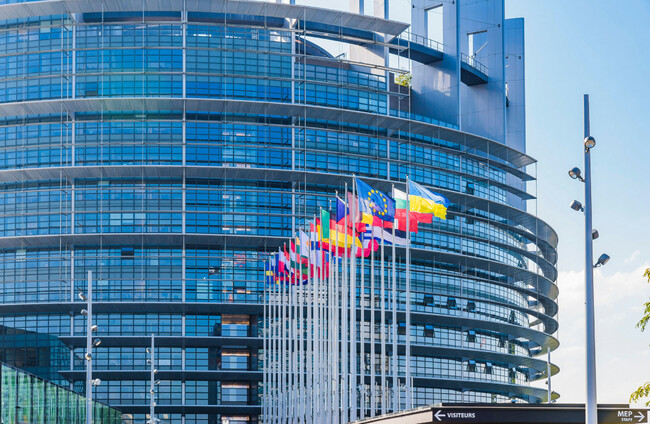
The European Parliament approved the new rules earlier this month. Among the most controversial elements is the creation of return hubs outside the EU, where unsuccessful asylum applicants could be transferred before being returned to their country of origin.
Destinations reportedly under consideration to host the return hubs include Rwanda, Uganda, Uzbekistan, Tunisia, Libya, Egypt, Ethiopia, Mauritania and Kazakhstan.
The proposals have been strongly criticised by human rights organisations and some political groups, who argue they risk outsourcing asylum responsibilities and human rights protections to third countries.
Human Rights Watch has argued that the EU “should drop” the plans, stating: “It is unclear whether people will be detained wherever they go and for how long, whether they will be deported onward to their country of origin despite threats to their rights, or if they will have opportunities to rebuild their lives in a country to which they have no connection.”
Several EU member states, including Germany, Austria, Denmark and the Netherlands, have expressed interest in pursuing the model.
Asked whether Ireland would make use of return hubs, O’Callaghan said the issue would need further examination.
“The issue will have to be looked at to see whether there can be efficiencies, and if it’s going to be possible to have a system in place where there is a return hub that operates effectively and fairly and does respect the principle of non-refoulement,” O’Callaghan said.
Non-refoulement is a principle of international law that prohibits countries from returning people to places where they face persecution, torture or other serious harm.
Questioned on why Ireland was opting into the regulation despite concerns raised by opponents, O’Callaghan said the government wanted to keep its options open.
“Ireland is in a good position in respect to this, because we can see how the Returns Regulation will progress. Nothing has been done as of yet,” O’Callaghan said.
“What is apparent, however, is that individual countries, France and Germany, are looking at their own individual options.
“I will keep an open mind in respect of it, because I think it may provide solutions in due course.”
Pressed on whether children could ultimately be sent to return hubs, O’Callaghan said no decisions had yet been made on how the system would operate.
“We haven’t determined, or the EU hasn’t determined within the Returns Regulation what EU return hubs would be used,” he said.
“Ireland wouldn’t be complying with it or going along with it if it didn’t respect human rights, and neither would the EU Commission and the Parliament go along with it.”
O’Callaghan also defended the government’s approach to deportations, describing them as “an essential part of any asylum system”.
“If we’re not going to have deportations, what’s the point of having a process at all?” O’Callaghan said.
“If people think they can come to a country, claim asylum, and it doesn’t matter if you don’t get asylum because you can stay anyway, that’s a recipe for disaster.”
The minister said more than 1,100 people have been returned from Ireland so far this year, including both voluntary and enforced returns.
Asked about homelessness among people leaving the international protection system, O’Callaghan said accommodation provided under the system is intended only for those with active asylum applications.
“We have 33,000 people being accommodated within the international protection system,” O’Callaghan said.
“That accommodation is for people who are applying for international protection. It is not there for people who have been granted international protection, or people indeed have been refused international protection.”
He added that he could not “be in the business of providing accommodation” for people whose applications had been decided, saying doing so would require opening additional international protection centres around the country.