









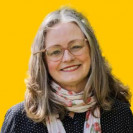
Susan Bennett and her husband Chris were living busy lives in Belfast when, in their mid-30s, in the same week and at the same hospital, they were both diagnosed with multiple sclerosis.
The shocking news nudged them to make major life changes and follow a long-held dream. They set about simplifying everything, packing up their lives, and taking to the road for a year in their campervan, Hans.
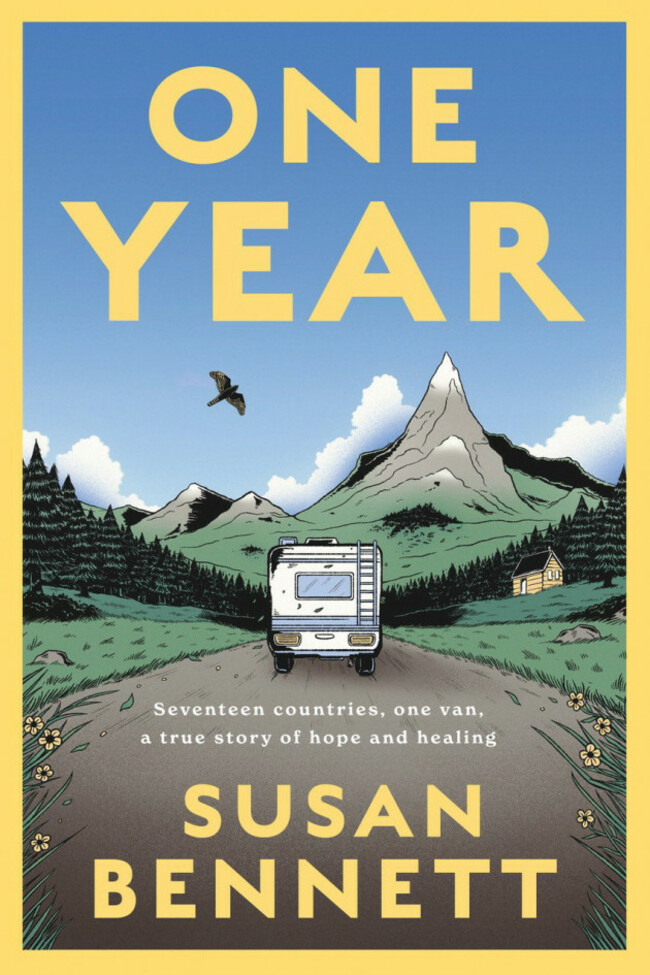
Susan’s memoir, One Year, tells the story of that journey and the opportunities it presented for processing grief and learning to stop and breathe. In this extract from the book, Susan writes about the years of quiet frustrations that led to the moment they finally cut the strings and took to the road…
WE HAD PLANNED this for the longest time. The Big Trip. The Year Out. Many years ago, just before Chris and I got married, we’d bought a clapped-out old van and converted it into a campervan (of sorts) and taken it travelling for three months on a UK honeymoon.
Ever since, we’d promised ourselves that we’d do it again, but this time properly. Maybe when we were old – say, in our mid-40s. Well, as tends to happen, we got old. Midlife had arrived while we were looking elsewhere. Time passed, and always on the horizon was the dream of packing all our stuff into a van and running off towards the sunset.
Reader, we did it.
After many false starts and delays and problems, we hit the road on a grey spring day in early May 2018, waving from the ferry to family members we knew were waiting on the shore – invisible, but there.
It felt surreal after all that time. It still feels surreal now, like it happened to someone else. Of course, there had been obstacles in our path to freedom: bureaucracy, bereavement, fear, loss and ill-health. Who does this? Who simply packs it all in and runs away for a whole year? Are you mad? The ties that bind were strong, but we cut the strings – some on purpose, some just fell away of their own accord – and we disentangled ourselves from our lives in Belfast.
The decade leading up to the trip had been challenging, there’s no denying it. It felt as if life was closing in. I’ve always been fairly stoic, shrugging my shoulders when life gets tough before quickly getting back on the horse. But something had been niggling in the back of my mind for too long. The careful numbing of the pain I had been feeling had also numbed my capacity for joy. I was immobile, no ups and downs, and I had congratulated myself for feeling safe. Numb but safe. Stable Susan had been my nickname and my mantra, but it was becoming a burden.
Taking the leap
I was starting to question things on dark nights when I was filled with fear. In those liminal times, nothing was off the table: marriage, grief, money, ageing, parenthood (or lack thereof).
I would tiptoe towards topics of such magnitude that I felt dwarfed by their shadow as I looked for an answer. Chris and I had chosen not to have children, a decision that had felt fundamentally right for us – but as the years passed and the incomprehension of those around us only became more entrenched, I sometimes found myself doubting our resolve.
Upon meeting someone new, I would fumble an answer to that inevitable question, ‘So, do you have kids yourself?’, trying to feel both confident and accepted. When I was in my 30s, this question was usually followed by a sad tilt of the head, and then eventually the questions stopped.
It should have been a relief, and in many ways it was, but I knew that this shift had only taken place because assumptions were made and became firmly attached to some ‘inner sadness’ that obviously I couldn’t talk about. Women, and happily married women at that, are surely only childless for sad reasons. This was not true for me, but I didn’t know how to tell the truth. And I wanted to be mindful of those for whom the lack was a loss.
It was messy and complicated to talk about, so it became easier to avoid the topic altogether. And then as middle age approached, I grew fearful of a mystical biological clock that might just start to tick when it was too late. Or, and these things happen, what if Chris suddenly changed his mind?
Spiritual growth
Then I’d move on to another big question – was I losing my faith? Since childhood, Sunday schools and teenage church groups, I had grown a strong spiritual life. It felt safe and easy to follow this straight path towards young marriage and faith-based work. Chris was passionate and enthusiastic about his faith, and I admired his ability to bring thoughtful depth to life decisions.
The bubble of the church world grew around my expectations and dreams until I no longer recognised them. We live in echo chambers that make us feel safe, and mine was indeed large and formidable; when it wobbled, it was frightening. For so many years, our daily lives had been steeped in the church and everything related to it. As soon as he’d finished school, Chris had followed a strong sense of vocation to become professionally involved in the church, and I was committed to supporting his work in whatever way I could, while trying to pursue a working life of my own as a fundraiser in various different charities and then studying psychology and working with clients who were experiencing bereavement.
But after the initial excitement of Chris’s appointment in 2009 to a role as chaplain in Belfast’s new Titanic Quarter, which soon turned into a wonderful community project and honesty-box café, I was beginning to find the constant, endless demands of service to others were taking their toll. The Dock had become a legend in its own lifetime; it was famous, and we loved it. But it was all on top of my own job in a local charity. I was just so tired.
And my nighttime ruminations would invariably lead me to the most pressing question of all: why was I still unwell? Since 2006, I had been experiencing intermittent headaches and nausea with some dizzy spells. My GP visits would involve a brief chat, little eye contact and some advice on stress-relieving techniques or medication for inner ear issues.
Labyrinthitis (an infection of the inner ear) was suggested; stress at work; women’s problems. All this time, I sensed something was up, but it was something I struggled to put into words. And, of course, it’s impossible to offer everyone a scan when they talk of headaches, or to really delve into any such problem.
So I don’t blame the medical professionals who missed the fact that a blood clot was slowly forming in my brain.
Susan Bennett is a writer based in Co. Antrim. She has been longlisted for the Cambridge Short Story Prize and shortlisted for the Oxford Flash Fiction Prize and is a regular contributor to BBC Radio Ulster’s Thought for the Day. Her new book, One Year, is available now, published by Gill Books.