



惯性聚合 高效追踪和阅读你感兴趣的博客、新闻、科技资讯
阅读原文 在惯性聚合中打开

推荐订阅源

人人都是产品经理
人人都是产品经理
freeCodeCamp Programming Tutorials: Python, JavaScript, Git & More
宝玉的分享
宝玉的分享
月光博客
月光博客
爱范儿
爱范儿
让小产品的独立变现更简单 - ezindie.com
WordPress大学
WordPress大学
有赞技术团队
有赞技术团队
阮一峰的网络日志
阮一峰的网络日志
博客园_首页
钛媒体:引领未来商业与生活新知
钛媒体:引领未来商业与生活新知
博客园 - 三生石上(FineUI控件)
博客园 - 聂微东
小众软件
小众软件
量子位
MongoDB | Blog
MongoDB | Blog
Blog — PlanetScale
Blog — PlanetScale
The Cloudflare Blog
Stack Overflow Blog
Stack Overflow Blog
U
Unit 42
Hugging Face - Blog
Hugging Face - Blog
T
The Blog of Author Tim Ferriss
H
Help Net Security
Cyber Security Advisories - MS-ISAC

TheJournal.ie

Court told Eleanor Donaldson placed bugging device in her husband’s car over fears of affair TD says she's been left with 20cm scar after skin cancer diagnosis Homelessness: Record number in emergency accommodation, including new high for children Blue Origin rocket explodes during test launch John Gibbons: The planet is burning, but Ireland still isn't taking climate change seriously 'Truly devastating': Tributes paid to Masuma Sohrabi after stabbing in Clifden Mother and carer: You don't appreciate public services until your child needs them to survive Left or right? Sinn Féin's fence-sitting may be about playing the long game Gavan Reilly: Gerry Hutch and his 30% vote in Dublin Central's best-heeled area Gavan Reilly: The Gerry Hutch 37.1% share of the vote in the shadow of the IFSC Ebola on the rise: Why the latest outbreak should concern all of us Ireland's data centre energy drain: How Big Tech added €1.4bn to household electricity bills Living with myeloma: 'I chose not to fight this blood cancer, but to instead live alongside it' Alberta’s separation bid: How Canada’s next political crisis could come from within Kelly Earley: Militarism might be Ireland’s next economic disaster Raising them right: Ireland has a dog poo problem, and we parents are sick of stepping in it Money Diaries: A recently graduated digital journalist on €35K living in Dublin Global tech job losses: Is ‘AI-washing’ the new trend nobody wants to call out? Down on the farm with a difference: This is what happens when animals are allowed to feel safe Surrealing in the Years: Some shameful Irish attitudes take a leaf out of Israel's book Motoring: Should we trust self-driving cars? The physio is in: Ireland is growing older, but are we moving enough to age well? Tech dubbed 'creepy': AI smart glasses are here, but our privacy laws have not caught up Larry Donnelly: The polls point one way for Friday but byelections rarely follow the script The war on human thought: Educational institutions must take back control from AI The Bee Guy: World Bee Day won't save our little bee friends Kelly Earley: Could Mountjoy Square be Dublin’s most important park? Money Diaries: How is your spending and saving going? Would you like to keep a diary for us? Rearing them right: Should modern parents bring back ‘the man’? Ireland's energy future: What if the real failure here is that we stopped thinking bigger?
www.thejournal.ie
https://www.thejournal.ie/author/eimer-mcauley/ · 2026-06-20 · via TheJournal.ie

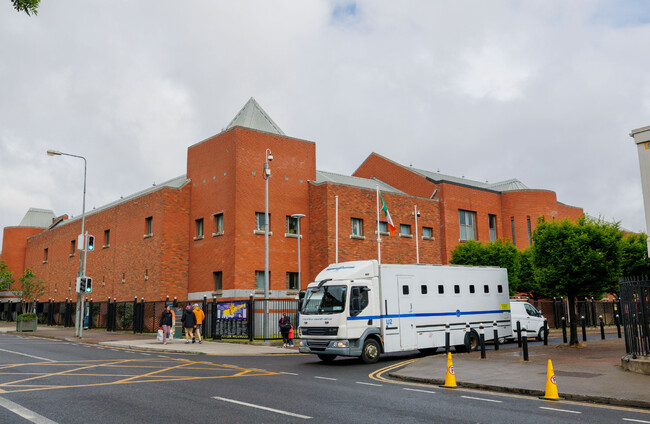
The Dóchas Centre in Dublin. Irish Prison Service.

Penal Reform

Calls made through in-cell landlines will be recorded and subject to monitoring.

A NEW PILOT program to allow prisoners to receive phone calls from listed friends and family members to landline phones in their cells could be expanded, the Irish Prison Service (IPS) has said. 

Inmates in the women’s Dóchas Centre and the Training Unit at Mountjoy Prison now have phones installed in the “vast majority of cells” as the project is being rolled out, an IPS spokesperson has said. 

The Dóchas Centre is on the Mountjoy campus in Dublin, it features residential-style units and operates on a community-based model. In the last year it has dealt with significant overcrowding issues, as it reported earlier this year that it was at times operating at 155% capacity. 

The Mountjoy training unit has 96 cells. It exclusively houses older male prisoners, many of whom are nearing the end of their sentence and are focusing on planning for life outside of prison, and reintegrating into society. 

The inbound phone scheme that began this week allows prisoners to receive calls during lock-up hours between 7.30am and 11pm. 

Enda Lee, press officer with the IPS, said that when it comes to planning for reintegration, building up contact with family and friends is vital. 

“It supports family reintegration, people who are successful with adjusting to life after prison are those with strong supports and a network on the outside, so it’s way of keeping a link between the person in prison and the person at home,” he said. 

He added that there can be “competition” for accessing shared phones at the end of prison floor landings. 

“The six-minute phone call has always been the thing, and you don’t get a second call. So this is about a chance to get another call from the family, at a time that suits family members to make that call themselves, because it can be difficult for people with busy lives and kids,” Lee said. 

Lee said that the IPS is open to expanding the pilot to higher security prisons if the three-month pilot program goes well. 

“Anything that’s brought into a prison can be abused, and these phone lines will still be monitored – calls will be recorded – so we’re not ruling putting them in Portlaoise or other prisons if the trial goes well,” he added. 

Access in in-cell phones is a privilege, and can be taken away in the event of misuse. 

Saoirse Brady, the director of the Irish Penal Reform Trust (IPRT), has welcomed the new initiative, she said it will foster “stronger family relationships”. 

She added that the chronic overcrowding levels in prisons means that the system for booking visits to see prisoners via the phone and online is under pressure as staff are “overstretched”. 

Brady said that in this context, in-cell phones could prove to be a “vital way” of maintaining family contact. 

Brady flagged that the IPRT is conscious that “many people are currently sharing a cell” and that this may cause issues and challenges that would need to be addressed as the rollout of the program continues. 

She added that Ireland does not allow prisoners who are married or in long-term relationships to have conjugal visits, and the lack of privacy with the existing phone facilities means that there is little opportunity for people to have “any level of intimacy or private in-person conversations”. 

Brady said that its particularly welcome that the pilot is being extended to the Dóchas centre. 

“We know that many women in custody are mothers and primary caregivers, and the lack of contact with their children has long-lasting negative impacts on their wellbeing and can be deeply distressing for their children,” she said.

Readers like you are keeping these stories free for everyone...

A mix of advertising and supporting contributions helps keep paywalls away from valuable information like this article. Over 5,000 readers like you have already stepped up and support us with a monthly payment or a once-off donation.