



惯性聚合 高效追踪和阅读你感兴趣的博客、新闻、科技资讯
阅读原文 在惯性聚合中打开

推荐订阅源

Blog — PlanetScale
Blog — PlanetScale
SecWiki News
SecWiki News
Google DeepMind News
WordPress大学
WordPress大学
小众软件
小众软件
C
CERT Recently Published Vulnerability Notes
Jina AI
Jina AI
N
Netflix TechBlog - Medium
GbyAI
GbyAI
IT之家
IT之家
Apple Machine Learning Research
AWS News Blog
AWS News Blog
G
GRAHAM CLULEY
L
Lohrmann on Cybersecurity
C
Cybersecurity and Infrastructure Security Agency CISA
I
Intezer
T
Tor Project blog
P
Palo Alto Networks Blog
P
Privacy & Cybersecurity Law Blog
P
Privacy International News Feed
Threat Intelligence Blog | Flashpoint
P
Proofpoint News Feed
T
Tailwind CSS Blog
C
Check Point Blog
Cloudbric
Cloudbric
Y
Y Combinator Blog
The Last Watchdog
The Last Watchdog
Forbes - Security
Forbes - Security
Last Week in AI
Last Week in AI
S
Security Affairs
博客园 - Franky
F
Fortinet All Blogs
量子位
M
MIT News - Artificial intelligence
C
Cisco Blogs
酷 壳 – CoolShell
酷 壳 – CoolShell
Stack Overflow Blog
Stack Overflow Blog
S
Secure Thoughts
V
Visual Studio Blog
AI
AI
美团技术团队
B
Blog RSS Feed
Application and Cybersecurity Blog
博客园 - 三生石上(FineUI控件)
阮一峰的网络日志
阮一峰的网络日志
Engineering at Meta
Engineering at Meta
人人都是产品经理
人人都是产品经理
Microsoft Security Blog
T
Threatpost
Cyberwarzone
Cyberwarzone

TheJournal.ie

Court told Eleanor Donaldson placed bugging device in her husband’s car over fears of affair TD says she's been left with 20cm scar after skin cancer diagnosis Homelessness: Record number in emergency accommodation, including new high for children Blue Origin rocket explodes during test launch Uber app now allows passengers to audio record their journey if they feel unsafe John Gibbons: The planet is burning, but Ireland still isn't taking climate change seriously 'Truly devastating': Tributes paid to Masuma Sohrabi after stabbing in Clifden Mother and carer: You don't appreciate public services until your child needs them to survive Left or right? Sinn Féin's fence-sitting may be about playing the long game Gavan Reilly: Gerry Hutch and his 30% vote in Dublin Central's best-heeled area Gavan Reilly: The Gerry Hutch 37.1% share of the vote in the shadow of the IFSC Ebola on the rise: Why the latest outbreak should concern all of us Ireland's data centre energy drain: How Big Tech added €1.4bn to household electricity bills Living with myeloma: 'I chose not to fight this blood cancer, but to instead live alongside it' Alberta’s separation bid: How Canada’s next political crisis could come from within Kelly Earley: Militarism might be Ireland’s next economic disaster Raising them right: Ireland has a dog poo problem, and we parents are sick of stepping in it Money Diaries: A recently graduated digital journalist on €35K living in Dublin Global tech job losses: Is ‘AI-washing’ the new trend nobody wants to call out? Down on the farm with a difference: This is what happens when animals are allowed to feel safe Surrealing in the Years: Some shameful Irish attitudes take a leaf out of Israel's book Motoring: Should we trust self-driving cars? The physio is in: Ireland is growing older, but are we moving enough to age well? Tech dubbed 'creepy': AI smart glasses are here, but our privacy laws have not caught up Larry Donnelly: The polls point one way for Friday but byelections rarely follow the script The war on human thought: Educational institutions must take back control from AI The Bee Guy: World Bee Day won't save our little bee friends Kelly Earley: Could Mountjoy Square be Dublin’s most important park? Money Diaries: How is your spending and saving going? Would you like to keep a diary for us? Rearing them right: Should modern parents bring back ‘the man’? Ireland's energy future: What if the real failure here is that we stopped thinking bigger? Barry Cummins: I shudder to think I sat in Tina Satchwell’s home while her body lay buried there Richard Boyd Barrett: Sanction Israel now, the way we did Russia An Spidéal in a byelection: We're caught between dereliction, development and a lack of vision Growing old disgracefully: The older I get, the more I understand my granny Surrealing in the Years: How is Bertie Ahern still finding new ways to disappoint us? Drink-driving: If your chance of being caught is 1 in 77, where is the deterrent? Navigating an uncertain world: The adults are panicking, but the kids are alright Lynn Ruane: The evidence clearly shows that the 'war on drugs' was a failed experiment The Bezos Ball: This year's Met Gala sold its soul to billionaires, did anyone notice? Labour's long knives: Starmer may be weak, but his opponents are not strong Life on the road: Our shared MS diagnoses forced us to finally start living How are you dealing with the cost of living? Would you like to keep a Money Diary for us? Kelly Earley: Should we scrap HAP? Ireland urgently needs an alternative Loss of a parent: I spent 50 years preparing for my father's death, but it still came as a shock Body of Evidence: Why your body starts storing fat in your 50s — and how it affects your brain Hear me out: Every new school building site should also be a classroom Money Diaries: A software engineer on €100K living in Dublin Life with a stoma: My worst nightmare became a reality, but this has given me my life back Summer festival supports: At PsyCare, we aim to be the calm in the chaos Surrealing in the Years: Come on guys, we don't have it in the locker to pull off nuclear energy Car love: I have that strange affliction of seeing cars as having personalities and souls David Attenborough turns 100: He brought the natural world into focus for us, we owe him so much Leavitt steps away, DJ Rubio wings it: Trump’s White House looks increasingly chaotic Time to act: Animal cruelty still happens every day in Ireland – our laws must catch up The housing crisis: Like wildfire, we need to abandon the delusion it’ll burn itself out United Ireland: On the contrary, Northern Ireland is not a burden, it brings fresh opportunities Dr Catherine Conlon: Hantavirus at sea triggers a global health response — what is this virus? Ireland, an electrostate: 100 years after Ardnacrusha, we now face the same energy challenges Good Vibrations: The Cork choir helping cancer survivors to reclaim their voice Money Diaries: An apprentice mechanic on €22K living in the Midlands Opinion: Women over 40 have been sidelined for too long. Now we push back Neurodivergence: The phrases people with ADHD are tired of hearing Surrealing in the Years: I'm not a government minister and AI didn't help me write this article The people carrier: Why have they almost disappeared from Irish roads? AI not so ready: The government's new tech literacy platform needs some improvement From Gaza to Iran: Israel's regional conflict expands with little accountability Stephen's Green Shopping Centre: Jaded Dubliners have had enough of bland, soulless buildings Noeline Blackwell: Character witnesses expose a legal system that fails victims Minister for nature: We need to work together to protect against biodiversity loss Kelly Earley: Don’t fall for the idea that Dublin is dangerous Irishwoman living abroad: Like many of my generation, the 'bailout babies', I chose emigration Gender-based violence: It’s time to recognise survivors as experts by experience Money Diaries: A compliance officer on €45K living in the Midlands Blood donation: Ireland's stocks are a lifeline for patients, but the system is under strain An Irish conundrum: Why do 125 people a year buy a convertible in this country? Surrealing in the Years: Housing plans will have us living like Bosco, if Bosco had roommates Fail to prepare: Recent fuel protests have exposed Ireland’s lack of future climate planning Larry Donnelly back from Boston: The recent fuel protests have struck a chord in Irish America Caroline Foran's new book: I wish I'd known sooner that self-compassion changes everything The Spring Economic Statement: Ireland is no longer forecasting the future, it’s bracing for it Soccer academies: Football can unite Ireland, but the hard work to build its future starts here The physio is in: The rise of fitness wearables is changing how and why we move Pirate queens, powerbrokers & public servants: Anne Chambers on her life as an Irish biographer Dublin's screen-free school: We have no tablets, no screens and no regrets Money Diaries: A man receiving invalidity pension living in the west of the country Office vacancy rates: Dublin's busy office market isn't broken, the interpretation of data is The money dial: How we manage our finances best to protect what we care about the most Opinion: Carbon tax may be the tax we love to hate, but it's the one we can't afford to scrap From Idaho to Ireland: I chose to leave the US behind, and now I love my new home Maria Walsh: Hungary's election result shows the centre can still hold in Europe Opinion: With a 'looksmaxxing' influencer rushed to hospital, is the war on ageing getting ugly? Opinion: The protests aren't just about fuel, they're a revolt against a hollow state The Pontiff vs the President: Trump, Pope Leo and the Catholic contradiction Harm reduction drugs policy: Compassion for some cannot become a risk to all Women and the Catholic Church: Reform has long been promised, but real change has been denied Motoring: How we can all get a bit more from our fuel Surrealing in the Years: 'Fuel protests' are bad news for a society that's given up on nuance Some very creative accounting was needed to greenlight the Galway ring road It's his menu, not ours: Let's not rush to criticise Rory McIlroy's choice of dinner
When morality becomes law: The parallels between modern oppressive Iran and Ireland’s past
2026-04-26 · via TheJournal.ie

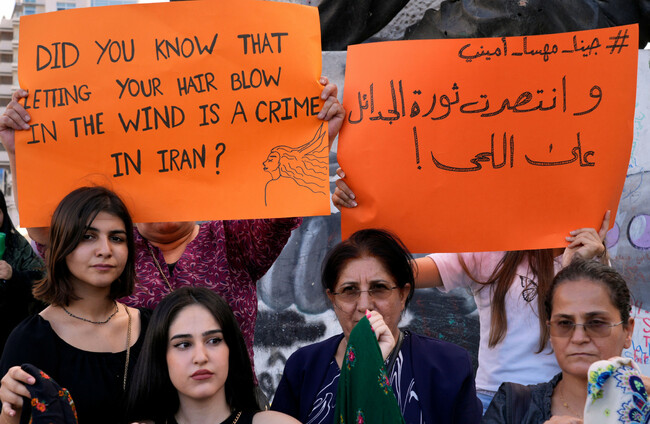
Women hold up placards during a protest against the death of Iranian Mahsa Amini in Iran in 2022. Alamy Stock Photo

Islamic republic

As Ireland was beginning to embrace a more plural society, imagine if it had instead fallen back under religious control — this is what happened in Iran, writes Samieh Hezari.

FOR MANY PEOPLE in Ireland today, the realities of life under the Islamic Republic of Iran can feel distant. Something that belongs to another culture, another history, another world.

Reports of women being stopped in the street, detained for how they dress, or punished for behaviour deemed “immoral” are often received with shock, but also with a quiet sense that such things are difficult to fully imagine in a modern society.

But they are not as unimaginable as they seem.

In recent days, much discussion has taken place across Ireland after the release of the 1926 Census. A welcome look at the country’s history. And some of that census has brought stories of an Ireland of the past that we have come to understand as one that operated a very different system. A society where religious authority defined morality, often controlled behaviour and enabled the punishment of those who did not conform.

The high-walled institutions of Old Ireland, like the Magdalene Laundries, were not simply places of ‘care’. They were buildings where women — often unmarried mothers — were confined, silenced and forced into manual labour because they were judged to have failed a moral standard set by the Church.
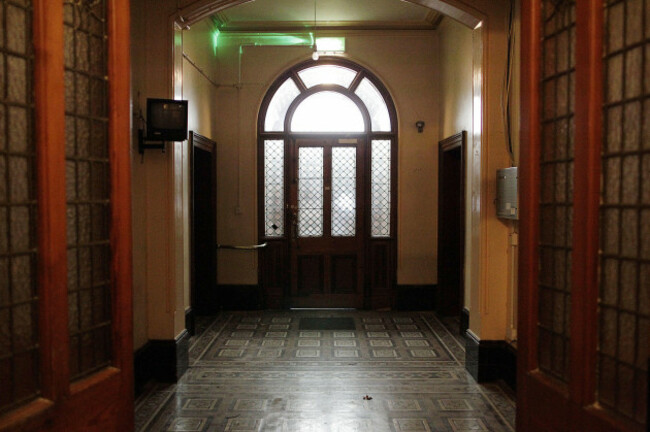
apology-for-magdalene-laundry-women The front door and hallway of the now derelict Sisters of Our Lady of Charity Magdalene Laundry on Sean McDermott St. Alamy Stock Photo Alamy Stock Photo

The litany of cruelty and abuse that was perpetrated against the victims of these institutions is now well documented in Ireland. These women were not criminals in the legal sense. Their “crime” was social and moral. Yet they were removed from society, sometimes for years, sometimes for life.

They worked without pay, lived under constant supervision and had little or no ability to challenge their situation. Their voices carried no weight against the authority of the institutions that controlled them.

What made this system possible was not only the power of the Church, but its alignment with the wider structures of society. Families sent daughters to these institutions. State bodies referred women to them. Public contracts supported their operation. Oversight was limited. The system was not hidden; it was normalised.

Old Ireland, modern Iran

It is from this point that we can begin to understand Iran under the Islamic Republic, not as something entirely foreign, but as something structurally familiar.

Iran’s trajectory, however, also reflects a different kind of rupture. Prior to the 1979 revolution, the country had already undergone significant social and educational transformation. 

It was by no means perfect, but Iran’s urban centres were increasingly outward-looking, women participated in public and professional life with greater autonomy and debates about modernisation and identity were actively unfolding.
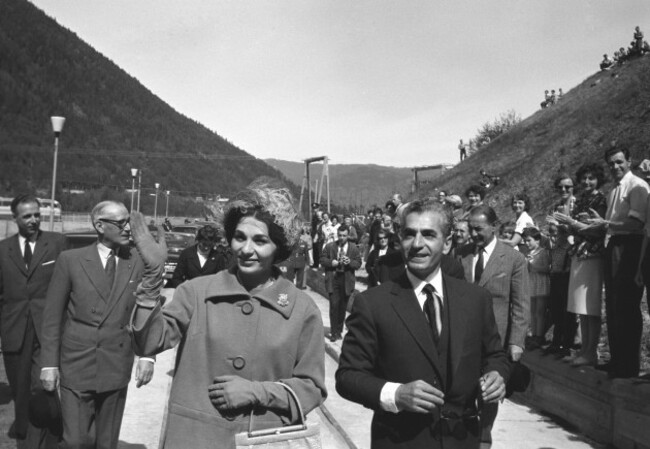
norway-on-may-27-1961-the-shah-of-persia-iran-with-queen-farah-diba-visits-norway-here-on-the-way-to-rjukan-the-ferry-storegut-will-bring-them-over-tinnoset-there-were-red-carpet-flag-and-h Iran under the Shah was a more western-looking state, for a time. Norway on May 27, 1961. The Shah of Persia (Iran) with Queen Farah Diba, visits Norway. Alamy Stock Photo Alamy Stock Photo

Religious institutions existed within society, but they did not hold direct political power. The revolution, in part, was driven by a desire for change, including calls for justice and political reform. Yet the system that emerged did not accelerate plurality; it re-centred authority within a religious framework, reshaping both public life and personal freedoms.

In this sense, the shift was not simply a continuation of tradition, but a reconfiguration of power that altered the direction of a society already in transition.

For an Irish reader, the scale of this shift might be understood as if, at the moment Ireland was opening itself to Europe and a more plural society, religious authority had instead moved to take direct control of the state, reversing social freedoms and redefining public life according to a single moral code.

Iran’s cruel Republic

The Islamic Republic of Iran operates on a principle in which religious authority is embedded in the structure of the state. Morality is not left to the individual; it is defined, legislated, and enforced. One of the clearest examples of this is the regulation of women’s dress and behaviour.

Laws require women to adhere to specific standards in public, and failure to do so can lead to intervention by enforcement bodies often referred to as morality police.
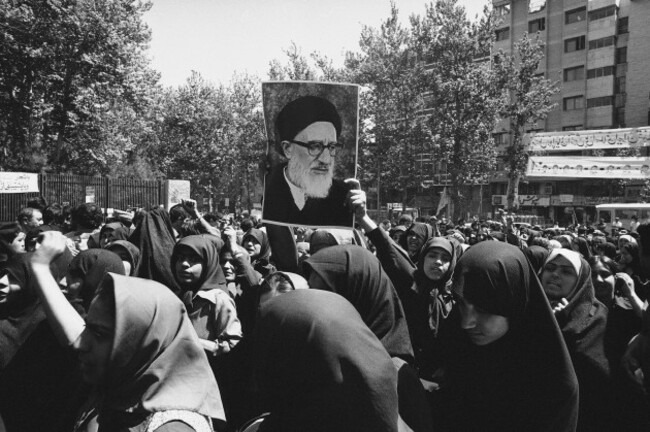
iranian-women-wearing-chadors-in-the-islamic-tradition-protesting-in-tehran-on-monday-april-16-1979-in-the-recent-arrest-of-ayatollahs-two-sons-and-daughter-in-law-be-revolutionary-committee-militi Iran after the Revolution was a country dominated by the Ayatollah and religious. Alamy Stock Photo Alamy Stock Photo

These encounters are not theoretical. They happen on streets, in public spaces, in everyday life. A woman can be stopped, questioned, detained or punished for how she appears. The justification of those in power is moral. The enforcement happens every day, and it’s institutional.

For many in the West, this is where understanding begins to falter. It feels too extreme, too visible, too far removed from contemporary European life. But the difficulty lies not in the nature of the system; it lies in the scale.

In Ireland’s past, some of the cruel enforcement of moral standards happened in institutions such as the Magdalene Laundries, behind closed doors, where the system targeted a particular group of women. In Iran, the same underlying logic has instead operated in plain sight, extending across an entire society and out into public space. What once happened within walls now unfolds in the open.

The mechanism, however, is familiar. Behaviour is measured against a prescribed moral code. Deviation is identified as a failure that must be corrected. Authority is justified not through debate or consent, but through reference to a higher moral or religious order.

Oppression in different forms

There is one crucial difference that must be clearly understood. In Ireland, while society lived with tight rules around bodily autonomy and social structures, the system of moral control and incarceration was directed at a specific group, women who were judged to have violated social and religious expectations.

In Iran, the reach of religious authority extends far beyond any single category. It shapes not only personal behaviour but the structure of everyday life: what people wear, how they speak, what they can say publicly and how dissent is treated.

Economic life, too, is affected, as systems built on ideological loyalty rather than accountability can produce instability, corruption and limited opportunity. Those who challenge these structures do not simply face social stigma; they may face arrest, imprisonment, or severe consequences. For many Iranians, the result is not only restriction, but a gradual erosion of agency – expressed in exile, silence, or the constant negotiation required to live within such a system.

Societies rarely move in a straight line towards openness and plurality; the path is often uneven, shaped by periods of control, resistance and gradual reform. This broader scope is often difficult to convey, particularly to societies where similar mechanisms once existed but were more limited in reach. Yet it is precisely this expansion — from targeted control to societal framework — that defines the difference.
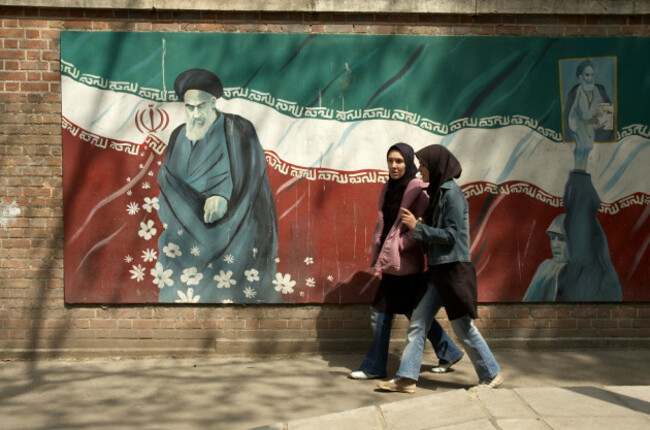
two-woman-wearing-islamic-uniforms-walking-in-front-of-the-painting-of-ayatollah-khomeini-and-the-iranian-flag-on-outside-walls Alamy Stock Photo Alamy Stock Photo

One parallel lies in the question of accountability. Institutions like the Magdalene Laundries persisted in Ireland for decades in part because those who operated them were not meaningfully challenged. The authority of the Church was rarely questioned, and those inside the system had little power to speak up in ways that would be heard. It took many years before the full extent of what had happened became widely acknowledged.

In Iran, accountability is complicated by the structure of the state itself. When the authority enforcing the rules is also the authority defining them, the space for challenge becomes extremely limited. The system sustains itself not only through brutal enforcement but through the legitimacy it claims through religion.

These systems also depend on something less visible but equally powerful: social reinforcement. In Ireland, stigma around “fallen women” helped sustain the existence of the laundries. Families often felt they had no alternative but to comply. Society, in many ways, looked away. In Iran, social norms and expectations continue to play a role in maintaining the system. Behaviour is not only regulated by institutions, but also shaped by the awareness of being seen, judged and reported.

This is not to say that Ireland’s past and Iran’s present are identical. Ireland was not a theocracy, and over time it developed the capacity to confront and reckon with these injustices. Iran’s system is more deeply embedded in the structure of governance and operates on a broader scale. The forms of punishment, the legal framework and the political context are all different.

But acknowledging these differences should not obscure the underlying similarity: in both cases, religious authority moved beyond personal belief and became a mechanism of control.

The Magdalene Laundries are now widely recognised as a failure of both Church and state in Ireland, a moment when the protection of institutional authority came at the cost of individual dignity and freedom. That recognition did not come easily. It required listening to those who had been silenced and accepting that something deeply unjust had been allowed to continue for far too long.

When we look at Iran today, the challenge is not only to observe or to feel sympathy, but to understand. And understanding often begins not with what is unfamiliar, but with what we already know.

The question is not whether such a system can exist in the modern world. Ireland’s own history shows that it can. The question is whether we are able to recognise its patterns while they are still unfolding elsewhere, and what we choose to do with that recognition when we do.

Samieh Hezari is an Iranian-Irish citizen and the author of the book Trapped in Iran. 

Readers like you are keeping these stories free for everyone...

A mix of advertising and supporting contributions helps keep paywalls away from valuable information like this article. Over 5,000 readers like you have already stepped up and support us with a monthly payment or a once-off donation.