








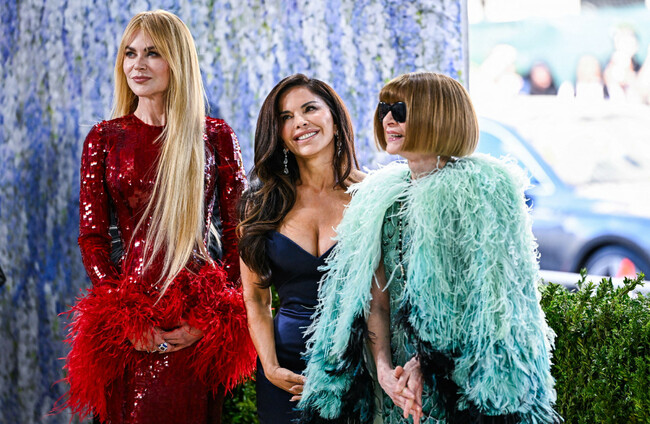

THE MET GALA is one of the most visible celebrations of style, creativity, innovation and craftsmanship.
With the annual event having happened last week, our social media feeds were, and continue to be, inundated with photos and videos of the looks, bursting with opinions on who got it right, who got it wrong, and yet very little commentary about one seismic shift that defines this year above all else.
The billionaire owner of Amazon, Jeff Bezos, and his wife, Lauren Sánchez Bezos, contributed a reported $10 million (€8.5 million) to sponsor the event this year, which supports the Met’s Costume Institute. It was the single largest donation in the Gala’s history. And it shows.
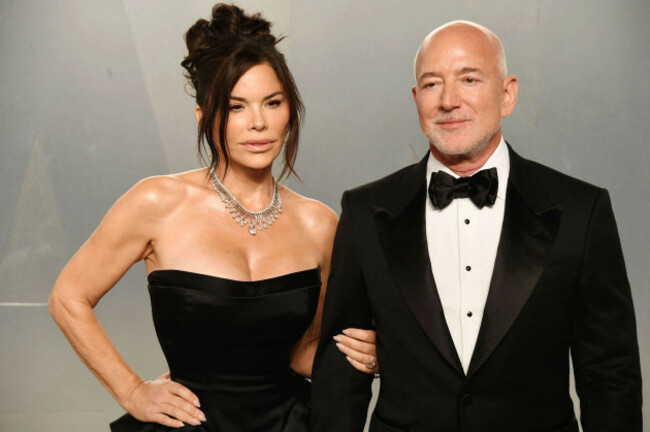
One of the largest cultural events in America is becoming another monument to billionaire influence. Increasingly, many institutions in America are being quietly purchased by the same handful of people: the media, politics, sports, AI, newsrooms, social platforms and now the aesthetic world of fashion. These are the events that shape public life, and those who dominate it call the narrative.
The billionaire boys’ club
The Bezoses didn’t come alone. Amazon, Meta, OpenAI and Snapchat all purchased tables at $350,000 (€297,000) each. This was the first year a tech figure served as lead sponsor, and the first time multiple major tech companies occupied the same room at the same event.
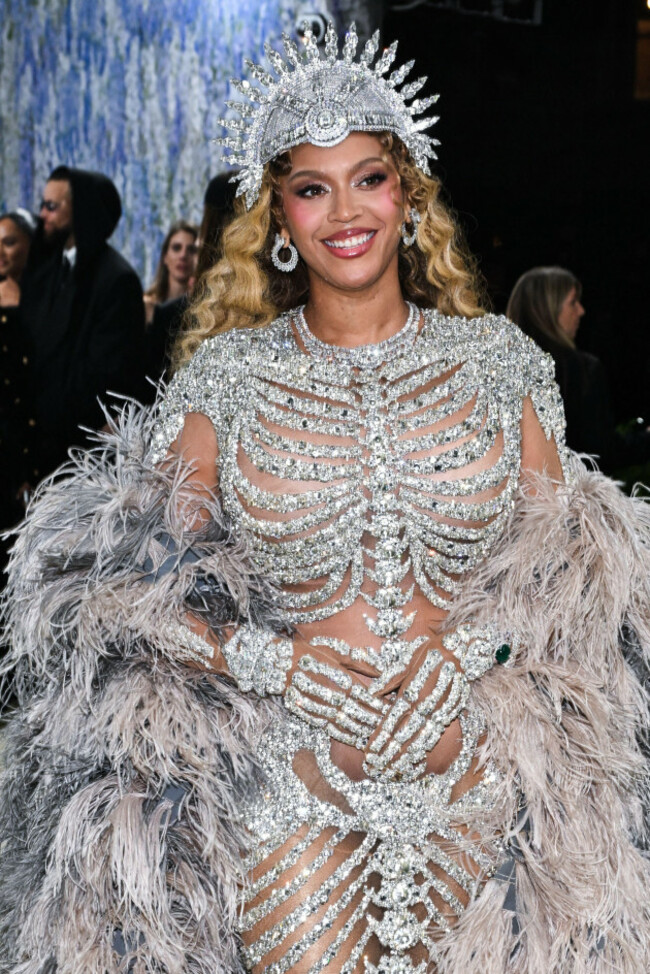
What was once fashion’s biggest night, where Rihanna’s dress made the front page, and designers competed for which celebrity would wear their looks up the famous steps, became something else entirely in 2026. Tech CEOs drew the headlines.
Several, including Bezos and Mark Zuckerberg, quietly entered through side doors, skipping the carpet altogether. They were the most powerful people in the room. They just didn’t feel the need to show up for the spectacle they bankrolled.
There is a particular irony at the heart of all this that has gone largely unremarked upon in the fashion press: Amazon has been one of the primary forces behind the decimation of the very industry the Met Gala celebrates. Its dominance in e-commerce accelerated the rise of fast fashion, eroded clothing quality and pushed consumers, squeezed by precisely the economic conditions Bezos’s business model helped create, toward choosing the cheapest option over craftsmanship, ethics or longevity.
The artists and artisans whose work hung in the Costume Institute exhibition this week have been undercut, cheapened and displaced by the marketplaces that online industrialists like Jeff Bezos have built. He paid $10 million (€8.5 million) to stand next to them.
The revolution will not be televised
The guest list made the contradictions more acute. This is an exclusive event by design; the museum controls who attends, and the room fills with CEOs and executives, many of whom have spent recent years squeezing workforces to the margins with low pay, union-busting and conditions that workers describe as untenable.
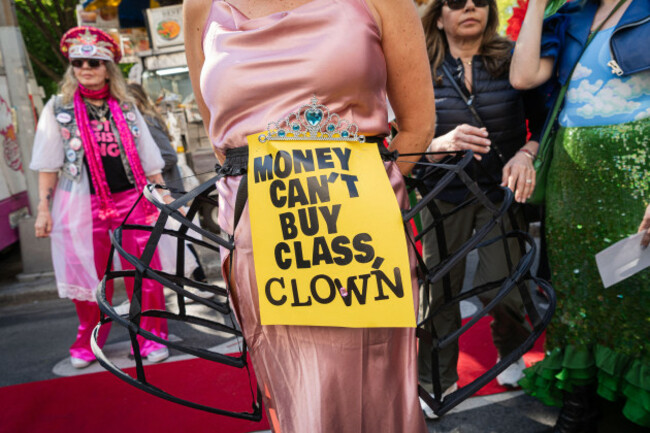
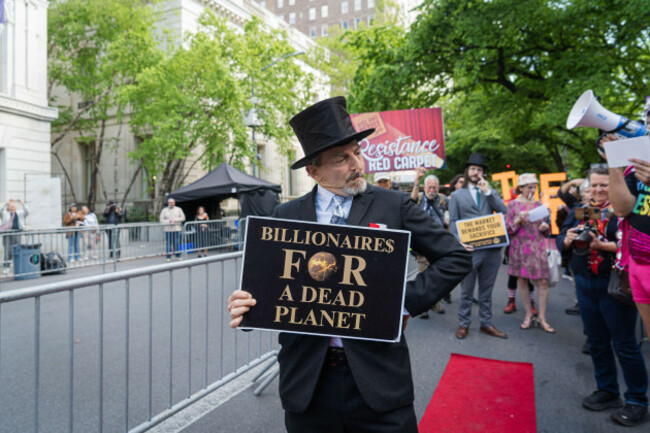
In protest of Amazon’s well-documented record on worker treatment, including allegations that employees have been denied adequate bathroom breaks, an activist group placed close to 300 bottles of fake urine inside the Metropolitan Museum of Art during the event. It was blunt, visceral and impossible to ignore. The fashion press largely tried.
There is a question worth sitting with here: what, exactly, is Jeff Bezos buying?
The Met Gala has always had an element of social currency; Anna Wintour’s guest list has functioned for three decades as a hierarchy of cultural legitimacy, a nod from the high table of American taste.
For Lauren Sánchez Bezos, the Gala represents the latest step in a carefully managed ascent: the cover of Vogue, a wedding gown reportedly blessed by Wintour, Zendaya’s stylist Law Roach on the payroll, front row in Paris for couture week.
The transformation echoes the trajectory of Kim Kardashian a decade ago – from outsider to insider, via a sustained campaign of proximity and money. Credibility used to require time and effort. Or that used to be the case.
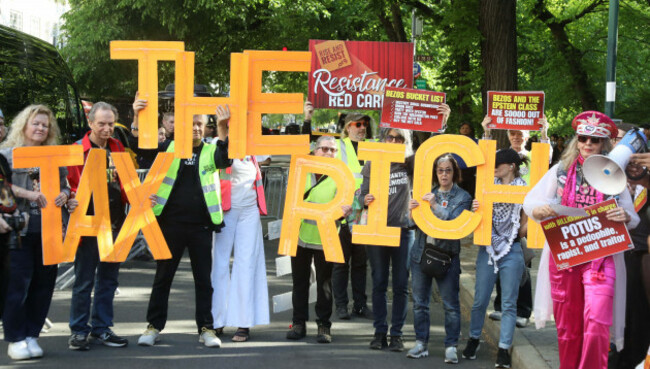
For Jeff Bezos, the calculation is different and arguably more troubling: a billionaire systematically buying proximity to cultural institutions, editorial voices and the mechanisms that shape public taste and public narrative. This is not philanthropy in the traditional sense. This is infrastructure acquisition. Wealth no longer merely buys comfort or status. It buys narrative control, cultural legitimacy, political access and moral insulation.
Selling out
Anna Wintour has spent 30 years building the Met Gala into an event of genuine cultural weight; a night that has introduced millions of people to the art of fashion, sparked conversations about race, identity, history and craft, and raised serious money for a serious institution. That legacy is real. It also makes this year’s decisions harder to defend.
Insiders say that when the backlash erupted across social media, in the streets of New York, projected literally onto the walls of Bezos’s $120 million (€102 million) penthouse, Wintour was “genuinely shocked,” reportedly having never imagined that the Met Gala would come to be seen as a symbol of excess rather than a cultural institution.
That either speaks to naivety or to a wilful blindness that is itself a kind of answer. Someone whose entire professional identity is built on reading the cultural room failed, comprehensively, to read the cultural room.
If Wintour’s brand is cultural authority – the arbiter of what matters, what endures, what deserves to be seen, then allowing that authority to be rented out to the highest bidder is not a neutral act.
It is a choice with consequences for what Vogue, the Costume Institute and the Met Gala stand for going forward.
The event raised a record $42 million (€35.7 million). The museum is grateful. The Costume Institute will benefit. These facts are true, and they are not nothing.
But something else is also true: the transaction has a cost, and it is not measured in dollars. When cultural institutions become dependent on the same concentrated wealth that is actively widening the gap between most Americans and the ultra-rich, they do not simply raise money; they confer legitimacy.
They offer moral insulation.
They transform an act of accumulation into an act of generosity, and ask us to applaud.
The question is what is traded away in that transaction, and whether the Met Gala, Vogue and Anna Wintour understand what they have exchanged.
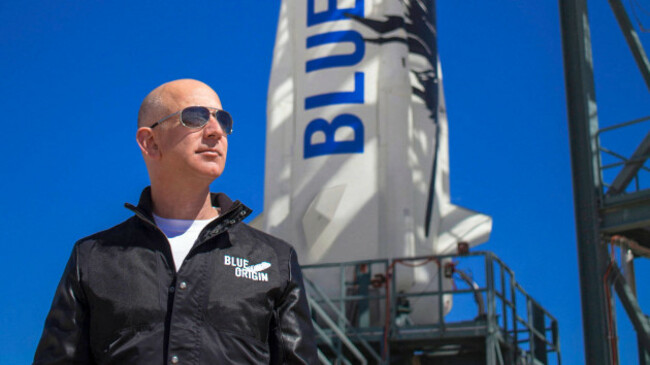
There is a chasm at the heart of the Met Gala that no camera chooses to show. On one side: the stars, the designers, the carefully curated spectacle of creative brilliance. On the other, the rest of us, watching from the outside, our attention the very currency that makes those inside the room so valuable to the billionaires funding it.
Celebrities whose careers are built on public love are making a choice, whether they acknowledge it or not, when they lend their faces and their platforms to events underwritten by wealth that demands no accountability.
Yes, there is beauty.
Yes, there is talent.
But beauty has always been the most effective way to stop people from asking questions. And there are questions here worth asking: about power, about access, about whose values get laundered through whose aesthetic.
We are all so busy admiring the dress. Almost nobody is reading the label.
Cathy O’Connor is a designer, fashion writer and stylist. She is the founder of Women Unbranded. More at www.womenunbranded.com.