






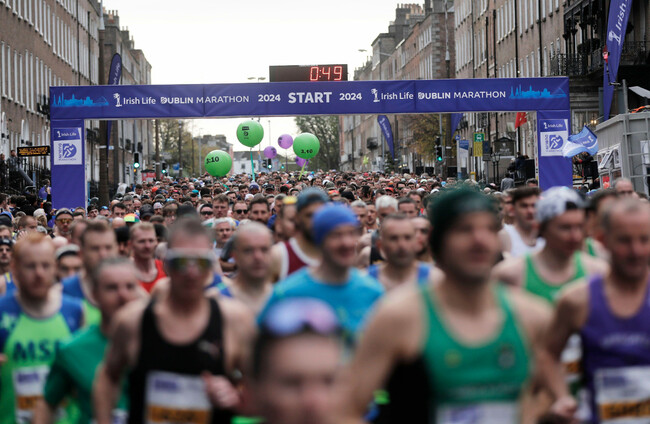
DUBLIN MARATHON HAS said it will “consider” refunding unsuccessful ballot entries next year, after taking in €149,000 in fees for this year’s event from people who will not get to run.
Dublin Marathon Group, which operates the event, said the non-refundable €5 entry fee it charged last November “contributes towards” the administration of the ballot, including technology and customer support.
Many Irish runners were annoyed by the non-refundable fee to enter the ballot for places at the 2026 Dublin Marathon, with some complaining about it on the event’s Facebook page.
Many other major marathons such as London do not charge people to enter the ballot for ticket.
There were 47,000 entries to the ballot for this year’s event but only 17,200 runners secured a place for 25 October.
Entry to the event costs €110 (less the €5 ballot fee) plus a €5.50 handling charge.
The ballot took place over six days last November and, for this year’s race, more places were made available for first-time runners. Previously, returning runners had priority access. The organisers also said they aimed to increase female representation in 2026.
Apart from the general entry ballot, places are separately reserved for elite runners, charity runners and people who can demonstrate they met a “good for age” qualifying standard in another marathon. For men aged 18-35 “good for age” was defined as running the 42.2km race in less than three hours, and for women less than three hours 40 minutes.
Dublin Marathon Group said it had refunded unsuccessful entrants to the ballot for places at another of its events, the Dublin City Half Marathon which took place last month. That meant the cost of operating the ballot was borne by successful entrants through the event entry fee rather than by all applicants, it said.
“As part of our ongoing review of entry processes, we will consider participant feedback and the learnings from this approach when finalising 2027 Dublin Marathon entry arrangements,” it said in a statement to The Journal this weekend.
Entry to the Dublin City Half Marathon cost €75 (less the €4 ballot fee), plus a €2 charge for runners who are not members of Athletics Ireland, plus platform and payment transaction fees.
Transfer fee
Dublin Marathon Group has also defended its charges for cancelling a ticket and for transferring an entry for the event.
The transfer window opens next month and many of the thousands of runners who were unsuccessful in the ballot last November will be hoping to secure a spot.
Runners who cannot do the race and give back their ticket for a refund will be charged €20 “to cover the administration of the refund”. People who receive a transfer will also be charged €20.
Dublin Marathon Group said the transfer process “incurs administrative, customer support, technology and security costs”. It said it has listened to runners and extended the transfer window by a month this year.
It has urged runners to do transfers through the official platform for security reasons and to avoid scams.
Profit
The most recently filed accounts for Marathon Events Management, the company behind the Dublin Marathon, Dublin City Half Marathon and Dublin Race Series events, show it recorded profit of €452,000 in 2024 and €592,000 in 2023 – a total of just over €1 million across the two years.
Dublin Marathon Group said it is a not-for-profit organisation and any financial surplus generated is reinvested into the delivery and development of events, as well as the safety and experience of participants, and operational improvements.
Reserve funds are maintained to ensure operational stability and support the long-term sustainability of the organisation, it said.
Demand for running events is soaring in Ireland. Cork City Marathon is currently running its first ballot for entry after record demand for this year’s event, which took place on 31 May.
Race director Eamon Hayes said a ballot system seemed the fairest and most transparent way to allocate places for the full marathon, half and 10k events.
The Cork ballot remains open until 30 June. Non-successful entrants to the ballot will be fully refunded the €5 fee.