



惯性聚合 高效追踪和阅读你感兴趣的博客、新闻、科技资讯
阅读原文 在惯性聚合中打开

推荐订阅源

T
Troy Hunt's Blog
cs.AI updates on arXiv.org
T
Threat Research - Cisco Blogs
K
KPMG report finds enterprise disconnect between AI and its ROI | CIO
Schneier on Security
Scott Helme
Scott Helme
L
LINUX DO - 热门话题
Help Net Security
Help Net Security
cs.CL updates on arXiv.org
P
Palo Alto Networks Blog
P
Privacy International News Feed
AWS News Blog
AWS News Blog
Forbes - Security
Forbes - Security
N
News and Events Feed by Topic
L
LINUX DO - 最新话题
A
Arctic Wolf
Hacker News: Ask HN
Hacker News: Ask HN
P
Proofpoint News Feed
N
News and Events Feed by Topic
S
Security @ Cisco Blogs
Cyberwarzone
Cyberwarzone
Google Online Security Blog
D
Darknet – Hacking Tools, Hacker News & Cyber Security
PCI Perspectives
PCI Perspectives
Know Your Adversary
Know Your Adversary
The Hacker News
The Hacker News
www.infosecurity-magazine.com
T
Tenable Blog
S
Security Affairs
P
Privacy & Cybersecurity Law Blog
W
WeLiveSecurity
Jina AI
Jina AI
The GitHub Blog
The GitHub Blog
S
Securelist
AI
AI
Latest news
Latest news
T
The Blog of Author Tim Ferriss
Application and Cybersecurity Blog
C
Cybersecurity and Infrastructure Security Agency CISA
月光博客
月光博客
酷 壳 – CoolShell
酷 壳 – CoolShell
C
CXSECURITY Database RSS Feed - CXSecurity.com
美团技术团队
G
GRAHAM CLULEY
cs.CV updates on arXiv.org
Simon Willison's Weblog
Hacker News - Newest:
Hacker News - Newest: "LLM"
C
Cisco Blogs
V
Visual Studio Blog
L
LangChain Blog

TheJournal.ie

Court told Eleanor Donaldson placed bugging device in her husband’s car over fears of affair TD says she's been left with 20cm scar after skin cancer diagnosis Homelessness: Record number in emergency accommodation, including new high for children Blue Origin rocket explodes during test launch Uber app now allows passengers to audio record their journey if they feel unsafe John Gibbons: The planet is burning, but Ireland still isn't taking climate change seriously 'Truly devastating': Tributes paid to Masuma Sohrabi after stabbing in Clifden Mother and carer: You don't appreciate public services until your child needs them to survive Left or right? Sinn Féin's fence-sitting may be about playing the long game Gavan Reilly: Gerry Hutch and his 30% vote in Dublin Central's best-heeled area Gavan Reilly: The Gerry Hutch 37.1% share of the vote in the shadow of the IFSC Ebola on the rise: Why the latest outbreak should concern all of us Ireland's data centre energy drain: How Big Tech added €1.4bn to household electricity bills Living with myeloma: 'I chose not to fight this blood cancer, but to instead live alongside it' Alberta’s separation bid: How Canada’s next political crisis could come from within Kelly Earley: Militarism might be Ireland’s next economic disaster Raising them right: Ireland has a dog poo problem, and we parents are sick of stepping in it Money Diaries: A recently graduated digital journalist on €35K living in Dublin Global tech job losses: Is ‘AI-washing’ the new trend nobody wants to call out? Down on the farm with a difference: This is what happens when animals are allowed to feel safe Surrealing in the Years: Some shameful Irish attitudes take a leaf out of Israel's book Motoring: Should we trust self-driving cars? The physio is in: Ireland is growing older, but are we moving enough to age well? Tech dubbed 'creepy': AI smart glasses are here, but our privacy laws have not caught up Larry Donnelly: The polls point one way for Friday but byelections rarely follow the script The war on human thought: Educational institutions must take back control from AI The Bee Guy: World Bee Day won't save our little bee friends Kelly Earley: Could Mountjoy Square be Dublin’s most important park? Money Diaries: How is your spending and saving going? Would you like to keep a diary for us? Rearing them right: Should modern parents bring back ‘the man’? Ireland's energy future: What if the real failure here is that we stopped thinking bigger? Barry Cummins: I shudder to think I sat in Tina Satchwell’s home while her body lay buried there Richard Boyd Barrett: Sanction Israel now, the way we did Russia An Spidéal in a byelection: We're caught between dereliction, development and a lack of vision Growing old disgracefully: The older I get, the more I understand my granny Surrealing in the Years: How is Bertie Ahern still finding new ways to disappoint us? Drink-driving: If your chance of being caught is 1 in 77, where is the deterrent? Navigating an uncertain world: The adults are panicking, but the kids are alright Lynn Ruane: The evidence clearly shows that the 'war on drugs' was a failed experiment The Bezos Ball: This year's Met Gala sold its soul to billionaires, did anyone notice? Labour's long knives: Starmer may be weak, but his opponents are not strong Life on the road: Our shared MS diagnoses forced us to finally start living How are you dealing with the cost of living? Would you like to keep a Money Diary for us? Kelly Earley: Should we scrap HAP? Ireland urgently needs an alternative Loss of a parent: I spent 50 years preparing for my father's death, but it still came as a shock Body of Evidence: Why your body starts storing fat in your 50s — and how it affects your brain Hear me out: Every new school building site should also be a classroom Money Diaries: A software engineer on €100K living in Dublin Life with a stoma: My worst nightmare became a reality, but this has given me my life back Summer festival supports: At PsyCare, we aim to be the calm in the chaos Surrealing in the Years: Come on guys, we don't have it in the locker to pull off nuclear energy Car love: I have that strange affliction of seeing cars as having personalities and souls David Attenborough turns 100: He brought the natural world into focus for us, we owe him so much Leavitt steps away, DJ Rubio wings it: Trump’s White House looks increasingly chaotic Time to act: Animal cruelty still happens every day in Ireland – our laws must catch up The housing crisis: Like wildfire, we need to abandon the delusion it’ll burn itself out United Ireland: On the contrary, Northern Ireland is not a burden, it brings fresh opportunities Dr Catherine Conlon: Hantavirus at sea triggers a global health response — what is this virus? Ireland, an electrostate: 100 years after Ardnacrusha, we now face the same energy challenges Good Vibrations: The Cork choir helping cancer survivors to reclaim their voice Money Diaries: An apprentice mechanic on €22K living in the Midlands Opinion: Women over 40 have been sidelined for too long. Now we push back Surrealing in the Years: I'm not a government minister and AI didn't help me write this article The people carrier: Why have they almost disappeared from Irish roads? AI not so ready: The government's new tech literacy platform needs some improvement From Gaza to Iran: Israel's regional conflict expands with little accountability Stephen's Green Shopping Centre: Jaded Dubliners have had enough of bland, soulless buildings Noeline Blackwell: Character witnesses expose a legal system that fails victims Minister for nature: We need to work together to protect against biodiversity loss Kelly Earley: Don’t fall for the idea that Dublin is dangerous Irishwoman living abroad: Like many of my generation, the 'bailout babies', I chose emigration Gender-based violence: It’s time to recognise survivors as experts by experience Money Diaries: A compliance officer on €45K living in the Midlands Blood donation: Ireland's stocks are a lifeline for patients, but the system is under strain An Irish conundrum: Why do 125 people a year buy a convertible in this country? When morality becomes law: The parallels between modern oppressive Iran and Ireland’s past Surrealing in the Years: Housing plans will have us living like Bosco, if Bosco had roommates Fail to prepare: Recent fuel protests have exposed Ireland’s lack of future climate planning Larry Donnelly back from Boston: The recent fuel protests have struck a chord in Irish America Caroline Foran's new book: I wish I'd known sooner that self-compassion changes everything The Spring Economic Statement: Ireland is no longer forecasting the future, it’s bracing for it Soccer academies: Football can unite Ireland, but the hard work to build its future starts here The physio is in: The rise of fitness wearables is changing how and why we move Pirate queens, powerbrokers & public servants: Anne Chambers on her life as an Irish biographer Dublin's screen-free school: We have no tablets, no screens and no regrets Money Diaries: A man receiving invalidity pension living in the west of the country Office vacancy rates: Dublin's busy office market isn't broken, the interpretation of data is The money dial: How we manage our finances best to protect what we care about the most Opinion: Carbon tax may be the tax we love to hate, but it's the one we can't afford to scrap From Idaho to Ireland: I chose to leave the US behind, and now I love my new home Maria Walsh: Hungary's election result shows the centre can still hold in Europe Opinion: With a 'looksmaxxing' influencer rushed to hospital, is the war on ageing getting ugly? Opinion: The protests aren't just about fuel, they're a revolt against a hollow state The Pontiff vs the President: Trump, Pope Leo and the Catholic contradiction Harm reduction drugs policy: Compassion for some cannot become a risk to all Women and the Catholic Church: Reform has long been promised, but real change has been denied Motoring: How we can all get a bit more from our fuel Surrealing in the Years: 'Fuel protests' are bad news for a society that's given up on nuance Some very creative accounting was needed to greenlight the Galway ring road It's his menu, not ours: Let's not rush to criticise Rory McIlroy's choice of dinner
Neurodivergence: The phrases people with ADHD are tired of hearing
2026-05-03 · via TheJournal.ie

Awareness of ADHD has increased over the past few years, but a number of damaging stereotypes persist, writes Mike McGrath-Bryan.

‘ADHD? SURE, THAT’S all made up!’ Just one of the many things those of us with ADHD, Attention Deficit Hyperactivity Disorder, hate to hear.

It’s a common misconception, that one. As the wider understanding of ADHD grows, fuelled in no small part by social media, it’s no wonder many are happy to dismiss it as a passing fad.

But it’s no fad. ADHD is a real state of being that’s been established by decades of scientific process and practice. ADHD, by definition, is a neurodevelopmental condition rooted in differences in brain structure and function.

According to Stanford Medicine, it is believed to be genetic. The typical ADHD brain may face challenges with inattention, hyperactivity (though girls tend to present with less hyperactivity than boys), be prone to dopamine deficiency and find impulse control difficult. 
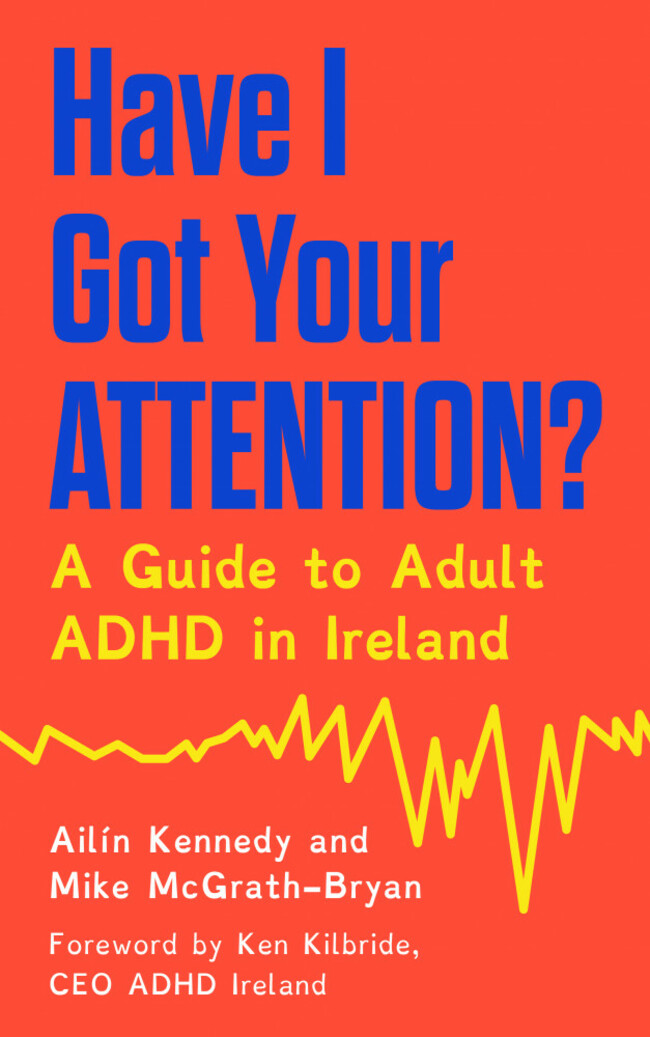
Have I Got Your ATTENTION_Cover MP_v5

You can look at the history of ADHD, including in our book, for examples of how a neurological difference comes to wider attention and awareness – and how those definitions are gradually refined and revised, as bodies of knowledge and data are gathered and improved upon.

A formal diagnosis of ADHD requires a fixed number of criteria to be met in examination and assessment, and oftentimes public treatment in Ireland will require a set amount of ‘concrete’ evidence of material issues arising in one’s daily quality of life as a result.

Much of the discussion around ADHD in recent years has been driven by adults, like myself, who’ve been diagnosed in later life. You’ll often find them saying that once they received a diagnosis, their entire existence began to make sense. As with all neurodivergents, it is exhausting having to fit into a world that is designed to accommodate neurotypical brains.

So, in the interest of broadening the understanding and softening the discourse around ADHD, here are some more phrases that we ADHDers won’t thank you for:

‘That’s just fancy talk for being a bit hyper, like’

While many mass-media portrayals of ADHD have focused on hyperactivity, ADHD is far more than a simple ‘inability’ to concentrate or otherwise regulate attention.

ADHDers often experience very real practical difficulties with tasks or activities that aren’t rewarding to them or their brains specifically, which can manifest in a range of ways, from the ‘hyper’ behaviours and demeanours to social withdrawal and overwhelm in unrewarding situations.

‘There wasn’t any of this kind of thing back in my day!’

Aspects of ADHD and wider neurodivergence are often found in a range of human behaviours and presentations.

As scientific and sociological knowledge advances, and professionals and advocates develop the language and conversation around any diagnosis or neurological difference, it’s natural for some people to become a little bit reactive when confronted with new or changed understandings that differ from what they might have taken for granted.

The idea that ADHD is somehow novel or new, however, is easily debunked by medical evidence.

‘Sure, they can cure that, now’

ADHD is a genuine neurodevelopmental condition that cannot be cured but can often be effectively managed. It is a difference in neurological development and function that affects a wide range of human responses, from attention and concentration to emotional regulation and impulse control.

It can be diagnosed (or self-identified), with aspects of ADHD being recognised in daily life, and managed in a wide variety of ways, from establishing new routines, supports and workflows that work with your brain, to beginning, stabilising and continuing a course of prescription medication with help from your healthcare professionals.
concept-for-attention-deficit-disorder-adhd Alamy Stock Photo Alamy Stock Photo

Oftentimes, ‘problematic’ behaviours that arise from ADHD are a matter of specific needs not being identified and addressed, which, according to the widely adopted ‘social model’ of disability, points to systemic issues with knowledge, articulation, awareness and acceptance. They are what you might call a ‘symptom’, but certainly not a ‘disease’ itself.

There are medications available to help treat ADHD, but the idea of a ‘cure’ for ADHD does not exist.

‘Yerrah, that’s something you grow out of, eventually’

The ‘signs’ of ADHD might change over the course of a person’s life, from childhood to adulthood, but that doesn’t mean that ADHD ‘goes away’, to use a broad term.

Everything from neurological development and resultant behaviours to external support and material circumstances is a factor in the ways that ADHD and related difficulties present in an individual.

For some, certain aspects of ADHD change from more ‘obvious’ external behaviours in younger people, to internal discomfort in adolescence – sometimes obscured by ‘masking’, a term used to describe a range of learned behaviours focused on developing conformity, often internalised by neurodivergent people for the purposes of survival or ‘fitting into’ a world that’s simply not made for everyone.

For others, whose ADHD may not have presented academic or interpersonal problems in childhood, the shift in expectations, responsibility and circumstance that adolescence brings can result in latent problems being exacerbated, seemingly ‘coming to the surface’, going hand-in-hand with the hormonal and developmental challenges of puberty and the social transition to adulthood, etc.

And then for others still, who might be lucky enough to either receive a diagnosis and support early or fall into interests and a lifestyle that meets their needs, various aspects of ADHD might not present a massive challenge per se, but continue regardless to make themselves apparent, and equally likely, certain aspects of ADHD can provide recurring, changing challenges as they proceed through life.

ADHD isn’t a one-size-fits-all thing that can be conveniently identified, ‘cured’ and/or ‘moved past’. Remember, if you’ve met one ADHD person, you’ve met one ADHD person. That is to say, many experiences can be common among ADHDers, but none are absolutely universal.

‘Women can’t have ADHD!’

Historically, far more young boys than young girls have received childhood diagnoses of ADHD and other neurodevelopmental differences. This tends to happen because ADHD can have different presentations between boys and girls.

For example, a teacher or supervisor might readily recognise the ‘hyperactive’ kid in a classroom, but would they so easily spot a child frequently ‘spacing out’ at their desk, or the ‘quiet’ person that suddenly has a massive episode as they deal with big feelings?

Of course, this disparity has, over the years, created an inequality in how ADHD has been diagnosed, with aspects of the neurological difference often going unidentified, or worse, misdiagnosed and receiving unsuitable treatment – a story that, unfortunately, is quite common among women of the current generation of people finding themselves diagnosed later in life. ADHD isn’t just something boys or men experience.

‘They’re only after the medication’

Stimulant medication is a means of treatment for many ADHDers. People who are in treatment for ADHD and managing it are at a lower risk of substance misuse than those who are untreated. Stimulant medications are controlled drugs, and their dispensing is carefully regulated.

A recent study shows that treatment with ADHD medication was associated with a reduction in rates of suicidal behaviours, car accidents, substance use and criminality.

‘Why should people with ADHD be getting all these accommodations and things?’

Education, academia and work have always historically been geared, it has been argued, toward producing workers and graduates that fit a very limited number of social and working moulds, necessary for the maintenance of the then-existing socioeconomic order.

Indeed, many ADHDers thrive in their work and are productive employees. But neurodivergence often presents differences in behaviour and thought patterns that might create challenges in many respects of daily life, and much as with other forms of disability, it shouldn’t restrict or hold anyone back from fulfilling their potential, ideas and aspirations.

Simply put, ‘reasonable accommodations’, be they changes in workflow, working from home, or an agreed change in workload, are a means of levelling the playing field, and these accommodations are your entitlement as a student or employee – it’s no different from expecting institutions or employees to provide accommodations for other disabilities.

‘Why would you want to give yourself a label, anyway?’

If you could identify the things that were happening within you, presenting problems in your social, personal and work/academic lives, then work with healthcare professionals and loved ones to put a structure in place to help with said problems and their impacts on your mental and physical health… why wouldn’t you?

Mike McGrath-Bryan is a journalist from Cork City, Ireland, and the co-author of ‘Have I Got Your Attention?: A Guide to Adult ADHD in Ireland’, available now in all good bookshops, and via the Merrion Press’ website.

Readers like you are keeping these stories free for everyone...

A mix of advertising and supporting contributions helps keep paywalls away from valuable information like this article. Over 5,000 readers like you have already stepped up and support us with a monthly payment or a once-off donation.