






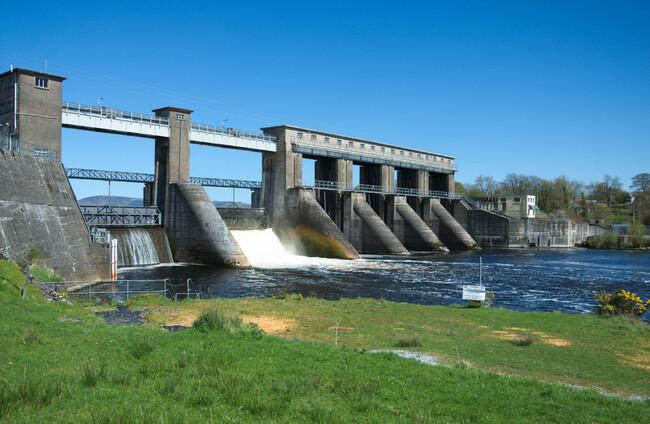

ONE HUNDRED YEARS ago, the state build Ardnacrusha hydroelectric power plant on the Shannon River, which could power nearly all the electricity in the new Free State. Now Ardnacrusha only supplies 2% of our electricity, and we have become dependent on imported oil and gas, which we thought was dependable.
But yet again a war has been started by some macho male leader and Irish businesses and families end up paying higher prices. There was Iraq war I, Iraq war II, the full invasion of Ukraine, and now the attack on Iran. Different leaders, different decades, but the same high prices in Ireland.
Since March, Ireland has moved to ease pressure on households and businesses, including through reductions in excise duties on petrol and diesel. Meanwhile, the EU has announced plans to accelerate the electrification of the various sectors of the European economy.
The era of inflation
Even if a stable ceasefire is agreed, prices will not revert to pre-war levels. The Iranian strikes on Qatar’s Ras Laffan complex are going to remove about 3% of all liquefied natural gas traded globally for up to 3-5 years. Unable to make deliveries due to damage, Qatar has already declared that some of its most important contracts cannot be fulfilled. As such, higher gas prices are here to stay.
As global gas and oil prices rise, so do our home electricity prices, along with the many products, such as fertilisers, derived from natural gas. In March, the average price for a megawatt-hour in Ireland was just under €129. Meanwhile, Spain’s price stood at €43, and Portuguese prices averaged even lower. We have some of the most expensive bills in Western Europe, yet it does not have to be this way.
Ireland has made extraordinary progress on renewable uptake. Data from Green Collective, a Dublin-based data project, showed that on St Patrick’s Day, renewable generation was meeting nearly 90% of the island’s electricity demand for much of the day.
Ireland, the electrostate
Some people are again questioning Ireland’s ban on further oil and gas exploration or suggesting we ease sanctions on Russian fossil fuels. This is certainly not a solution. Even setting aside the moral and ecological arguments against drilling for new fossil fuel resources, it makes no economic sense. Recent research from Oxford University showed that a country fully powered by renewable energy would save households a huge amount.
The good news is that the solution is not decades away, but already here and cheaper than any alternatives. We need to fully commit to a complete electrification across all sectors, allowing us to become one of Europe’s leading electrostates. Unlike in previous crises, we have mature technologies that are market-ready and cheaper. The question is no longer what we do, but how fast we move.
First, we need a massive increase and acceleration in renewable generation and energy storage. There is a significant pipeline of wind and solar energy projects in planning, such as the Tonn Nua windfarm site off the Waterford coast. All available Government resources must be dedicated to ensuring that these are completed as fast as possible. With a system reliant on variable sources of power like wind, we need battery storage at scale to provide greater flexibility and keep electricity costs low.
Second, we need to focus on electrifying sectors which are lagging behind, which means the transport, heating and cooling sectors. The switch from petrol cars, which are five times more affected by the energy crisis than electric vehicles, needs to be sped up. The Government should increase subsidies for EVs, ensuring that there is adequate support to poorer households to avoid an unequal transition. We will need to drastically increase electric charging stations across the country and find a smart solution to charging in urban areas. The Government’s announcement of a national retrofit plan, with higher grants for heat pumps, is a strong financial commitment. The hard work of implementation and wider communication of available grants must be ramped up.
Europe must step in
Finally, we need an efficient and well-interconnected European grid to ensure that cheap, clean renewable energy can flow where it is needed most. As one of the negotiators of the EU’s €80 billion infrastructure fund for energy and transport, the Connecting Europe Facility, I am working on ensuring that European and private funding can help increase our interconnection with European neighbours and improve our existing grid, thereby bringing down electricity prices.
The Celtic Interconnector, which will connect us to France, will now come online in 2028, allowing us access to cheap French electricity. There are ongoing discussions of further interconnectors to the UK, France and Spain. These are the sort of long-term investments we should be making, not speculative drilling that has already been tried before.
Unfortunately, we will still need to rely on natural gas for at least the medium term, which is why the Shannon Estuary LNG terminal is needed.
Just like a hundred years ago, when we built Ardnacrusha, the future is renewable and electric.
We can do it again.
Barry Andrews is MEP for Dublin.