





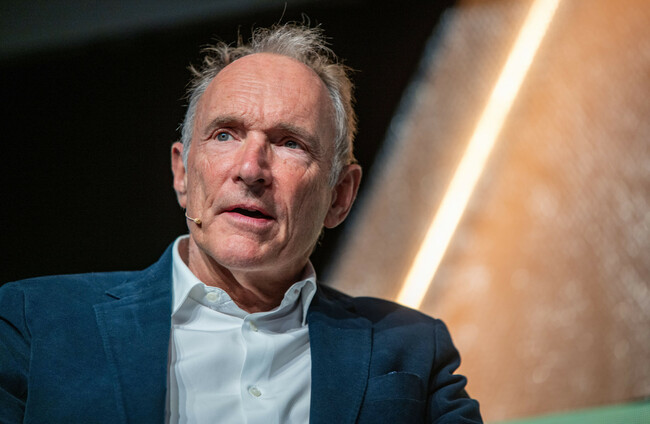
WHEN TIM BERNERS-LEE invented the World Wide Web in 1989, he said it was a “battle” to convince people that it should be free.
Speaking before a packed out crowd at The Dalkey Book Festival on Friday, the British computer scientist said in the early years there was the temptation to incorporate the internet, but Berners-Lee said “it had to be free”.
He was working for the intergovernmental organisation, CERN, at the time, which is globally recognised for its work in particle physics and advanced technology and based just outside Geneva, Switzerland.
Berners-Lee said there were worries that one day CERN could go down the road of monetising World Wide Web, which is why he says getting the director of the organisation to sign an agreement that it would never charge royalties for the invention “was a pivotal moment”.
Making the internet free for everyone
Born in the same year as Steve Jobs, it was put to him that things could have turned over very differently if he had gone down another road.
Berners-Lee said it could have, but maintained how the World Wide Web had to be for everyone.
He said it is still a battle sometimes, mentioning how some governments choose to exercise their power of switching off the internet in particular countries, during times of upheaval or war.
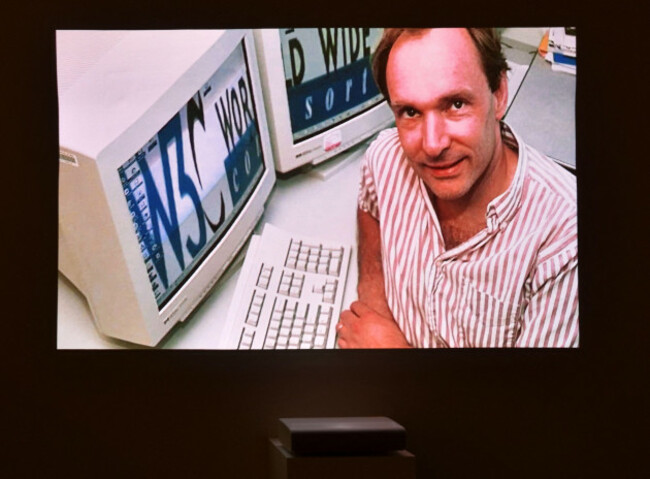
Fast forward 37 years, and no one, not even Berners-Lee could have predicted the uses of the internet today, for both good and bad.
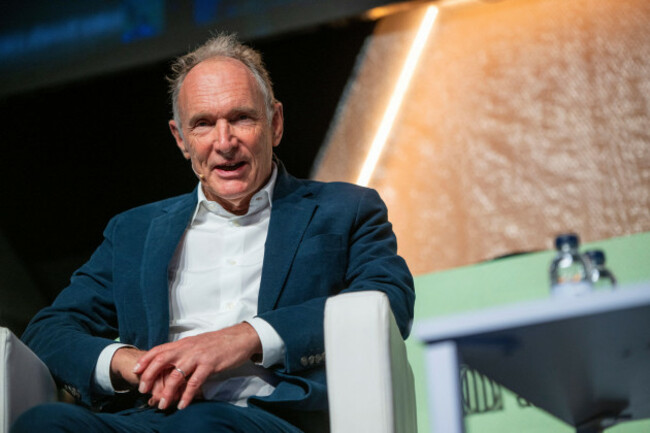
Journalist and entrepreneur Mark Little, who was interviewing the inventor for the event in Dalkey, described Berners-Lee new book, ‘This Is for Everyone: The Unfinished Story of the World Wide Web’, as a “call to arms” for people to reclaim the internet.
“We can fix the internet … It’s not too late,” Berners-Lee writes in the book, describing his mission as a “battle for the soul of the web”.
Addressing the audience, which included the co-founder of Wikipedia, Jimmy Wales, Berners-Lee said where we are now with the internet is not where we want to be.
In the beginning, he said “it wasn’t all bad”, describing how bloggers could have adverts of the sides of their posts and could make some earnings from their work.
2016 was a turning point
It wasn’t until 2016 – around the time of Brexit – did Berners-Lee begin to see just how toxic the web could be.
A year later he said the misuse of data has created a “chilling effect on free speech” and warned of “internet blind spots” that are corrupting democracy.
After that, people began to say how the web was a polarising force, in particular social media. Berners-Lee said the core foundation of his invention is that the web is “good for humanity”.
He now wants people to take back their power, particularly over the data, describing how many companies now hold lots of information about the public and make money off it.
Berners-Lee’s new pursuit is aims to shift the way data is held on the web. Called Solid (social linked data) protocol, it is idea that you own your own data and should assign how it is used.
The concept is each person securely holds their own data, allowing them to choose what to share with certain people, businesses and organisations, and in some cases, for a cost.
He spoke about the need to ensure that artificial intelligence is working for the person, not the corporations, who are hoovering up peoples’ data.
‘Siri doesn’t work for you, she works for Apple’
“Does Siri work for you? No, she works for Apple. Does Alexa work for you? No she works for Amazon,” he explained.
The inventor has previously said regulations must be rethought to prevent the web from becoming “darker” for future generations, stating that the web is at a “tipping point” as threats such as disinformation and privacy invasions prevail online.
With technology, such as artificial intelligence, now moving at warp speed, Berners-Lee is not the only person looking to reinvent how things are done online.
Countries, such as Australia and the UK, are moving to put regulations and barriers around the use of the internet, particularly young people.
What does Berners-Lee make of social media bans for under-16s?
He said he was in Australia promoting the book around the same time the ban was being rolled out.
He recalls how some young people said they were happy with it, as it allowed them to focus more on their relationships with their families and friends, while others said the ban was preventing them from accessing their support network and friends, who are online.
“So, I can see both sides,” he said.
Rounding out the discussion at the Dalkey Book Festival, Berners-Lee was asked if his book was looking for a civil rights movement when it comes to the internet today.
We have the power to change the web for the better, said Berners-Lee.
Dalkey Book Festival events run all weekend from 18 to 21 June 2026.