


惯性聚合 高效追踪和阅读你感兴趣的博客、新闻、科技资讯
阅读原文 在惯性聚合中打开

推荐订阅源

雷峰网
雷峰网
WordPress大学
WordPress大学
MyScale Blog
MyScale Blog
奇客Solidot–传递最新科技情报
奇客Solidot–传递最新科技情报
T
The Blog of Author Tim Ferriss
U
Unit 42
罗磊的独立博客
G
Google Developers Blog
Microsoft Azure Blog
The Cloudflare Blog
aimingoo的专栏
aimingoo的专栏
Vercel News
Vercel News
N
Netflix TechBlog - Medium
H
Hackread – Cybersecurity News, Data Breaches, AI and More
云风的 BLOG
云风的 BLOG
Hugging Face - Blog
Hugging Face - Blog
大猫的无限游戏
大猫的无限游戏
F
Fortinet All Blogs
博客园 - 聂微东
Stack Overflow Blog
Stack Overflow Blog
小众软件
小众软件
博客园 - 【当耐特】
H
Help Net Security
The GitHub Blog
The GitHub Blog

TheJournal.ie

Court told Eleanor Donaldson placed bugging device in her husband’s car over fears of affair TD says she's been left with 20cm scar after skin cancer diagnosis Homelessness: Record number in emergency accommodation, including new high for children Blue Origin rocket explodes during test launch John Gibbons: The planet is burning, but Ireland still isn't taking climate change seriously 'Truly devastating': Tributes paid to Masuma Sohrabi after stabbing in Clifden Mother and carer: You don't appreciate public services until your child needs them to survive Left or right? Sinn Féin's fence-sitting may be about playing the long game Gavan Reilly: Gerry Hutch and his 30% vote in Dublin Central's best-heeled area Gavan Reilly: The Gerry Hutch 37.1% share of the vote in the shadow of the IFSC Ebola on the rise: Why the latest outbreak should concern all of us Ireland's data centre energy drain: How Big Tech added €1.4bn to household electricity bills Living with myeloma: 'I chose not to fight this blood cancer, but to instead live alongside it' Alberta’s separation bid: How Canada’s next political crisis could come from within Kelly Earley: Militarism might be Ireland’s next economic disaster Raising them right: Ireland has a dog poo problem, and we parents are sick of stepping in it Money Diaries: A recently graduated digital journalist on €35K living in Dublin Global tech job losses: Is ‘AI-washing’ the new trend nobody wants to call out? Down on the farm with a difference: This is what happens when animals are allowed to feel safe Surrealing in the Years: Some shameful Irish attitudes take a leaf out of Israel's book Motoring: Should we trust self-driving cars? The physio is in: Ireland is growing older, but are we moving enough to age well? Tech dubbed 'creepy': AI smart glasses are here, but our privacy laws have not caught up Larry Donnelly: The polls point one way for Friday but byelections rarely follow the script The war on human thought: Educational institutions must take back control from AI The Bee Guy: World Bee Day won't save our little bee friends Kelly Earley: Could Mountjoy Square be Dublin’s most important park? Money Diaries: How is your spending and saving going? Would you like to keep a diary for us? Rearing them right: Should modern parents bring back ‘the man’? Ireland's energy future: What if the real failure here is that we stopped thinking bigger?
Australia detects first case of contagious H5 bird flu
https://www.thejournal.ie/author/afp/ · 2026-06-20 · via TheJournal.ie

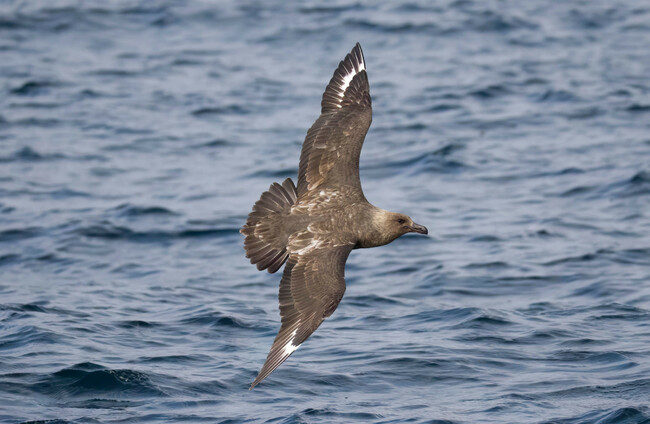
The disease was found in a brown skua in remote Western Australia. Alamy Stock Photo

Bird Flu

Australian prime minister Anthony Albanese said the detection of the case was concerning.

SCIENTISTS HAVE DETECTED the H5 strain of bird flu in Australia for the first time, the country’s agriculture minister said today, meaning the highly contagious variant has now spread to every continent.

Julie Collins told a press conference the disease had been found in a migratory seabird, a brown skua, in remote Western Australia, and the result confirmed by the national science agency.

Samples from another sick bird, a giant petrel found in the same area, had also shown a suspected positive result, she said.

Australia was previously the only continent where the H5 strain, which can devastate poultry and wild bird populations, had not been detected.

“Whilst disappointing, this is not unexpected, given the global spread of the H5 bird flu,” Collins told reporters in Canberra.

“I can confirm there is still no evidence of any mass mortalities at this time, nor is there any evidence of infection in any poultry,” she said.

An emergency meeting of animal health and agriculture officials has been held to consider a national response.

“We all knew we couldn’t be bird flu-free forever,” Collins added.

The H5 strain has caused severe disease and high death rates in poultry, wild birds and affected mammals across the globe.

Australian prime minister Anthony Albanese said the detection of the case was concerning, and that his government would take measures seeking to contain the spread of the disease.

“This is something that has happened through migratory birds, and has happened by definition around the world, and this is why we are preparing for this,” he said.

The wild birds most affected by the H5 strain include waterfowl, shorebirds, seabirds and birds of prey.

Marine mammals have also been affected, with some detections in other animals like cats, goats, alpacas and pigs.

H5 can infect humans, but these infections are rare. Most human cases occur in individuals with close, unprotected contact with infected birds (like poultry) or other livestock, such as dairy cattle.

In Ireland, bird flu activity generally spikes during the winter months when migratory birds arrive.

‘Population-level impacts’

There has been concern that the deadly disease could add to the extinction risks faced by Australian fauna, many of which are unique to the vast continent.

Almost half of Australia’s wild bird species, and 83% of its mammals, are found nowhere else.

Australia’s Threatened Species Commissioner Fiona Fraser said there was a plan to protect 35 species by boosting captive breeding.

Among them, the Tasmanian devil, black swan, little penguin and Australian sea lion are at particular risk from bird flu, she said.

“There could clearly be population-level impacts for our species,” Fraser said.

The confirmed case was detected in a wilderness area 630 kilometres (391 miles) southeast of the city of Perth on the west coast.

Officials said they are investigating if the disease arrived in Australia via birds migrating from the sub-Antarctic.

On Thursday, Australian scientists said the H5 bird flu strain had killed more than 13,000 elephant seal pups after infecting a breeding colony on the remote Heard and McDonald Islands, one of Australia’s external territories in the sub-Antarctic.