




AFTER A LONG period of stagnation, even retrenchment, in the Catholic Church, Pope Francis was a reformer.
Through a movement which he called Synodality, he attempted to change the structure of the Church, in particular in its decision-making processes.
The idea reflects the need to shift from a system where traditionally all the power and authority were in the hands of the clergy to a system where all the believers had a voice and accepted that, at a basic fundamental level, all the baptised were equal. It was a radical concept.
His successor, Leo, was a surprise choice, especially because he was an American – it was generally assumed in the church that an American would never become pope – but he immediately lined himself up as being of a similar mind to Francis in the area of synodality.
However, Leo’s first year has been distinguished for a different reason. As a native of the US, he has gradually emerged as one of the leading critics of US President Donald Trump and his administration, recently describing his behaviour as ‘truly unacceptable’. It is refreshing to see that our Pope is unafraid of those in power and making a clear stand for the dignity of every human person. His criticism is in contrast to the attitude of many European leaders.
Issues closer to home
But Pope Leo needs to deal with internal church issues in order to bring the Church more truly into the modern world. Back in 1974, probably the greatest theologian of the twentieth century, Karl Rahner, wrote, “If we are honest, we must admit that we are to a terrifying extent a spiritually lifeless Church’. That is still, I believe, largely true.
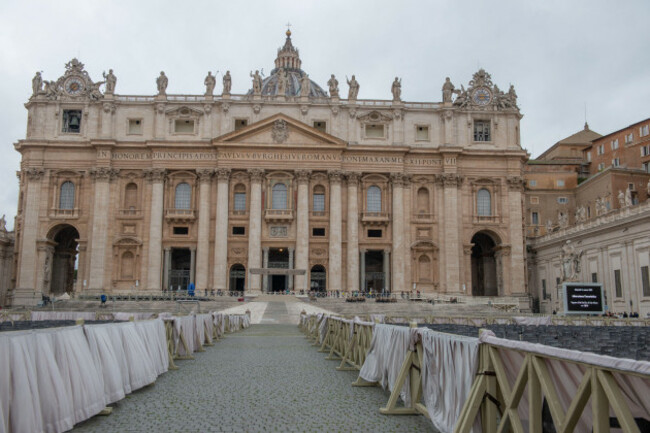
The synodality movement would now appear to be running into a roadblock around the issue of equality for women. Women are still second-class citizens in the Church. They cannot be priests or deacons. (Deacons are the next layer of the clerical church after priests; they can administer some of the sacraments and preach at Mass, but they cannot celebrate Mass or hear confessions.
Married men can be deacons, but no woman can, even though it is clear that there were women deacons in the early Church.) That means that women have no say in decision-making at any level of the Church, unless they are invited to do so by their priest or bishop.
The present Church authorities, at all levels, seem to be unable to face up to that issue. Women are relegated to reading the scripture at Mass – but not allowed to read the Gospel, which is reserved for the priest – and distributing Holy Communion. And of course, it is largely women who do the menial tasks, like cleaning the church and washing the altar linen.
Stuck in the past
But there is a bigger challenge facing the Pope and the whole Church, and it touches on the credibility of some of the basic Church teachings. In 1992 the then Pope, John Paul II, published a new Catechism of the Catholic Church which asserted, among many other things, that the story of creation, and of the sin of our first parents, as recounted in the Book of Genesis, was, though told in figurative language, an actual historical account of an event that took place at the beginning of the history of humanity.
Two years earlier, in 1990, the Hubble telescope was launched. We learned that our earth is only a tiny speck in the enormity of a universe that originated many billions of years ago, that grew, and continues to grow, through the process of evolution, and that human beings first walked on this earth about one hundred and 20 thousand years ago. So the creation of the earth as told in the Book of Genesis is not, despite what the Catechism asserts, an historical account. There was no Garden of Eden, and Adam and Eve did not eat the apple. All of this is mythology.
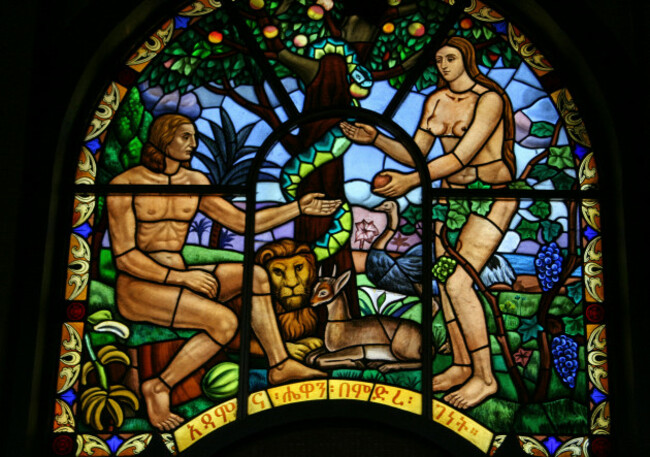
There is nothing wrong with mythology; we here in Ireland have our own mythological stories. But the problem started when the Church began to frame dogmas as if the Genesis account was historical, dogmas around Original Sin, the dwelling place and the nature of God, and the purpose of the life of Jesus. These dogmas asserted that God, dwelling in the skies, closed the gates of Heaven until such time as his son, Jesus, came down and died a horrible death on a cross to appease the anger of God and open those gates.
With the Hubble images beaming into homes around the world, many believers, theologians or otherwise, could not fail to see their implications. Questions began to be asked about God dwelling in a heavenly abode, about where we fit into this wonderful universe, about evolution, and about where Jesus fits into the Christian story.
The authorities got worried.
A quote from the 1998 Catechism now became prominent, indeed was used as a weapon by some bishops who wanted to silence people:
“The Church, which has the mind of Christ, knows full well that we cannot tamper with the revelation of original sin without undermining the mystery of Christ.”
And, to add to this assertion of Church authority, in 2000, the then Cardinal Ratzinger promulgated a theological document, called a Declaration, Dominus Iesus, asserting traditional teachings: It stated:
“Jesus, and Jesus alone, bestows revelation and divine life to humanity.”
Also:
“No one can enter into communion with God except through Christ.”
In other words, we were back to the old belief that ‘outside the Church there is no salvation’ – only Catholics could be saved, and only by believing what the Church teaches. No allowance is made for people’s own intelligence and conscience, or for loving people who follow the Prophet Mohammed, the Buddha, or other faiths.
Now we had two documents, the Catechism of 1992 and the Declaration of 2000, affirming traditional teaching, and both were sent around to all the bishops of the world. The instructions were clear; anyone who deviated from these teachings, no matter how sincerely their views were held and expressed, was to be silenced.
We were ordered to accept, despite incontestable knowledge to the contrary, that humanity emerged into a state of paradise. It didn’t. Humanity developed over billions of years through the evolutionary process, until beings with self-awareness emerged, and humans, as we know ourselves, began to walk the earth.
But as long as the Vatican and bishops around the world have the authority to silence any questioning of such dogmas as infidelity to the Catechism of the Catholic Church, Rahner’s description of a spiritually lifeless Church will persist.
Flickers of a modern Church
New hope came with Pope Francis. He largely put a stop to the ‘silencing’ and began the process of open discussion. It was greeted with great enthusiasm in many quarters of the Church, and in the past number of years it has achieved a fair amount, mainly in just allowing and creating the forum for free and open discussion, for the acceptance of the mysterious, for faith in the Divine, despite life’s uncertainties.
But now I am fearful, when I see the great difficulty we are having in accepting a simple change of allowing women to be ordained deacons in the Church, and the continued unwillingness to have even a suggestion of openness to the priesthood for women, or for people who choose to marry.
When we cannot manage these changes, how are we going to face the need to revise ancient teachings and dogmas on the basis of our new understandings? As the Czech theologian, Tomas Halik, said, all views, opinions and statements are time-bound, based on current knowledge and understanding, so each new era with its new learnings and developments, needs to revise and restate the ancient truths in a way that makes sense to modern times.
That is not to suggest that ancient truths do not contain basic truths about the human condition, but they need to be revised and restated in a way that makes sense to our modern understanding.
That is the biggest challenge facing the Catholic Church, and indeed all religious institutions.
Fr Tony Flannery is a Redemptorist priest who was forbidden to practice by his superiors in Rome in 2012 for speaking up on many issues. This continues to this day. More at TonyFlannery.com.