



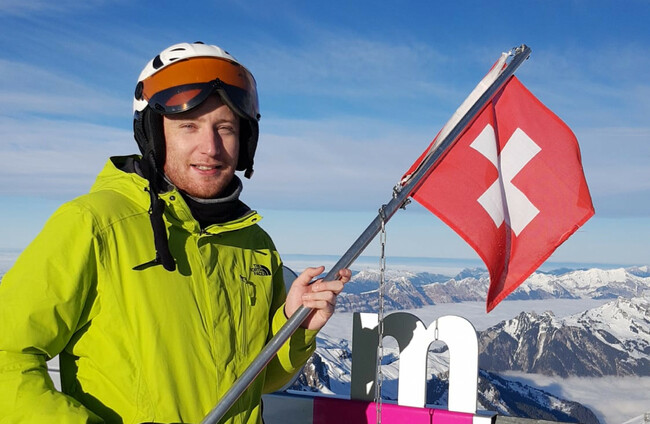
A DUBLIN MAN who has been living in Switzerland for almost 10 years has said that people are nervous that a referendum on capping the country’s population at 10 million could result in a ‘yes’ vote.
With opinion polls tight, Swiss people who don’t support the proposal are worried there could be a surprise yes vote, James Nolan said.
“It could be like Brexit – no one expects it to happen and then it does, but we have no idea how it would be enforced,” Nolan said.
On Monday, those eligible to vote will give their answer to the initiative “No to a Switzerland with 10 million!” which would require the government to keep the country’s population below 10 million up to 2050.
The proposal has been put forward by the right-wing Swiss People’s Party (known as SVP). They argue that infrastructure, public services and housing supply are all being put under pressure by a rise in immigration. They also argue that crime is linked to more people moving to the country.
The SVP is the largest party in the Swiss government, which operates as a seven-member council that shares seats amongst the largest parties.

Essentially, the country is run by consensus rather than majority rule. Referendums are much more frequent than in other countries, with voters usually called to the polls four times each year.
Referendums are held if petitions can gain 100,000 signatures within 18 months.
Currently, the Swiss population is at 9.1 million, up from 7.4 million in the early 2000s.
Many immigrants in the country are workers from EU states, like James and his wife, who are able to live there thanks to Switzerland’s participation in the EU’s freedom of movement agreement.

However, James says he doesn’t believe that it is workers from European countries that the SVP and its supporters are worried about.
“I think there’s a racial element to this, and a xenophobic element. They don’t have an issue with ‘native’ Europeans coming, it’s people coming from North Africa and Sub-Saharan Africa.
“There’s been increasing immigration from the likes of Somalia and Ethiopa, and that is visible in the cities – Zurich for example is very diverse and multi-cultural – so the anti-immigration stuff is more so targeted at those communities,” he explained.
James moved to Switzerland off the back of a job offer, and after two years of trying to buy a house in Ireland.
“We would love to come home but we were priced out of it. The salaries are better here and you pay a lot less tax, so it’s very tough to move back, and there’s the issue of not being able to find a house at home. We said we’d come for two years, and that was ten years ago,” he said.
He says people are “nervous” about the vote, but more so about what could be coming down the track if the cap is brought in.
“Everyone here is part of the 10 million, so I’m not worried about renewing my next visa, but people are worried about the knock-on effect of this. Brexit was a platform for Nigel Farage and now Reform is leading the polls in Britain. Could this be a springboard for the SVP to be more dominant in the Swiss parliament?” James said.
He added that the party’s name is on all the posters urging people to vote yes, and that there are billboards all over the city.
As James lives in a German-speaking Canton (an area in Switzerland) he has to demonstrate a moderate level of ability in the German language to have his visa.
He said that one thing people are concerned about is that the SVP could move to raise the standards for this test “so you basically have to be fluent”.
“That would definitely disqualify many of the people that they want out of the country, but it would also disqualify me, because I’m not fluent,” he said.
As non-nationals are not eligible for citizenship until they have been in the country for 10 years, James and his wife cannot actually vote on Monday.
“It’s really odd, local people in your area can vote against you getting citizenship too, so you really cannot go around pissing people off,” he said.
(In some areas of Switzerland, citizenship applications are still decided by local assemblies. In the past, popular votes were held on individual applications, however that process has largely been phased out.)
The 37-year-old, who works in the IT industry, said that people are joking about the referendum in Zurich, but beneath the humour there are real worries about how the country would change.
“The thing is we have no idea how this would actually work. Are they going to start policing the land borders, or would it be one in one out? ‘Okay, someone’s died so you are in, oh wait, someone’s had a baby, tough luck’,” he said.
The idea of a cap is opposed by most mainstream political parties in Switzerland, and large business and employer groups have voiced their concerns about how it could affect the economy.
Justice minister Beat Jans said that he believes it would damage Switzerland’s international standing and would “undermine labour markets and cooperation with the EU”.
An estimated 8,000 to 10,000 Irish citizens live in Switzerland, with many working in finance and the pharmaceutical industry.