





HOT WEATHER IS one of the biggest seasonal risks for dogs. Unlike humans, dogs can’t sweat effectively; they rely almost entirely on panting to cool themselves down, which makes them far more vulnerable to overheating than most people realise.
Every summer, thousands of dogs suffer from heat-related illness, and many don’t survive. Understanding how heat affects your dog, what their limits are, and what you can do to help is one of the most important things you can do as a responsible owner.
How dogs regulate body temperature
Dogs have a normal body temperature of between 38°C and 39.2°C (100.4°F–102.7°F). When that rises above 40°C (104°F), they are at risk of heat exhaustion. Above 41°C (106°F), heatstroke sets in a life-threatening emergency that can cause organ failure, brain damage, and death within minutes (Bradbury, 2026; Carter, 2020).
Dogs cool themselves primarily through panting, which evaporates moisture from their tongues, mouths and upper respiratory tracts. They also release a small amount of heat through the pads of their paws, but this is minimal compared to panting.
This system works reasonably well in moderate conditions, but in high heat and humidity, it becomes dangerously inefficient because when the surrounding air is already hot and humid, panting simply can’t transfer heat away fast enough. This is why humidity matters just as much as temperature and is the reason Ireland can actually be more dangerous for dogs than countries people associate with extreme heat.
Panting works by evaporating moisture into the surrounding air. In dry conditions, evaporation happens quickly and efficiently, which is why dogs in hot but arid places like parts of Spain, Greece or Australia can often cope at temperatures that sound alarming on paper. The heat is intense, but the dryness means panting does its job.
When the air is already saturated with moisture, as it frequently is in Ireland, evaporation slows dramatically, and panting becomes far less effective.
A dog may manage reasonably well at 30°C in dry air, but be in serious danger at the same temperature with 80% humidity. On 22 June, the humidity in Ireland ranged between 70% and 86%. A warm, damp Irish summer day can pose more risk to a dog than a scorching dry afternoon in Southern Europe, which is why so many Irish dog owners are caught off guard.
Which Breeds Are Most at Risk?
Not all dogs are equal when it comes to heat tolerance. Breed, body shape, coat type, age, health, and fitness all play a role.
High Risk Breeds: Brachycephalic Dogs
Brachycephalic dogs with flat, pushed in faces are the most vulnerable to heat by a significant margin. Their shortened nasal passages and narrowed airways mean they already have to work harder just to breathe normally. In the heat, their panting becomes even less effective, and they can overheat extremely quickly.
Of all the brachycephalic breeds, the French Bulldog is the most heat-sensitive. Their combination of severely restricted airways, a compact muscular build, and minimal ability to pant effectively means they can overheat within minutes of being outside in warm weather even on a day that feels mild to us.
Other high-risk flat-faced breeds include English Bulldogs, Pugs, Shih Tzus, Boxers, Boston Terriers, Cavalier King Charles Spaniels, Chow Chows, and the Dogue de Bordeaux. Each has its own variation of the same core problem: an airway that simply wasn’t designed for the demands that hot weather places on it.
If you own a brachycephalic dog, heat is not just uncomfortable for them, it is genuinely dangerous, and you should treat even mild warm weather with caution.
Heavy Coated Breeds
Dogs with thick double coats were built for cold climates, and no matter how warm the summer gets, that insulating layer doesn’t switch off. While a dense coat does offer some protection from direct sunlight, it also traps heat close to the body and makes it much harder for these dogs to cool down — often more so than their happy, energetic behaviour would suggest.
The breeds most affected are Huskies, Malamutes and Samoyeds, all Arctic dogs that are genuinely out of their element in warm, humid conditions. Bernese Mountain Dogs, Golden Retrievers, Labrador Retrievers, German Shepherds, and Border Collies are also at significant risk.
It’s worth noting that Retrievers and Border Collies are particularly dangerous not just because of their coats, but because of their personalities. They are enthusiastic, eager to please, and highly unlikely to stop and rest on their own, even when their bodies are telling them they should.
Large and Giant Breeds
The bigger the dog, the more body heat it generates and the harder that heat is to shift. Giant breeds carry so much mass that even on a moderately warm day, their bodies are working hard just to stay at a safe temperature.
Saint Bernards and Newfoundlands are among the highest-risk dogs of any breed. Both were built for cold, demanding environments, mountain rescue and icy Atlantic waters respectively, and both combine enormous size with a thick, heavy coat.
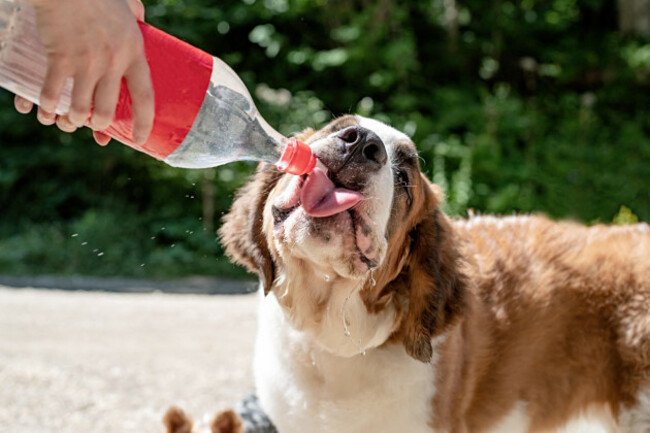
They are simply not designed for warmth, and warm, humid Irish summers can be genuinely dangerous for them.
Great Danes, while short-coated and therefore better placed than their giant counterparts, still generate significant body heat due to their sheer size and should not be underestimated.
Other factors that increase risk
Beyond breed, several individual factors significantly affect a dog’s vulnerability to heat:
Age. Puppies haven’t yet developed full thermoregulation, and elderly dogs often have reduced cardiovascular function and underlying health issues that make heat harder to manage. Both ends of the age spectrum need extra protection.
Obesity. Overweight dogs carry extra insulation that makes them retain heat more effectively. Fat dogs are significantly more likely to overheat than lean ones.
Fitness level. A very unfit dog who suddenly does vigorous exercise in warm weather is at much higher risk than a fit dog doing regular exercise.
Health conditions. Heart disease, respiratory conditions, laryngeal paralysis, and any condition affecting breathing or circulation increase risk substantially.
Coat colour. Dark-coloured dogs absorb more radiant heat from the sun than light coloured dogs, especially in direct sunlight.
Previous heatstroke. Dogs that have previously suffered heatstroke are more susceptible to it happening again.
Signs of heat exhaustion and heatstroke
Knowing the signs and responding quickly can save your dog’s life.
Early warning signs (heat exhaustion):
- Heavy, rapid panting
- Excessive drooling (often thick and stringy)
- Restlessness, inability to settle
- Seeking shade or cool surfaces
- Slowed movement, reluctance to continue walking
- Bright red gums and tongue
Serious signs (heatstroke emergency):
- Vomiting, sometimes with blood
- Diarrhoea
- Glazed or unfocused eyes
- Wobbling, stumbling, loss of coordination
- Muscle tremors or seizures
- Pale or blue-tinged gums
- Collapse
- Loss of consciousness
If your dog shows any signs beyond early panting and seeking shade, treat it as an emergency.
What to do if your dog overheats
Act immediately. Every minute matters.
- Move them to shade or a cool, air-conditioned space as quickly as possible.
- Wet them with cold water. Focus on the paws, groin, armpits and neck.
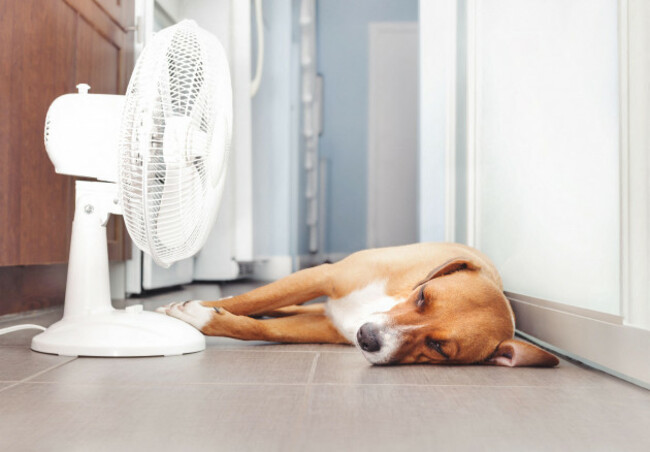
- Use a fan if one is available to enhance evaporative cooling.
- Offer small amounts of cool water to drink if they are conscious and able to swallow, but don’t force it.
- Call your vet immediately and head there as quickly as possible. Heatstroke causes internal damage that isn’t always visible from the outside.
Heatstroke causes internal organ damage that continues even after the external temperature is reduced. Veterinary treatment is essential regardless of how quickly they seem to recover.
Things you should never do in hot weather
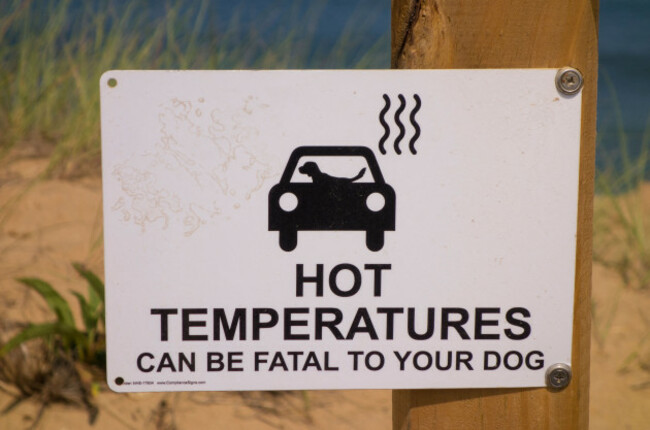
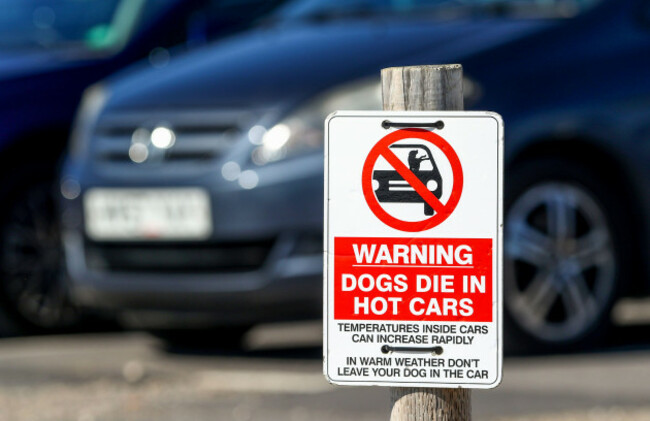
Never leave a dog in a car. This cannot be overstated. To put it in concrete terms: on 22 June, with an outside temperature of 29°C, the internal temperature of my parked car was recorded at 55°C. Even on a milder 22°C day, a parked car can reach 47°C within an hour, even with windows cracked.
There is no errand, no quick shop, no five-minute stop that is worth the risk. In Ireland, it is illegal to leave an animal in a vehicle in a way that causes suffering, and for good reason.
Don’t walk during the hottest part of the day. Between 11 am and 3 pm in summer, pavements and tarmac can become hot enough to cause serious burns to a dog’s paw pads. The general rule: if you can’t hold the back of your hand on the pavement for five seconds, it’s too hot for your dog’s paws.
Don’t over-exercise in warm weather. Dogs, especially enthusiastic, high-drive breeds, will push through exhaustion and overheating because they want to please or because they’re having fun. It is your job to stop before they stop themselves.
Don’t rely on the “early morning” walk as a cure-all. In the middle of summer, even a 7 am walk can be risky in some climates if temperatures are already high and humidity is elevated. Check actual temperatures and feel the pavement.
Don’t muzzle dogs in the heat. A muzzle that prevents panting significantly compromises a dog’s ability to cool down. If your dog needs to be muzzled, ensure it allows full panting (basket muzzles are preferable) and avoid situations where they need to wear it for extended periods in the heat.
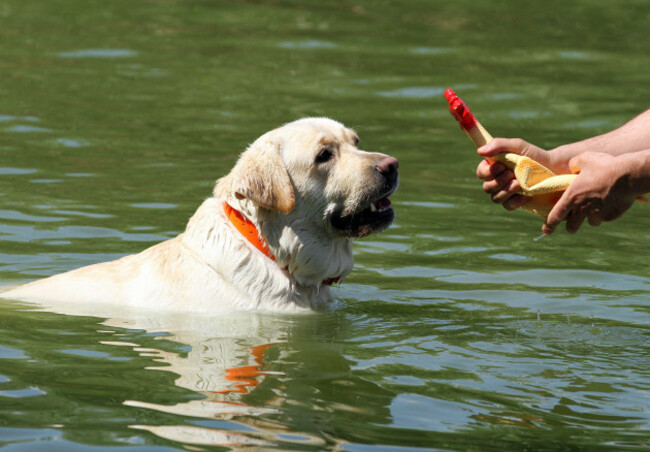
Don’t assume your dog will tell you when they’ve had enough. They won’t, reliably. Many dogs will collapse before they choose to stop.
Things you should do to help your dog in the heat
Timing of walks
Shift walks to early morning (before 8am, where possible) and evening (after 7–8 pm, depending on the time of year and your location).
Not only is the air cooler, but pavements that have been shaded overnight are also cooler.
Water, water, water
Always have fresh, cool water available at home, in the garden, and when out. Carry a bottle of water on every walk.
Dogs should be drinking more than usual in warm weather; make it easy for them to do so. You can add ice cubes to their bowl at home to keep it cool longer.
Provide shade
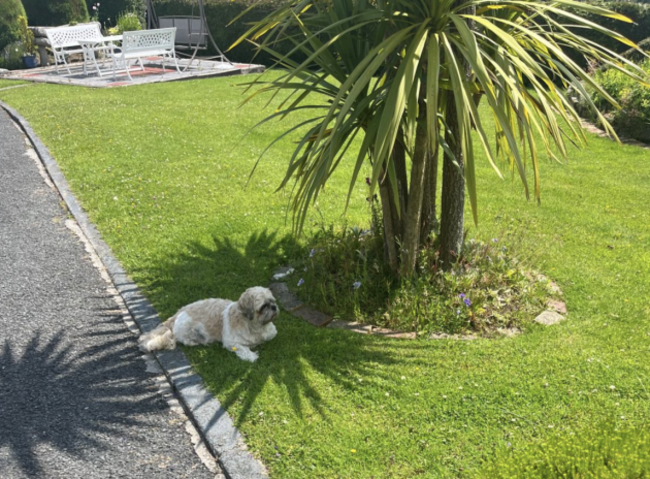
If your dog has access to a garden, ensure there is always a shaded area available throughout the day.
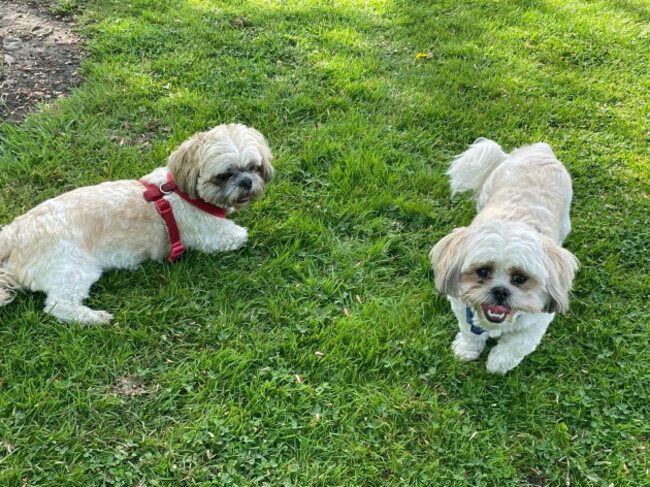
Shade moves as the sun does, so check that the shaded spots at 9 am are still shaded at 2 pm. Dogs left outside without adequate shade in summer can overheat even with water available.
Cooling mats and pads
Cooling mats are gel-filled pads that absorb heat from a dog’s body. They don’t need electricity or refrigeration; they activate by pressure.
Most dogs will use them readily once they understand what they’re for. Give them access to it throughout the day.
Paddling pools
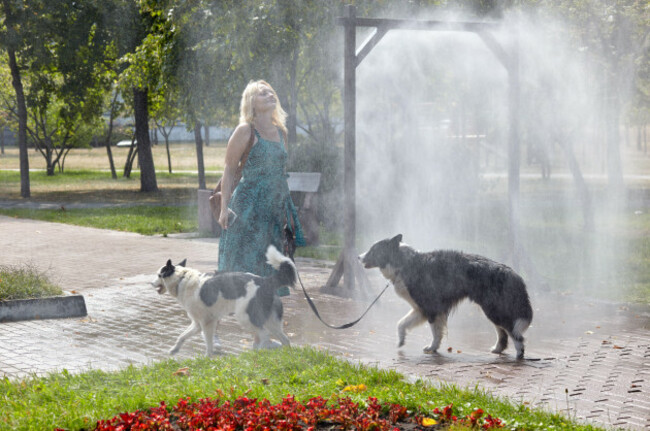
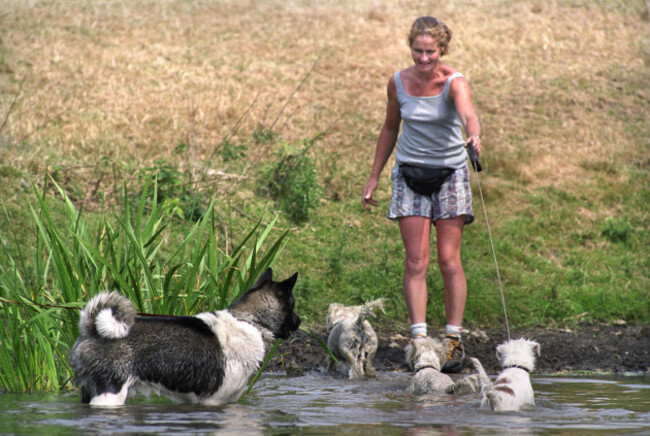
Many dogs happily spend time in a shallow paddling pool. A small child’s paddling pool filled with a few inches of cool water can be an excellent cooling tool.
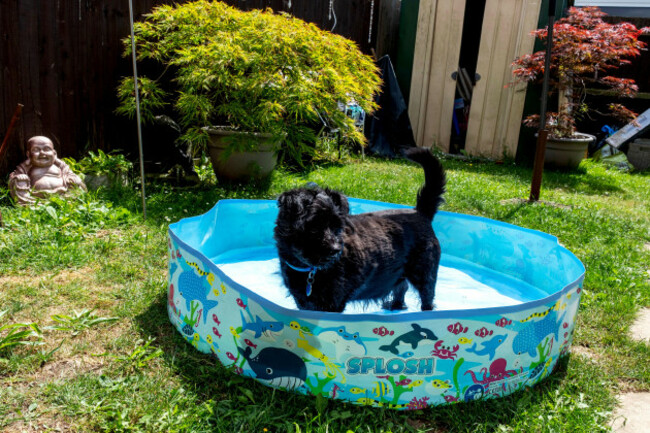
Even dogs that aren’t natural swimmers will often stand or lie in cool water given the chance.
Frozen treats
Frozen treats are a good way to provide enrichment, hydration and cooling simultaneously. Some easy options:
- Ice cubes made from diluted low-salt chicken stock
- Frozen Kongs stuffed with wet dog food, banana or plain yoghurt
- Frozen fruit, many dogs enjoy frozen blueberries, watermelon (seedless), or strawberries
- Purpose-made dog ice cream or lollies
Wet towels and cool downs
Wetting a towel with cool water and draping it over your dog, particularly on their neck, chest and groin, helps speed up cooling.
Replace the towel as it warms up. You can also wipe their paws with a cool, damp cloth after a walk.
Grooming and coat care
For double-coated breeds, ensure the coat is well-groomed and free from matting. A matted coat traps heat close to the skin and prevents airflow. Regular brushing removes dead undercoats and allows better air circulation.
Know their individual limits
Learn your own dog’s normal panting, drinking and rest patterns so you notice early when something is off.
A dog that normally pants lightly after a walk, panting heavily before you’ve even left the house, is telling you something.
Err heavily on the side of caution: a missed walk never hurts a dog, but heatstroke can.
Suzi Walsh is an expert dog behaviourist and dog trainer. She has an honours degree in Zoology and a Masters in Applied Animal Welfare and Behaviour from the Royal Dick School of Veterinary. She has worked as a behaviourist on both TV, radio and has also worked training dogs in the film industry.