





Amy Barry doesn’t like the word ‘stillborn’, preferring to say that her baby boy Connie was born sleeping last year.
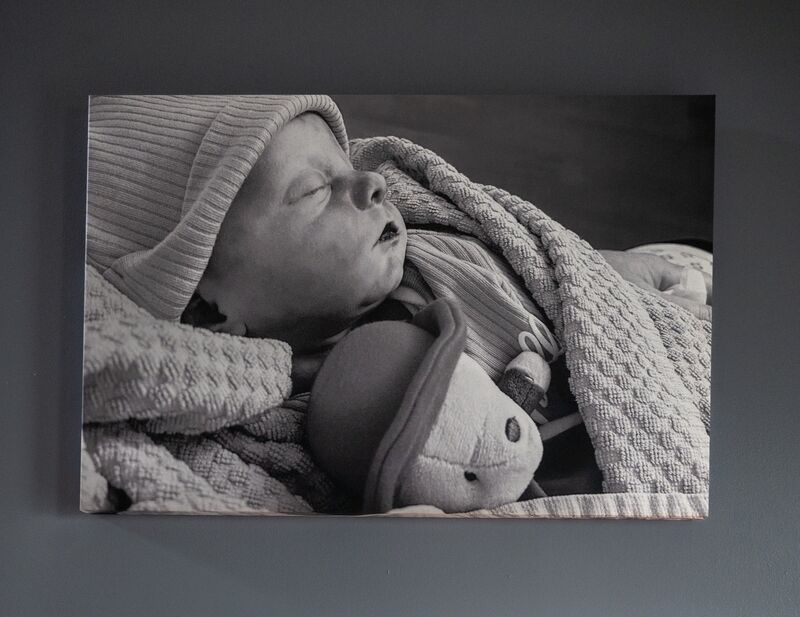
A photograph of Connie hangs in the hallway of the home Amy shares with her husband Jason, and sleeping is the perfect word for how he looks.
Last Thursday, at the inquest into Connie’s death, Cork University Maternity Hospital (CUMH) apologised to Amy and Jason for “missed opportunities” during the management of Amy’s pregnancy.
The inquest, in the Cork city coroner’s court, heard that the pregnancy had become complicated by worsening intrahepatic cholestasis of pregnancy, sometimes called ICP, a liver condition associated with an increased risk of stillbirth.
CUMH offered its “heartfelt sympathies and deepest condolences” to Amy and Jason, saying: “We recognise that there was [sic] missed opportunities in the care provided to you.
“We do not underestimate how traumatic this has been for you and your family and we are truly sorry for what occurred.”
Connie would have been the first child, grandchild, and great-grandchild in his family, and Amy, a healthcare assistant, and Jason, a truck driver, were “excited and nervous” to discover they were expecting a baby.
When they learned they were having a boy, they chose the name Connie.
“We were already building a little personality for him,” Amy said.
Jason started buying “little truck jackets and car jackets and T-shirts”.
It was toward the 35th week that Amy developed an itch in her hands and feet.
Diagnosis of obstetric cholestasis
On March 31, 2025, the midwifery clinic in Carrigtwohill diagnosed obstetric cholestasis and referred her immediately to CUMH.
There, various tests were performed, and the diagnosis of cholestasis was confirmed. Amy was prescribed an antihistamine for the itching.
Cholestasis occurs where bile ducts are blocked, and bile levels rise in the placenta. Symptoms can include severe itching for the mother.
On April 3, at 36 weeks and three days gestation, testing in CUMH’s foetal assessment unit showed Amy had bile acid levels of 57µmol/L. Levels of 100µmol/L are deemed severe.
A plan was made for induction of labour on April 17.
Blood tests on April 4 showed that Amy’s bile acids had risen to 67µmol/L. On April 10, at 37 weeks and four days gestation, Amy attended the clinic, reporting worsening itch symptoms.
A bedside ultrasound showed good foetal movement, normal amniotic fluid, and normal foetal growth. However, no repeat bile acid testing was performed.
In evidence to the inquest, consultant obstetrician Dr Anne de Haan said it was unknown whether testing then “would have changed the outcome for baby Connie [but] it was a missed opportunity for intervention”.
On Monday, April 14, Amy experienced cramps, and thought she was having contractions. She and Jason went to the CUMH ED, where a nurse tried to find Connie’s heartbeat.
“There was complete silence, and that’s when we were told ‘I’m sorry, there’s no heartbeat'. You’re shattered. You’re thinking ‘How is there no heartbeat?’
“I remember the nurse putting her arms around me and saying she’s so sorry, and I remember the doctor having his hand on me and saying he’s so sorry, but after that moment, I don’t remember much until I was brought up to a ward.”
Connie was delivered at 1.19pm on Tuesday, April 15. Amy said she kept waiting for Connie to cry and it never came.
“He was put on my chest, and Jason cut the cord.”
Jason dressed Connie in baby clothes, describing it as “the hardest moment of my life, but at the same time it was so precious, because he was my son. You were crying but you were smiling too.”
When Amy was brought to her room, a cool cot, supplied by the charity Féileacáin, the Stillbirth and Neonatal Death Association of Ireland, was waiting for Connie.
Amy described it as “basically a Moses basket, but with icepacks underneath for Connie, to preserve him”. It allowed them time to bond with Connie.
That Friday, Amy and Jason tucked Connie into his little white coffin with his teddy bears and his blanket, and, in their own car, they brought him to the crematorium in Ringaskiddy.
Narrative verdict recorded for Connie's death
Last week, Cork city coroner Philip Comyn recorded a narrative verdict for Connie's death.
He found the cause of death to be “of uncertain aetiology, but with evidence of foetal vascular malperfusion due to nuchal cord, and also of delayed recognition of worsening intrahepatic cholestasis of pregnancy”.
“Nuchal cord” relates to the umbilical cord becoming wrapped around a baby’s neck, and vascular malperfusion occurs when the baby does not get enough blood flow through the placenta.
Amy and Jason say the first they knew that this had happened to Connie was last month, when they read a statement from Dr de Haan saying Connie had been born with “nuchal cord tight around neck twice”.
The CUMH apology said the hospital did “not underestimate how traumatic” Connie's death was, but the year since Connie’s death has also been traumatic for Amy and Jason.
A freedom of information request for Amy's medical records was not progressed for 11 months, requiring an intervention from her solicitor, Darren Fitzgerald of Orbitus Law.
CUMH identified 'missed opportunities' in Amy’s care
A serious incident management team review at CUMH identified “missed opportunities” in Amy’s care. The family was not informed about the review until the night before the inquest.
CUMH has promised to introduce new protocols around the management of cholestasis, “within six weeks”, and Doireann O’Mahony, barrister for the family, asked that the coroner request those protocols be named in honour of Connie.
Mr Comyn said it was “a good idea” but it was not within his remit to make such a request.
For Amy and Jason, they feel that if any good is to come of Connie’s death, it would be that awareness of cholestasis would be raised, and the lives of other babies might be saved.
“When you’re pregnant, you’re asked the basics: any headaches, any swelling, any blurred vision, but you’re never asked about an itch, and that’s where cholestasis comes in,” Amy said.
“Maybe the next woman who has an itch during pregnancy will think of Connie and get help straight away, and maybe Connie will help to save a life.”
Connie has a little brother now, Tadgh, a rainbow baby whose first cries four weeks ago came after a long, breaths-held silence.
Amy and Jason say Connie will watch over Tadgh as he grows in the embrace of his family, protected by the memory of a brother who never had the chance to know him.
此内容由惯性聚合(RSS阅读器)自动聚合整理,仅供阅读参考。 原文来自 — 版权归原作者所有。