












Parkinson's disease affects one to two in every 1,000 people. Some 18,000 in Ireland have the neurodegenerative condition.
A tremor is the symptom most people associate with Parkinson’s. But other warning signs can appear years earlier.
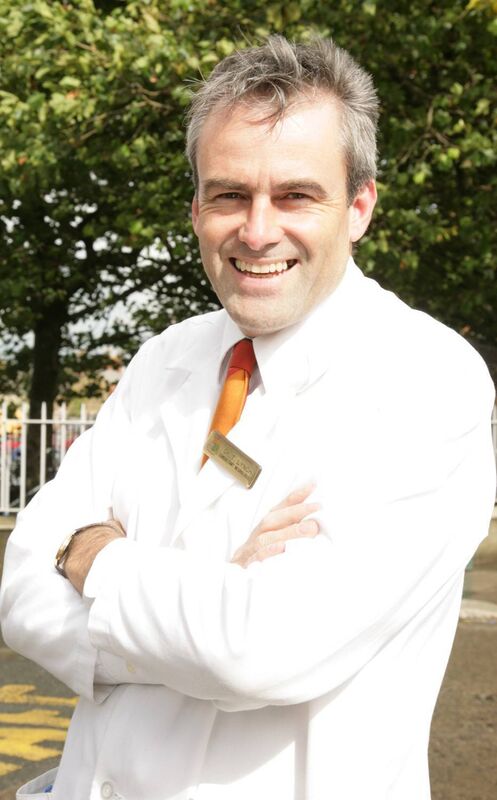
Dr Tim Lynch is a professor of neurology, a consultant neurologist at the Mater Misericordiae University Hospital in Dublin, and a Parkinson’s specialist. He says the disease is one that “can affect the whole body, resulting in a wide range of symptoms, not just tremors”.
Parkinson’s is a progressive disorder that affects a part of the brain called the substantia nigra. This part of the brain produces dopamine, a neurotransmitter involved in movement and co-ordination.
Degeneration of the substantia nigra reduces dopamine output, which can lead to a range of symptoms, including impairments in movement (motor symptoms). The classic one is a tremor.
“A tremor is an uncontrollable, rhythmic shaking of a part of the body that typically occurs when someone is at rest,” says Lynch. “For example, there may be no shaking in someone’s hand when they hold out a newspaper to read it, but the tremor will emerge after a moment or two.
“It can also be exacerbated at times of heightened emotion, fatigue, or stress.”

Prof Anhar Hassan is a consultant neurologist at Beacon Hospital, Dublin, where she specialises in Parkinson’s. She says that while resting tremors are the main symptom, about 30% of people don’t get them.
“There are also people with tremors that aren’t caused by Parkinson’s — they can be a symptom of other neurological conditions or be caused by certain medications.”
Other motor symptoms of Parkinson’s include slowness of movement, muscle stiffness, and balance issues.
“People with Parkinson’s can also experience freezing of gait, which happens when they start moving or turning and their foot gets stuck in place,” says Lynch.
“In some cases, they can also develop rounded shoulders or a stooped posture.”
These wide-ranging motor symptoms are why Parkinson’s is known as a movement disorder.
However, there can also be non-motor symptoms, which can show up long before tremors, slowness, or stiffness.
Loss of sense of smell

“Anosmia, the loss of sense of smell, occurs in around 90% of people with Parkinson’s in the 10 years prior to diagnosis,” says Hassan.
There are other causes for the loss of a sense of smell. It can be a temporary side-effect of a cold, an after-effect of covid, or the result of a head trauma, such as concussion.
Lynch says that unexplained cases are often recruited to studies to “see if they go on to develop Parkinson’s and to try to understand what treatments might be developed to delay the onset of the disease”.
Acting out dreams
Acting out dreams while asleep can be another early symptom. Hassan says this is called REM sleep behaviour disorder. “In normal REM sleep, our bodies are paralysed, so that we don’t move while dreaming. People with REM sleep behaviour disorder can have vivid dreams and physically act them out by yelling, kicking, or punching, which can injure either themselves or their bed partners.”
Research, including a 2025 Chinese paper that analysed data from more than half a million people, found that more than 70% of people with REM sleep behaviour disorder go on to develop Parkinson’s or related conditions.
Ongoing constipation
Those%20with%20constipation%20had%20a,diagnosis%20by%20over%20a%20decade
A 2015 study[/url published in the Journal of Neurology, Neurosurgery and Psychiatry found that one of the most common gastrointestinal complaints might also indicate a future diagnosis of Parkinson’s. People with ongoing constipation were twice as likely to develop Parkinson’s as people without.
However, we get constipation for lots of reasons, including a low-fibre intake, lack of exercise, stress, and dehydration.
Mood change and disturbed sleep
Lynch says other non-motor symptoms can show up as Parkinson’s progresses. They include anxiety, low mood, disturbed sleep (that’s unrelated to REM sleep behaviour disorder), and fatigue. “Parkinson’s develops slowly, and different symptoms can emerge over the years,” he says.
Treatment is available to manage those symptoms. “We don’t yet have medication to slow or stop the disease. But we do have medications, like Levodopa, to replace the dopamine that’s no longer being produced in the brain, as well as dopamine infusions and deep brain stimulation therapy.”
Hassan says these treatments can work “extraordinarily well, with patients showing marked improvement”.
Can we reduce our risk?
Hassan says that 10% to 15% of Parkinson’s cases carry a gene that makes them more likely to develop the disease. In the other 85% of cases, the risk factors include “ageing, sustaining a head injury, and long-term environmental exposure to chemicals like pesticides — the part of the brain involved in making dopamine seems to be vulnerable to those toxins”.
We have little control over our genes, ageing, or whether we incur a head injury, but we can influence exposure to chemicals.
Lifestyle plays an important role in keeping Parkinson’s at bay. “Take regular physical exercise, especially aerobic exercise that gets our heart rate up, which increases blood flow to the brain and delivers vital oxygen and nutrients,” says Lynch.
He also recommends activities that promote brain health. “Keep up some form of intellectual activity, especially once you’ve retired. Prioritise sleep. Follow a Mediterranean or similar diet that’s high in fruit and vegetables. Take a vitamin D supplement and maintain good social contact.”
Hassan’s final advice is to “be hopeful if you are diagnosed with Parkinson’s. There are treatment options which help people maintain a good quality of life.”
此内容由惯性聚合(RSS阅读器)自动聚合整理,仅供阅读参考。 原文来自 — 版权归原作者所有。