



惯性聚合 高效追踪和阅读你感兴趣的博客、新闻、科技资讯
阅读原文 在惯性聚合中打开

推荐订阅源

Martin Fowler
Martin Fowler
Jina AI
Jina AI
J
Java Code Geeks
Microsoft Security Blog
Recent Announcements
I
InfoQ
L
LangChain Blog
The Cloudflare Blog
IT之家
IT之家
博客园 - 叶小钗
Apple Machine Learning Research
B
Blog
A
About on SuperTechFans
Cyber Security Advisories - MS-ISAC
Last Week in AI
Last Week in AI
Blog — PlanetScale
Blog — PlanetScale
罗磊的独立博客
云风的 BLOG
云风的 BLOG
Microsoft Azure Blog
Engineering at Meta
Engineering at Meta
F
Fortinet All Blogs
博客园 - 聂微东
美团技术团队
博客园_首页

Latest from Tom's Hardware in Semiconductors

Intel Intel’s performance-enhanced 18A-P process enters risk production — drop-in 18A upgrade promises 9% performance improvement at iso-power, cuts thermal resistance by 40% Chinese fab SMIC TSMC says panel packaging won Analyzing TSMC's fab expansion roadmap — multi-fab N2 ramp, CoWoS, SoIC, and uncorking bottlenecks Chinese startup claims photonic chip production without DUV lithography, says nanoimprint process cuts costs by 90%… ASML becomes Europe's most valuable company ever as analysts bet on higher EUV output — its market cap hit… TSMC CEO C.C. Wei says, ‘It will be a long time before we can meet customer demand’ — tells shareholders that he will keep prices stable, refrain from implementing price hikes Samsung shows first HBM5 mockup with Heat Path Block cooling — thermal race with SK hynix shaping up Seven hospitalized after toxic gas fire at SK hynix advanced memory plant — Cheongju 4th campus incident today led… TikTok owner ByteDance is reportedly developing its own custom AI CPUs — company looks to ease China's… Trailing-edge foundry roadmaps for GlobalFoundries, UMC, and SMIC — mature node chipmakers each pursue differing… Chinese university builds 3D chip design tool tailored to Huawei's ‘LogicFolding’ architecture — 3D design delivers increased performance and better thermal management China adds homegrown AI chips to 'secure and reliable' procurement list for the first time — nine options added as move away from Nvidia continues SK hynix unveils 'iHBM' thermal architecture that cools AI memory at the source — integrated cooling elements inside HBM interface cut thermal resistance by 30%, target next-gen HBM5 accelerators and dense AI data centers Imec builds world's first High-NA EUV-fabricated quantum dot qubit device — breakthrough could pull quantum computing onto the same manufacturing roadmap as next-gen AI processors, compressing timelines Huawei claims sanctions-busting breakthrough with 1.4nm-class chips by 2031, claims 55% higher transistor density — firm claims new LogicFolding chip architecture can bypass EUV restrictions, introduces 'Tau Scaling Law' to replace Moore's Law Samsung's $400,000 payout for memory workers sparks revolt as other divisions get only $4,000, fueling intentional production slowdowns — internal resentment disrupts packaging operations, major AI chip project decisions to a complete halt The custom AI ASIC state of play (May 2026) — Broadcom deals, Google TPUs, Meta MTIA & beyond AMD begins production ramp of 256-core EPYC Venice — first 2nm HPC chip claims 70% performance leap Intel kicks off development on next-decade 10A and 7A process technologies — 14A node remains on track for… SMIC founder and AMEC CEO urge Chinese fabs to test domestic chipmaking tools on active production lines — equipment makers post record revenue but falling margins Russia’s Mikron is selling framed test wafers with up to 120,000 processors as souvenirs — 12 designs, priced around $170 each, sold alongside $2 vials of cleanroom air Trump calls $14 billion Taiwan arms deal a 'negotiating chip' with China after Xi said Taiwan issue could lead to 'clashes and even conflicts' — Trump says 'Taiwan would be very smart to cool it a little bit' Leading-edge foundry roadmaps for TSMC, Intel and Samsung — outlining the path to 1.4nm nodes and beyond TSMC allocates $20 billion to Arizona expansion — project faces water and labor shortages, complicated by visa… NASA partners with Microchip to build next-generation spaceflight chips with 100x the power of current offerings — chip designed to withstand radiation for extended missions on the Moon and Mars Intel, SK hynix shares surge following reports of chip packaging partnership — SK is said to be testing… Apple reportedly strikes deal for Intel to make some of its chips — two tech giants reached a preliminary… Global semiconductor sales hit nearly $300 billion in Q1 2026 — chips are on track to top $1 trillion for this…
ASML denies US government report that its EUV chipmaking ...
https://www.tomshardware.com/author/anton-shilov · 2026-06-19 · via Latest from Tom's Hardware in Semiconductors
ASML
(Image credit: ASML)

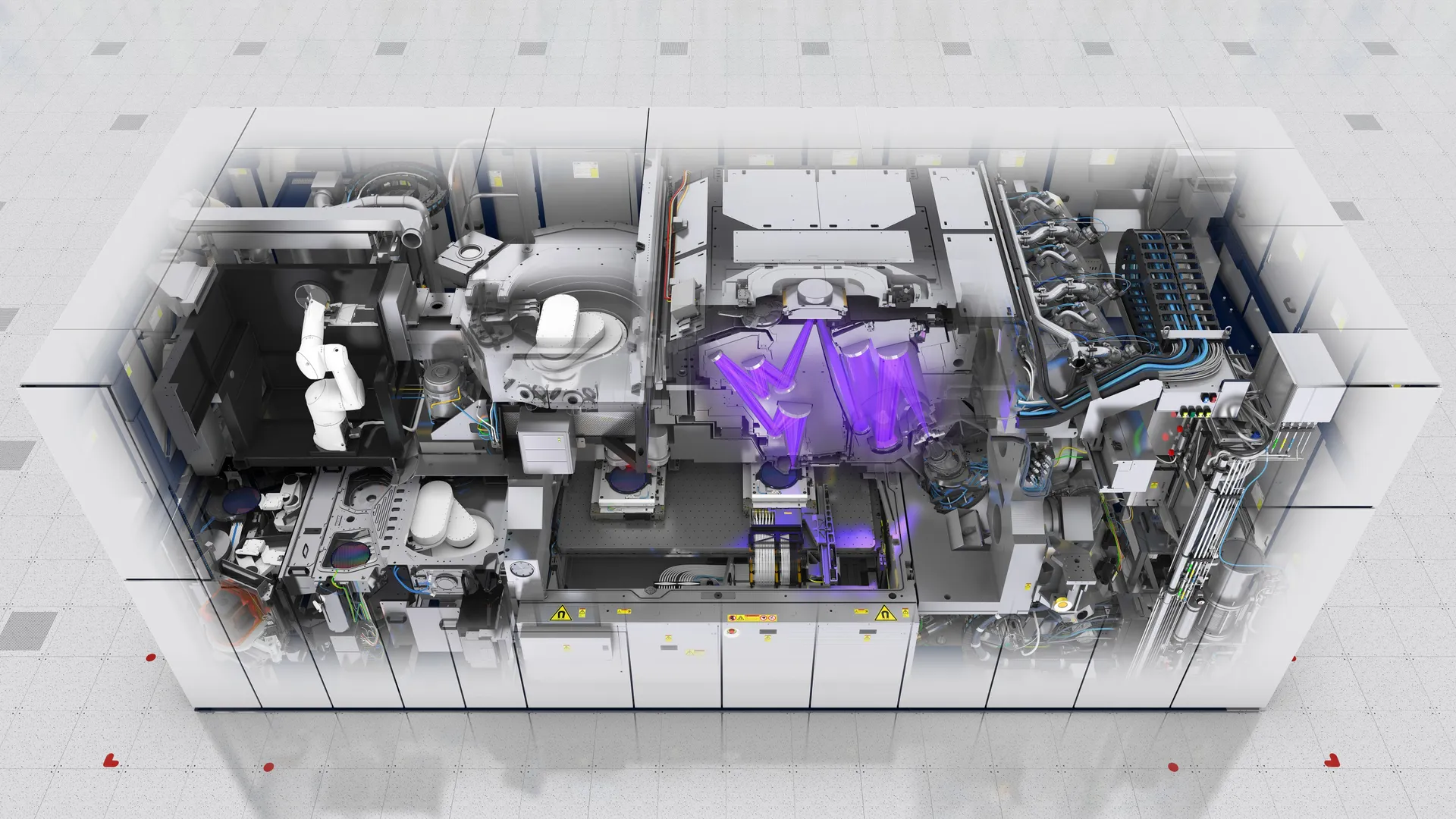
ASML has told Tom's Hardware that claims one of its extreme ultraviolet (EUV) lithography systems has ended up in China despite export restrictions is both inaccurate and damaging to its reputation. It follows a report that Commerce Secretary Howard Lutnick questions senior leadership, concerned that one of the machines had ended up in China in breach of export restrictions.

The company is refuting a recent report claiming the U.S. government believes that one of ASML's extreme ultraviolet (EUV) lithography systems may have somehow reached China despite export restrictions, according to Bloomberg, citing sources familiar with negotiations between the U.S. officials and ASML executives. ASML denies any wrongdoing and claims that it knows the location of every EUV tool it has ever built.

The issue reportedly emerged during meetings between U.S. Commerce Secretary Howard Lutnick and ASML executives. According to people familiar with the discussions cited by Bloomberg, Lutnick questioned whether an EUV system may have found its way into China. Such a development would represent a major breach of export controls because, under the Wassenaar Arrangement, ASML can not ship EUV lithography equipment to Chinese customers. In fact, the only EUV tool that China-based Semiconductor Manufacturing International Corp. (SMIC) has bought remains in the Netherlands. As a result, ASML calls the accusations 'unfounded' and 'damaging.'

"In recent years, ASML has refuted several unfounded rumors regarding non-compliance with export controls concerning China which were inaccurate and damaging to our reputation," a spokesperson for ASML told Tom's Hardware.

The U.S. government has not publicly produced evidence that a complete EUV scanner is operating in China. Yet, several senior administration officials told Bloomberg that they possess information indicating that ASML exported equipment associated with EUV systems, including specialized systems used to 'transport EUV machines.' Those officials declined to disclose any evidence, citing sensitivity concerns.

"ASML has never shipped an EUV machine to China, nor have we shipped to China any component, module or equipment specially designed to be used in an EUV machine," the spokesperson told us.

An ASML EUV scanner is made of 100,000 components and weighs 180 tons. It is transported only by air on multiple planes, and it would be impossible to intercept such a shipment without causing an international scandal. Meanwhile, given the complexity of the machine, it is impossible to build one using spare or scrap parts or reverse engineer it using its components, as we reported back in December.

Get Tom's Hardware's best news and in-depth reviews, straight to your inbox.

Bloomberg claims that ASML has circulated an internal presentation titled 'No indication of any ASML EUV System in China,' which reportedly states there are 314 EUV systems currently operating worldwide and another 26 that have been retired. According to the document, none are located in China. The presentation further notes that EUV scanners continuously communicate with ASML, so the company can detect interruptions, abnormal activity, or connectivity issues. In addition, customers cannot simply dismantle, transport, and reinstall an EUV scanner without direct assistance from ASML due to specialized logistics and handling requirements.

ASML certainly understands concerns of the West regarding China, so claims it has never shipped an EUV tool to the People's Republic initially due to the Wassenaar Arrangement and then due to more recently imposed export controls.

"ASML regularly engages in transparent and open dialogue with government leaders globally," ASML told us. "We recognize the national security considerations behind export control regulations in the U.S. and the Netherlands. As a company, we are fully committed to abiding by all laws and regulations applicable to our business activities, including all applicable relevant export control regulations, and we have consistently adjusted our business to any development in export controls to comply to any new rules."

Google Preferred Source

Follow Tom's Hardware on Google News, or add us as a preferred source, to get our latest news, analysis, & reviews in your feeds.

Anton Shilov is a contributing writer at Tom’s Hardware. Over the past couple of decades, he has covered everything from CPUs and GPUs to supercomputers and from modern process technologies and latest fab tools to high-tech industry trends.