






The AI-era CFO can no longer assume that waiting is the safest decision in business — protect the capital, study the market and let someone else absorb the early risk. That traditional playbook is becoming dangerous.
AI is changing too quickly, spreading too broadly and cutting too deeply across the enterprise for leaders to wait until every cost is predictable and every return is guaranteed. The risk calculation has flipped. Inaction is no longer the conservative choice. It may be the most expensive one.
That puts the chief financial officer in a new position. The CFO still has to protect the business, but protection now requires movement. It requires investing through uncertainty, connecting technology to revenue and establishing enough governance for the company to move faster without losing control.
This is the new CFO equation: discipline plus courage.
In the latest conversation from “IBM’s Transformation Edge: A C-Suite Reinvention Series,” I spoke with Scott Grossman (pictured), chief financial officer of Ensono, at theCUBE’s studio in New York City. (* Disclosure below.)
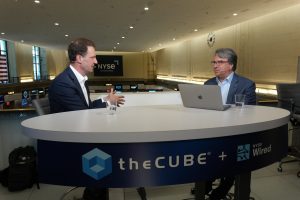
Scott Grossman explains how the AI-era CFO balances risk, investment and growth.
Ensono is a hybrid information technology managed service provider operating across mainframe, private cloud and public cloud environments, supported by consulting services. The company has approximately 4,000 employees and 250 enterprise clients.
Its growth provides an important backdrop to the AI conversation. Grossman said the business has added $1 billion in revenue over the past decade, with about 70% of that growth coming organically. It is now owned by KKR and participates in the private equity firm’s shared-ownership program, giving Ensono employees equity in the business.
That means transformation is not an abstract technology exercise. It is connected directly to growth, ownership and how value gets created throughout the company. Grossman sees the CFO’s role changing accordingly.
“Traditionally, CFOs may have been looked at as a safe pair of hands or managing the budget and just managing cost,” he said. “Nowadays as CFO, you really have to understand the business and you really have to get into the business and spend time with the sales team, the product team, the delivery and operations teams to understand the fundamentals of the business and what is really driving it and how is AI going to be interwoven into all aspects of the business.”
That is a major departure from the old model.
The CFO can no longer sit downstream from strategy, reviewing proposals after the operational decisions have already been made. Finance has to be embedded in the decision-making process from the beginning because AI affects the entire economic model of the business.
It changes costs. It changes pricing. It changes labor. It changes product development. Most importantly, it changes where future revenue will come from.
The caricature of the CFO as the “chief no officer” emerged for a reason. The job traditionally rewarded caution, predictability and control.
But caution without context can become obstruction.
“The CFO nowadays, you have to have a growth mindset,” Grossman said. “You have to be willing to understand and learn how these technologies are changing.”
That learning requirement is becoming more urgent as AI providers change how they charge customers. Traditional per-seat software licensing created a relatively straightforward financial model. Usage-based AI services create a variable one.
Token consumption can rise with adoption, agent activity and the complexity of prompts and workloads. That makes the cost structure harder to forecast and forces CFOs to understand the technology at a much deeper level.
Yet the answer is not to shut experimentation down. It is to create a controlled environment where experimentation can occur.
Ensono initially restricted employees from accessing external models directly from within the company environment. Rather than allowing unrestricted use, the company developed its own tool through which employees could access AI capabilities.
“We developed AI policies,” Grossman said. “We brought this up very early as a topic with our audit committee, and they were incredibly appreciative for us being forthright around this because a lot of this we didn’t know.”
That last point matters.
Governance is often presented as the point at which an organization claims to have all the answers. In reality, effective governance begins by acknowledging what the company does not yet understand. Ensono did not use uncertainty as a reason to reject AI. It used uncertainty as a reason to establish boundaries around how AI would be adopted.
“It wasn’t that we were saying no to AI,” Grossman said. “We allowed all of our internal teams to develop, but to … just carte blanche give all 4,000 associates [access], we wanted to take a disciplined approach to it.”
That is the balance every enterprise is now trying to find: enough control to protect the company’s data and financial position but enough freedom to let employees learn, build and identify new sources of value.
Capital allocation has always defined the CFO role. What is changing is the nature of the decision.
AI investments do not always arrive with a conventional business case. The technology is developing too quickly, the potential applications are too broad and the economic models are still being established. Waiting for perfect clarity may feel responsible. But by the time that clarity arrives, the competitive advantage may already belong to someone else.
“We look at how much free cash flow we want to invest back into AI, and a lot of it came down to the cost of inaction,” Grossman said. “I think a lot of companies are stuck in the mud. How do I take that first step?”
Ensono took its first major step two years ago by hiring a vice president of machine learning who had previously run data centers for Meta. The company had a hypothesis about becoming more proactive in its work with clients, but it did not have a fully developed AI organizational model or playbook.
The position eventually evolved into that of the chief AI officer role.
This is how transformation often works. The company does not begin with a complete map. It begins with a strategic direction, the right talent and enough conviction to start moving.
“We’re all learning every day, every week, every month in this world,” Grossman said.
The best leaders are not waiting for uncertainty to disappear. They are building the organizational capability to operate within it.
Most early enterprise AI conversations focused on productivity.
How many tasks can be automated? How much labor can be saved? How quickly can an existing process be completed? Those are valid questions, but they are not the biggest questions.
Companies that treat AI only as a cost-reduction program will eventually run out of costs to remove. The larger opportunity is using AI to improve the product, create new services and deepen customer value.
“I think companies that are just thinking about, ‘Oh, how do I automate and reduce cost?’ … ultimately, are going to lose out in the long run,” Grossman said.
At Ensono, that means incorporating AI into the foundation of its service model. Grossman described the traditional managed service provider approach as “react, repair and mitigate.” Ensono is trying to move toward “predict, prevent and optimize.”
The company is using 10 years of operational data covering incidents, changes, migrations and outages to build tools that can anticipate problems and resolve them more quickly.
That is not AI sitting beside the business. It is AI changing what the business can deliver.
The companies gaining an early advantage from AI share one important characteristic: They are becoming their own first customers. They are not selling transformation as a theory. They are deploying the technology internally, learning where it works and turning those lessons into capabilities they can take to market.
Ensono’s “client zero” story begins with its Envision Predictive Engine (EPE), which uses telemetry data to predict outages or major incidents before they occur. The company also developed DiagnoseNow, a tool that analyzes incoming incidents using information from the underlying infrastructure.
DiagnoseNow has reduced mean time to resolution by up to 66%, while EPE has lowered incidents by up to 40%, according to Grossman. Those internal outcomes quickly became a customer conversation.
“We’ve taken these products to about 25 clients now, and we joke that we’re 25 for 25 for clients saying, ‘Can I buy that? I really like that,’” Grossman said.
This is where AI changes the economics of a services company.
Traditional services growth was closely tied to headcount. More billable employees produced more revenue. Embedding technology into service delivery creates operating leverage, allowing the company to improve outcomes and expand without relying entirely on linear workforce growth.
The internal efficiency becomes a commercial capability. The capability becomes a differentiator. The differentiator becomes revenue. That is the transformation flywheel.
Technology alone does not produce that flywheel. Employees have to understand how to use it.
Ensono allows employees to develop their own agents on top of its internal platform. The company has also required AI training for all employees and included an AI goal in every associate’s annual plan.
That signals a broader cultural shift. AI cannot remain confined to a centralized technical team. At the same time, distributing AI capabilities across the company without governance risks creating the next generation of shadow IT.
The operating model, therefore, has to combine centralized accountability with distributed innovation.
Ensono leans on curiosity as one of its core values while recognizing that leaders must provide the training and resources employees need to use the technology appropriately, according to Grossman. This is where the C-suite has to operate as a system.
The CFO, chief information officer, chief technology officer, chief AI officer and chief legal officer cannot remain in separate lanes, defending separate domains. AI cuts horizontally across all of them.
The data has to be governed. The financial model has to be understood. The legal risks have to be managed. The technical architecture has to work. The employees have to know what they are empowered to do.
No one executive can solve that equation alone.
The modern CFO is expected to make decisions about technologies whose costs, capabilities and business models remain in motion. That requires a different leadership profile.
Grossman identified two qualities that will matter most: humility and courage.
“You have to be humble enough to understand what you don’t know, and then you’ve got to have the courage,” he said. “You have to have courage to say, ‘You know what? Not every AI project is going to have a defined ROI.’”
That does not mean abandoning financial discipline. It means recognizing that traditional return-on-investment calculations may not capture the full strategic value of an early AI investment.
The company may not know precisely how token costs will develop. It may not be able to predict every use case employees will find. It may not know exactly when an internal capability will become a new source of revenue. But it can still determine whether the investment is central to differentiation and future competitiveness.
That is where judgment enters the equation.
The economics will remain difficult.
A per-seat software price can be placed neatly into a financial model. Tokens are more complicated. Usage varies, agents can operate continuously and the return generated by a prompt or automated action may be difficult to isolate.
“With tokens it’s just difficult,” Grossman said. “How many words are in this prompt or this query? And how do we calculate that? Then what is the return that we’re getting from that, and how does that compare to an actual FTE versus the tokens generated by the agent that we have in our org chart? It’s insane.”
This is exactly why the CFO has to become more technically fluent.
Token economics cannot be delegated entirely to information technology, because the consequences extend beyond the technology budget. They affect workforce planning, service pricing, margins, customer value and the fundamental design of the organization.
The CFO does not have to become an AI engineer. But the CFO does have to understand how the machine works.
The AI-era CFO cannot optimize solely for certainty.
The role now requires protecting the company while giving it room to move, funding experiments before every outcome is known and connecting technology investment to durable revenue growth.
Ensono’s approach brings those responsibilities together through three strategic pillars: associates, clients and technology.
“We need to be what’s next for our associates,” Grossman said. “We need to be what’s next for our clients.”
That is the transformation edge. It is not one model, platform or agent. It is the ability to connect people, customers and technology into a single operating system for growth.
The old CFO managed the cost of action. The modern CFO must also understand the cost of standing still.
Here’s the complete video interview, part of SiliconANGLE’s and theCUBE’s coverage of “IBM’s Transformation Edge: A C-Suite Reinvention Series”:
(* Disclosure: TheCUBE is a paid media partner for “IBM’s Transformation Edge” interview series. Neither IBM, the sponsor of theCUBE’s event coverage, nor other sponsors have editorial control over content on theCUBE or SiliconANGLE.)
Support our mission to keep content open and free by engaging with theCUBE community. Join theCUBE’s Alumni Trust Network, where technology leaders connect, share intelligence and create opportunities.
About SiliconANGLE Media
SiliconANGLE Media is a recognized leader in digital media innovation, uniting breakthrough technology, strategic insights and real-time audience engagement. As the parent company of SiliconANGLE, theCUBE Network, theCUBE Research, CUBE365, theCUBE AI and theCUBE SuperStudios — with flagship locations in Silicon Valley and the New York Stock Exchange — SiliconANGLE Media operates at the intersection of media, technology and AI.
Founded by tech visionaries John Furrier and Dave Vellante, SiliconANGLE Media has built a dynamic ecosystem of industry-leading digital media brands that reach 15+ million elite tech professionals. Our new proprietary theCUBE AI Video Cloud is breaking ground in audience interaction, leveraging theCUBEai.com neural network to help technology companies make data-driven decisions and stay at the forefront of industry conversations.
此内容由惯性聚合(RSS阅读器)自动聚合整理,仅供阅读参考。 原文来自 — 版权归原作者所有。
