



惯性聚合 高效追踪和阅读你感兴趣的博客、新闻、科技资讯
阅读原文 在惯性聚合中打开

推荐订阅源

cs.CV updates on arXiv.org
博客园 - 三生石上(FineUI控件)
博客园 - 司徒正美
博客园_首页
J
Java Code Geeks
V2EX - 技术
V2EX - 技术
让小产品的独立变现更简单 - ezindie.com
K
KPMG report finds enterprise disconnect between AI and its ROI | CIO
TaoSecurity Blog
TaoSecurity Blog
T
Troy Hunt's Blog
Forbes - Security
Forbes - Security
Schneier on Security
Hugging Face - Blog
Hugging Face - Blog
PCI Perspectives
PCI Perspectives
O
OpenAI News
OSCHINA 社区最新新闻
OSCHINA 社区最新新闻
Hacker News: Ask HN
Hacker News: Ask HN
Application and Cybersecurity Blog
H
Heimdal Security Blog
D
Darknet – Hacking Tools, Hacker News & Cyber Security
博客园 - 聂微东
量子位
酷 壳 – CoolShell
酷 壳 – CoolShell
大猫的无限游戏
大猫的无限游戏
WordPress大学
WordPress大学
美团技术团队
V
V2EX
Cisco Talos Blog
Cisco Talos Blog
小众软件
小众软件
奇客Solidot–传递最新科技情报
奇客Solidot–传递最新科技情报
C
Cybersecurity and Infrastructure Security Agency CISA
有赞技术团队
有赞技术团队
腾讯CDC
Cloudbric
Cloudbric
Google DeepMind News
博客园 - 【当耐特】
SecWiki News
SecWiki News
IT之家
IT之家
C
Cisco Blogs
雷峰网
雷峰网
aimingoo的专栏
aimingoo的专栏
B
Blog RSS Feed
S
Schneier on Security
Security Latest
Security Latest
Scott Helme
Scott Helme
H
Help Net Security
Threat Intelligence Blog | Flashpoint
P
Palo Alto Networks Blog
L
LINUX DO - 热门话题
Cyber Security Advisories - MS-ISAC

The Eclectic Light Company

Apple has released an update to XProtect for all macOS Hero or hooligan: Theseus’ later years BSD flags are incompatible with iCloud Drive Apple has released macOS Tahoe 26.5.1 In memoriam Mary Cassatt: 1, 1868-1880 Solutions to Saturday Mac riddles 362 What Location Services do in macOS Eclectic paintings of Joseph Stella: 2 European myths Last Week on My Mac: Razzle and dazzle Eclectic paintings of Joseph Stella: 1 American landscapes Saturday Mac riddles 362 Protect files with the Locked or Immutable flag Reading Visual Art: 252 Dragonfly What happens in the log when an app crashes as it starts up? Portraits of trees: Introduction On Reflection: Conclusions and contents Which tasks require mains power? Medium and message: Vast canvases Online reference to external displays for Apple silicon Macs What’s in that phishing email? Hero or hooligan: Theseus and Ariadne Solutions to Saturday Mac riddles 361 How to search document versions Rubens’ Consequences of War Rubens’ Peace and War Saturday Mac riddles 361 How to search Time Machine backups? Naturalists: Contents and artists On Reflection: Extending the image Tackle QuickLook problems Medium and message: Pottery Hero or hooligan: Theseus and the sandals How QuickLook provides thumbnails and previews Last Week on My Mac: Syncing metadata in iCloud Drive Paintings of visits to India 1778-1877 Saturday Mac riddles 360 On Reflection: Pierre Bonnard 1909-1946 SpotTest 1.2 can display Spotlight metadata directly On Reflection: Pierre Bonnard 1899-1908 How to preserve versions, and how to create versioned PDFs Medium and message: Sculpture What gets synced in iCloud Drive? Hero or hooligan: Perseus 2 Solutions to Saturday Mac riddles 359 Last Week on My Mac: snapshots, the elephant in APFS Paintings of Beatrice Portinari: to 1862 Saturday Mac riddles 359 Naturalists: Into the 20th century How to check whether Spotlight is getting the right metadata On Reflection: Mirror play Hero or hooligan: Perseus 1 The bicentenary of Frederic Edwin Church: 1857-77 Solutions to Saturday Mac riddles 358 macOS virtual machines and audio-video syncing A walk in the parks of Rome, Vienna, Manhattan and Brooklyn Saturday Mac riddles 358 Naturalists: Photography Use Finder tags for categories Control what gets written to the log Medium and message: Tapestry Virtualisation on Apple silicon Macs is different Jerusalem Delivered: Overview and contents The bicentenary of Frederic Edwin Church: 1849-57 Solutions to Saturday Mac riddles 357 Painting Pandora and her box: 1883-1919 Painting Pandora and her box: 1550-1882 Saturday Mac riddles 357 Reading Visual Art: 250 Winged sandals The secret life of the xattr The macOS Natural Language framework and Nalaprop Medium and Message: Stained glass The MACL extended attribute Jerusalem Delivered: 13 Leading characters Solutions to Saturday Mac riddles 356 Privacy: How locations are protected Painting Spring blossom 2 Last Week on My Mac: Don’t be a victim of fraud Painting Spring blossom 1 Saturday Mac riddles 356 Explainer: Recovery Reading Visual Art: 249 Mask Naturalists: Urban poverty On Reflection: Cézanne Privacy: Which folders are protected in Tahoe? Medium and Message: Mosaic Jerusalem Delivered: 12 Delivery Solutions to Saturday Mac riddles 355 Centaurs 2: Revenge Centaurs 1: Fights Saturday Mac riddles 355 Explainer: sandboxes Naturalists: The modern meal Why you can’t trust Privacy & Security Apple has just released an update to macOS Tahoe, to version 26.4.1 On Reflection: Divisionism Please help update CPU frequencies for Apple silicon Macs Commemorating the centenary of the death of John Ferguson Weir Privacy: Files & Folders or Full Disk Access? Jerusalem Delivered: 11 Into Jerusalem Privacy: protected folders
Naturalists: Sorolla and Zorn
hoakley · 2026-05-15 · via The Eclectic Light Company

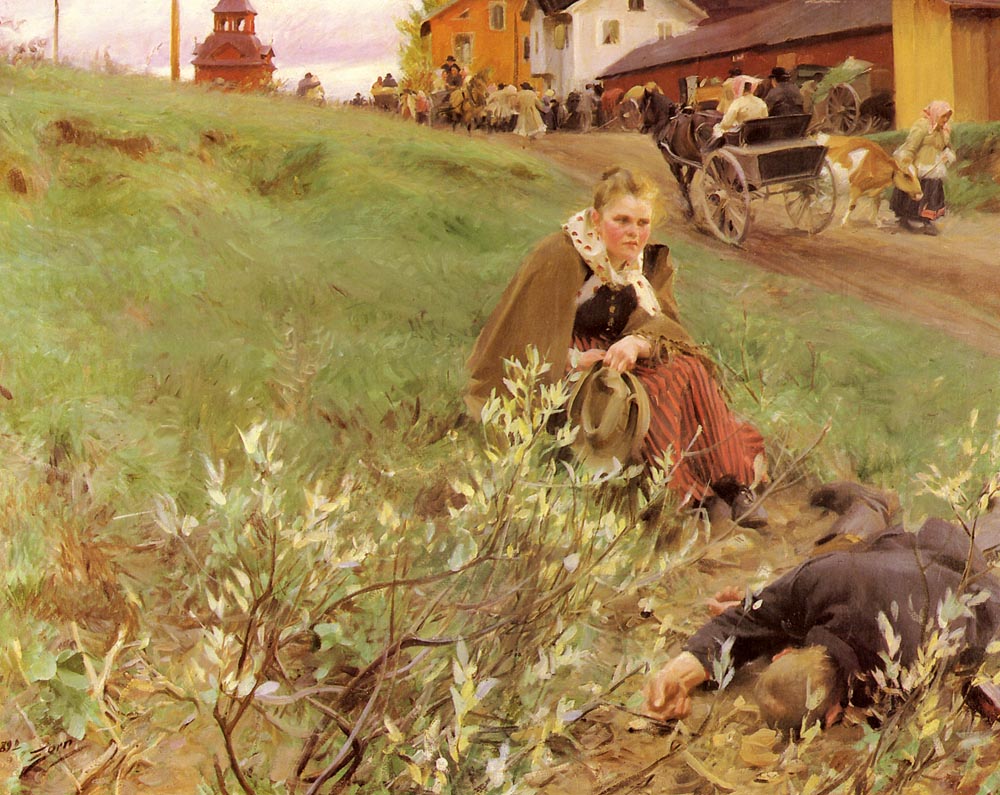
Anders Zorn, Mora Fair (1892), oil on canvas, 133 x 167.5 cm, Private collection. WikiArt.

Many Naturalist artists continued to paint in the style until late in their career, but two younger aspiring painters passed through a phase of Naturalism on their way to greatness in the early twentieth century, Joaquín Sorolla in Spain, and Anders Zorn in Sweden. Neither is now generally recognised as having been Naturalist at that time, though.
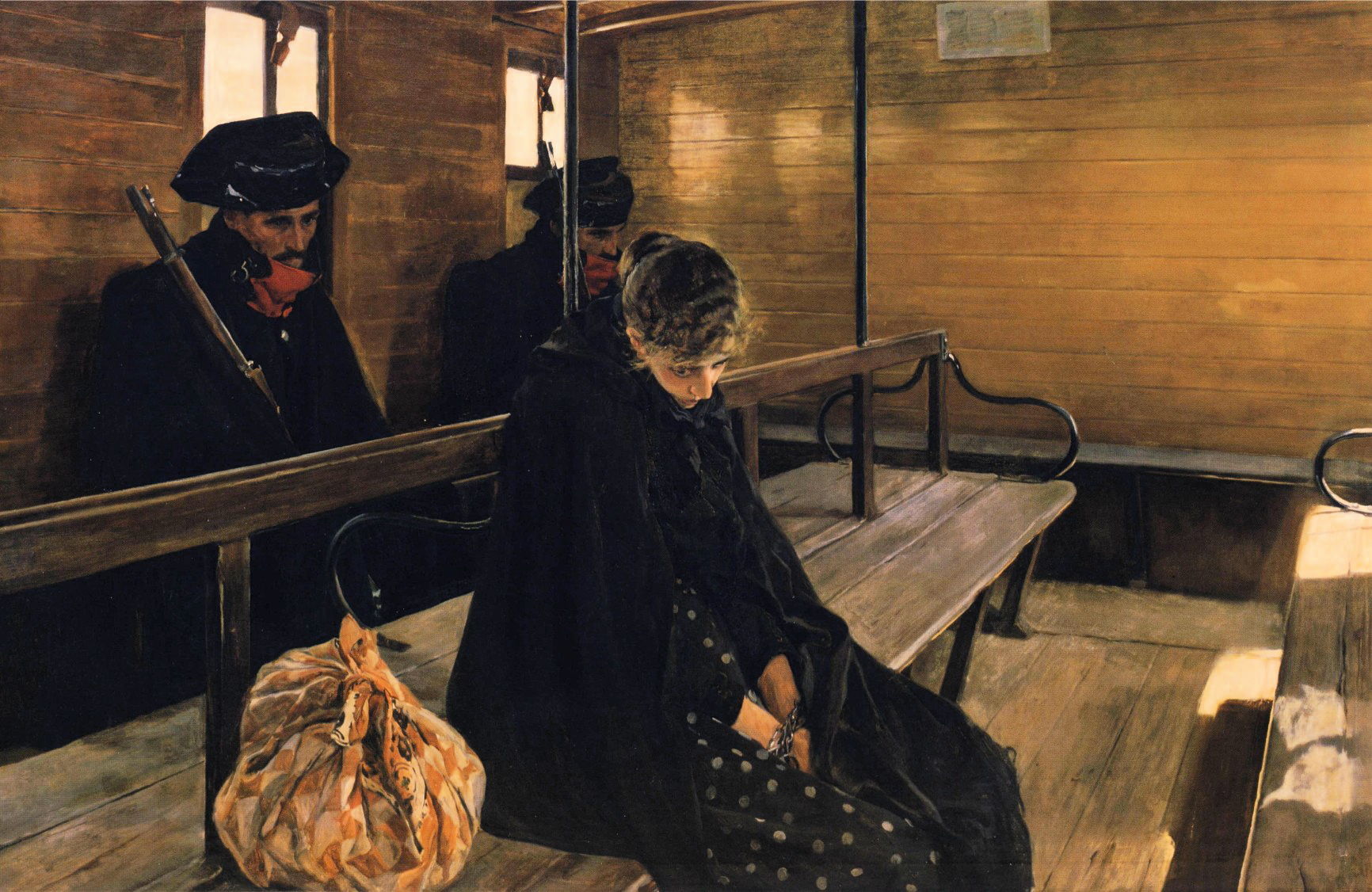
sorollaanothermarguerite
Joaquín Sorolla y Bastida (1863–1923), Another Marguerite! (1892), oil on canvas, 130.1 x 200 cm, Mildred Lane Kemper Art Museum, St. Louis, MO. Wikimedia Commons.

Sorolla had his first great success with a gold medal at the 1892 National Exhibition in Madrid, for Another Marguerite! which went on to win first prize at a Chicago International exhibition.

A young woman sits, hunched up and dejected, with chains around her wrists and her possessions tied up in a small bundle next to her. Sat behind her in the cattle-class compartment of the railway train are two armed National Guards, near-identical figures who are escorting her in custody to face trial. She appears already to be sitting in the cell which awaits at her destination.

Sorolla’s title explains, with its reference to Gounod’s opera Faust (1859), itself based on Goethe’s Faust. There, Marguerite was seduced by Faust, made pregnant, and then killed her baby. The artist was apparently inspired to paint this in the summer of 1892 in Valencia, by a real-life episode in which he had seen a woman being transported in custody to face a tribunal for an identical charge.

sorollacostoffish
Joaquín Sorolla y Bastida (1863–1923), And They Still Say Fish is Expensive! (1894), oil on canvas, 151.5 x 204 cm, Museo Nacional del Prado, Madrid, Spain. Wikimedia Commons.

And They Still Say Fish is Expensive! (1894) is set in the hold of one of the larger Valencian fishing vessels, amid spare tackle, a large barrel, and some of its catch. Two older men are attending to a youth, who appears to have been wounded, presumably as the result of an accident at sea. Around the boy’s neck is a pendant good-luck charm; he is stripped to the waist and pale, and one of the men is pressing a dressing against his abdomen. Lit from an open hatch at the top left, the painting has the immediacy of a photographic ‘snap’ and looks documentary.

Sorolla’s title is incisive social comment about the values of a society which is happy to see young boys go to sea to fish, putting their lives at risk so that those ashore can enjoy cheap seafood. This was painted during the summer of 1894, again in Valencia, and went on to great acclaim in the Paris Salon the following year, where it was bought for the Museo del Prado in Madrid.

sorollawhiteslavetrade
Joaquín Sorolla y Bastida (1863–1923), White Slave Trade (1895), oil on canvas, 166.5 x 194 cm, Museo Sorolla, Madrid, Spain. Wikimedia Commons.

Another painting that Sorolla exhibited successfully at the Salon in 1895 was White Slave Trade (1895), an epitome of the contemporary trade in prostitutes in Spain.

Set in a similarly bleak railway compartment to Another Marguerite, four young women are asleep while being transported in the care of a much older woman. In contrast to their guardian, who wears black, the young women are dressed in bright-coloured Valencian regional costumes, and wear fashionable shoes. Their few possessions are stacked on the bench at the right, and include a guitar. The ‘slave trade’ to which Sorolla’s title refers is, of course, the movement of prostitutes between brothels. This could have been from Valencia to the port of Cartagena, then over to Orán and Algeria, as suggested by Powell for example.

The theme of prostitution had been brought to the fore in Naturalism by the Norwegian painter and writer Christian Krohg, whose first novel published in 1886 had documented its problems in Oslo, and which he had depicted in Albertine in the Police Doctor’s Waiting Room (1885-87), a work Sorolla is unlikely to have seen, but may well have heard about.

sorollasimarromicroscope
Joaquín Sorolla y Bastida (1863–1923), Portrait of Dr. Simarro at the Microscope (1897), oil on canvas, 80 x 100 cm, Universidad Complutense de Madrid, Madrid, Spain. Courtesy of Legado Luis Simarro, via Wikimedia Commons.

Sorolla’s Portrait of Dr. Simarro at the Microscope from 1897 shows Doctor Luis Simarro Lacabra (1851-1921), who was an eminent psychiatrist in Madrid. He also undertook pioneering research looking at the fine structure of the brain. Among his many achievements was a modification of an established technique for staining microscopic sections of brain, which proved a major advance and an inspiration to the great Spanish neurohistologist Ramon y Cajal. This portrait was exhibited at the National Exhibition in Madrid in the same year.

sorollaresearch
Joaquín Sorolla y Bastida (1863–1923), Research (Una investigación o El Dr. Simarro en el Laboratorio) (1897), oil, 122 x 151 cm, Museo Sorolla, Madrid, Spain. Wikimedia Commons.

Research, or under its original Spanish title of Una investigación o El Dr. Simarro en el Laboratorio, from the same year, goes on to look at Dr. Simarro at work in the laboratory among colleagues and students. He is here preparing specimens for microscopy, presumably using his staining technique. The table is covered with bottles of chemicals used in that process, and the chunky metal object in the centre foreground is a microtome, used for cutting very thin sections of tissue embedded in paraffin wax, prior to their staining, for study under the microscope.

Anders Zorn’s Naturalism flourished when he was painting the realities of country life in the rural town of Mora, Sweden, where he had been born and brought up.
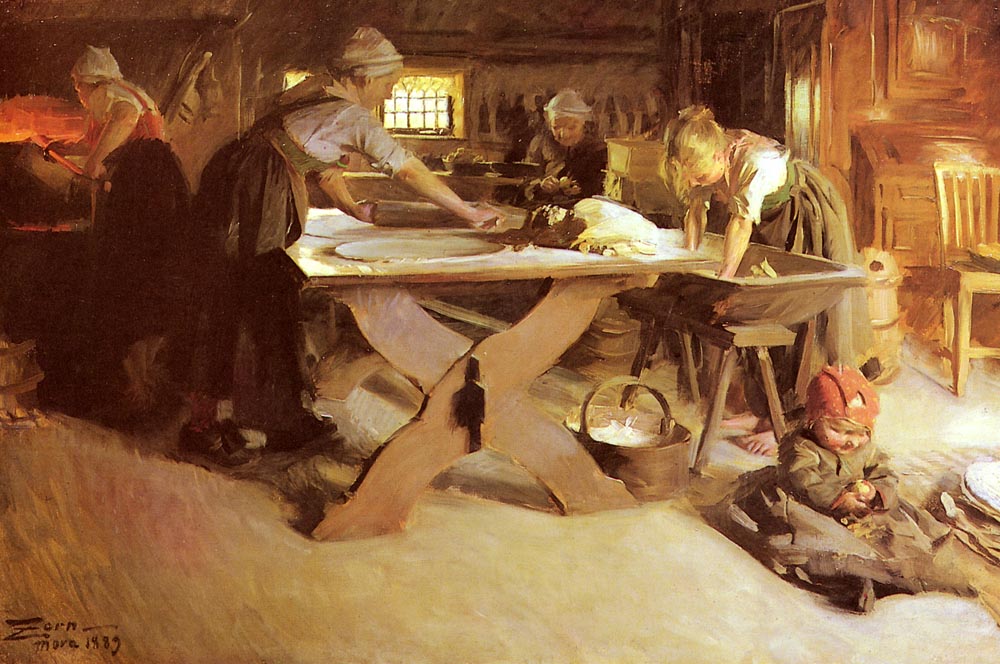
Anders Zorn, Baking Bread (1889), oil on canvas, dimensions not known, Private collection. WikiArt.
Anders Zorn (1860–1920), Baking Bread (1889), oil on canvas, dimensions not known, Private collection. WikiArt.

In Baking Bread, painted in Mora in 1889, Zorn captures each step in the process in documentary fashion, from kneading the dough, through rolling and preparing it, to its baking. There’s even an infant in the foreground who looks ready to consume it. This is painted in his characteristic limited palette derived from his transition to oils when he was in Saint Ives, Cornwall.
Anders Zorn, Mora Fair (1892), oil on canvas, 133 x 167.5 cm, Private collection. WikiArt.
Anders Zorn (1860–1920), Mora Fair (1892), oil on canvas, 133 x 167.5 cm, Private collection. WikiArt.

My favourite painting from this period in his career is another showing country events near his family home, at Mora Fair, from 1892. Against a background of crowds and carts going to and leaving the fair, a young woman sits looking completely fed up. Not far from her feet, her partner is slumped face down amid the weeds, presumably from an excess of alcohol.

Anders Zorn, The Lace Makers (1894), oil on canvas, 92 x 65 cm, Private collection. Wikimedia Commons.
Anders Zorn (1860–1920), The Lace Makers (1894), oil on canvas, 92 x 65 cm, Private collection. Wikimedia Commons.

A couple of years later, he stole some time from painting the rich and famous when he was staying in Venice, for some more serious work, here showing The Lace Makers (1894).