

惯性聚合 高效追踪和阅读你感兴趣的博客、新闻、科技资讯
阅读原文 在惯性聚合中打开

推荐订阅源

Recent Announcements
V
Visual Studio Blog
freeCodeCamp Programming Tutorials: Python, JavaScript, Git & More
云风的 BLOG
云风的 BLOG
Microsoft Security Blog
博客园 - 司徒正美
Y
Y Combinator Blog
Stack Overflow Blog
Stack Overflow Blog
雷峰网
雷峰网
小众软件
小众软件
GbyAI
GbyAI
OSCHINA 社区最新新闻
OSCHINA 社区最新新闻
aimingoo的专栏
aimingoo的专栏
MyScale Blog
MyScale Blog
让小产品的独立变现更简单 - ezindie.com
腾讯CDC
A
About on SuperTechFans
宝玉的分享
宝玉的分享
WordPress大学
WordPress大学
B
Blog RSS Feed
G
Google Developers Blog
量子位
Cyber Security Advisories - MS-ISAC
博客园 - 三生石上(FineUI控件)

The Eclectic Light Company

Apple has released an update to XProtect for all macOS Hero or hooligan: Theseus’ later years BSD flags are incompatible with iCloud Drive Apple has released macOS Tahoe 26.5.1 In memoriam Mary Cassatt: 1, 1868-1880 Solutions to Saturday Mac riddles 362 What Location Services do in macOS Eclectic paintings of Joseph Stella: 2 European myths Last Week on My Mac: Razzle and dazzle Eclectic paintings of Joseph Stella: 1 American landscapes Saturday Mac riddles 362 Protect files with the Locked or Immutable flag Reading Visual Art: 252 Dragonfly What happens in the log when an app crashes as it starts up? Portraits of trees: Introduction On Reflection: Conclusions and contents Which tasks require mains power? Medium and message: Vast canvases Online reference to external displays for Apple silicon Macs What’s in that phishing email? Hero or hooligan: Theseus and Ariadne Solutions to Saturday Mac riddles 361 How to search document versions Rubens’ Consequences of War Rubens’ Peace and War Saturday Mac riddles 361 How to search Time Machine backups? Naturalists: Contents and artists On Reflection: Extending the image Tackle QuickLook problems
Reading Visual Art: 249 Mask
hoakley · 2026-04-17 · via The Eclectic Light Company

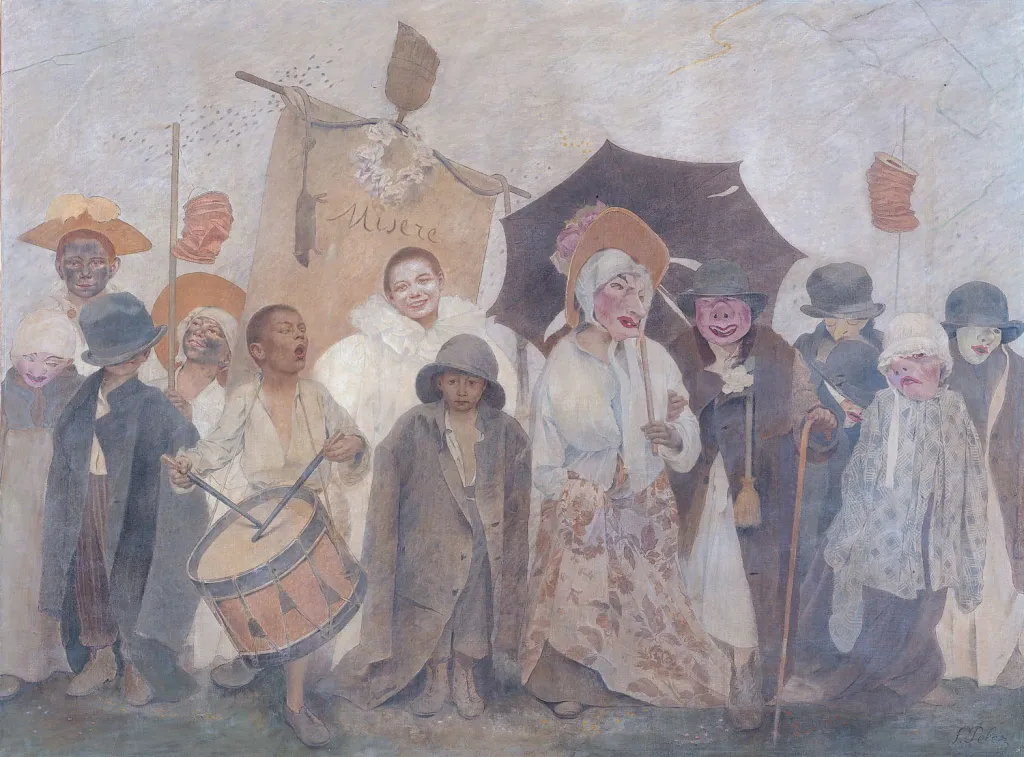
Fernand Pelez (1848-1913), La Vachalcade (The Cow-valcade) (1896), media and dimensions not known, Musée du Petit Palais, Paris. Wikimedia Commons.

A mask is a cover worn over part or all of the face. Covering the face more generally has been considered in this previous article. Here I’ll concentrate on masks that represent the face, and those used in the theatre, carnivals and masked balls.

Masks have been associated with acting and the theatre since ancient times, and can be seen as symbolic of drama and the stage.
rochegrossebernhardt1900
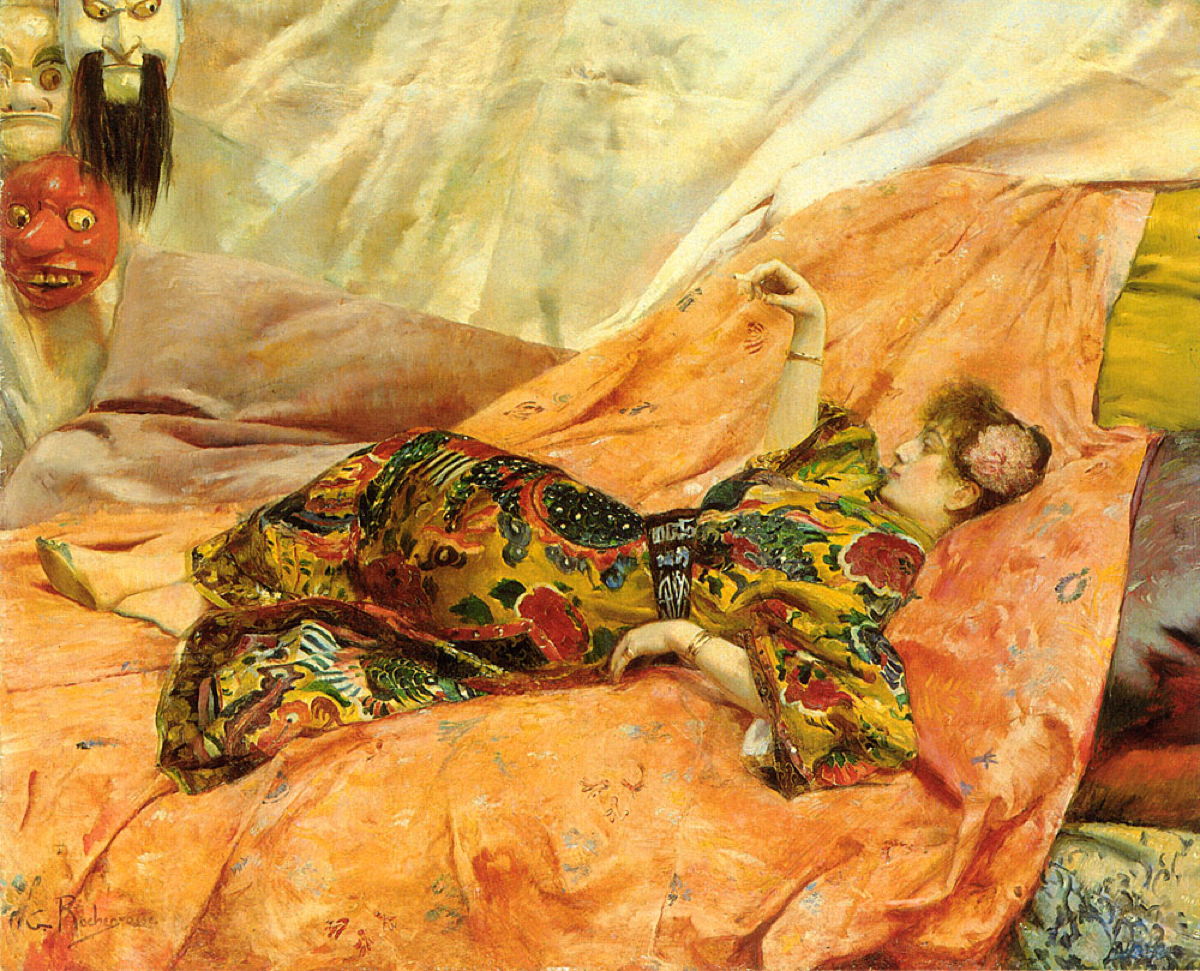
Georges Rochegrosse (1859–1938), Portrait of Sarah Bernhardt (c 1900), further details not known. Wikimedia Commons.

Georges Rochegrosse painted this Portrait of Sarah Bernhardt in about 1900, including three masks taken from Japanese Noh theatre at the left edge. Bernhardt was one of the most famous actresses of this period.

Some of the most remarkable archaeological discoveries of the late nineteenth century were unearthed at Tanagra in Greece around 1874, and included numerous painted terracotta figurines that Jean-Léon Gérôme featured in several of his paintings.
geromepaintingbreatheslifesculpture
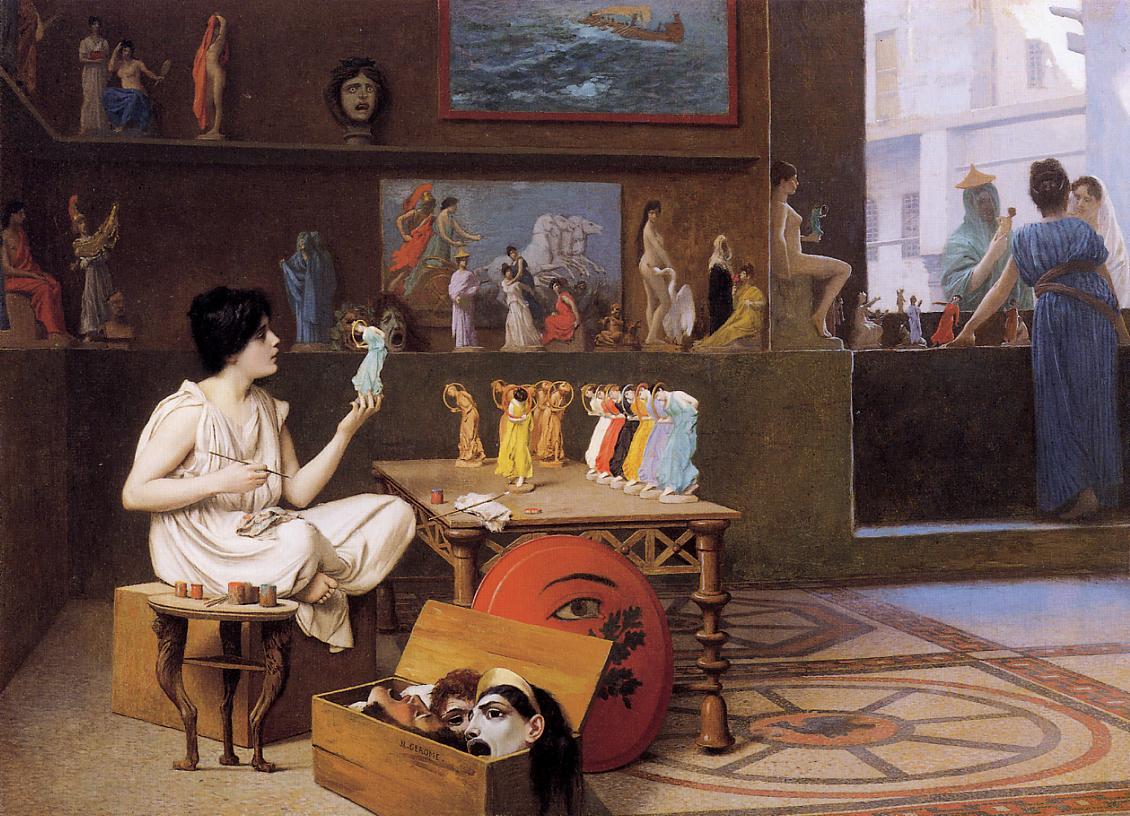
Jean-Léon Gérôme (1824–1904), Sculpturae Vitam Insufflat Pictura (Painting Breathes Life into Sculpture (1893), oil on canvas, 50.2 x 69.2 cm, Art Gallery of Ontario, Toronto. Wikimedia Commons.

Sculpturae Vitam Insufflat Pictura (Painting Breathes Life into Sculpture) (1893) is a combination of a manifesto for Gérôme’s own polychrome sculpture, and a celebration of those discoveries at Tanagra. In addition to painted figurines, there’s a wooden box of masks in the foreground, and some on the shelves behind.
geromeateliertanagra
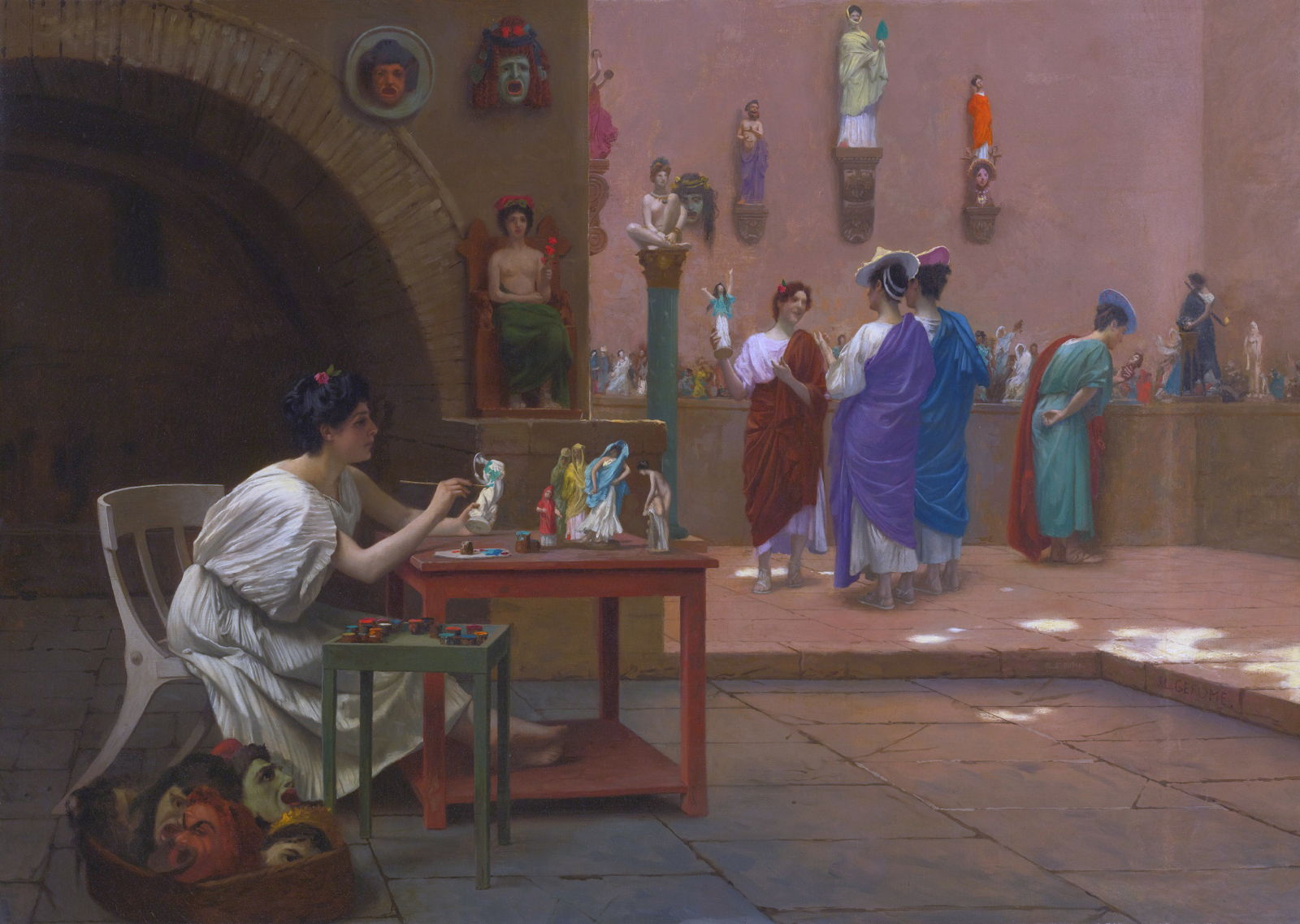
Jean-Léon Gérôme (1824–1904), Atelier of Tanagra (1893), oil on canvas, 65.1 x 91.1 cm, Private collection. Wikimedia Commons.

Gérôme’s Atelier of Tanagra from the same year includes a wider range of figurines and masks in a similar setting. These are typical of classical masks, where the face with mouth agape stands for tragedy, and the smiling face for comedy.

geromeworkingmarble
Jean-Léon Gérôme (1824–1904), The Artist’s Model (1895), oil on canvas, 50.8 x 39.6 cm, Dahesh Museum of Art, New York, NY. Wikimedia Commons.

If his painting of The Artist’s Model from 1895 is to be believed, Gérôme kept several masks as props in his own studio, where he’s working on full-size sculpture of his model Emma.
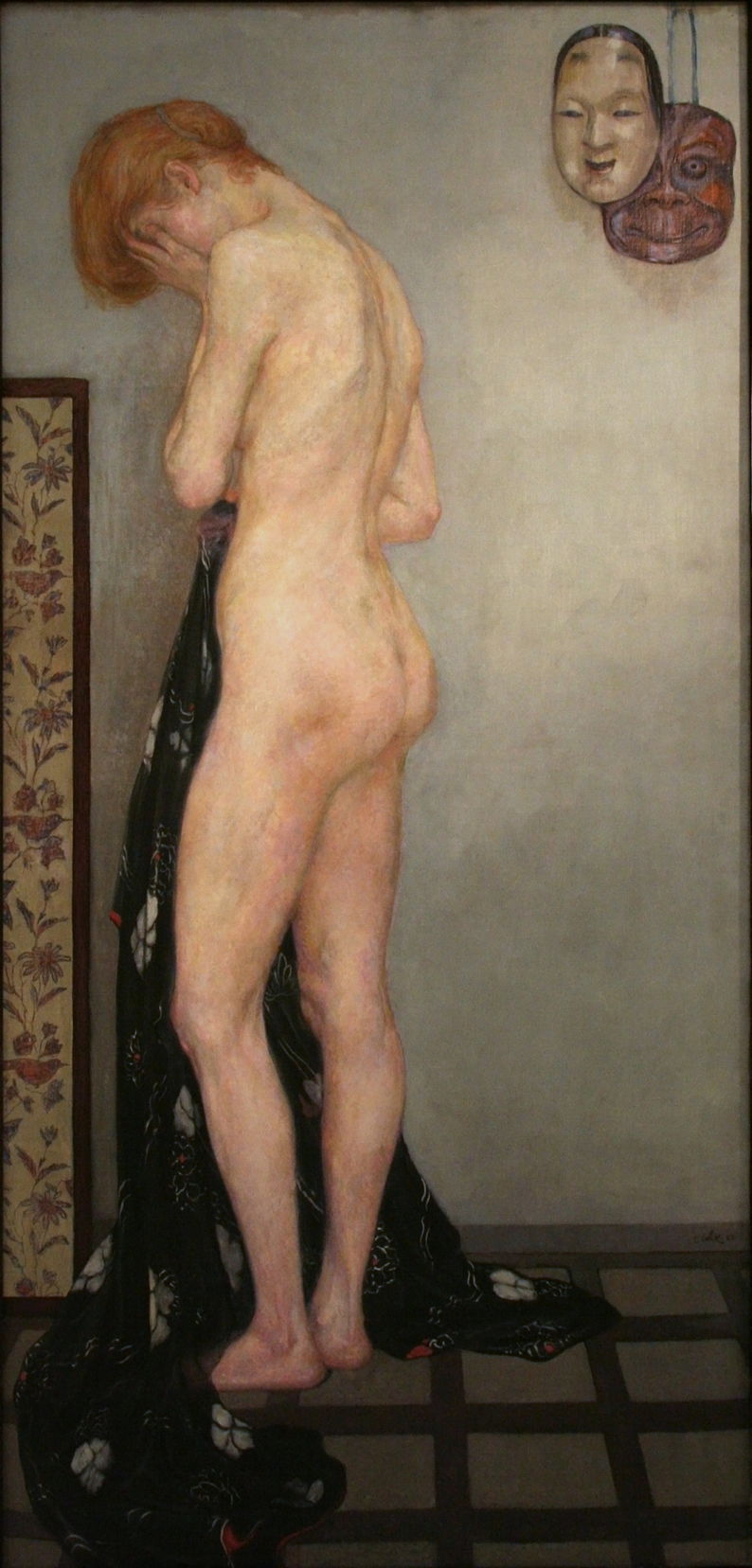
orlikmodel
Emil Orlík (1870–1932), Model (1904), oil on canvas, 195 × 92 cm, Národní galerie v Praze, Prague, The Czech Republic. Image by Ophelia2, via Wikimedia Commons.

Emil Orlík painted this unusual Model in 1904. She appears to have become shy or distressed. Her gown, screen, floor and hanging masks are evidence of the artist’s Japonisme.

Masks worn for balls seldom covered the whole face, and their primary purpose has been to disguise identity, thus to encourage extra-marital relationships, even promiscuity.
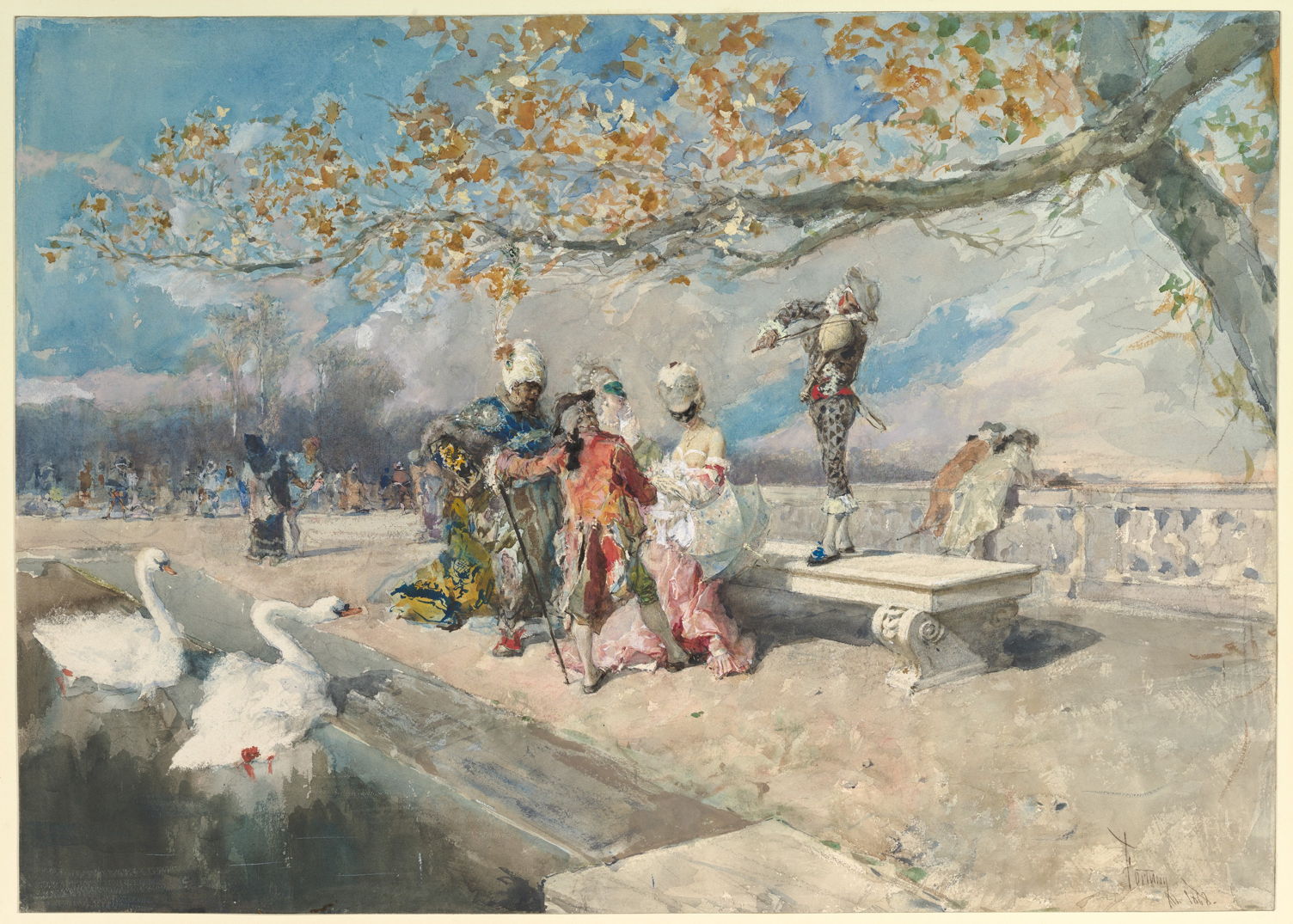
fortunymasquerade
Marià Fortuny (1838–1874), Masquerade (1868), brush and watercolor and gouache over black graphite on off-white heavy paper, 44.9 x 62.9 cm, The Metropolitan Museum of Art (Bequest of Mary Livingston Willard, 1926), New York, NY. Wikimedia Commons.

Marià Fortuny’s Masquerade (1868) is a marvellously loose watercolour showing an open-air masked ball, presumably held in Italy in the autumn, which is arousing the interest or bemusement of two swans. Dress is liberal to say the least, with the masked woman in the centre baring her breasts and holding a parasol.

corinththewitches
Lovis Corinth (1858–1925), The Witches (1897), oil on canvas, 94 × 120 cm, Private collection. Wikipedia Commons.

Despite its title, Lovis Corinth’s Witches (1897) isn’t a depiction of sensuous rites taking place in a coven. Instead the women are preparing a younger woman to attend a masked ball. Their subject has just got out of the wooden tub in the foreground, has been dried off, and is about to don the fine clothes laid over the chair at the left, including the black mask.

pelezvachalcade
Fernand Pelez (1848-1913), La Vachalcade (The Cow-valcade) (1896), media and dimensions not known, Musée du Petit Palais, Paris. Wikimedia Commons.

Fernand Pelez’s La Vachalcade (The Cow-valcade) from 1896 shows young revellers taking part in a carnival procession, perhaps one of those in Montmartre at the time. Several are wearing full masks.