







PostHog 1.34.0 focuses on supporting collaboration and helping you to find and share insights on PostHog. New features in this update include a new default homepage for projects, smart names for all insights and an entire Data Management tool!
IMPORTANT! Before upgrading, make sure to run all async migrations on your instance. This version will not run until async migrations are completed. Please check out the async migrations docs for details.
IMPORTANT! If you use SAML please read our deprecation notices below.
Wondering how to upgrade a self-hosted instance? Check out our upgrade guide.
Release highlights:
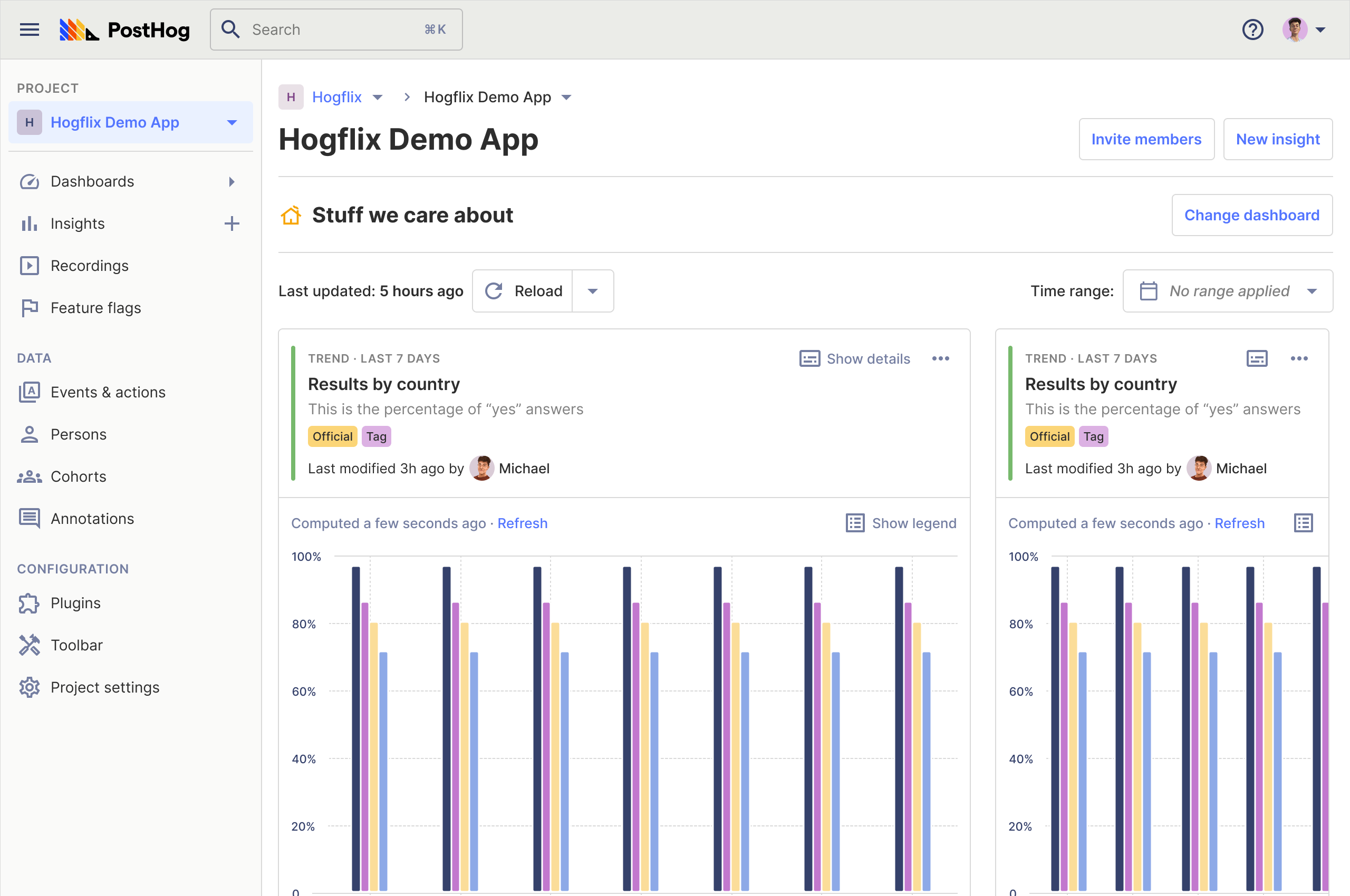
We've added default homepages for each project in PostHog, to help you explore new data and keep track on important metrics. You can pin your favorite dashboard directly to this new homepage to easily access those insights and we'll also surface popular insights for you too.
Best of all, if your team uses Session Recording, we'll also add your most recent recordings to the homepage too. We've found users who watch these recordings make 3x more useful discoveries, on average!
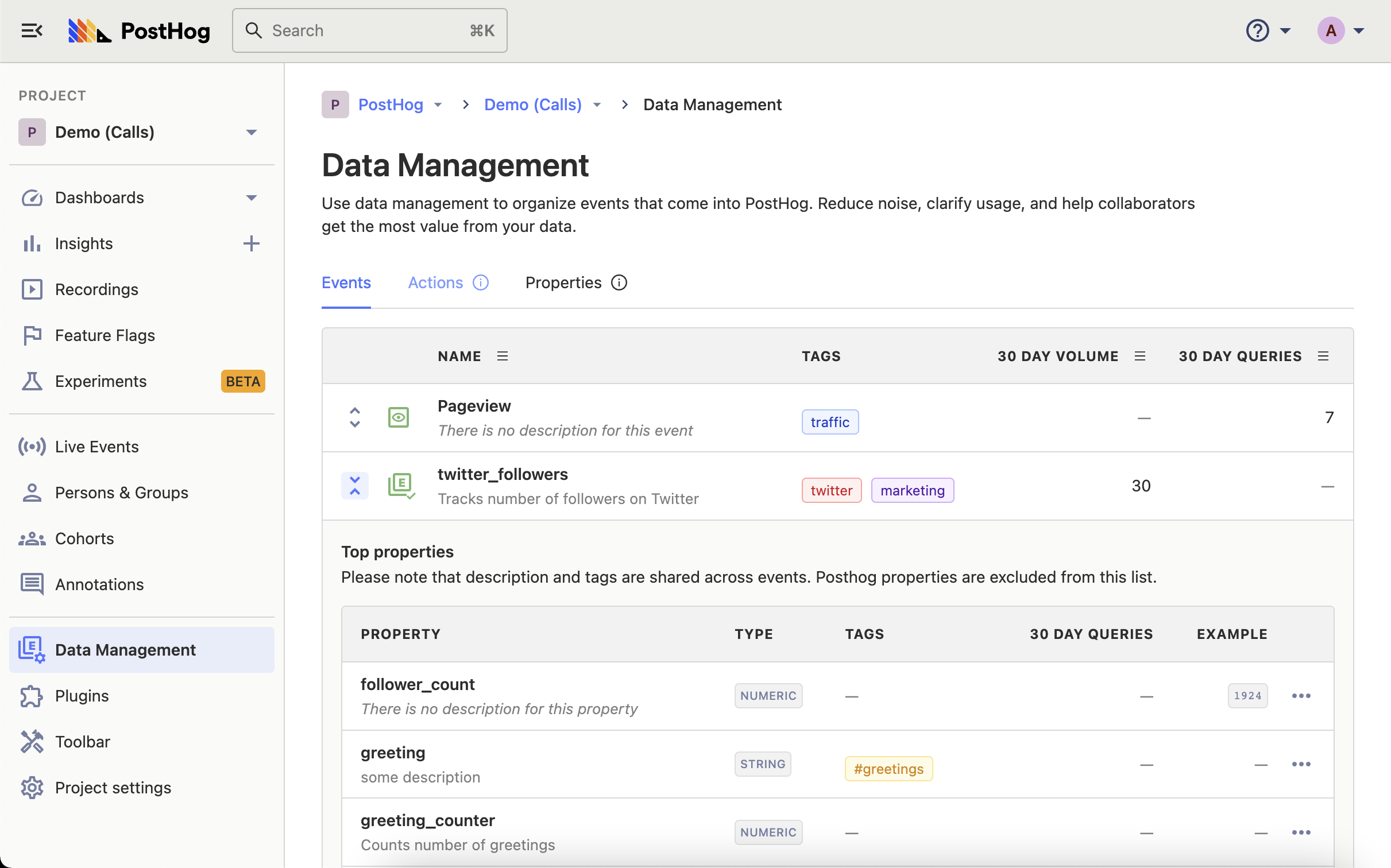
We've also added a new Data Management system! This new tool helps you organize your PostHog data in-house through event definitions, definition tagging and many more features. This is especially useful in large teams, where it can sometimes be difficult to know if your insights are using the right events.
Check out our blogpost which explains more about Data Management on PostHog or dive straight into the Data Management docs for more information.
🎁 Definition creation, tagging, and volume metrics are premium features which require a PostHog Scale or Enterprise license. Learn more.
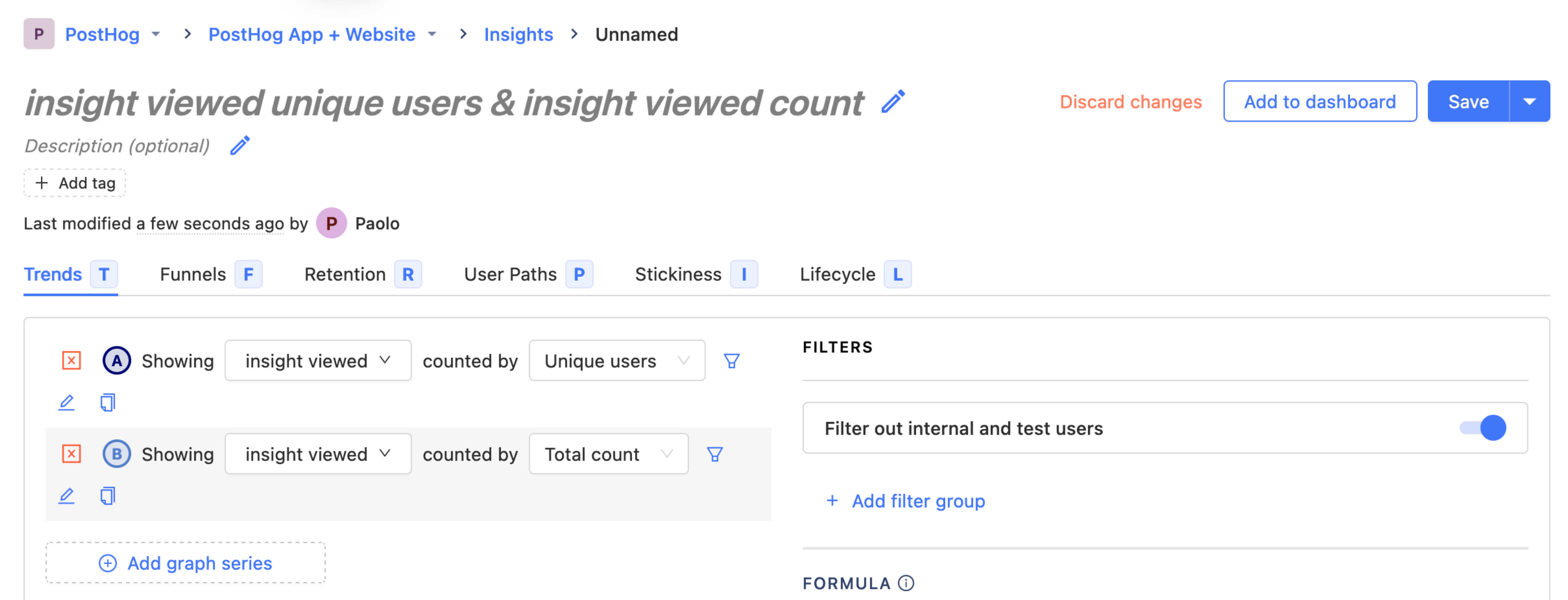
Previously, we generated random default names for insights based on animals. It was fun and ensured each insight had a unique name, but they weren't very descriptive and didn't help if you wanted to browse existing insights.
Now, we've added smart insight naming to automatically generate descriptive names for every insight you create. This makes it a lot easier to find the insights you need - thought you can of course add custom animal names, if you want.

One of the most requested features for PostHog, property group filters enable you to mix and match your favourite property filters with ORs and AND conditions. This makes it much simpler to create complex filters when building insights, though this is currently only available as a global filter for insights.
Self-hosted users can now manage staff users on their instance settings. Staff users are a special instance-level permission which have access to instance-wide settings - and you probably want to have multiple staff users enabled to ensure your instance can always be properly maintained.
You can manage staff users either via the PostHog UI, or the API if you prefer - check out the staff user docs for more information.
Self-hosted users can now shard and replicate their data on ClickHouse to scale horizontally. This can help improve fault tolerance and improve query performance in certain situations.
Check out the horizontal scaling runbook for more information.
Version 1.34.0 also adds hundreds of other fixes and improvements, including...
SAML_ENFORCED environment variable) then this environment configuration has been deprecated too. You will now need to configure SSO enforcement via Authentication domains (see SSO docs for more details.)We'd love to hear anything you have to say about PostHog, good or bad. As a thank you, we'll share some awesome PostHog merch.
Want to get involved? Email us to schedule a 30 minute call with one of our teams to help us make PostHog even better!
Want to help improve PostHog? We always welcome contributions from our community! Check out our contributing resources to get started, or head to our community page.
We would also specifically like to thank PostHog team members @hazzadous, @guidoiaquinti and @liyiy for their efforts on this particularly stubborn release.
This month we also want to say thank you to the following people...
Want to join us in helping make more products successful? We're currently hiring for remote candidates in any of the following roles:
Curious about what it's like to work at PostHog? Check out our careers page for more info about our all-remote team and transparent culture. We also welcome speculative applications for roles from exceptional candidates.
Follow us on Twitter or LinkedIn for more PostHog news!
Want to just try it already?
(Sorry for the shameless CTA.)
此内容由惯性聚合(RSS阅读器)自动聚合整理,仅供阅读参考。 原文来自 — 版权归原作者所有。