There's "ready" and then there's "ready for everyone"; if you've ever scrambled to revert a deploy, you know the difference.
Maybe an edge case breaks on mobile, maybe the feature tanks conversion for a segment you didn't test, or maybe your new onboarding flow confuses more people than it helps.
This is where feature flags come in: you ship the code when it's ready, and you control who sees it separately.
This guide compares the best feature flag tools for developers – what they do well, where they fall short, and which one fits your workflow best.
At its core, a feature flag tool lets you toggle features on or off for specific users, groups, or percentages of traffic without redeploying code. But the best tools are a lot more than flip switches.
Most solid feature flag tools include:
Developer-focused tools often go further with:
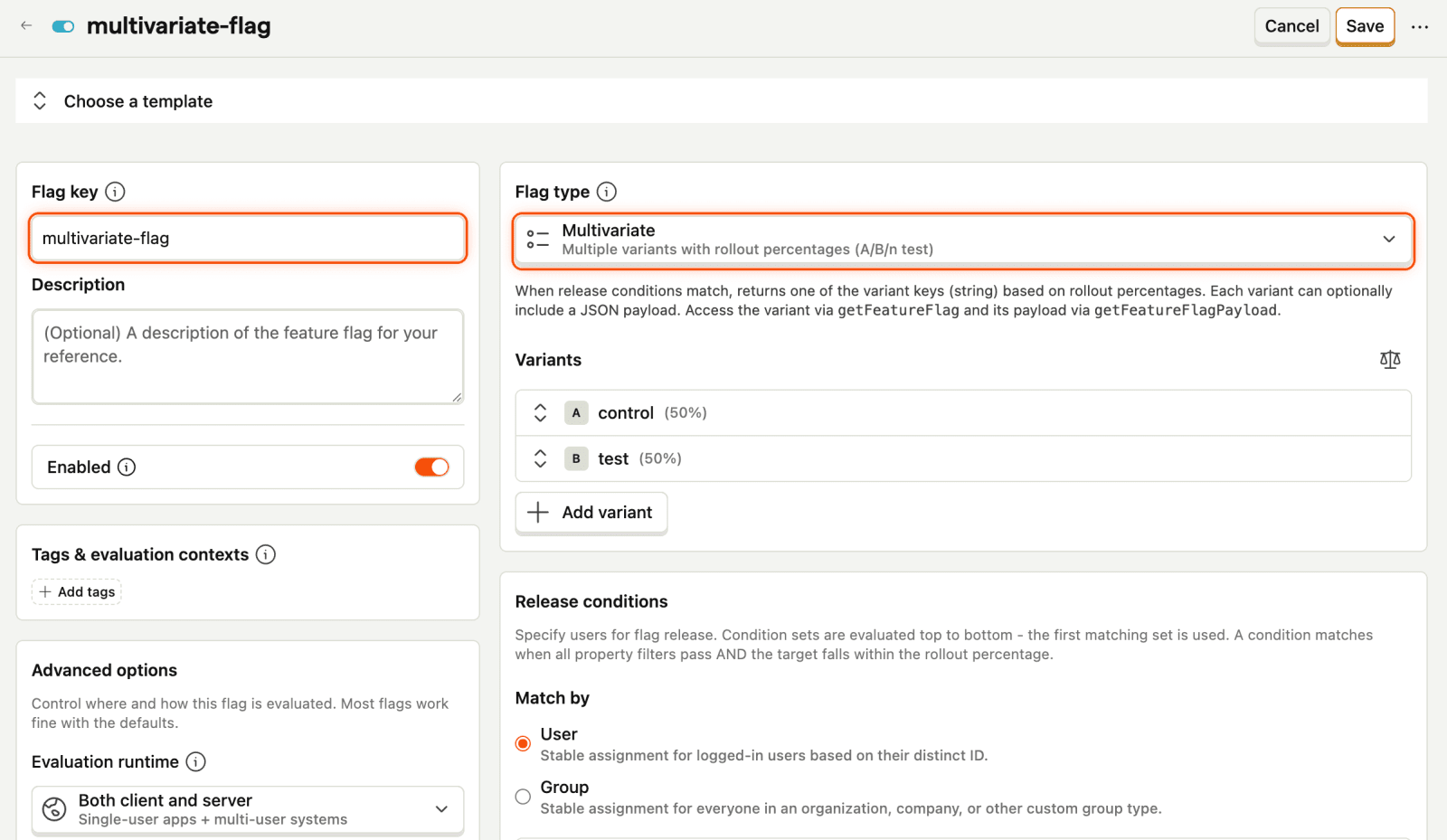
PostHog is an all-in-one developer platform where feature flags aren't a standalone product – they're woven into a broader workflow that includes product analytics, session replay, experiments, error tracking, LLM observability, logs, and more.
This means you can roll out a feature to 10% of users, watch session replays of those users, check whether the flag variant increased conversion, catch any errors it triggered, and get feedback about their experience – all without leaving the platform.
PostHog supports boolean and multivariate flags, percentage rollouts, user and group targeting, JSON payloads for remote configuration, and local evaluation for low-latency flag checks. It also powers PostHog's experimentation features, so you can go from "ship it behind a flag" to "measure its impact with statistical significance" in a few clicks.
PostHog uses usage-based pricing with a free tier of 1 million feature flag requests per month – enough for most early-stage teams. You can also set billing caps to prevent surprise charges, and eligible startups can get $50k in free credits through the PostHog for Startups program.
Strengths:
Developers who want feature flags as part of a complete build-measure-learn workflow, and startups that want to replace multiple tools with one platform.
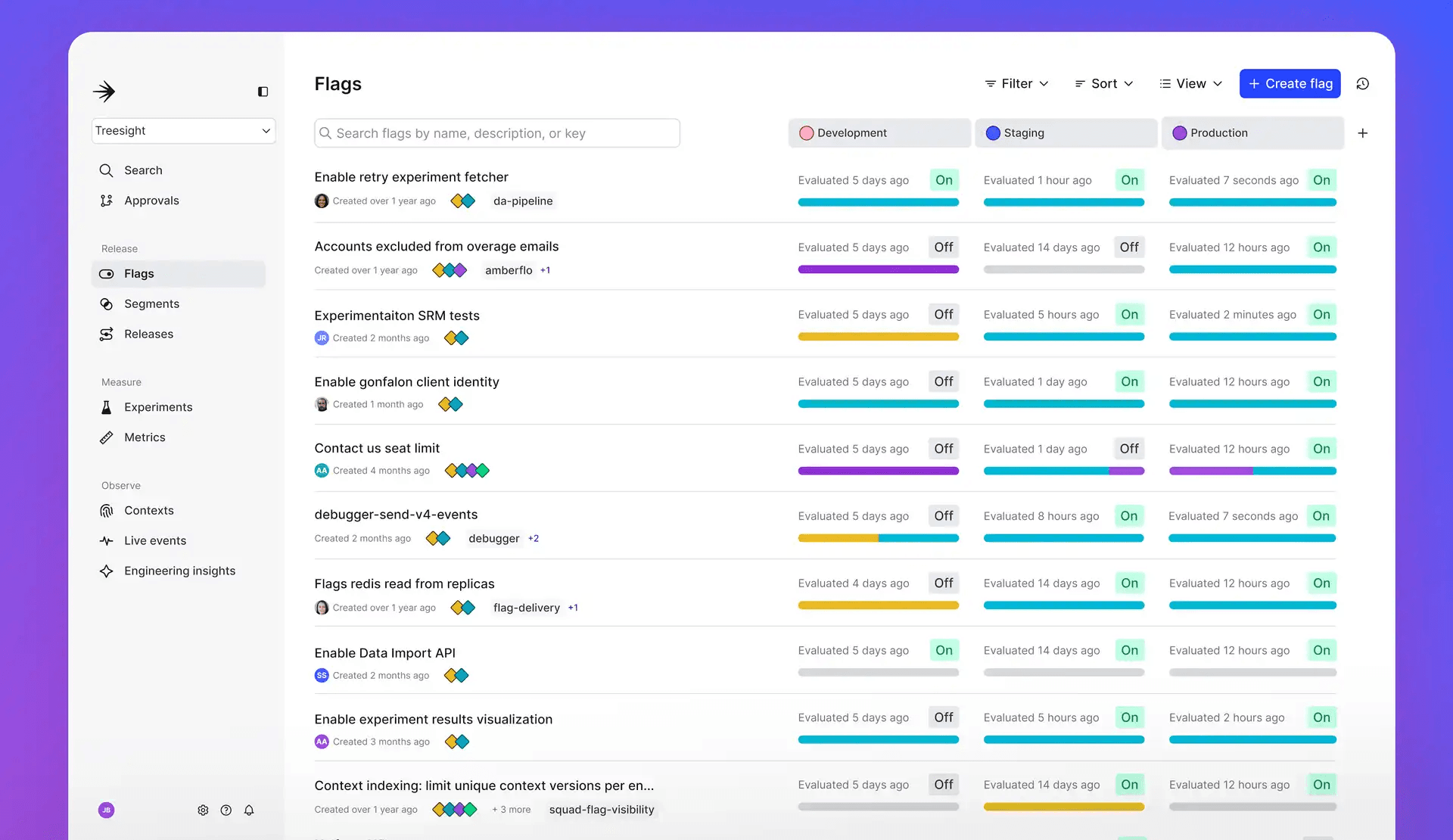
LaunchDarkly is the most established feature flag platform and the go-to choice for many organizations. It was built specifically for feature management at scale, and it shows in the depth of its targeting rules, governance features, and SDK support.
LaunchDarkly supports complex boolean logic, multi-dimensional targeting (users, devices, organizations), progressive rollouts, approval workflows, and audit logging. It features a broad SDK coverage, and the streaming architecture delivers flag updates in near real-time without polling.
More recently, it has expanded into experimentation, release monitoring, and AI model configuration. It also offers "guarded releases" that automatically roll back changes when performance metrics degrade.
The trade-off is cost. Their pricing is based on client-side MAUs, and can scale quickly. It also doesn't include session replay or error tracking, so you'll need separate tools for those.
Strengths:
Large engineering teams that need enterprise-grade feature management with deep governance, compliance, and the broadest possible SDK support.
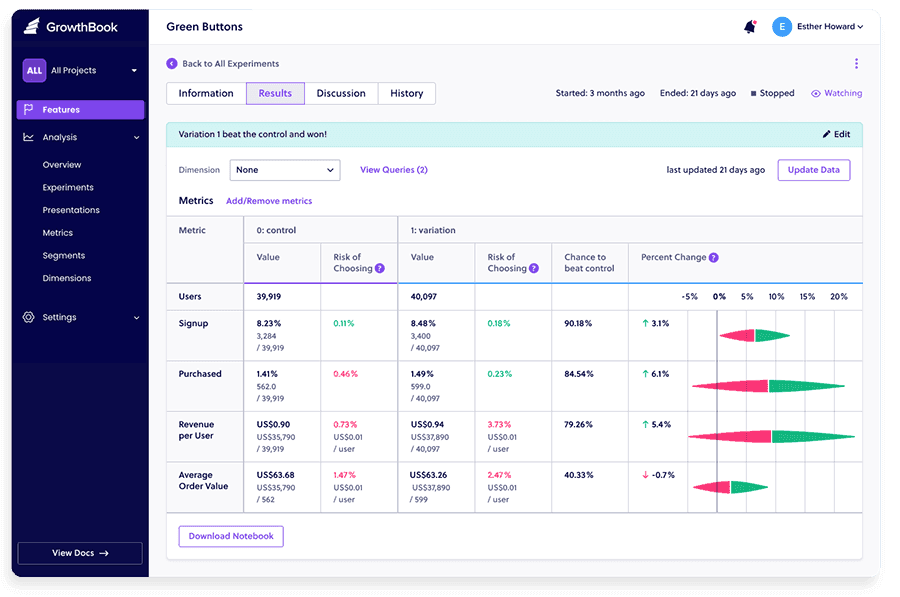
GrowthBook is an open-source platform built around the idea that every feature release should be measurable. It combines feature flags with a powerful experimentation engine that connects directly to your data warehouse, making it a strong pick for data-savvy teams.
Its feature flag capabilities include targeting rules, percentage rollouts, prerequisite flags, and JSON payloads. You can also turn any flag into an A/B test, define metrics via SQL, and analyze results using Bayesian or Frequentist statistical engines without exporting data or wiring up a separate tool.
GrowthBook is free to self-host; the cloud version has a free tier for up to 3 users, with paid plans starting at $40/user/month for features like multi-armed bandits, product analytics, access control, and more.
Strengths:
Data teams and engineers who want experimentation built into their feature release workflow, with full control over their data.
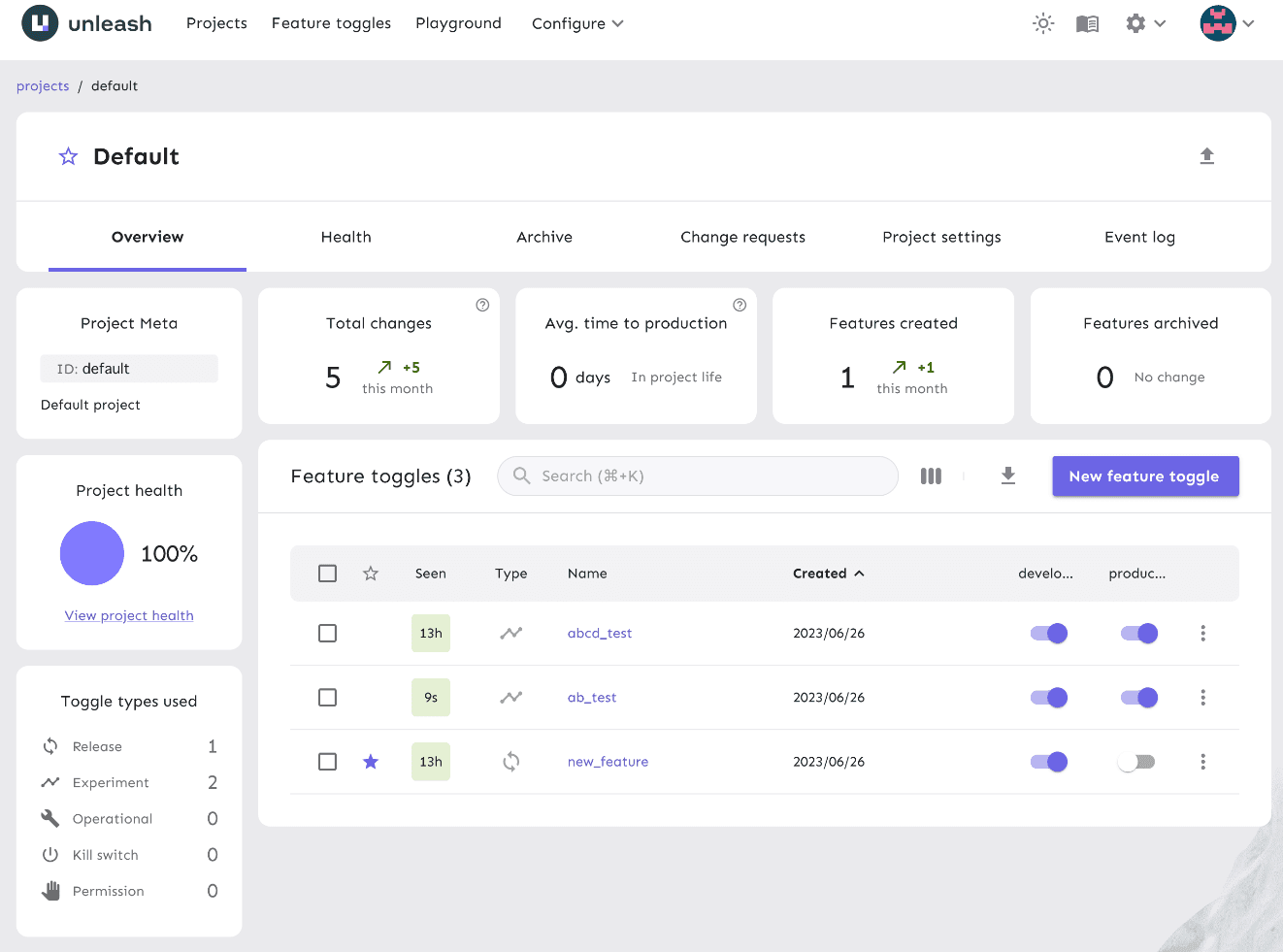
Unleash is an open-source feature flag platform designed for teams that need full control over their infrastructure. It’s used in production by large orgs, including Visa, where data sovereignty and compliance aren't optional.
Unleash focuses on doing feature flags well without trying to be an analytics or experimentation platform. It supports progressive rollouts, kill switches, custom activation strategies, and environment management. Under the hood, it's a Node.js and TypeScript backend that uses PostgreSQL for storage, and it's straightforward to deploy via Docker or Kubernetes.
Their OSS is positioned as a single-environment setup, and teams that need multiple environments with governance features typically upgrade to Enterprise for things like RBAC, audit logs, and change requests, plus SSO and SCIM.
Strengths:
Engineering teams in regulated industries that need self-hosted feature flags with enterprise-grade security, audit trails, and full data control.
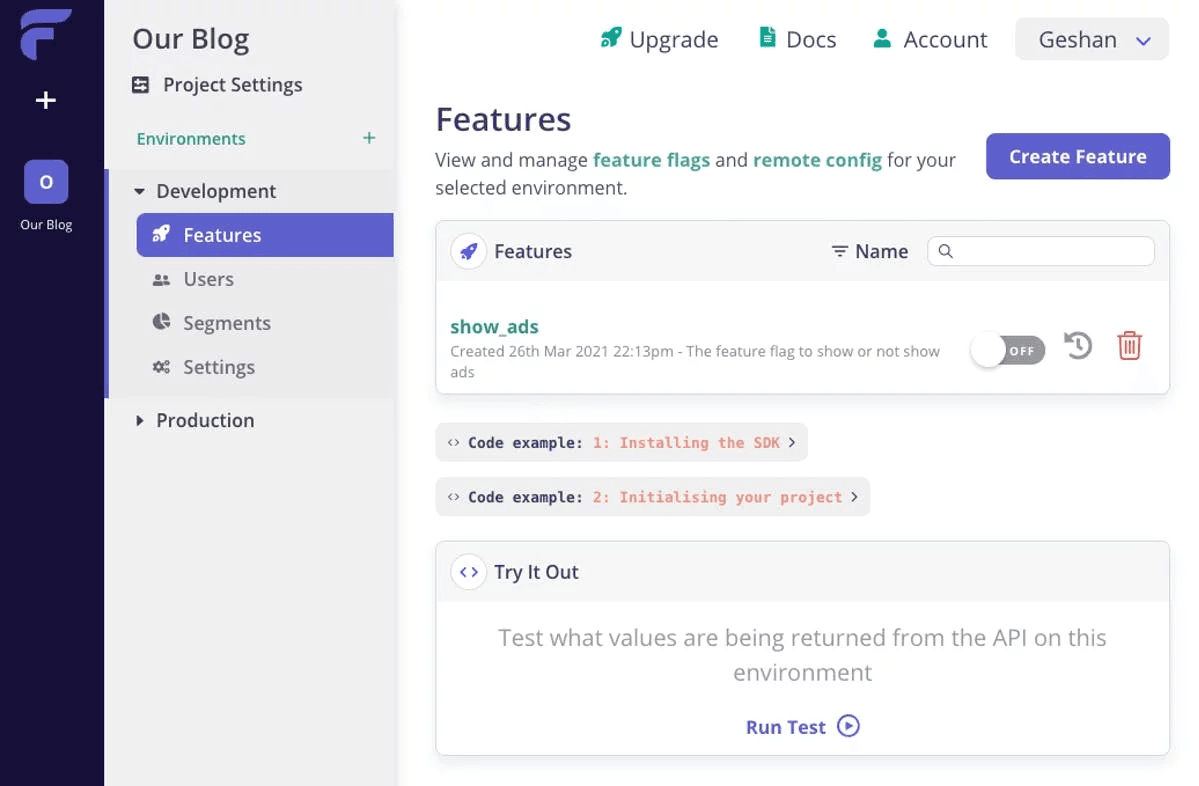
Flagsmith is an open-source feature flag and remote configuration platform that gives teams flexibility in how they deploy. You can run it as SaaS, on a private cloud, or fully on-premises – a rare combination that makes it a strong fit for security-conscious organizations.
It supports boolean and multivariate flags, user segments, percentage rollouts, A/B testing, remote config, and scheduled flags. Its Edge API routes requests to the nearest data center for low-latency evaluation, and it supports local evaluation for server-side SDKs.
One area where Flagsmith differs from platforms like PostHog is that it isn't trying to be a full product analytics suite.
It includes testing features, but if you want deep behavioral analysis, funnels, retention, or replay-led debugging, you'll typically pair it with your existing analytics stack. Their free tier includes 50,000 requests per month, and paid plans start at $45/month.
Strengths:
Security-conscious teams that need deployment flexibility and remote configuration, with the option to self-host on their own infrastructure.
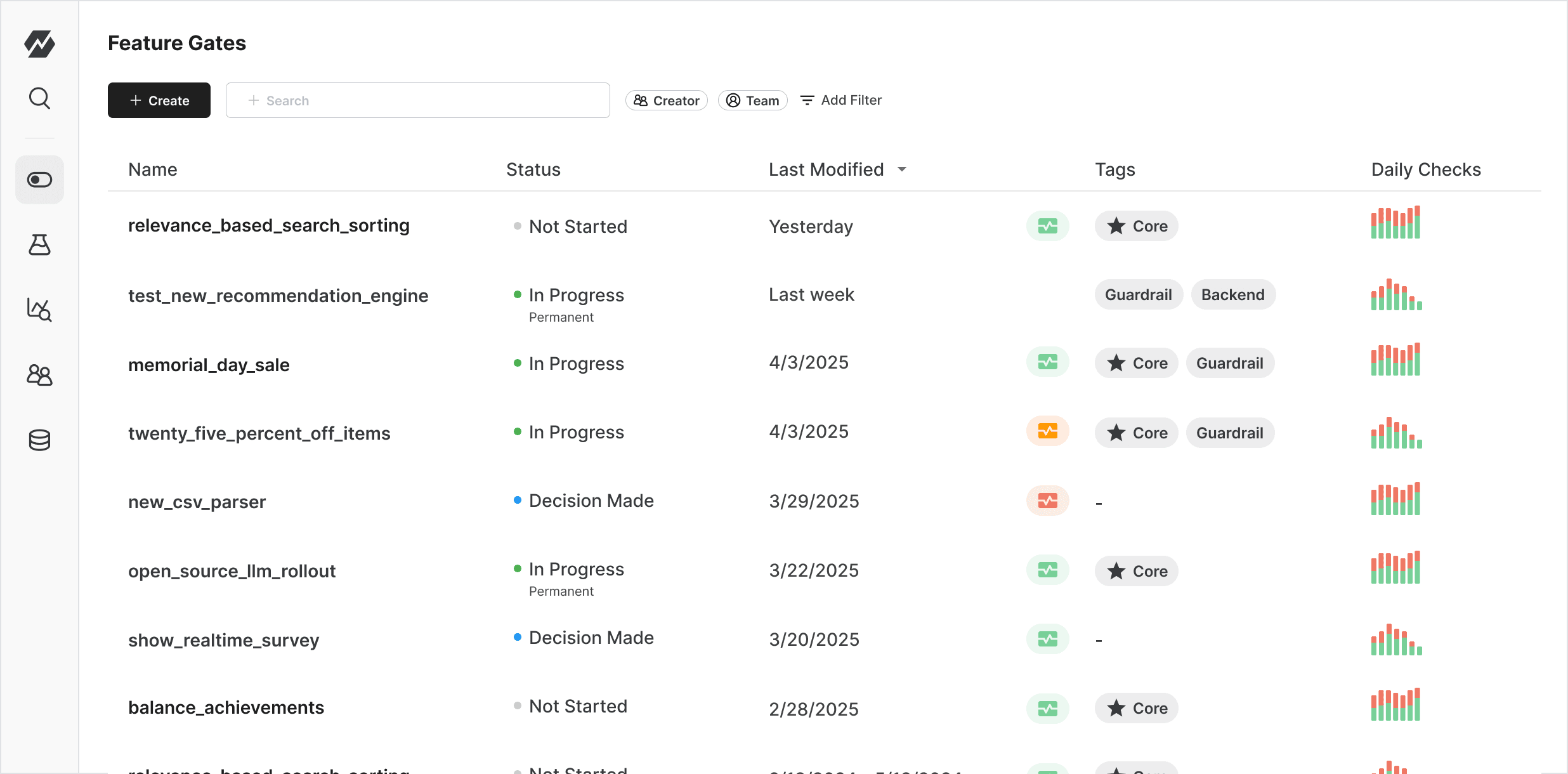
Statsig was built by ex-Facebook engineers who wanted to bring Meta's internal experimentation infrastructure to every team. The result is a platform that combines feature flags, experimentation, analytics, and session replay in one unified system.
Statsig's standout is its experimentation engine. Every feature flag can be turned into an experiment with automatic metric tracking, CUPED variance reduction, and sequential testing. The platform also includes product analytics, funnels, and session replay, giving teams a full picture of how flags impact user behavior.
It markets unlimited flag and config checks on every tier, and the free tier includes 2M events per month plus session replay volume. In practice, that means you can run a lot of flags without paying for every flag check, costs scale mainly with how much you measure and replay.
Strengths:
Product and engineering teams that want to run high-velocity experiments as part of every feature release, with advanced statistical methods built in.
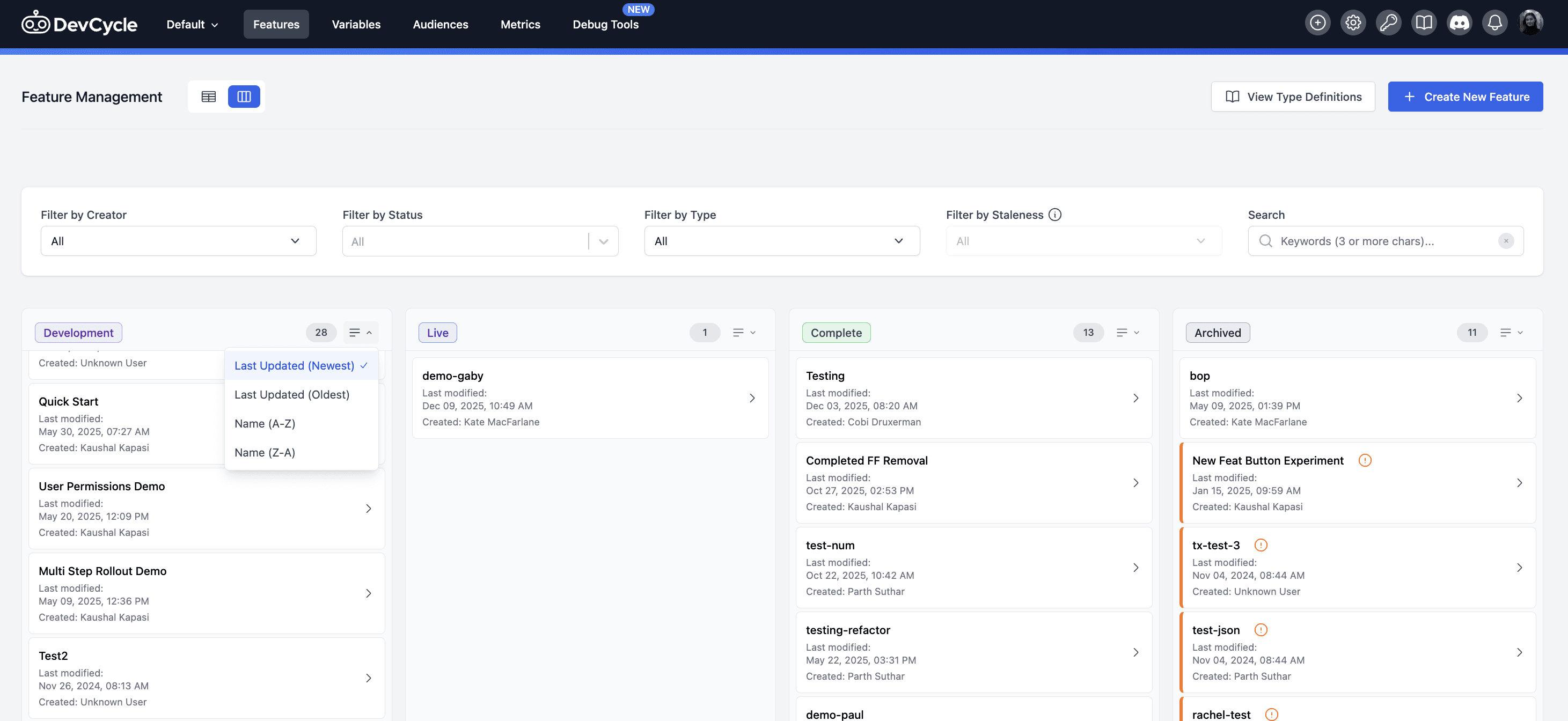
DevCycle is a feature flag platform that prioritizes speed, simplicity, and tight integration with existing development workflows. It's designed for teams that want to manage flags the same way they manage code – with Git-based workflows, CLI tools, and IDE integrations.
DevCycle supports boolean and multivariate flags, percentage rollouts, user targeting, and environment management. It integrates with GitHub and Jira for flag lifecycle management, and includes built-in stale flag detection to help teams clean up technical debt.
What sets DevCycle apart is its obsession with developer workflow. It supports CLI and IDE-first ways to work with flags, plus integrations with tools like GitHub and Jira so flags show up naturally in code review and planning. And their edge and local-bucketing style options help keep evaluation fast without you managing a full flag platform yourself.
DevCycle offers a free tier for up to 1,000 MAUs, with paid plans based on MAU volume.
Strengths:
Engineering teams that want a fast, lightweight feature flag tool that fits into Git-based workflows without the overhead of a full platform.
ConfigCat: A privacy-first feature flag service with fixed, predictable pricing and a generous free tier (10M requests/month). All evaluations happen locally via SDKs pulling from a global CDN. It doesn't collect end-user data, which simplifies GDPR compliance. The trade-off is no experimentation, analytics, or CI/CD integration – it's intentionally lightweight. Best for teams that want simple, reliable flags without complexity.
Harness: Harness acquired Split in May 2024 and merged its experimentation engine into the broader Harness CI/CD platform. The result is feature flags that go through the same governance and verification workflows as code changes, with A/B testing and metric ingestion from tools like Segment and Sentry. Best for enterprise DevOps teams that want flags tightly integrated into their CI/CD pipeline.
Here's the (short) sales pitch.
We're biased, obviously, but PostHog is the best choice for feature flags if:
It's completely free to get started – no credit card required. Our setup wizard handles configuration in minutes, or you can check out our docs to do it yourself.
Feature flags (also called feature toggles) let you control which users see a feature without redeploying code. They're used for progressive rollouts, A/B testing, kill switches, and trunk-based development. Instead of maintaining long-lived feature branches, you merge code behind a flag and control its visibility separately.
PostHog if you want flags integrated with analytics, experiments, and error tracking in one platform. LaunchDarkly if you need the deepest feature management capabilities and enterprise governance. GrowthBook if you want open-source flags with built-in experimentation.
LaunchDarkly is a dedicated feature management platform built for enterprise-scale flag operations. It has the most sophisticated targeting rules, governance workflows, and SDK coverage, but doesn't include analytics, session replay, or error tracking.
PostHog takes a different approach by embedding feature flags into an all-in-one developer platform. You can roll out a flag, watch session replays of affected users, check analytics for impact, and catch errors – all without switching tools. It's more affordable for most teams but doesn't match LaunchDarkly's depth in pure feature management.
Choose LaunchDarkly if feature flag governance is your primary concern. Choose PostHog if you want flags as part of a broader build-measure-learn workflow. Learn more about the differences in our PostHog vs LaunchDarkly comparison guide.
The best LaunchDarkly alternatives depend on what you're optimizing for:
For a full breakdown, see our guide to the best LaunchDarkly alternatives and competitors.
Yes. PostHog, GrowthBook, Unleash, and Flagsmith all have open-source editions. GrowthBook and Unleash are commonly self-hosted by teams that want maximum control over data and infrastructure. Keep in mind that open-source editions can differ from paid plans in governance features like multi-environment management, RBAC, and approvals.
Yes. Feature flags that are never cleaned up become "stale flags" – dead code paths that add complexity and make the codebase harder to maintain. Good feature flag hygiene includes setting expiry dates, using stale flag detection, and treating flag removal as part of the feature lifecycle.
Statsig offers unlimited free feature flags at every pricing tier and includes 2M events per month. PostHog includes 1 million free feature flag requests per month with transparent usage-based pricing. GrowthBook and Unleash are both free to self-host with no usage limits.
PostHog has the tightest integration since analytics, session replay, and feature flags are all built into the same platform. Statsig also includes built-in analytics and experimentation. For tools without native analytics – like Unleash and Flagsmith – you'll need to integrate with external analytics platforms.
PostHog supports iOS, Android, React Native, and Flutter with native SDKs. LaunchDarkly has the broadest SDK coverage across platforms, and Flagsmith focuses heavily on low-latency delivery via its Edge API, which can be helpful for global mobile performance.
You can build a basic flag system with config files or a database table. But as your needs grow – targeting rules, percentage rollouts, multi-environment support, audit logs, experimentation – the engineering cost of maintaining a homegrown system adds up fast. Most teams find it's worth adopting a purpose-built feature flag tool once they have more than a handful of flags.
PostHog is more than a feature flag tool. It gives developers full context by combining all the tools needed to build a successful product in one platform.
Based on our research, the best feature flag tools for developers right now are:
For a deeper look at open-source options specifically, see our guide to the best open-source feature flag tools.
Subscribe to our newsletter
Read by 100,000+ founders and builders
We'll share your email with Substack
此内容由惯性聚合(RSS阅读器)自动聚合整理,仅供阅读参考。 原文来自 — 版权归原作者所有。