惯性聚合 高效追踪和阅读你感兴趣的博客、新闻、科技资讯
阅读原文 在惯性聚合中打开

推荐订阅源

宝玉的分享
宝玉的分享
Recent Commits to openclaw:main
钛媒体:引领未来商业与生活新知
钛媒体:引领未来商业与生活新知
T
Tailwind CSS Blog
Cyber Security Advisories - MS-ISAC
罗磊的独立博客
V
Visual Studio Blog
爱范儿
爱范儿
H
Help Net Security
J
Java Code Geeks
I
InfoQ
Recent Announcements
H
Hackread – Cybersecurity News, Data Breaches, AI and More
Recorded Future
Recorded Future
Jina AI
Jina AI
Microsoft Security Blog
WordPress大学
WordPress大学
GbyAI
GbyAI
freeCodeCamp Programming Tutorials: Python, JavaScript, Git & More
CTFtime.org: upcoming CTF events
Y
Y Combinator Blog
Google DeepMind News
Scott Helme
Scott Helme
S
SegmentFault 最新的问题
S
Securelist
L
LINUX DO - 热门话题
Cyberwarzone
Cyberwarzone
C
Cisco Blogs
Simon Willison's Weblog
G
Google Developers Blog
酷 壳 – CoolShell
酷 壳 – CoolShell
博客园 - 叶小钗
T
The Blog of Author Tim Ferriss
博客园_首页
B
Blog
F
Fortinet All Blogs
AWS News Blog
AWS News Blog
V
Vulnerabilities – Threatpost
S
Secure Thoughts
cs.AI updates on arXiv.org
Forbes - Security
Forbes - Security
S
Security @ Cisco Blogs
T
Threat Research - Cisco Blogs
OSCHINA 社区最新新闻
OSCHINA 社区最新新闻
S
Schneier on Security
Project Zero
Project Zero
Martin Fowler
Martin Fowler
C
Cybersecurity and Infrastructure Security Agency CISA
N
Netflix TechBlog - Medium
N
News and Events Feed by Topic

PostHog's RSS Feed

Training our own AI models - PostHog From 270GB RAM to 5GB: Moving local flag evaluation from Django to Rust The best analytics stack for vibe-coded apps The do's and don'ts of minimum viable product marketing - PostHog The best MCP servers for startups, by workflow 4,063 errors closed without a human opening PostHog – here's what we learned - PostHog PostHog Code and the self-driving product - PostHog Why attacking your competitors online is dumb - PostHog The best real-time analytics platforms for developers, compared DuckDB vs ClickHouse: Why we use both at PostHog - PostHog PostHog's next chapter - PostHog Making Claude Cowork actually useful - PostHog PostHog vs Matomo in-depth tool comparison You're doing lifecycle emails wrong Untangling Tokio and Rayon in production: From 2s latency spikes to 94ms flat The best HIPAA-compliant A/B testing tools - PostHog A beginner's guide to testing AI agents - PostHog I hate the standup bot (so I built an agent to do it for me) - PostHog The best CDPs for developers, compared The best error tracking tools for developers, compared The best feature flag software for developers, compared 7 best session replay tools for mobile apps 7 best free open source business intelligence tools right now 7 best free and open source LLM observability tools PostHog vs LogRocket in-depth tool comparison The most popular PostHog alternatives, compared Open source (and self-hosted) session replay tools - PostHog The 9 best GA4 alternatives for apps and websites - PostHog PostHog vs Google Analytics 4 in-depth tool comparison How we built automatic clustering for LLM traces - PostHog The 7 best HIPAA-compliant analytics tools 8 best open source analytics tools you can self-host - PostHog The best product analytics tools for startups, compared PostHog vs FullStory in-depth tool comparison The best in-app survey tools for product teams, compared The 7 best mobile app analytics tools PostHog vs Hotjar in-depth tool comparison The 8 best free and open-source feature flag services - PostHog The 5 best free and open-source A/B testing tools - PostHog The best mobile app A/B testing tools, compared What is a feature flag? Feature Flags vs Remote Config vs A/B Testing PostHog is now available in Vercel’s v0 The best Heap alternatives & competitors, compared PostHog vs Heap in-depth tool comparison PostHog vs Pendo in-depth tool comparison PostHog × Vercel: feature flags, minus the plumbing Your logs' final destination is in GA. You always end up here anyway Behind the scenes of a PostHog hackathon - PostHog The most popular Mixpanel alternatives & competitors, compared PostHog vs Mixpanel in-depth tool comparison The 9 best GDPR-compliant analytics tools How we use Logs at PostHog The best web analytics tools for developers, compared Stop AI slop: Run evals with LLM-as-a-Judge - PostHog You product data just got a job: Workflows is now out App onboarding: How to fix drop-off points Meet Logs (beta) – logs with all the tools you’re already using Why small teams crush tiger teams How we built user behavior analysis with multi-modal LLMs (in 5 not-so-easy steps) - PostHog The best Contentsquare alternatives & competitors, compared 8 learnings from 1 year of agents – PostHog AI - PostHog Why we killed our AI product assistant Workflows graduate to beta! Product data, meet automation The best Rollbar alternatives & competitors, compared Workflows are now in Alpha and I already broke mine - PostHog I've consistently underestimated how important communication is as a CEO - PostHog How we made feature flags even faster and more reliable The best session replay tools for developers, compared What I learned attending my first ever hackathon - PostHog Did you know AI is answering our community questions? - PostHog How not to be boring - PostHog We built an internal tool to generate changelog images for social media - PostHog What we built at our windswept Mykonos hackathon - PostHog How we built our onboarding email flow (with actual performance data) - PostHog We're building a better PostHog community by closing our public Slack - PostHog Introducing Notebooks for PostHog - PostHog Why we've launched PostHog user surveys - PostHog How we made feature flags faster and more reliable - PostHog In-depth: ClickHouse vs Redshift - PostHog Introducing HouseWatch: An open-source toolkit for ClickHouse - PostHog Introducing HogQL: Direct SQL access for PostHog - PostHog What we built at our sun-kissed Aruba hackathon - PostHog In-depth: ClickHouse vs BigQuery - PostHog In-depth: ClickHouse vs Elasticsearch - PostHog HogMail #22: Why do companies over-hire?" - PostHog Our simpler goal: Help engineers to be better at product - PostHog In-depth: ClickHouse vs Snowflake - PostHog HogMail #21: Avoiding the "Product Death Cycle" - PostHog Sunsetting Kubernetes support for PostHog - PostHog Why 'Product Engineer' is the most fun role I've had in tech - PostHog HogMail #20: Why do startups fail? - PostHog The best Google Optimize alternatives for apps and websites - PostHog Array 1.43.0: Massive performance improvements! - PostHog In-depth: ClickHouse vs Druid - PostHog HogMail #19: Which meetings should you kill? - PostHog CEO diary: The things I learned in 2022 - PostHog The essential tools used by product engineers - PostHog HogMail #18: What can SaaS learn from the New York Times? - PostHog What is a product engineer? - Product Engineer Handbook - PostHog Array 1.42.0: Get beta features via our roadmap! - PostHog
Building an open source data stack - PostHog
Joe Martin · 2022-10-19 · via PostHog's RSS Feed

At PostHog, we believe an open source approach doesn’t just lead to greater growth; it also leads to better products. That’s what inspired us to make our platform open source, to adopt a transparent company culture, and also why we try to use open source software wherever we can in our stack.

We think the open source approach is best because it forces teams to be transparent, both in their decision making and also in their implementation. Then, because other teams have full visibility of the code, they can build on it and make it even better, faster and stronger. Often, they can do this for free.

Of course, PostHog isn’t the only open-source analytics platform out there. In fact, there’s such variety that it’s possible to build an entirely open-source stack — and here are some of our favorite open source alternatives for engineers.

Not an engineer? Find other open source alternatives on the PostHog blog!
PostHog

PostHog - best open source analytics for engineers

Of course, PostHog may not be the only open source software useful to engineers, but it’s our (completely biased) favorite.

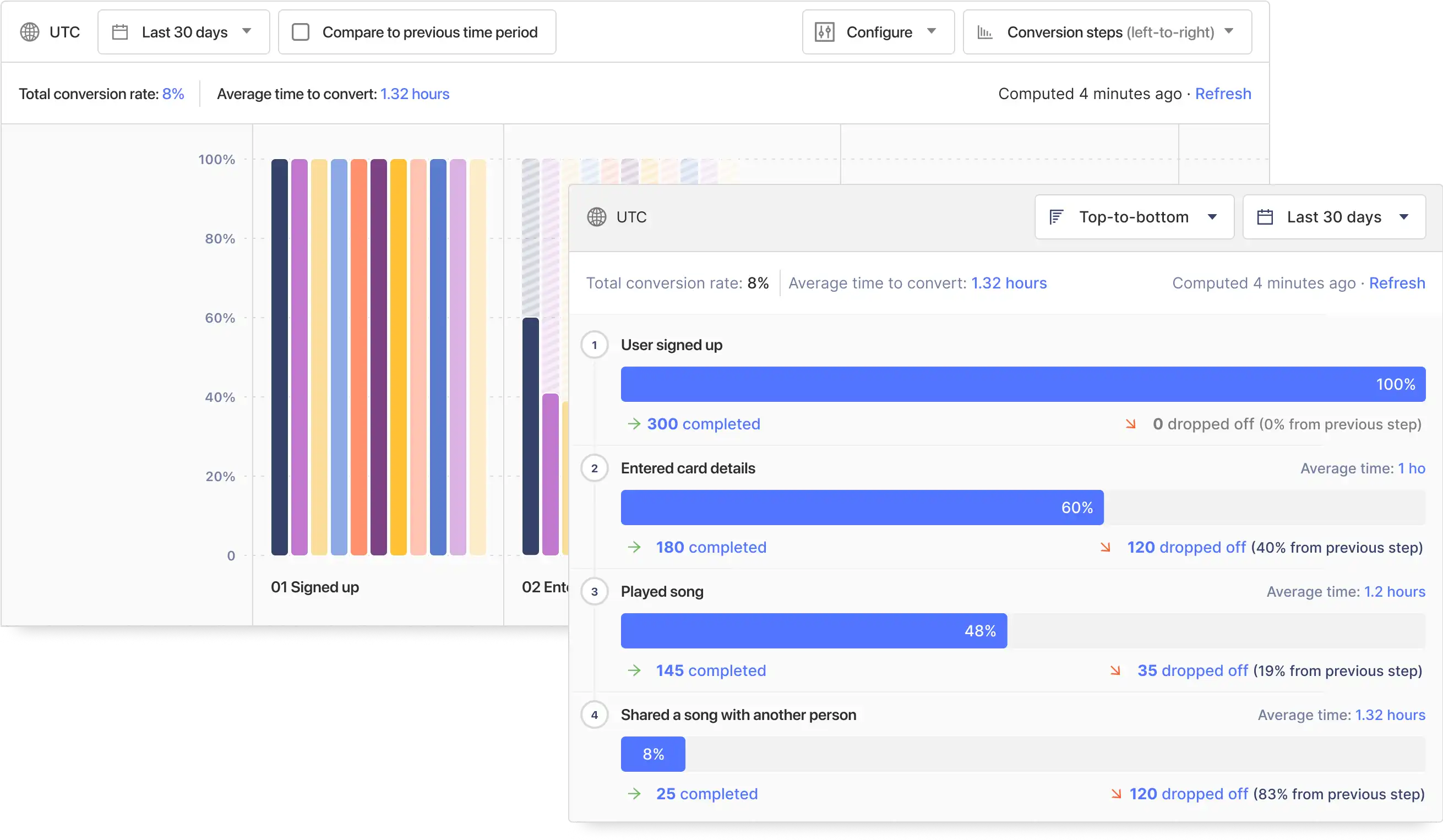
PostHog’s all-in-one suite of dev tools that is direct alternative to expensive, proprietary tools such as Amplitude, Mixpanel or Heap. It’s entirely self-serve, can be self-hosted or deployed in the cloud, and offers everything from funnel analytics and path analysis to cohort creation and user tracking. Best of all, because PostHog can be deployed on-prem, it’s more suitable for teams worried about GDPR compliance and HIPAA compliance.

Unlike proprietary platforms such as Amplitude however, PostHog offers far more than just core analytics. Features such as session recording, feature flags and experimentation mean it can also act as an open-source alternative to LaunchDarkly, HotJar, VWO and more. This means PostHog isn’t just useful to engineers, but also to product managers and other teams which work closely with engineering.
Strengths

  • All-in-one product analytics
  • Individual and group analytics
  • Deploy to the cloud, or on-prem
  • Unlimited feature flags
  • Built-in session recording
  • Multivariate experimentation suite
  • Third-party apps to enrich and move data

Metabase - open source data visualization for engineers

  • Useful for: Data visualization, business intelligence
  • Alternative to: Looker, Tableau, PowerBI
  • License: AGPL

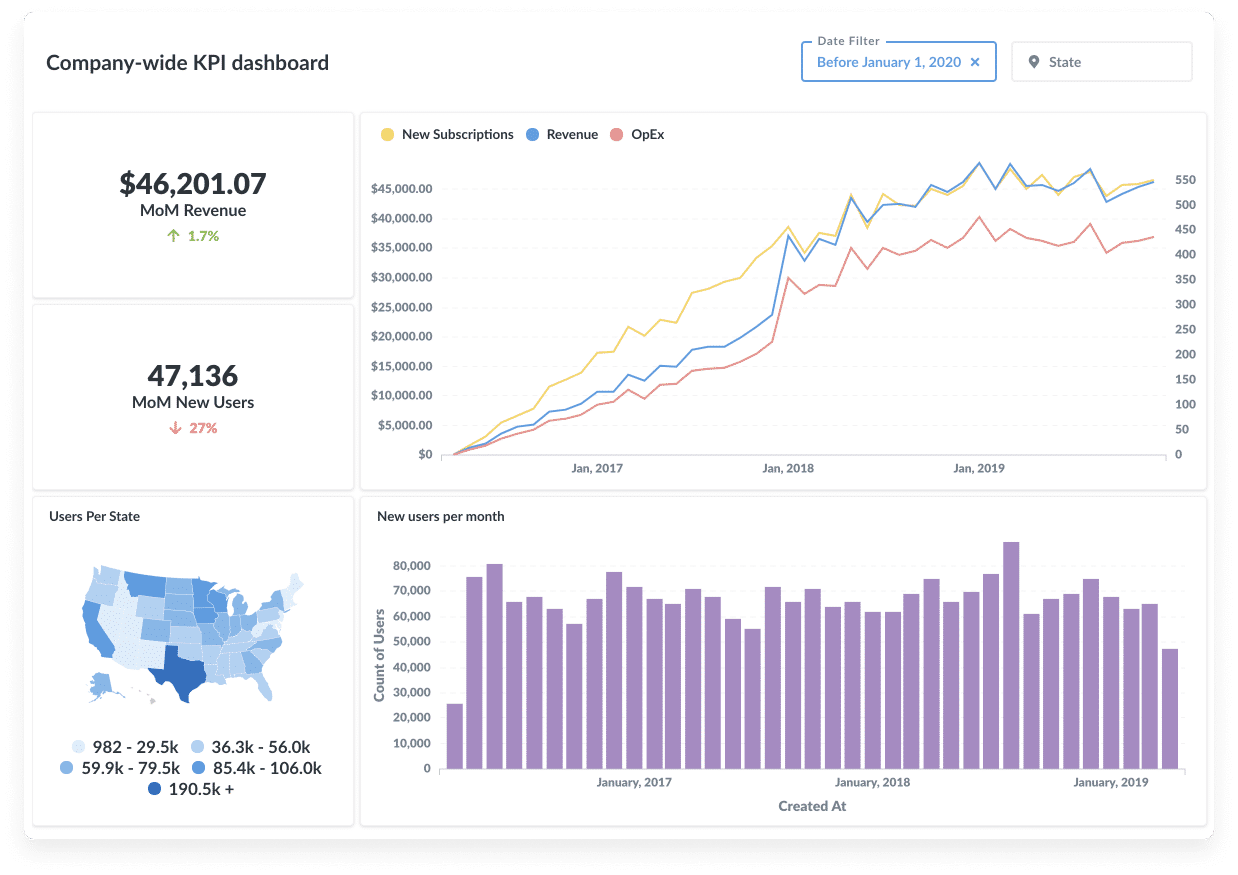
We use Metabase for visualizing data in different ways and running complex business intelligence – it's powerful alternative to Looker, Tableua and PowerBI.

What makes Metabase so essential is that, like PostHog, you can accomplish a huge amount without needing to resort to SQL. Instead, you can create BI dashboards in just a few minutes without ever needing to write a line of code. Afterwards, these dashboards can be shared anywhere — internally, or externally.
Strengths

  • Easy to use, no SQL required
  • Interactive, drag and drop dashboards
  • Deploy to the cloud, or on-prem
  • Integrate with 20+ data sources

Rudderstack - open source data pipeline for engineers

  • Useful for: CDP, Data pipeline
  • Alternative to: Segment, Tealium
  • License: AGPLv3

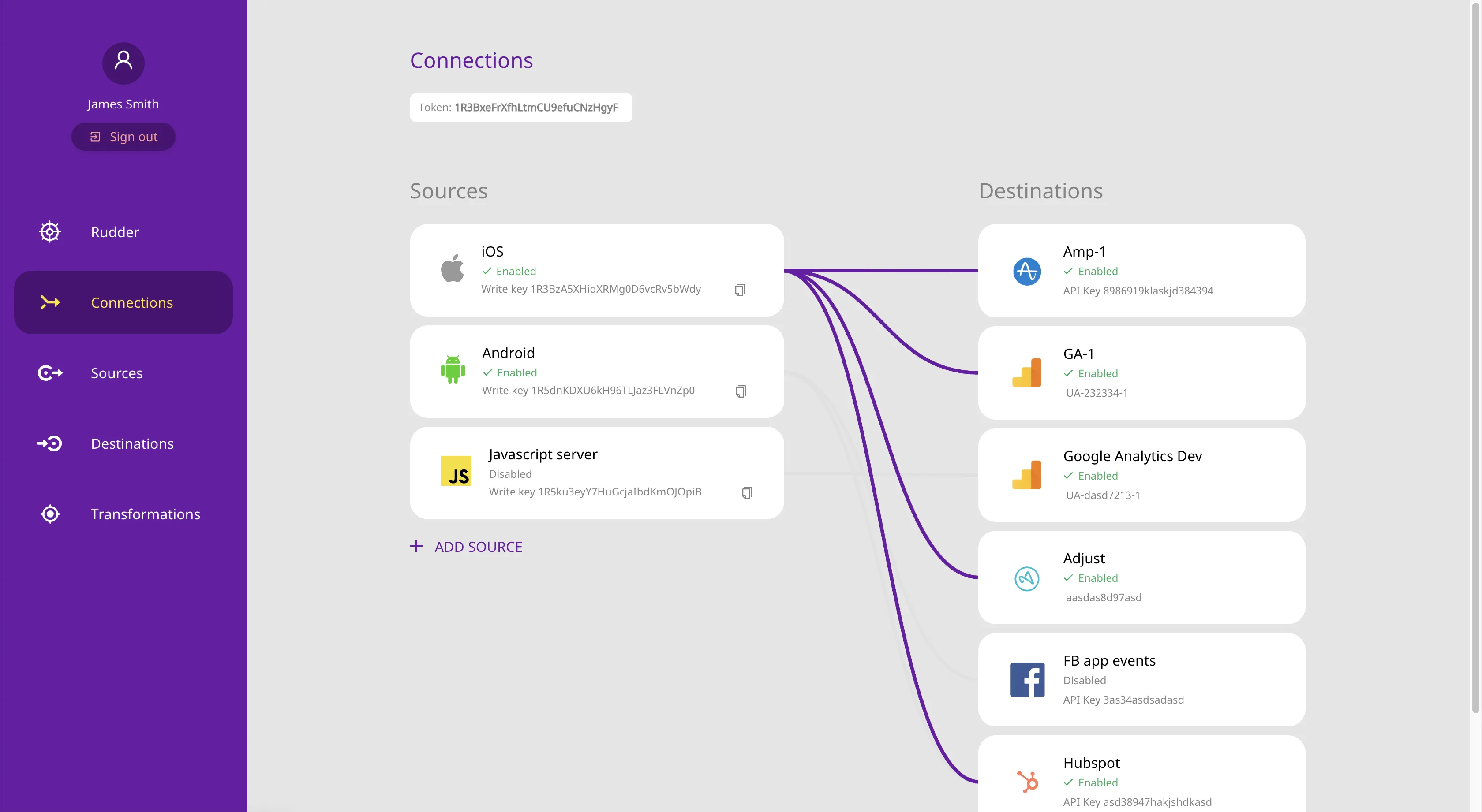
RudderStack has two things in common with PostHog. Firstly, it can act as a data pipeline to funnel ingested events to other sources, such as a data warehouse or third-party platform. Secondly, you need two capital letters to spell it correctly.

Unlike PostHog however, RudderStack is completely focused on acting as a data pipeline. It can ingest data from more than 20 different sources, perform transformations in real-time and even perform version control operations via GitHub actions.

RudderStack is perfect for teams which are concerned with regulatory compliance, as it can mask PII and filter out sensitive events with ease. This has helped it become wildly popular with users such as Stripe, Hinge and Allbirds to name a few.
Strengths

  • Transport data to anywhere
  • Transform data in real-time
  • Pre-defined schemas for data warehouses
  • SDKs track anonymous users and update downstream tools

NocoDB - open source database collaboration for engineers

  • Useful for: Database collaboration
  • Alternative to: Airtable, Postgres
  • License: AGPLv3

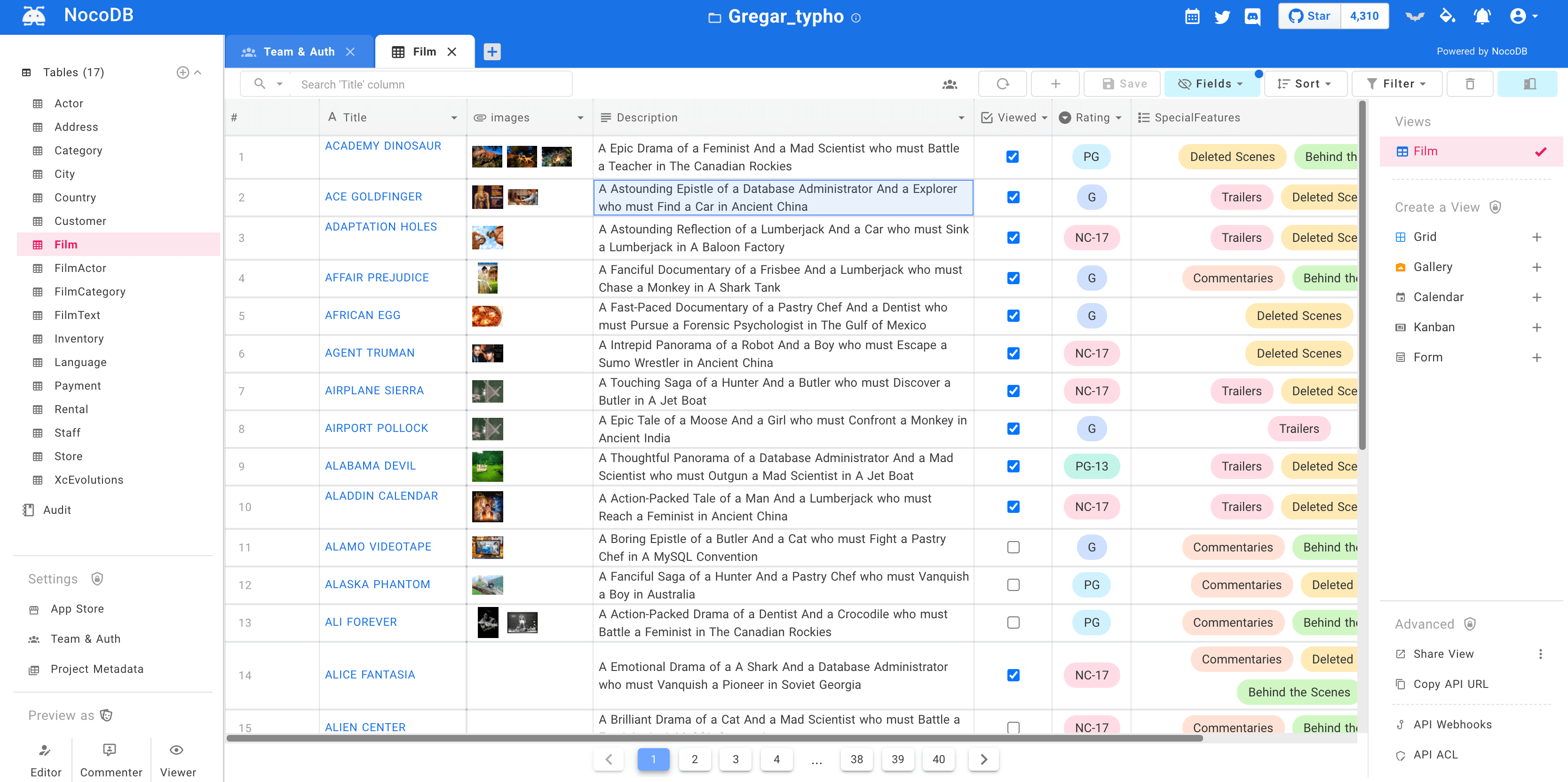
NocoDB isn’t just an alternative to database tools like Airtable — it can also act as a tool which sits on top of platforms like Airtable, converting complex databases into ‘smart spreadsheets’.

Why would you want databases transformed into spreadsheets? Because that makes it easier to collaborate with others, especially if you’re collaborating with non-engineers. That’s why NocoDB is a no-code platform, with tools which make it easy to share spreadsheets with others (or not, via password protection).

If you are comfortable with code however, NocoDB has a few advanced features up its sleeve. Like other open-source solutions, NocoDB can be self-hosted easily, or extended further through REST APIs or an SDK.
Strengths

  • No-code, built for collaboration
  • Strong permissioning options
  • Free and self-hostable

n8n - open source automation for engineers

  • Useful for: Workflow automation, connecting services
  • Alternative to: Zapier, node-red
  • License: Sustainable use license

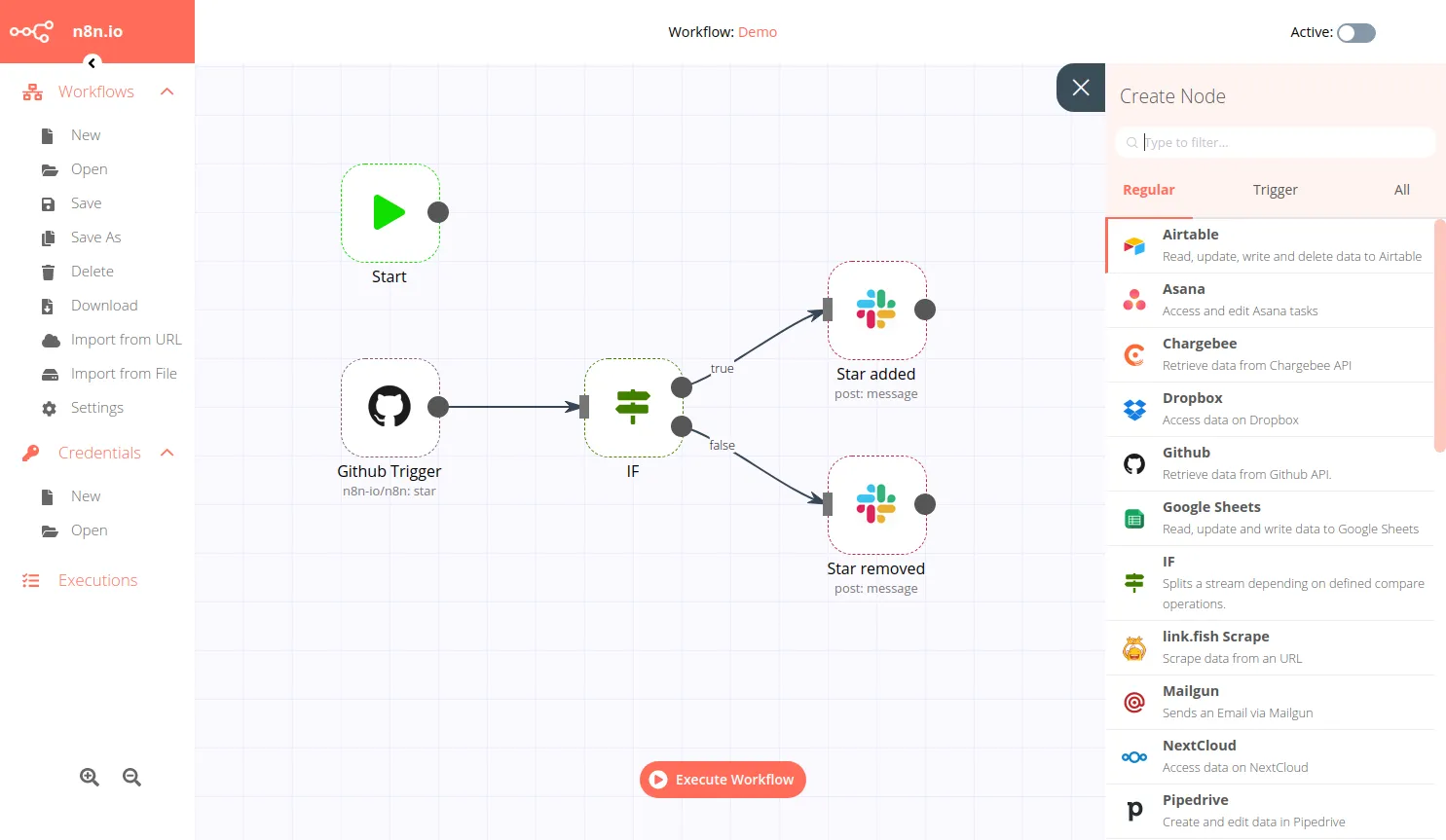
When you need to automate work, move data between platforms, or create basic bots there are generally two options: you can create a custom solution which you’ll then need to maintain and manage… or you can use n8n.

With over 200 different integrations — or ‘nodes’, as n8n calls them — to choose from, n8n offers the best of both worlds. It’s simple enough that stakeholders can maintain workflows on a casual basis using a drag and drop UI, but powerful enough that it lets you delve into the code for more complex work.

As with most open-source solutions, n8n can be self-hosted if you need to keep sensitive workflows or data off the cloud. Best of all, n8n even integrates directly with PostHog!
Strengths

  • 200+ integrations with other platforms
  • Deploy in the cloud, or on your own infrastructure
  • Integrates with PostHog -Simple UI for casual users; code editor for engineers

Netdata - open source monitoring service for engineers

  • Useful for: System monitoring
  • Alternative to: Datadog, Newrelic
  • License: GPL 3.0

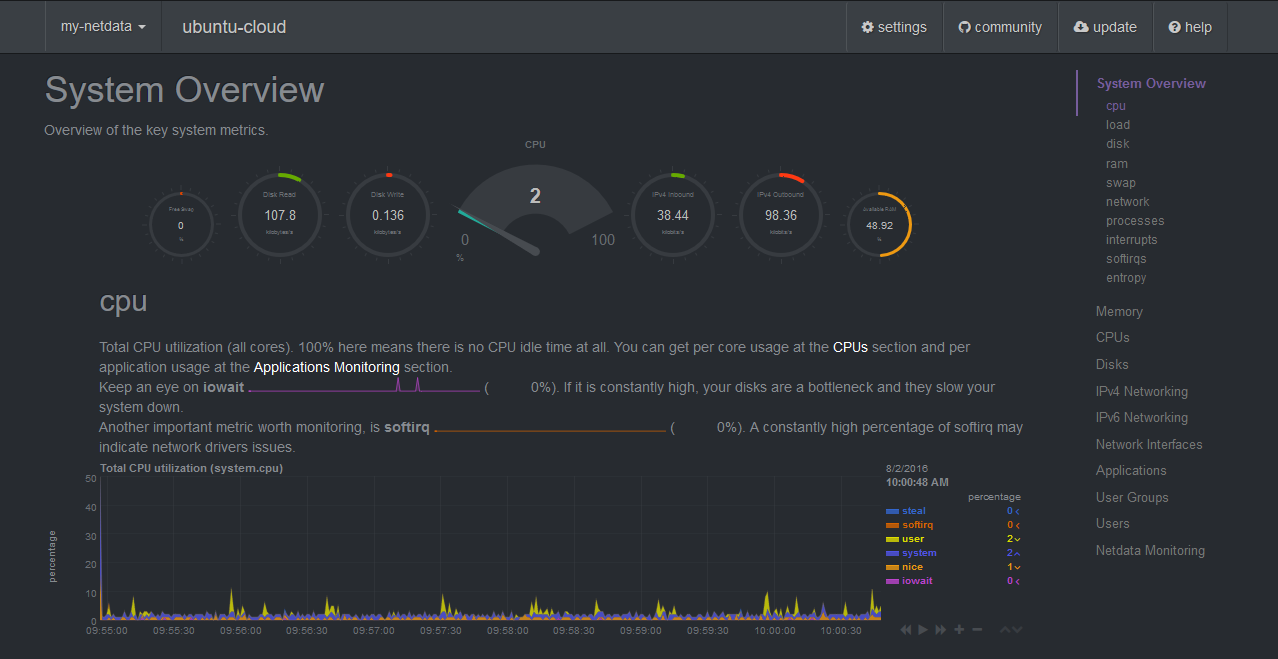
Compatible with almost any physical or virtual server, Netdata’s open-source agent enables you to collect and visualize any available metric in real time. This means you can effortlessly track over 2,000+ metrics in graphs, as well as configure 200+ alerts to notify you when something goes awry.

Going beyond this, Netdata also offers more advanced anomaly detection issues for when you really need to get into the weeds, all while making a minimal resource footprint. It’s just one of the reasons why we’re big fans of Netdata — and not just because they use PostHog themselves!
Strengths

  • 1ms collection-to-visualization latency
  • Single-line auto-deployment
  • Anomaly detection powered by machine learning

ClickHouse - open source database for engineers

  • Useful for: Database management, powering PostHog
  • Alternative to: Redshift, Bigquery, Snowflake
  • License: Apache 2.0

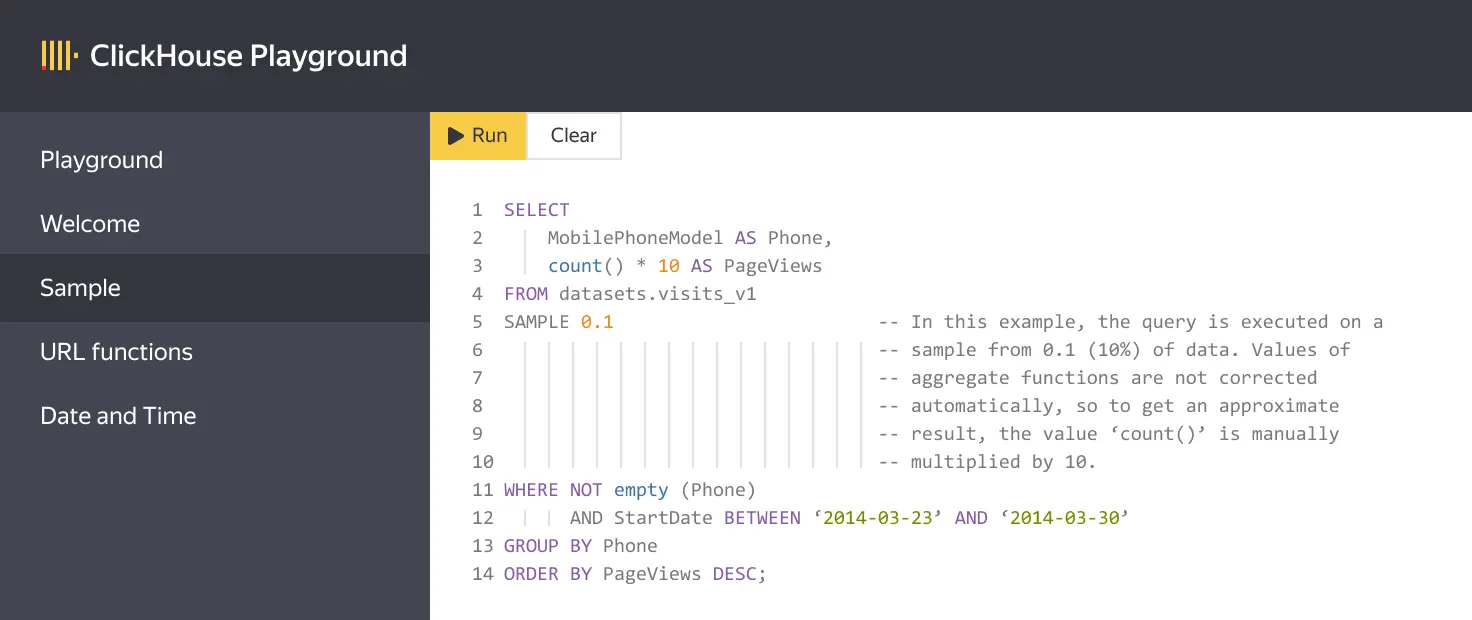
We’re such big fans of ClickHouse that we not only partner with the team through the PostHog Marketplace, we also use it to power our own product!

ClickHouse is a database system which is so quick that it’s an order of magnitude faster than other systems, such as Postgres, while also featuring a columnar structure which offers easy scaling (as long as you’re managing your tables correctly). It’s also popular with early-stage projects because of how efficient it is in terms of system resources, meaning that you can use less costly hardware and avoid more expensive software options.

Strengths

  • Much faster than most other databases
  • Efficient use of hardware; scales horizontally
  • Columnar database structure; easily scales
  • Deployed with a single binary; no need for multiple layers

Subscribe to our newsletter

Product for Engineers

Read by 100,000+ founders and builders

We'll share your email with Substack