




惯性聚合 高效追踪和阅读你感兴趣的博客、新闻、科技资讯
阅读原文 在惯性聚合中打开

推荐订阅源

cs.AI updates on arXiv.org
T
The Blog of Author Tim Ferriss
S
Securelist
C
CXSECURITY Database RSS Feed - CXSecurity.com
T
Tor Project blog
S
Schneier on Security
Google DeepMind News
Cyber Security Advisories - MS-ISAC
Blog — PlanetScale
Blog — PlanetScale
AWS News Blog
AWS News Blog
F
Fortinet All Blogs
C
Cisco Blogs
L
LangChain Blog
MongoDB | Blog
MongoDB | Blog
D
Docker
T
The Exploit Database - CXSecurity.com
The GitHub Blog
The GitHub Blog
月光博客
月光博客
量子位
A
Arctic Wolf
博客园 - 叶小钗
L
LINUX DO - 热门话题
J
Java Code Geeks
The Hacker News
The Hacker News
Security Latest
Security Latest
V
Vulnerabilities – Threatpost
M
MIT News - Artificial intelligence
博客园 - 【当耐特】
T
Tenable Blog
Microsoft Security Blog
Recent Announcements
Simon Willison's Weblog
B
Blog
阮一峰的网络日志
阮一峰的网络日志
A
About on SuperTechFans
博客园_首页
OSCHINA 社区最新新闻
OSCHINA 社区最新新闻
钛媒体:引领未来商业与生活新知
钛媒体:引领未来商业与生活新知
T
Threat Research - Cisco Blogs
Exploit-DB.com RSS Feed
Y
Y Combinator Blog
PCI Perspectives
PCI Perspectives
Hacker News: Ask HN
Hacker News: Ask HN
P
Palo Alto Networks Blog
小众软件
小众软件
Threat Intelligence Blog | Flashpoint
O
OpenAI News
P
Privacy International News Feed
P
Privacy & Cybersecurity Law Blog
N
Netflix TechBlog - Medium

PostHog's RSS Feed

Training our own AI models - PostHog From 270GB RAM to 5GB: Moving local flag evaluation from Django to Rust The best analytics stack for vibe-coded apps The do's and don'ts of minimum viable product marketing - PostHog The best MCP servers for startups, by workflow 4,063 errors closed without a human opening PostHog – here's what we learned - PostHog PostHog Code and the self-driving product - PostHog Why attacking your competitors online is dumb - PostHog The best real-time analytics platforms for developers, compared DuckDB vs ClickHouse: Why we use both at PostHog - PostHog PostHog's next chapter - PostHog Making Claude Cowork actually useful - PostHog PostHog vs Matomo in-depth tool comparison You're doing lifecycle emails wrong Untangling Tokio and Rayon in production: From 2s latency spikes to 94ms flat The best HIPAA-compliant A/B testing tools - PostHog A beginner's guide to testing AI agents - PostHog I hate the standup bot (so I built an agent to do it for me) - PostHog The best CDPs for developers, compared The best error tracking tools for developers, compared The best feature flag software for developers, compared 7 best session replay tools for mobile apps 7 best free open source business intelligence tools right now 7 best free and open source LLM observability tools PostHog vs LogRocket in-depth tool comparison The most popular PostHog alternatives, compared Open source (and self-hosted) session replay tools - PostHog The 9 best GA4 alternatives for apps and websites - PostHog PostHog vs Google Analytics 4 in-depth tool comparison How we built automatic clustering for LLM traces - PostHog The 7 best HIPAA-compliant analytics tools 8 best open source analytics tools you can self-host - PostHog The best product analytics tools for startups, compared PostHog vs FullStory in-depth tool comparison The best in-app survey tools for product teams, compared The 7 best mobile app analytics tools PostHog vs Hotjar in-depth tool comparison The 8 best free and open-source feature flag services - PostHog The 5 best free and open-source A/B testing tools - PostHog The best mobile app A/B testing tools, compared What is a feature flag? Feature Flags vs Remote Config vs A/B Testing PostHog is now available in Vercel’s v0 The best Heap alternatives & competitors, compared PostHog vs Heap in-depth tool comparison PostHog vs Pendo in-depth tool comparison PostHog × Vercel: feature flags, minus the plumbing Your logs' final destination is in GA. You always end up here anyway Behind the scenes of a PostHog hackathon - PostHog The most popular Mixpanel alternatives & competitors, compared PostHog vs Mixpanel in-depth tool comparison The 9 best GDPR-compliant analytics tools How we use Logs at PostHog The best web analytics tools for developers, compared Stop AI slop: Run evals with LLM-as-a-Judge - PostHog You product data just got a job: Workflows is now out App onboarding: How to fix drop-off points Meet Logs (beta) – logs with all the tools you’re already using Why small teams crush tiger teams How we built user behavior analysis with multi-modal LLMs (in 5 not-so-easy steps) - PostHog The best Contentsquare alternatives & competitors, compared 8 learnings from 1 year of agents – PostHog AI - PostHog Why we killed our AI product assistant Workflows graduate to beta! Product data, meet automation The best Rollbar alternatives & competitors, compared Workflows are now in Alpha and I already broke mine - PostHog I've consistently underestimated how important communication is as a CEO - PostHog How we made feature flags even faster and more reliable The best session replay tools for developers, compared What I learned attending my first ever hackathon - PostHog Did you know AI is answering our community questions? - PostHog How not to be boring - PostHog We built an internal tool to generate changelog images for social media - PostHog What we built at our windswept Mykonos hackathon - PostHog How we built our onboarding email flow (with actual performance data) - PostHog We're building a better PostHog community by closing our public Slack - PostHog Introducing Notebooks for PostHog - PostHog Why we've launched PostHog user surveys - PostHog How we made feature flags faster and more reliable - PostHog In-depth: ClickHouse vs Redshift - PostHog Introducing HouseWatch: An open-source toolkit for ClickHouse - PostHog Introducing HogQL: Direct SQL access for PostHog - PostHog What we built at our sun-kissed Aruba hackathon - PostHog In-depth: ClickHouse vs BigQuery - PostHog In-depth: ClickHouse vs Elasticsearch - PostHog HogMail #22: Why do companies over-hire?" - PostHog Our simpler goal: Help engineers to be better at product - PostHog In-depth: ClickHouse vs Snowflake - PostHog HogMail #21: Avoiding the "Product Death Cycle" - PostHog Sunsetting Kubernetes support for PostHog - PostHog Why 'Product Engineer' is the most fun role I've had in tech - PostHog HogMail #20: Why do startups fail? - PostHog Array 1.43.0: Massive performance improvements! - PostHog In-depth: ClickHouse vs Druid - PostHog HogMail #19: Which meetings should you kill? - PostHog CEO diary: The things I learned in 2022 - PostHog The essential tools used by product engineers - PostHog HogMail #18: What can SaaS learn from the New York Times? - PostHog What is a product engineer? - Product Engineer Handbook - PostHog Array 1.42.0: Get beta features via our roadmap! - PostHog HogMail #17: The personal traits that can't be taught - PostHog
The best Google Optimize alternatives for apps and websites - PostHog
Andy Vanderv · 2023-01-23 · via PostHog's RSS Feed

Google recently confirmed the sunsetting Google Optimize, its A/B testing platform. In a statement on its website, Google said:

"Google Optimize and Optimize 360 will no longer be available after September 30, 2023. Your experiments and personalizations can continue to run until that date. Any experiments and personalizations still active on that date will end."

The statement went on to say Google is working on adding A/B testing functionality to Google Analytics 4, its somewhat divisive replacement for Google Analytics 360 (Universal Analytics). But Google didn't commit to a launch date for this A/B testing functionality, which suggests it may not arrive before Optimize is closed.

If this sounds like bad news to you, consider one of following six Google Optimize alternatives instead.

How did we choose these tools? There are dozens of A/B testing platforms, so we tried to include a cross-section of tools designed for engineers, marketing teams, and different use cases. We prioritized tools that are self-serve (i.e. no demo or quote needed to open an account) and/or have transparent pricing.
1. PostHog

google optimize alternatives

  • Free tier:
  • Transparent pricing:
  • Unlimited experiments:
  • Best for: Product and engineering teams

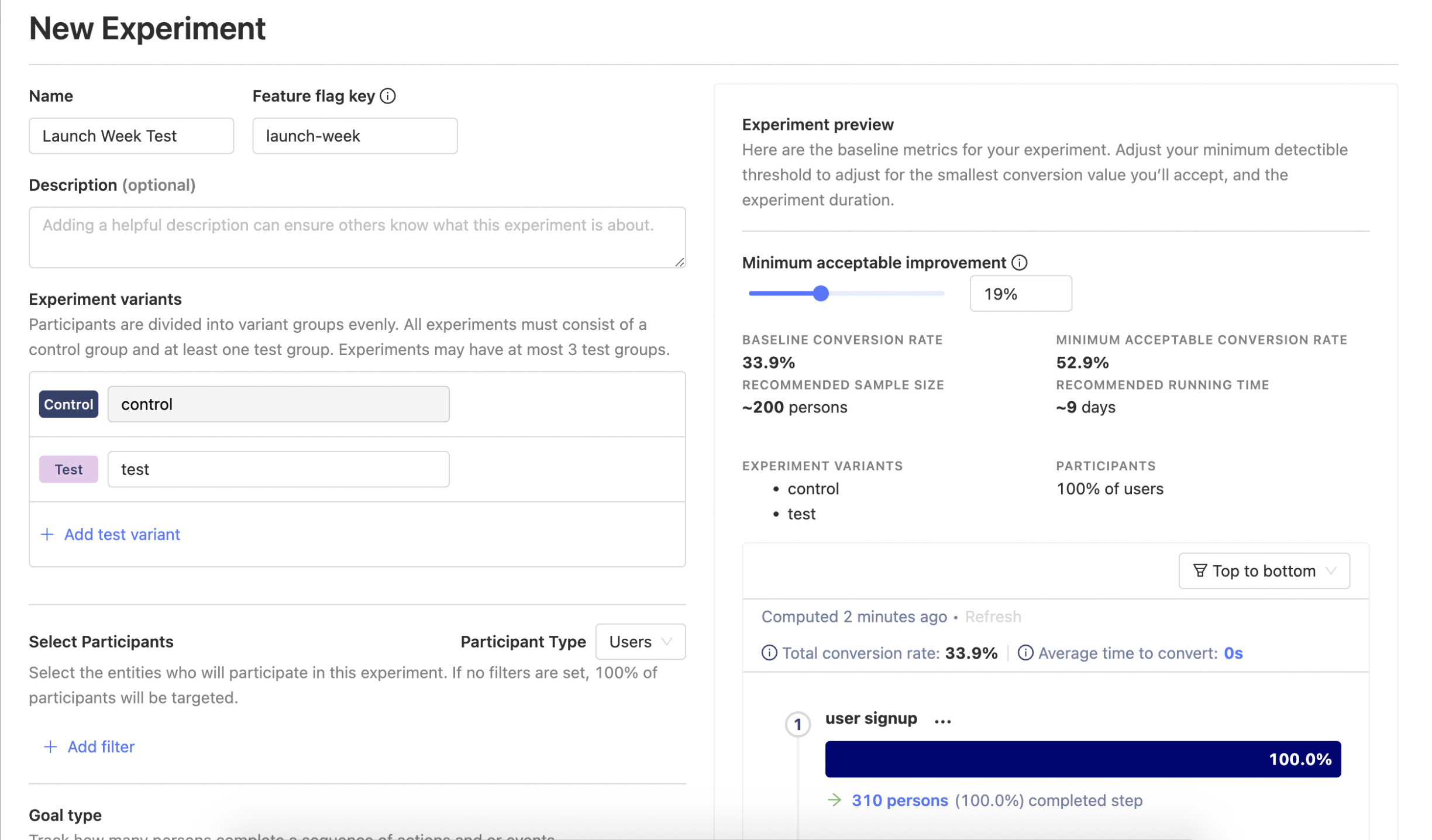
PostHog is a comprehensive Google Optimize and GA4 alternative that integrates A/B and multivariate testing with event-based analytics, session recording, and feature flags.

PostHog supports A/B and multivariate experiments that target by geography, device, source, cohort, or limitless other person properties. It tracks metric improvement goals for success, secondary goals, and estimates how long it takes to get a statistically significant result. PostHog's experimentation suite is built on its feature flag functionality, making it easy to rollout winning variants.

As an all-in-one platform, PostHog simplifies your data and analytics stack by replacing multiple tools. This makes it easy to quickly create experiments using existing data and cohorts in your product analytics, rather than connecting an external data source.

PostHog has a range of libraries and SDKs, from JavaScript to Python to iOS, to help integrate into your website or apps' codebase. It has an HTML snippet for easy setup with basic sites, Shopify, Wordpress, Webflow, Carrd, and more.

How much does PostHog cost?

PostHog offers unlimited experiments on PostHog Cloud, which includes 1 million events and 5,000 session recordings for free every month. You can calculate your price upfront using PostHog's pricing calculator and set billing limits to avoid surprise bills.
Companies that use PostHog

google optimize alternatives

  • Free tier:
  • Transparent pricing:
  • Unlimited experiments:
  • Best for: Marketing teams

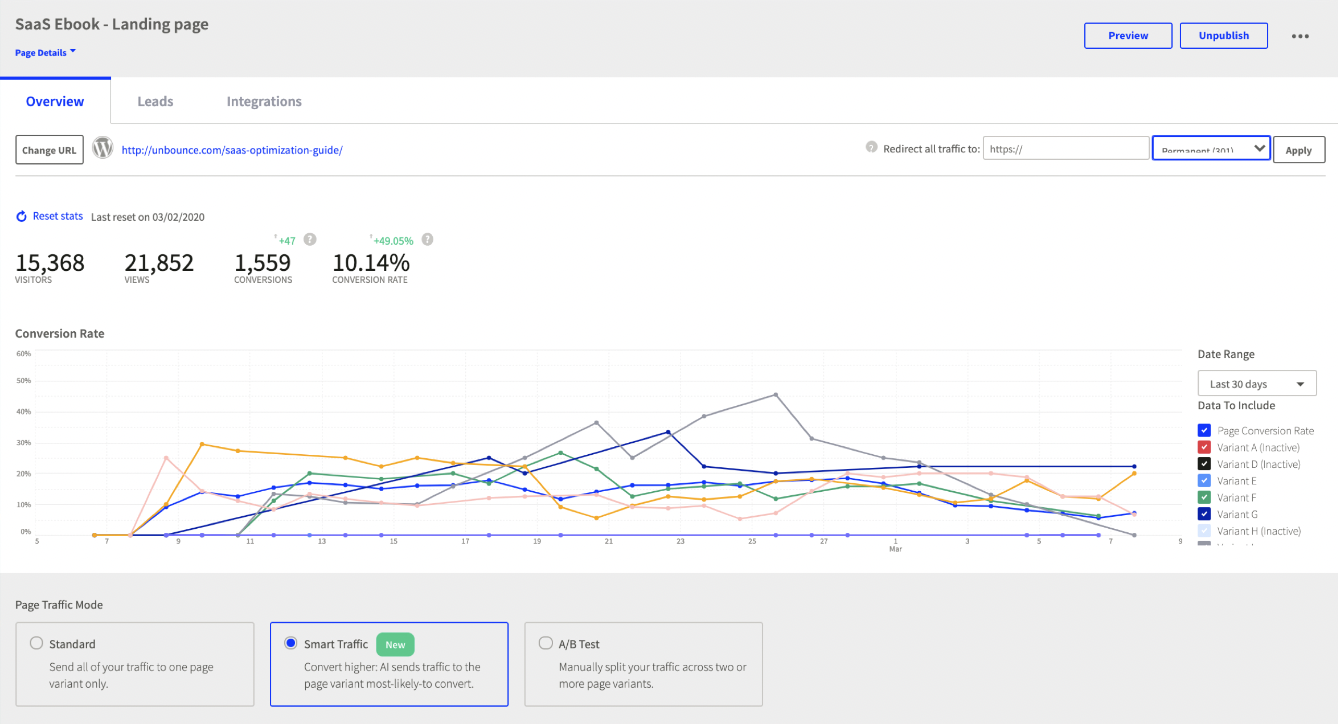
Unbounce is a popular content marketing platform among small and medium-size businesses. It allows marketers to quickly create landing pages using its page builder and AI copy writing tools, then use its 'Smart Traffic' system to automatically direct users to the best-performing variant. It supports traditional A/B tests, too.

This 'Smart Traffic' system is what's known as 'multi-armed bandit' testing, where machine learning is used to dynamically allocate traffic to the best performing variant. This is especially effective in marketing scenarios as Unbounce says it can direct visitors to their ideal variant after just 50 visits. Conversion rates should improve the longer a test is run as the algorithm learns.

The downside is Unbounce is only suitable for use on marketing websites – it can't be used on products or mobile apps.

How much does Unbounce cost?

Unbounce offers a pleasing range of transparently-priced plans. Its entry-level 'Launch' plan is $99 per month and supports "up to 500 conversions", 20k visitors, and one website domain – "conversions" being any time a user completes a conversion goal. Additional plans increase these limits and there's a 25% discount for paying annually.
Companies that use Unbounce

  • Packlane: Custom packaging and boxes for retailers
  • Uberflip: Sales engagement and lead-gen platform
  • PitchBook: M&A database and marketing intelligence

google optimize alternatives

  • Free tier:
  • Transparent pricing:
  • Unlimited experiments:
  • Best for: Product and engineering teams

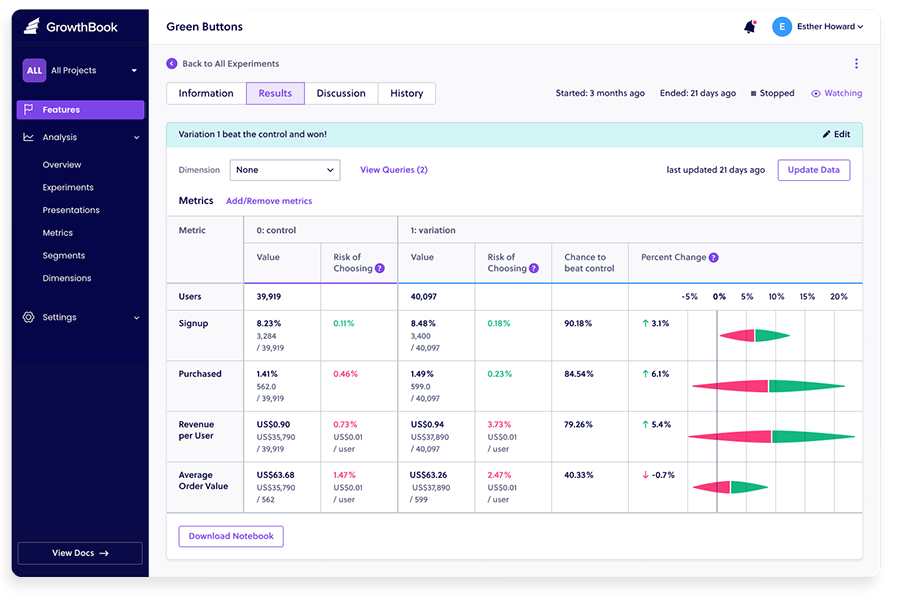
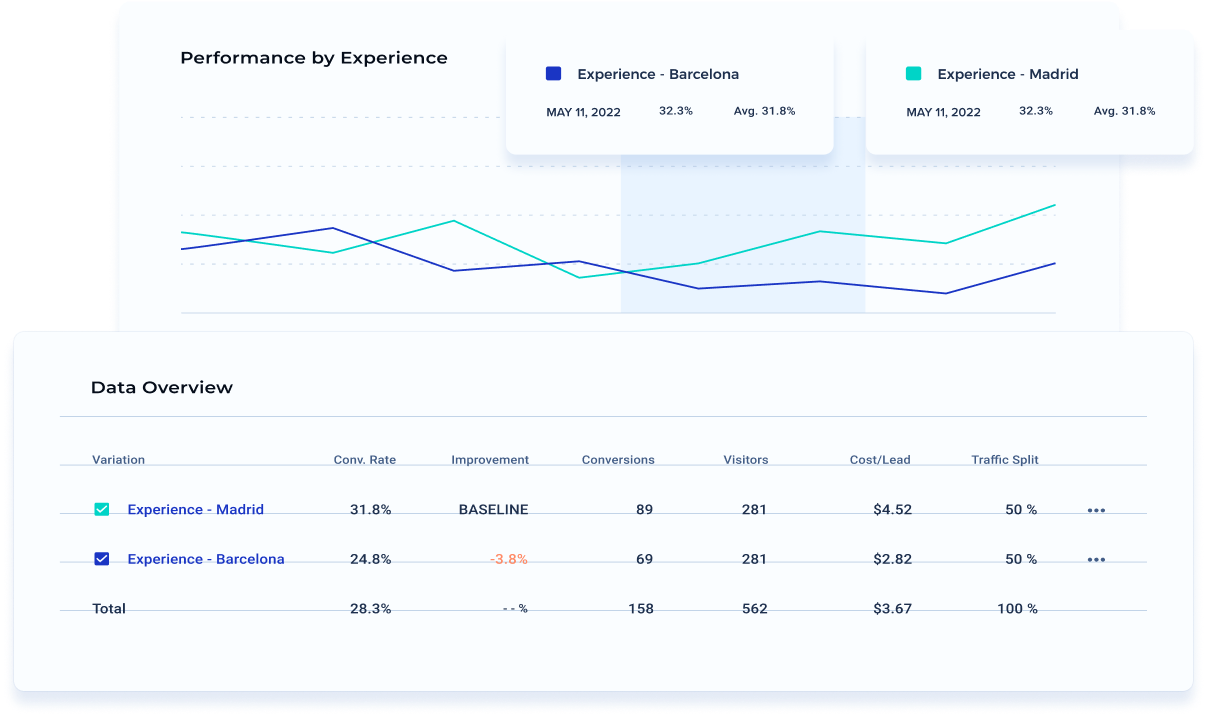
GrowthBook is a popular open-source feature flagging and experimentation platform. It supports A/B and multivariate tests, and integrates with a range of popular analytics tools, such as Google Analytics (UA), Mixpanel, Matomo, and most popular data warehouses.

It offers a basic visual editor so non-technical users can create experiments without writing code. GrowthBook's 'Guardrail' feature monitors for unintended second order effects of your change which you're not actively testing for.

How much does GrowthBook cost?

GrowthBook offers unlimited traffic (subject to a fair use policy), feature flags, and experiments. It charges only on the number of user accounts. Its Starter plan includes three GrowthBook users. Its Pro plan adds advanced permissions, custom fields, and its visual A/B test editor, for just $20 per user, per month.
Companies that use GrowthBook

  • Deezer: Music app
  • Brilliant: Learning platform
  • Typeform: Form and survey platform for businesses

4. Instapage

google optimize alternatives

  • Free tier:
  • Transparent pricing: Partial
  • Unlimited experiments:
  • Best for: Marketing teams

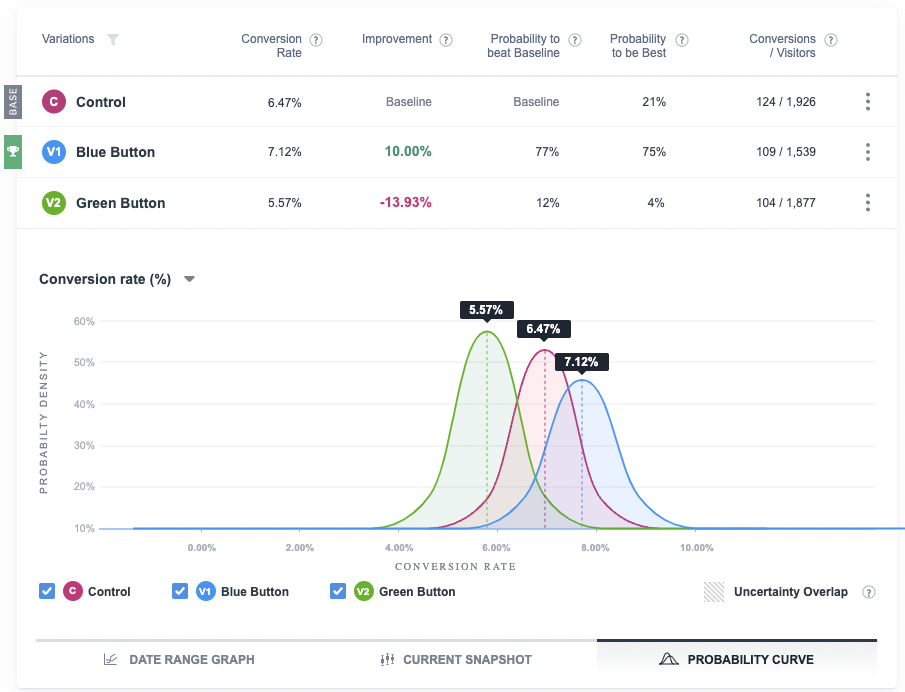
Instapage is a marketing optimization platform built around a landing page builder and experimentation suite. It doesn't support multi-armed bandit testing like Unbounce, but it does include a range of useful features for marketing teams, such as personalized landing pages based on ad creative, AMP page support, loading speed optimizations, and dynamic text replacement for PPC campaigns.

How much does Instapage cost?

Instapage's self-serve plan costs $299 per month ($199 if billed annually) and includes most of its core features with no usage limits. It doesn't publish pricing on its upgrade plans, which add numerous value-add features, such as heatmaps, custom font support, and consulting services.
Companies that use Instapage

  • HelloFresh: Recipe box delivery
  • Honey: Coupon and shopping browser extension
  • Skyscanner: Airline price comparison

google optimize alternatives

  • Free tier:
  • Transparent pricing:
  • Unlimited experiments:
  • Best for: Marketing teams

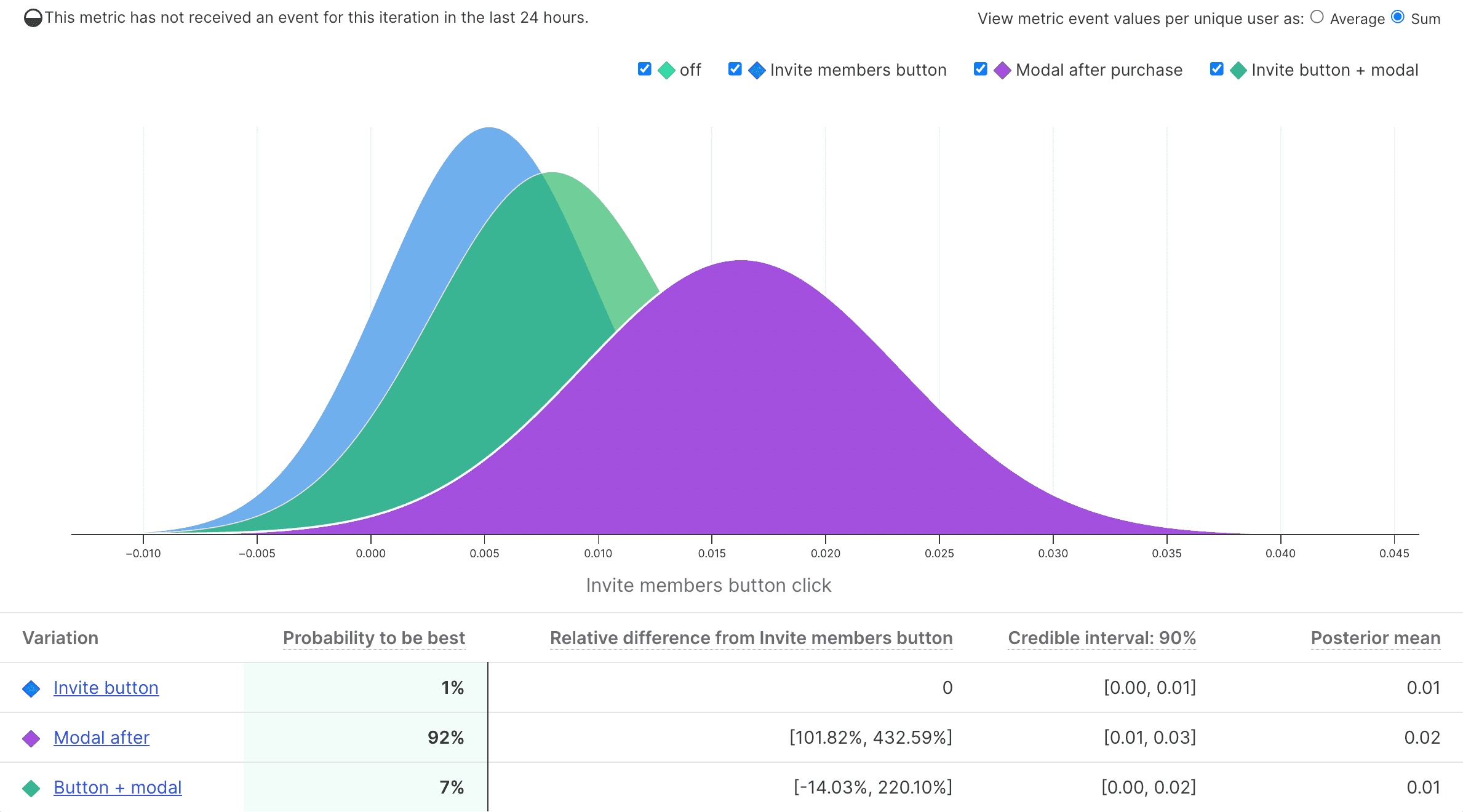
VWO is a testing platform that primarily targets large enterprises. Its experimentation platform includes support for A/B and multivariate tests, and a visual editor, though some features are locked behind its numerous product tiers. Geo-targeting, for example, is only available on the 'Pro' tier of VWO Testing, while feature flags are only available as part of its VWO FullStack product.

How much does VWO cost?

Outside of its new Starter plan, VWO is largely a 'price on application' product. Its Starter plan is free up to 50k visitors per month, and $199 per month up to 100k visitors per month, but it's quite limited. It only supports basic A/B tests and split URL testing, and you can only target based on device.
Companies that use VWO

  • Chargebee: Payments and subscription platform
  • Amway: Mutli-level marketing
  • TMZ: Celebrity and entertainment news

google optimize alternatives

  • Free tier:
  • Transparent pricing: Partial
  • Unlimited experiments:
  • Best for: Engineering and product teams

LaunchDarkly is a leading platform for feature management (feature flags) that also enables experimentation. Like all the products in this list, it supports A/B and multivariate testing. In contrast to Unbounce, however, LaunchDarkly is designed for product and engineering teams, so it lacks marketing-friendly features like a visual editor.

LaunchDarkly is a good option if you require a fully-featured feature flagging tool in addition to experimentation features, and it's particularly popular among enterprises with complex feature control needs.

How much does LaunchDarkly cost?

Experimentation is available on LaunchDarkly's Pro plan, which costs $20 per seat, per month, but experiments are priced separately to this. As per LaunchDarkly's docs:

"Experiments are billed monthly based on the number of unique user keys in each experiment. To estimate your Experimentation billing costs, multiply the number of experiments you run each month by the number of unique users in your experiment audience."

Companies that use LaunchDarkly

  • Square: Mobile payments
  • Ryanair: Affordable airline
  • HashiCorp: Infrastructure automation and security