




惯性聚合 高效追踪和阅读你感兴趣的博客、新闻、科技资讯
阅读原文 在惯性聚合中打开

推荐订阅源

GbyAI
GbyAI
The Last Watchdog
The Last Watchdog
TaoSecurity Blog
TaoSecurity Blog
PCI Perspectives
PCI Perspectives
L
LINUX DO - 最新话题
H
Heimdal Security Blog
S
Security Archives - TechRepublic
www.infosecurity-magazine.com
T
Troy Hunt's Blog
SecWiki News
SecWiki News
S
Secure Thoughts
The Cloudflare Blog
Last Week in AI
Last Week in AI
Google DeepMind News
Attack and Defense Labs
奇客Solidot–传递最新科技情报
奇客Solidot–传递最新科技情报
量子位
K
KPMG report finds enterprise disconnect between AI and its ROI | CIO
V
Visual Studio Blog
N
News and Events Feed by Topic
E
Exploit-DB.com RSS Feed
博客园 - Franky
博客园 - 司徒正美
OSCHINA 社区最新新闻
OSCHINA 社区最新新闻
酷 壳 – CoolShell
酷 壳 – CoolShell
Know Your Adversary
Know Your Adversary
M
MIT News - Artificial intelligence
V
V2EX
Webroot Blog
Webroot Blog
Hacker News - Newest:
Hacker News - Newest: "LLM"
Cyberwarzone
Cyberwarzone
博客园 - 【当耐特】
月光博客
月光博客
Y
Y Combinator Blog
B
Blog RSS Feed
Recent Announcements
S
Schneier on Security
H
Hacker News: Front Page
Stack Overflow Blog
Stack Overflow Blog
NISL@THU
NISL@THU
小众软件
小众软件
雷峰网
雷峰网
P
Privacy International News Feed
腾讯CDC
大猫的无限游戏
大猫的无限游戏
博客园 - 叶小钗
C
Cyber Attacks, Cyber Crime and Cyber Security
V
Vulnerabilities – Threatpost
H
Hackread – Cybersecurity News, Data Breaches, AI and More
N
News and Events Feed by Topic

Resend RSS Feed

6 Tips for Accessible Emails Welcoming Manoel do Amaral, our new Brand Designer Welcoming Michael Vaz, our new Customer Success Engineer Six Steps to Improve Your Sender Reputation Welcoming Tatira Andrade, our new Executive Assistant Welcoming Pedro Ivo Hudson, our new Design Engineer Welcoming Diel Duarte, our new Open source Engineer Welcoming Areia Spinner, our new Recruiter Resend Forward: A Conference about Craft React Email 6.0 Custom Tracking Domains AI Email Editor Introducing Automations Welcoming Ahmed Tolba, our new SRE Engineer Welcoming Aneil Singh, our new Founding Account Executive Welcoming Lucas Motta, our new Software Engineer Welcoming Trey Knowles, our new Founding Account Executive Welcoming Anxhela Carciu, our new SRE Engineer Introducing DMARC Analyzer Welcoming Evan Thibodeau, our new Customer Success Engineer Welcoming Derich Pacheco, our new Software Engineer Welcoming Alec Ventura, our new Data Engineer Welcoming Felipe Freitag, our new Software Engineer Welcoming Mateusz Wos, our new Software Engineer Incident report for February 15, 2026 Email automation for OpenClaw How to Create a DevTools Agent Skill Introducing Email Skills Why You Should Embrace the Promotions Tab Slater Smith, our new Customer Success Engineer Do You Need a Warmup Service? Welcoming Zá Scalon, our new Brand Designer How Replit Built Effortless Email Sending Features 1,000,000 users Top 10 new features in 2025 Welcoming Danilo Campos, our new Design Engineer How Dub Uses Webhooks to Power Features Incident report for November 18, 2025 Resend Forward 5: Wrap Up One More (AI) Thing React Email 5.0 Unsubscribe Topics New Contacts Experience Introducing Templates Inbound Emails $3M to Make Email Safer Hacktoberfest 2025 Four Ways to Hurt Your Sender Reputation Resend MCP Hackathon Welcoming Christina Martinez, our new Developer Experience Engineer How to read a DMARC report Welcoming Erin Levine, our new Chief of Staff How to Validate Form Inputs Engineering an AI App Welcoming Lucas da Costa, our new Software Engineer Welcoming Lucas Vieira, our new Software Engineer Resend acquires Briefer How Raycast Modernized their Email Sending How to Get Email Consent DMARC Policy Modes Welcoming Gabriel Miranda, our new Software Engineer Rebranding Resend The 7 Best Email Verification APIs for Developers How DMARC Applies to Subdomains Welcoming Pedro Gomes, our new Software Engineer Do You Need a Dedicated IP? The 6 best notification infrastructure services The Fixer Why Your Emails are Going to Spam Engineering Idempotency Keys Microsoft’s bulk sending requirements for 2025 Welcoming Rehan van der Merwe, our new Devops Engineer 400,000 users and beyond Welcoming Cassio Zen, our new Software Engineer Resend acquires Mergent How to warm up a new domain Welcoming Carolina Josephik, our new Software Engineer Launch Week: Behind the Scenes Welcoming Isabella Aquino, our new Software Engineer Resend Forward 4: Wrap Up React Email 4.0 Multiplayer Editor Broadcast API Multiple Teams new.email Public Launch Welcoming Anna Ward, our new Postmaster How Gumroad Migrated 100M Emails to Resend Welcoming João Melo, our new Software Engineer Welcoming Jp Valery, our new Customer Success Engineer What is AX (Agent Experience) and how to improve it Welcoming Pauline Chin, our new Customer Success Engineer Introducing new.email How we use Friction Logs to improve the product Welcoming Giovana Yahiro, our new Designer Engineer What BIMI's Changes Mean for Email Top 10 new features in 2024 Design Engineering an X Component Welcoming Alexandre Cisneiros, our new Software Engineer Resend raises $18M Series A Welcoming Danilo Woznica, our new Designer Engineer
Top 10 Email Deliverability Tips
Chris Pennington · 2025-01-08 · via Resend RSS Feed

Email deliverability can be hard to improve. Why do some emails land in the spam folder and others in the inbox?

Here are our top 10 tips for reaching the inbox.

  1. Use a subdomain
  2. Set up DMARC
  3. Match URLs to the sending domain
  4. Avoid link and open tracking
  5. Keep emails small and accessible
  6. Don't use look-a-like domains
  7. Test emails properly
  8. Maintain a clean email list
  9. Don't use no-reply emails
  10. Send consistently

Prefer watching a video?

1. Use a subdomain

The domain you choose to send emails with can significantly impact deliverability. Generally speaking, you should send emails from a subdomain instead of a root domain.

Sending from a subdomain holds a few benefits:

  • It helps you communicate the email's purpose.
  • It can limit any reputation damage to that subdomain.

If you use a subdomain, you can separate your reputation. If there's an issue with your marketing subdomain reputation, it's less likely to impact your transactional subdomain.

→ Learn about subdomains

2. Set up DMARC

DMARC is an email authentication protocol that tells mail servers what to do if an email message fails SPF and DKIM.

NameTypeValue
_dmarc.example.comTXTv=DMARC1; p=none; rua=mailto:report@example.com;

In this way, it protects against email spoofing. DMARC record builds trust with mailbox providers, as it allows them to verify that your emails are authorized by your domain.

→ Learn about DMARC

3. Match URLs to the sending domain

Ensure that the URLs in the body of your email match the sending domain. Mismatched URLs can trigger spam filters since spammers often use this technique.

In other words, if you send an email from example.com, whenever possible make sure that the URLs in the email are also hosted on example.com.
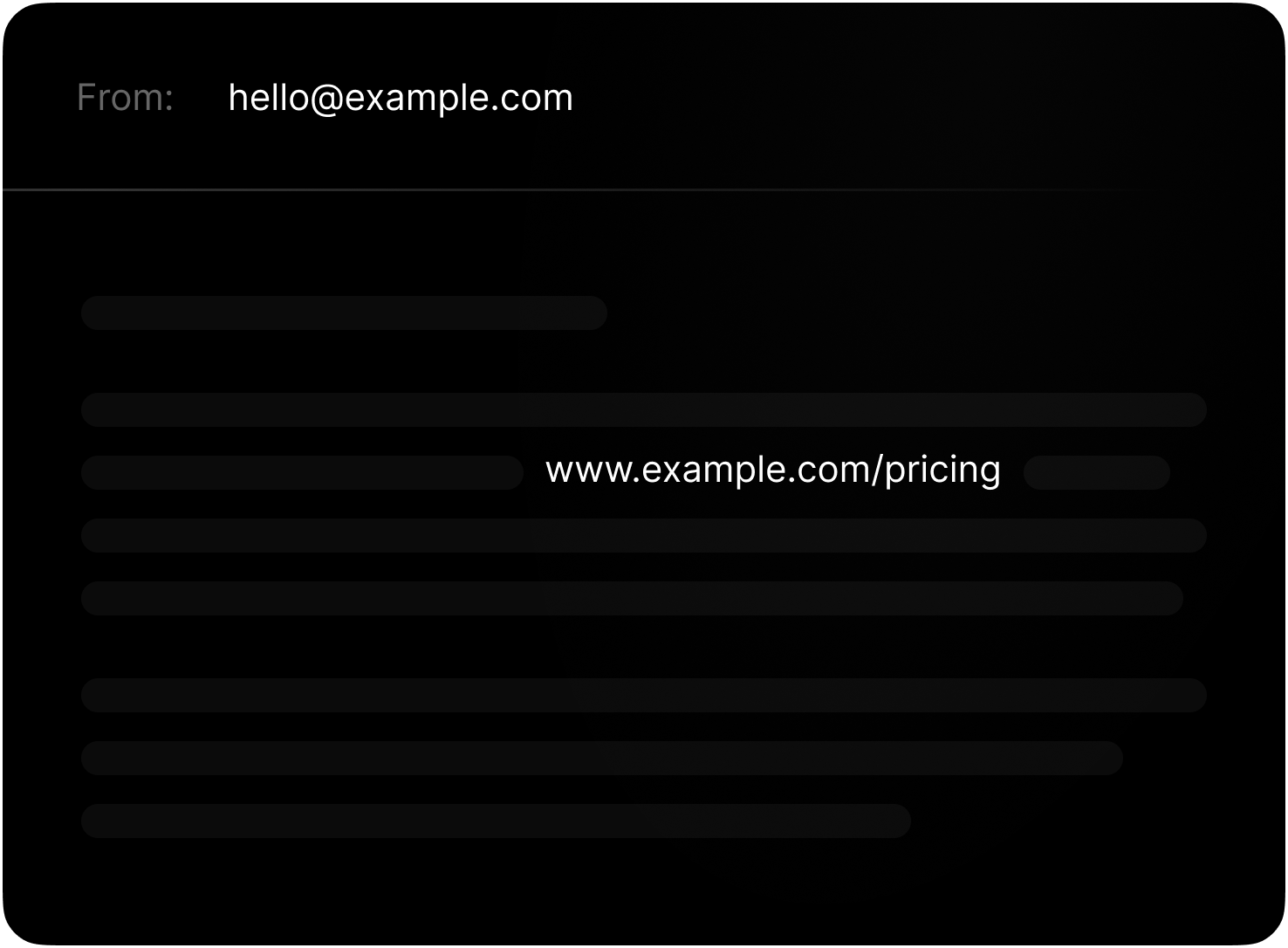
Example example with matching URLs

When possible, linked images should also match the sending domain.

While link tracking and open tracking are great to measure the impact of marketing emails, they can actually hurt your deliverability for transactional emails like notifications, magic links, and more.

Mailboxes can see the intent of the email, and when a magic link, for instance, doesn't lead to your domain, it can make the email look suspicious.

Setting up separate subdomains for transactional and marketing emails can often make it easier to include or remove these practices for different email types.

→ Learn about link and open tracking

5. Keep emails small and accessible

Gmail has a size limit of 102KB for each email message. Once that limit is reached, the remaining content is clipped.
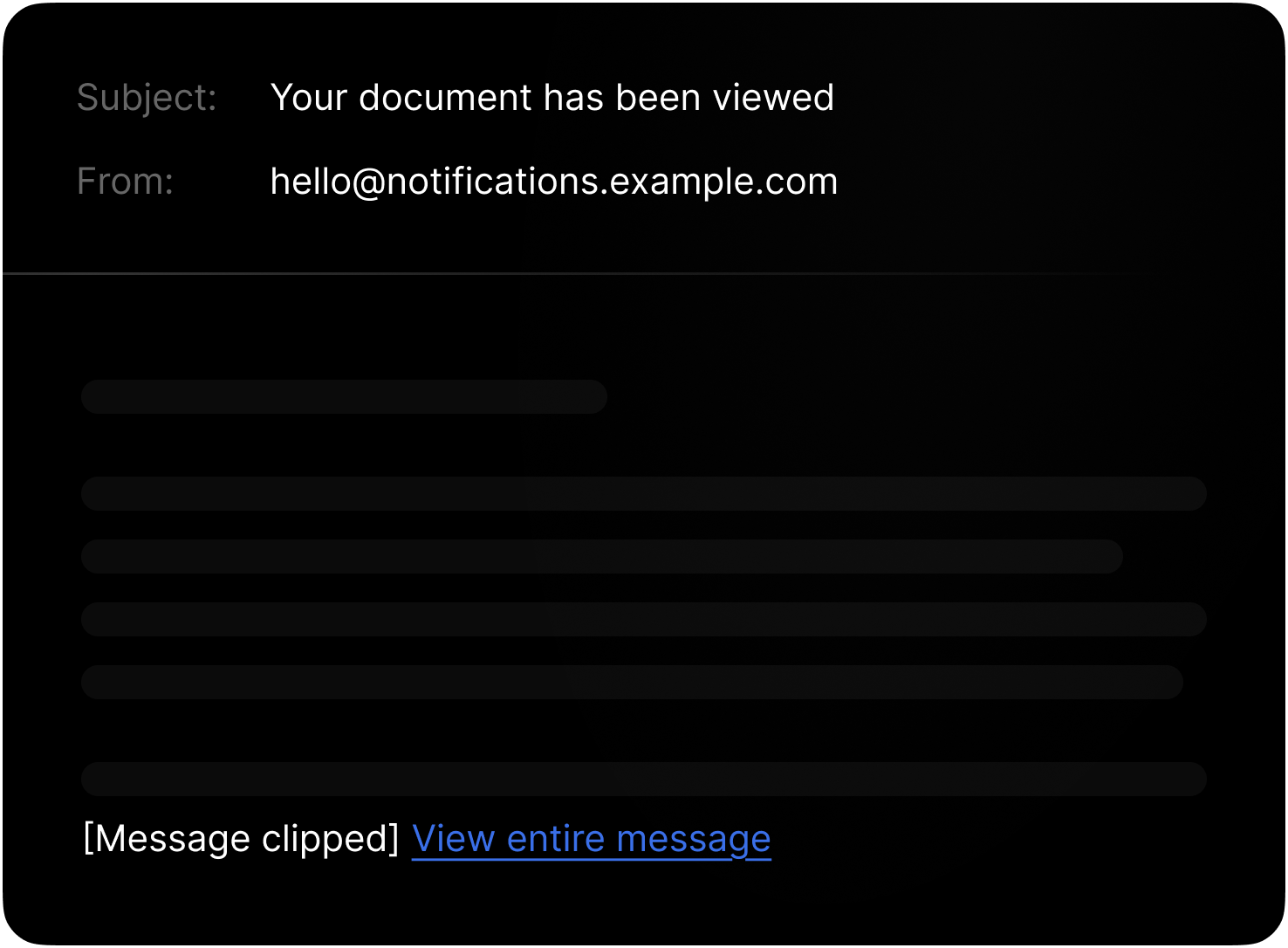
Example example with clipped content

Including a plain text version of your email is also good practice as it ensures that your message is accessible to all recipients, including those who have email clients that don't support HTML.

To help with both email size and accessibility, we recommend avoiding emails with a lot of images.

6. Don't use look-a-like domains

Spammers often phish from cousin or look-a-like domains, so avoid using them.

For example, if your domain is coca-cola.com, don't use cocacola-mails.com

Instead of registering an email-specific domain, which can cause brand confusion and look like spam, separate your sending using the subdomains method we covered earlier.

7. Test emails properly

When testing, it's tempting to send to fake email addresses to test for bounces, among other things.

While testing is important, intentionally hard-bouncing emails can damage your sending reputation. The bounces are real and will damage your reputation.

Instead, you should use a testing email address provided by your email service or create a testing email account (like testing@[your domain].com).

→ Learn about testing emails on Resend

8. Maintain a clean email list

You should only send to those who've asked to be sent to and don't send to unsubscribers, those who haven't engaged with your content, or those who've marked your previous emails as spam.

Testing should account for all of these scenarios. To keep a clean email list, you can capture bounces or spam complaints using a webhook and remove them from it.
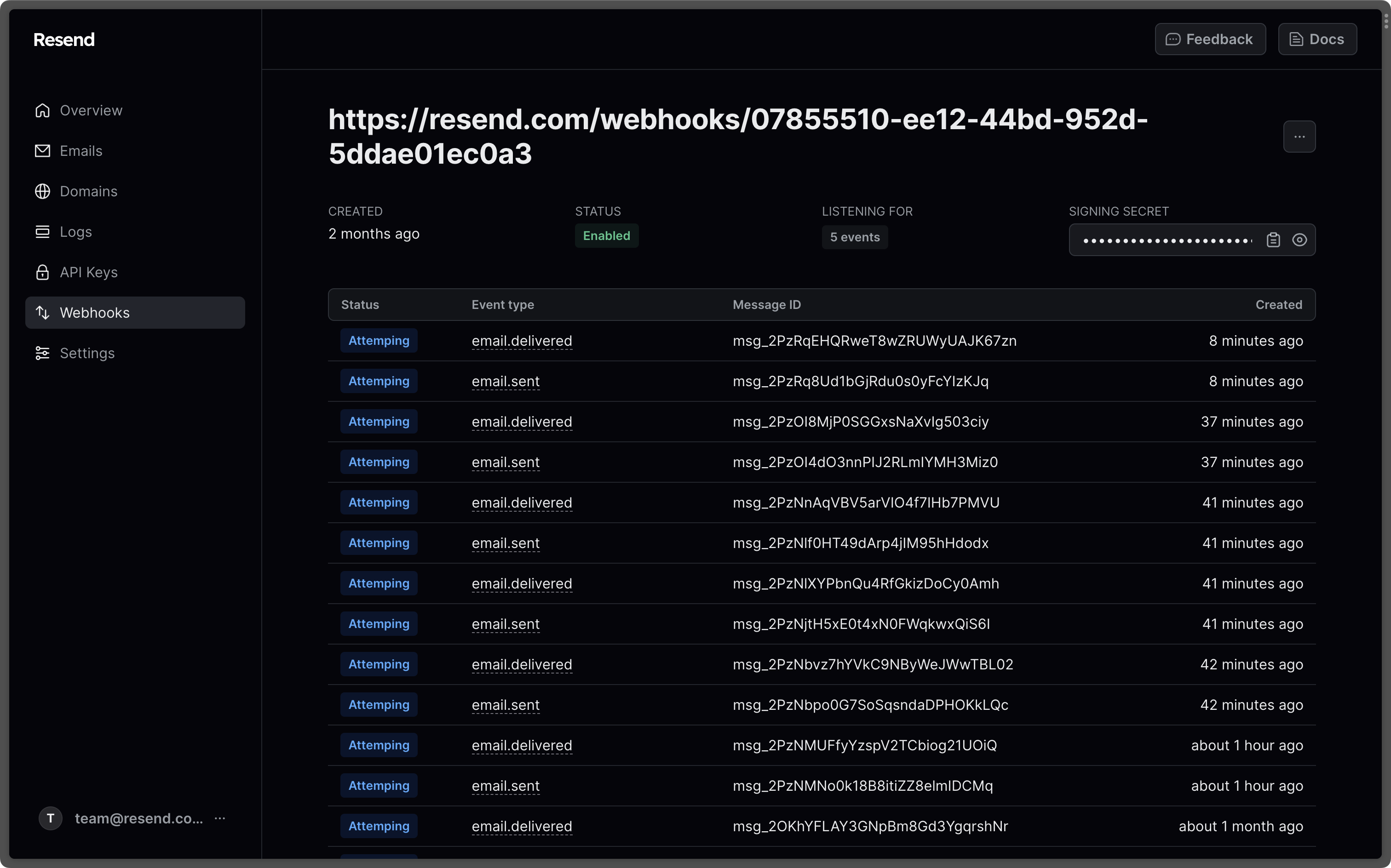
Webhooks table

→ Learn about Resend webhooks

9. Don't use no-reply emails

No-reply emails indicate to mailbox providers that the email is one-way communication and decreases trust.

It signals to inboxes that they cannot provide feedback on your emails (like reporting spam).

10. Send consistently

Mailbox providers are suspicious when you suddenly change the volume of sending.

If you want to send thousands of emails in a few months, you need to warm up your domain by sending them regularly ahead of time. Otherwise, you risk a large bounce rate and a big hit to your reputation, which can be hard to recover from in the future.

→ Learn more about deliverability