





In software, engineering and design are infantile in existence compared to other sectors: mechanical, electrical, aerospace, and environmental engineering. Engineering encompasses a broad range of disciplines and involves critical thinking, creativity, problem-solving, and collaboration. Many engineering disciplines have a role called a Design Engineer—a title that has been more popular in software in recent years. Design Engineers tend to work on products and systems that involve adapting and using complex scientific and mathematical techniques. In essence, they work on highly technical challenges that require strong design consideration. Today, we’re seeing Design Engineers become a popular role in software, and this isn’t the first time new roles/practices emerged.
In the early 2000s, the role of a Data Scientist became popular as data became increasingly abundant through the internet, social media, and digital technologies. Though the practice of statistics, analytics, and domain-specific knowledge existed before Data Science, companies like Facebook, Google, and Amazon were the pioneers leveraging data analytics to drive decision-making, improving user experiences, and growing the business. At the time, the practice was maturing in adoption and there was a shortage of talent who could do the role. Today it seems rare for any tech company to not have a Data Scientist.
Data Science was transformative in tech in the 2010s. In the age of LLMs, multi-device interfaces, and everything seemingly being programming, Design Engineering will be the transformative practice in the 2020s.
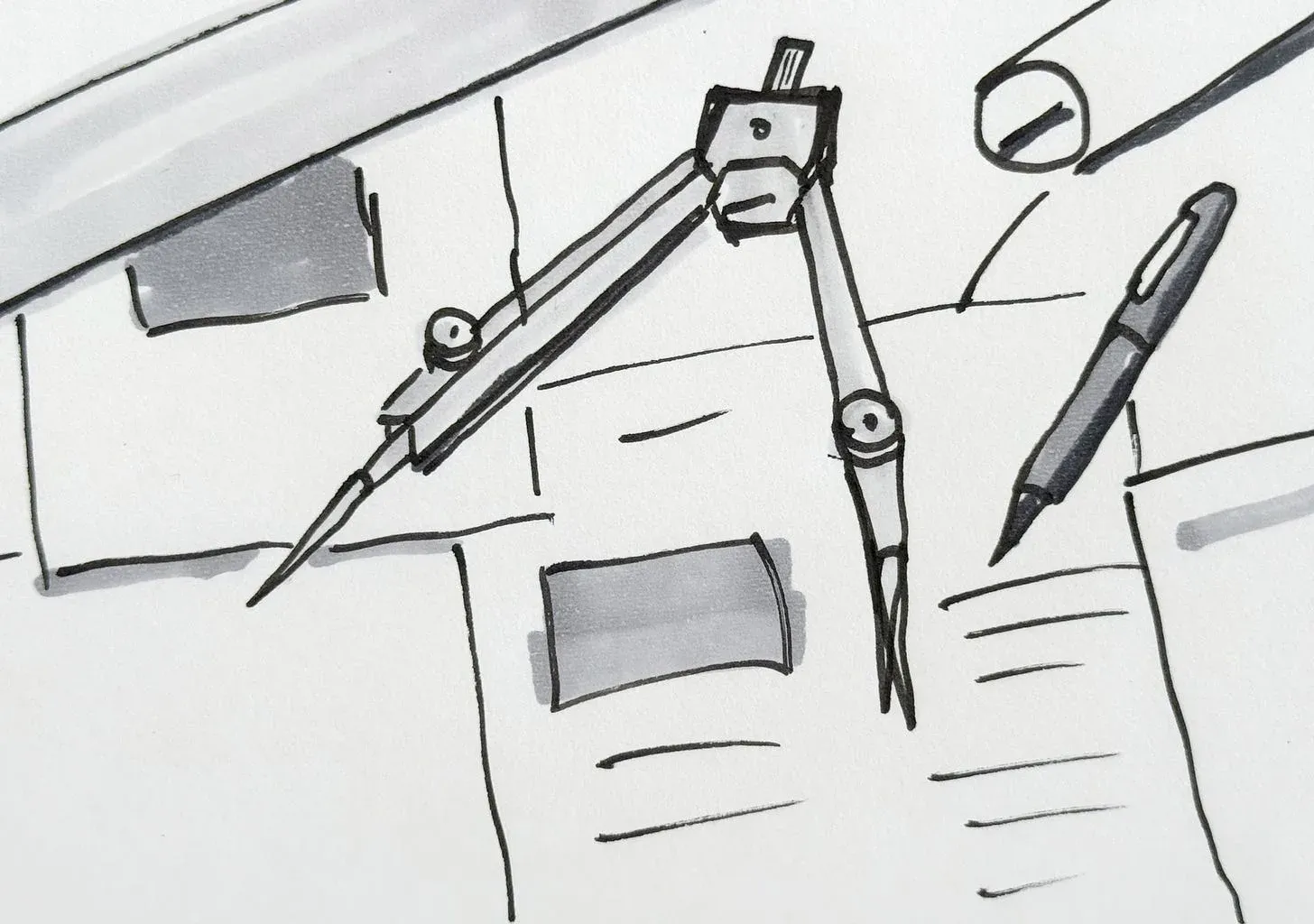
Design Engineering is not simply a rebrand of product design. Whether we like it or not, tech has a tendency to consolidate roles. Interaction Designers, UX Designers, UI Designers, and Visual Designers became Product Designers. Graphic Designers, Illustrators, Communications Designers, and Marketing Designers became Brand Designers.
To say Design Engineering is combining product design and front-end development dilutes the value the practice brings. Like a minestrone, the Arnold Palmer, or Cronut, Design Engineering is a true blend of two conventional roles. Design Engineers have deep knowledge in technological systems while scaling interface quality. They naturally fit in design crit or reviewing code with engineering.
There are three core areas Design Engineering is the top candidate for leading: product architecture, design infrastructure, and 0-1 R&D. These three areas do not encapsulate everything a Design Engineer might do, and the hope is to provide three concrete examples.
It makes sense for a Design Engineer, a role which balances technical systems and end user experiences, to be close to product architecture. In products that are authoring tools (Figma for design, Replit for code, Webflow for websites) it’s important to think beyond isolated features but the foundational capabilities of what your product can do. Design Engineers have the right skills to explore aspects such as information architecture of a product and also understand the technical logic of how such things function.
Design Engineers are naturals at design infrastructure—the underlying tools and systems to scale design. This might be contributing to component libraries, building internal tools to increase efficiency, or prototyping new patterns and interactions to inform the future of their software.
In many cases, Design Engineers are brought in to prototype experiences that otherwise would be nearly impossible in static mockups in Figma. When you’re dealing with an interaction with a Language Server Protocol (LSP) or a layout engine for a site builder, you have to build the prototype in code.
Exploring new product directions can be a need for an early-stage company needing to pivot in direction or an established company looking for new growth opportunities. These initiatives are usually not funded due to the perceived risk of pulling people off teams to do this unproven work. Due to the multidisciplinary skill sets of Design Engineers, they’re able to explore this space much more quickly and effectively than other teams.
My philosophy on org design is to optimize for the desired results, not the existing org chart. I’ve been at places where Design Engineers reported to me (Design) and others where they report to Engineering. For the sake of Design Engineers, it’s important to have a clear reporting line. Creative Technologists (made popular at Airbnb and Uber) in the 2010s have never recovered from the trauma of having unclear expectations and conflicting priorities of multiple orgs.
As we navigate what seems to be a tech paradigm shift with LLMs, AI applications, and multi-device experiences, Design Engineers will be this decade’s Data Scientist. Expect talent to be rare and continued definition of the impact of the role.
My hope is not for designers to simply change their title to Design Engineer on LinkedIn. It’s uncertain if every company needs a Design Engineer. However, I am confident authoring environments or work with complex interactions/data need Design Engineers. Snap, Retool, Replit, Uber, Square, OpenAI, and The Browser Company are a few examples of companies that have Design Engineers on their software teams.
Data was the currency in the web era of social and ad tech. Now it’s trained data (LLMs) presented in multi-device interfaces. When it comes to an emerging function in a paradigm shift in tech, the Design Engineer is the new Data Scientist. Let’s see if that’s true in ten years.
Originally posted on Proof of Concept
此内容由惯性聚合(RSS阅读器)自动聚合整理,仅供阅读参考。 原文来自 — 版权归原作者所有。