


For makers of software, Model/View/Controller (MVC) is one of the first concepts you learn. MVC is a design pattern that separates an application into three parts to organize code and make it easier to maintain. The Model handles data and business logic, the View manages the user interface, and the Controller acts as a middleman that processes user input and coordinates between them.
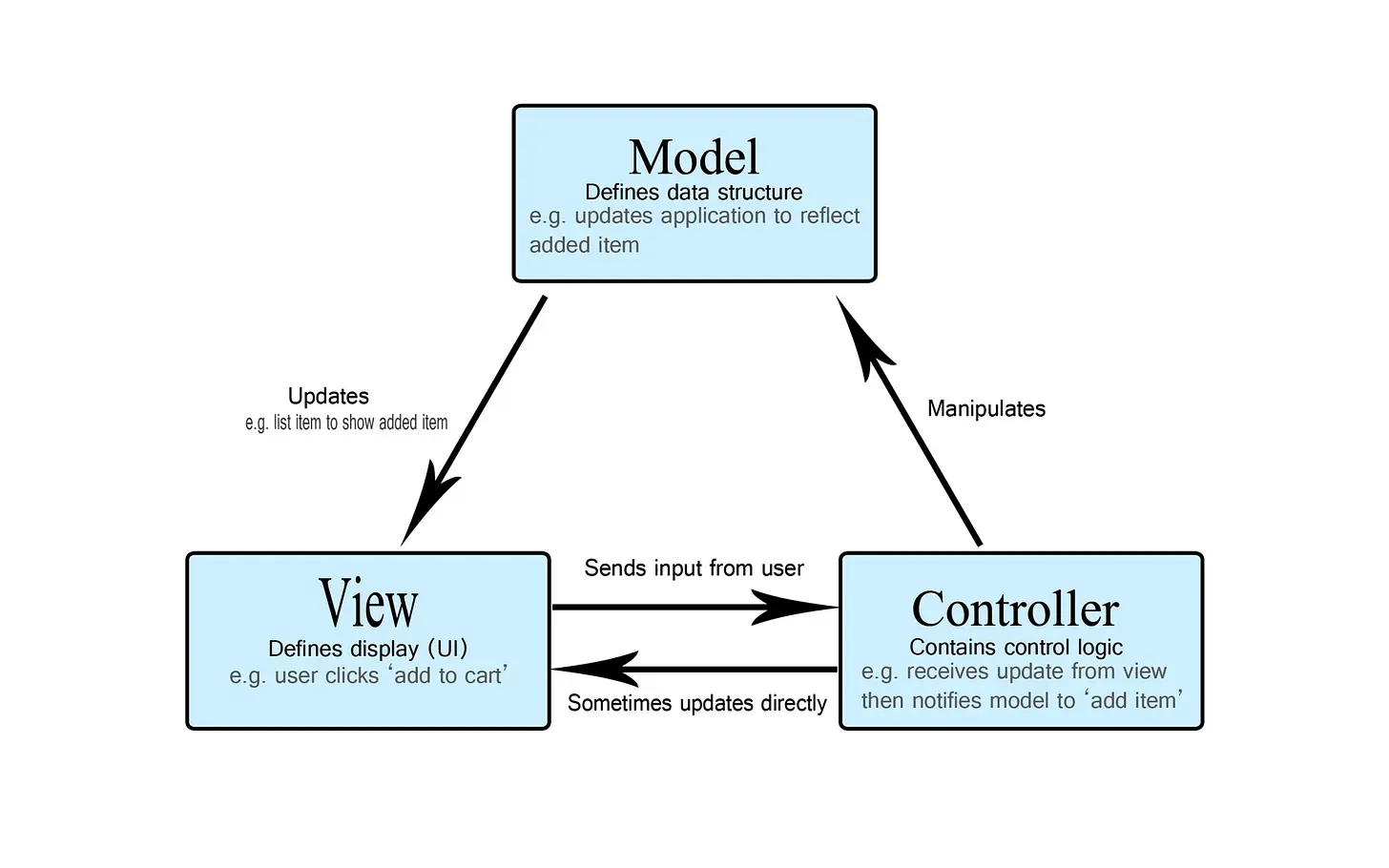
Think of it like a restaurant: the kitchen (Model) prepares the food, the dining room (View) is where customers eat, and the waiter (Controller) takes orders and communicates between the two. This separation allows developers to modify one part without breaking the others.
MVC has guided software architecture for decades—but AI is about to turn it on its head.
Instead of rigid relationships between data, interface, and logic, we’re entering a world where intelligent agents dynamically orchestrate distributed systems. Rather than building monolithic apps with centralized databases, we now design decoupled systems where agents respond in real-time using protocols like MCP (Model Context Protocol).
So what happens when Model, View, and Controller all become intelligent?
Before I share my thoughts, I must acknowledge and share Ruben Verborgh’s “Paradigm shifts for the decentralized Web.” Verborgh, a professor of Decentralized Web Technology, wrote this back in 2017 and laid out three critical shifts:
Now, with AI in the loop, these shifts feel even more pressing—and they’re converging with a reimagining of MVC. Let’s explore what the new MVC looks like.
The emerging MVC forces software makers to think of system-centric product experiences instead of app-centric. Simply put, the containers are breaking and walled gardens are coming down. Let’s look at the new constructs of MVC.
During a conversation with Kyle Turman at Anthropic, they said something that stuck with me: “LLMs are grown, not built.” That framing changed everything. Unlike traditional models you code and optimize, LLMs are trained, shaped, and continuously refined by their inputs and interactions. They behave less like deterministic engines and more like probabilistic ecosystems. This organic quality changes how we interface with them—and what we expect from “the model.”
In this new world, the app is no longer the destination—it’s the interface. Core workflows may still rely on apps, but increasingly, they’re just views for interacting with data and agents.
One of the first apps I ever built was Carogram, an Instagram client for the web and iPad using Node.js. Even back then, the trend was clear: apps were wrappers over data that lived elsewhere. Deep linking was a start. Now, we’re looking at a future where apps might not store any data at all—just render it, query it, or pass it through.
That was the promise of the decentralized web and blockchain: portability, ownership, and independence from centralized services. It didn’t fully land back then. But with AI and protocols like MCP, it may finally find footing.
This is where it gets interesting. If LLMs are the new Models and apps are our Views, AI agents step into the Controller role—except they don’t just relay input anymore. They interpret, decide, act, and coordinate across distributed systems. With Model Context Protocols (MCP), agents dynamically handle context switching, planning, and executing across multiple apps and data sources.
They’re not just smarter waiters. They’re like sous-chefs, sommeliers, and maître d’s rolled into one—making judgment calls in real time.
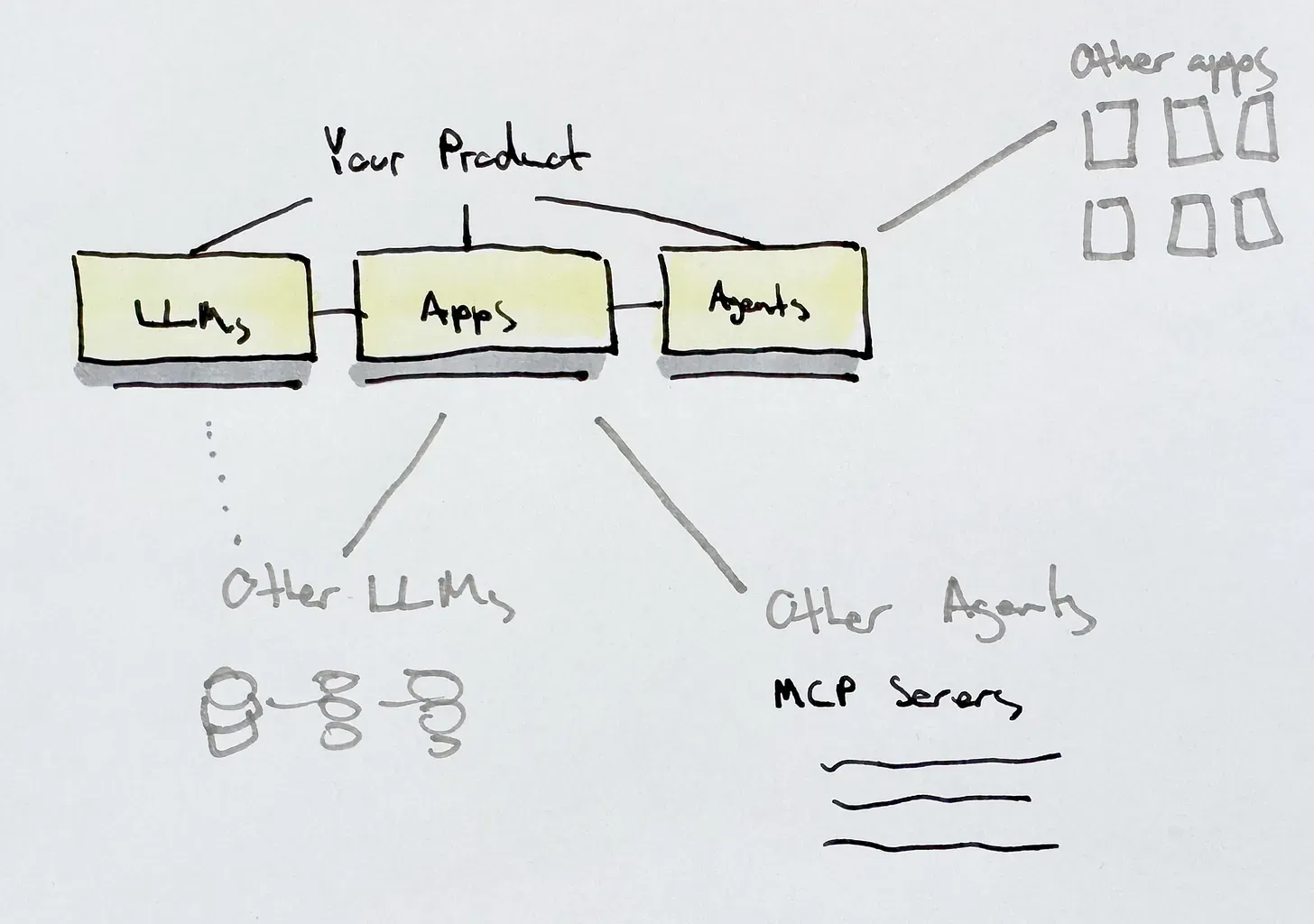
I won’t force a new acronym like LAA (LLMs, Apps, Agents)—but the point is clear: MVC isn’t gone, it’s evolving.
In this emerging architecture:
Software isn’t collapsing—it’s decoupling. We are moving from app-centric experiences to system-centric ones. And with that comes a chance to rethink how we make, control, and interact with the systems around us.
Originally posted on Proof of Concept
此内容由惯性聚合(RSS阅读器)自动聚合整理,仅供阅读参考。 原文来自 — 版权归原作者所有。