




Artifact: An object made by a human being, typically an item of cultural or historical interest.
Artifacts are powerful objects. They guide, galvanize, and hold history. These are tools that move humanity forward. In building products and companies, digital artifacts are crucial.
An artifact is a document, but not all documents are artifacts. I talk to my friend Ha Phan a lot about different ways to make artifacts. The short answer is there is no wrong way to do it. Each one is unique and serves a purpose. Let’s reflect on some of the attributes that make an artifact great.
Systems and concepts can be hard to interpret. One wrong word and someone might spawn a completely different mental model. That’s where a simple artifact can create quick alignment.
Have you ever presented in a meeting and people start asking questions before you can finish? I’ve probably done this myself. Moving the story along allows people to pay attention and follow your tempo. Sharing an artifact can give people something to pay attention to. It could even be a MacGuffin. What’s a MacGuffin? If you saw Star Wars: Rise of Skywalker, you asked yourself, “Why are they looking for this random dagger?” That’s a MacGuffin—an unnecessary object that moves things forward. The equivalent of a MacGuffin in design storytelling is when you wave the magic wand and ask people to move forward with assumptions. It helps move you to where you want to get to the point. Aspire to create something more than a MacGuffin though. All I’m saying is you can keep it dead simple.
Artifacts capture and memorialize certain moments. A danger is when artifacts become redundant or misinterpreted without context. Avoid those working docs that are never updated by someone who isn’t at the company anymore.
When someone can review and can clearly understand the context of an artifact, you know it’s good. It should not require voiceover or verbal context. Otherwise, the artifact is pointless. Guiding artifacts have a nomenclature and visual language that’s easy to understand. If you try to be too sophisticated, the barrier to comprehending makes it pointless.
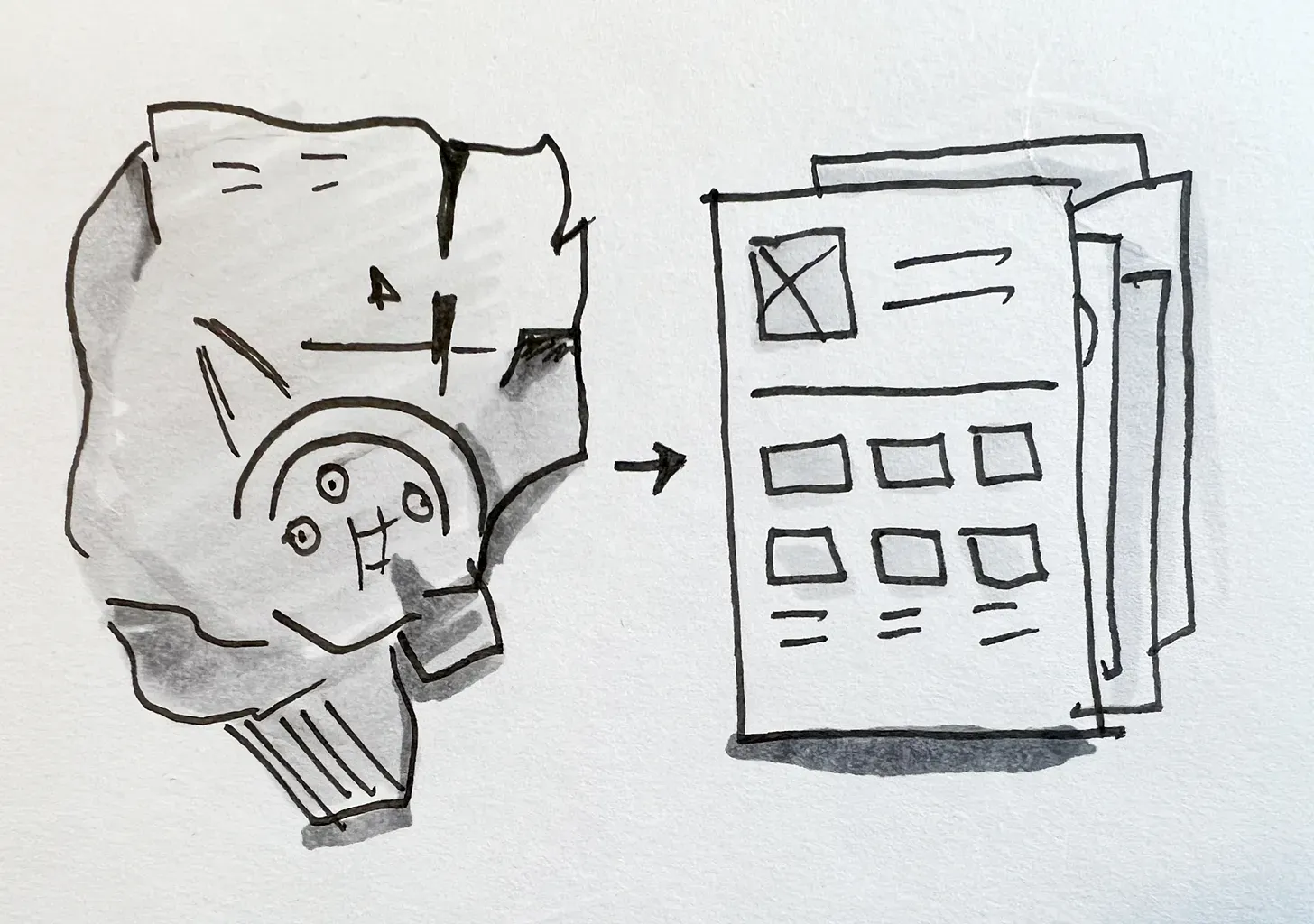
There’s no wrong way to make an artifact and there are multiple fidelities. The main purpose is you use them, share them with others, and have them guide you. I’ll share a few I’ve made at One Medical as examples. Though I’d love to share some artifacts that I use today, it’s too soon to share them in public!
At times, you don’t want artifacts to be too prescriptive, especially when you’re leading other people. Avoid making artifacts that feel too solution-oriented or prescriptive. I loved sharing low-fidelity sketches with the product designers and researchers on my team to generate ideas. This is a sketch of some of our initial ideas for our virtual therapy platform.
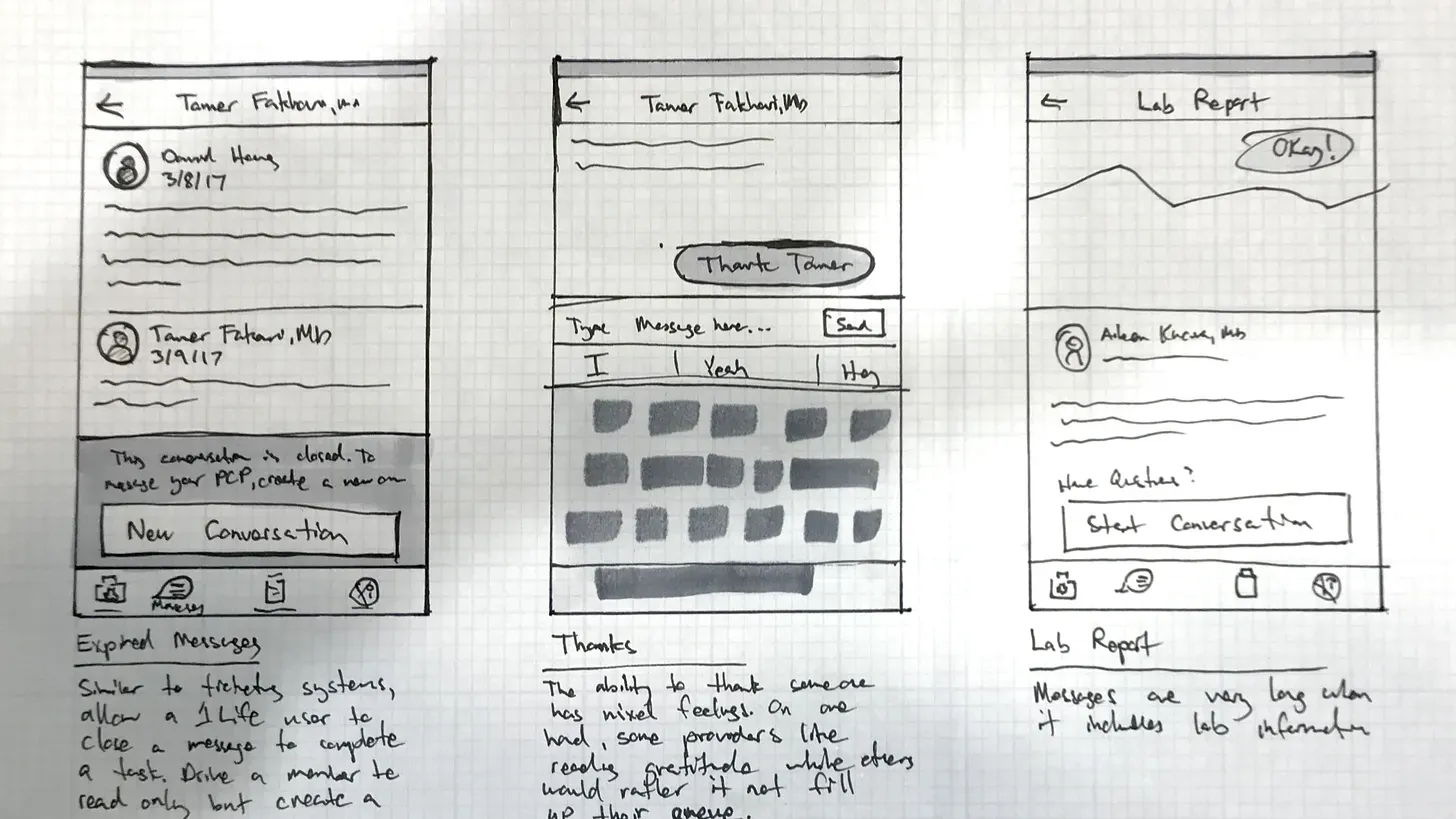
This is one of the development points of my drawing style. Strive for high-fidelity conversation and low-fidelity production.
I love Alissa Briggs’ talk Maps and Markers and refer to this often. Maps help plot where you need to go. A strategy, in its simplest form, is a map that guides you to your goal. This could be someone drawing on the dirt on a hiking trail or putting sticky notes on an ecosystem map. We plotted an ecosystem map with product and clinical leaders in this example. What you see (blurred) were key conversations memorialized in what would be a digital artifact.
Mapping our One Medical Ecosystem (intentionally blurred)
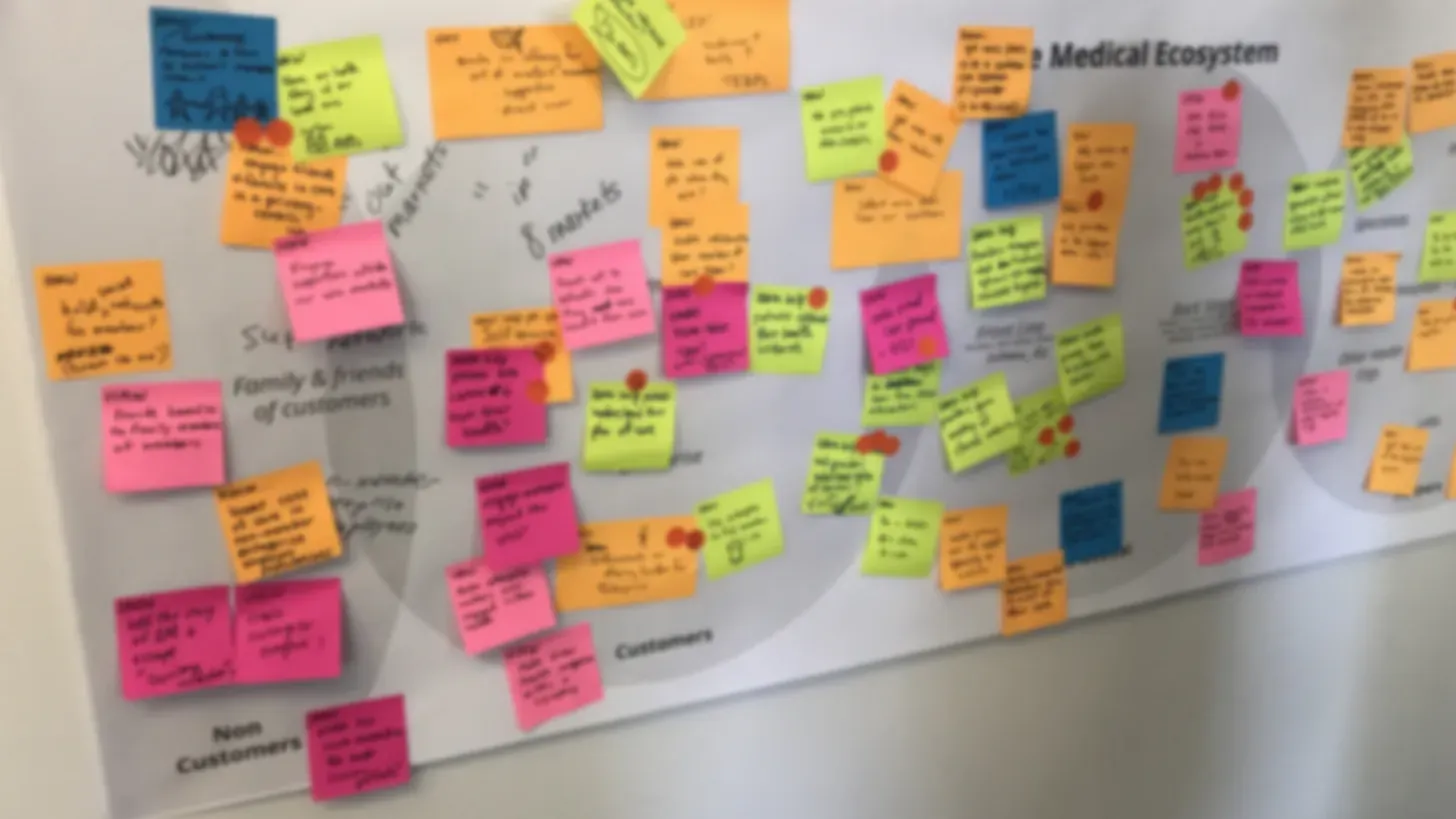
Maps encourage people to refine and build. The act of a map is to start the journey.
One project I was most proud of at One Medical was a vision book we shared with our board and execs on where the future of the company could go. We created a pitch book, just like one in my agency days. It was really fun to put together and tell a story.
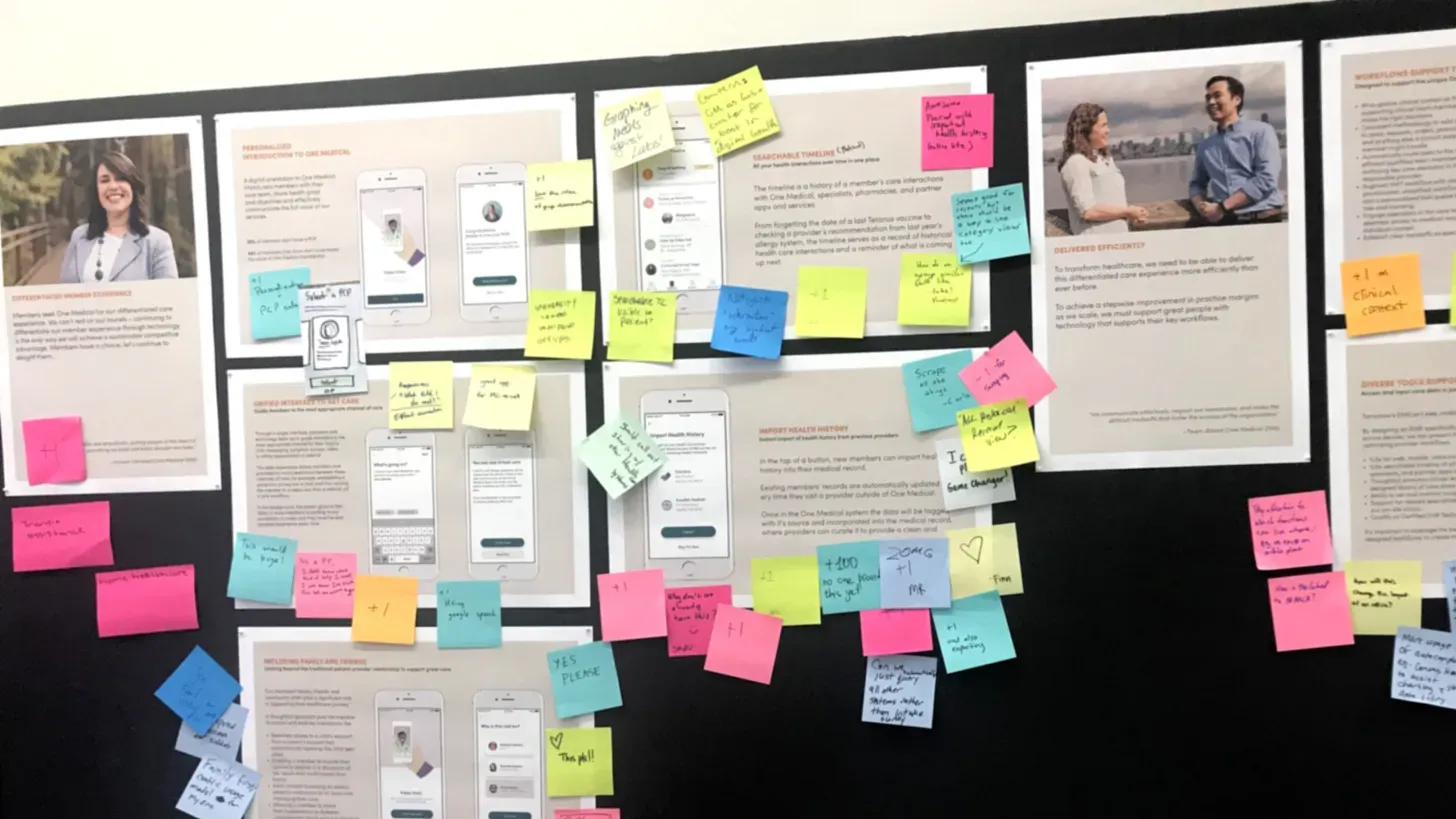
We printed out several copies and shared the narrative with our coworkers and stakeholders. This invited people to participate in a vision vs. it being handed down to them from the mountains. Their markups allowed us to infuse their perspectives in the vision and make it a part of the updated artifact.
Don’t underestimate the power of making an artifact. If you don’t know where to start, make a simple drawing or diagram. Share it with a colleague to see if it’s helpful. As you build a conversation around it, it’ll prove its value. Finally, making artifacts are fun. I wish you luck in your artifact-making.
Originally posted on Proof of Concept
此内容由惯性聚合(RSS阅读器)自动聚合整理,仅供阅读参考。 原文来自 — 版权归原作者所有。