






The Recycled Materials Guide shares engineering, design and operations insights in integrating recycled plastics, aluminum, stainless steel, cobalt, copper, gold, tin, tungsten and rare earths into products. It’s a resource for sustainability professionals and promoting industry innovation.
General summary
Google aimed to use more recycled materials in products and wants to help other companies do the same. The Pixel 10a phone is 36% recycled materials by weight, while the Nest Learning Thermostat and Nest Wifi Pro are at 48% and 60% respectively. Check out the Recycled Materials Guide to learn how to increase your use of recycled materials.
Summaries were generated by Google AI. Generative AI is experimental.
Bullet points
- This article, "How we’ve made our products with recycled materials," shares sustainability efforts.
- Google aimed to use recycled materials in all products and is close to 50% recycled plastic.
- The Pixel 10a uses 36% recycled materials, while Nest products use even more.
- Google created a guide to share insights and encourage other companies to use recycled materials.
- By increasing demand, Google helped build a circular economy for recycled materials.
Summaries were generated by Google AI. Generative AI is experimental.
Basic explainer
Google is trying to make its products more sustainable. They want to use more recycled stuff to build things like Pixel phones and Nest devices. Google even made a guide to help other companies use recycled materials too. They hope this will make the whole tech industry more eco-friendly.
Summaries were generated by Google AI. Generative AI is experimental.
Explore other styles:

Your browser does not support the audio element.
Listen to article
This content is generated by Google AI. Generative AI is experimental
[[duration]] minutes
In 2019, we set an ambition to get recycled materials into every new consumer hardware product we made. We actually reached that goal ahead of schedule, so in 2020 we set a new ambition to use at least 50% recycled or renewable plastic in our hardware products. We’re nearly there: 48% of the plastic used in products manufactured in 2025 was recycled content. 1
Our work in recent years has expanded beyond just plastic. We now track the recycled content of our entire product by weight. In our Pixel 10a phone, for example, recycled materials including aluminum, cobalt, copper, gold, tin, tungsten, rare earth elements, plastics and glass make up an industry-leading 36% of its weight. 2 Meanwhile, the Nest Learning Thermostat (4th gen) and Nest Wifi Pro are even further ahead, at 48% and 60% recycled content, respectively. 3 4
Nest Learning Thermostat (4th gen)
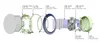
Reaching these milestones was not easy. When we started, we found that while some supply chains existed to support our work, others had to be developed. The electronics industry faced a Catch-22: without a steady supply of recycled materials, brands wouldn’t commit to using them — and without that commitment, suppliers wouldn’t produce higher volumes of recycled materials.
We decided to break this pattern by helping to build a circular economy that encourages both the production and the use of recycled materials. By partnering closely with our suppliers and showing real demand, we were able to help increase the supply of recycled materials to make them more readily available to other brands.
Today, we’re sharing what we’ve learned in our new Recycled Materials Guide. We don’t want to keep the insights from this journey to ourselves; instead we hope that other companies can learn from what we’ve done, and even find ways to improve upon our methods. Beyond a downloadable PDF, we’ve also made the guide available in NotebookLM, which offers additional ways to interact with the content.
Our commitment to sustainability and the environment inspired us to develop and adopt sustainable practices in our own business. We’ve previously shared guides on Plastic-Free Packaging Design and Consumer Hardware Carbon Reduction, and what we learned throughout is that others feel the same and share the commitment to adopting sustainability practices. We believe that true industry transformation will happen when sustainable practices become the standard, and we hope our new guide is a helpful step in that direction, and toward a more sustainable future.
Done. Just one step more.
Check your inbox to confirm your subscription.
You are already subscribed to our newsletter.
You can also subscribe with a